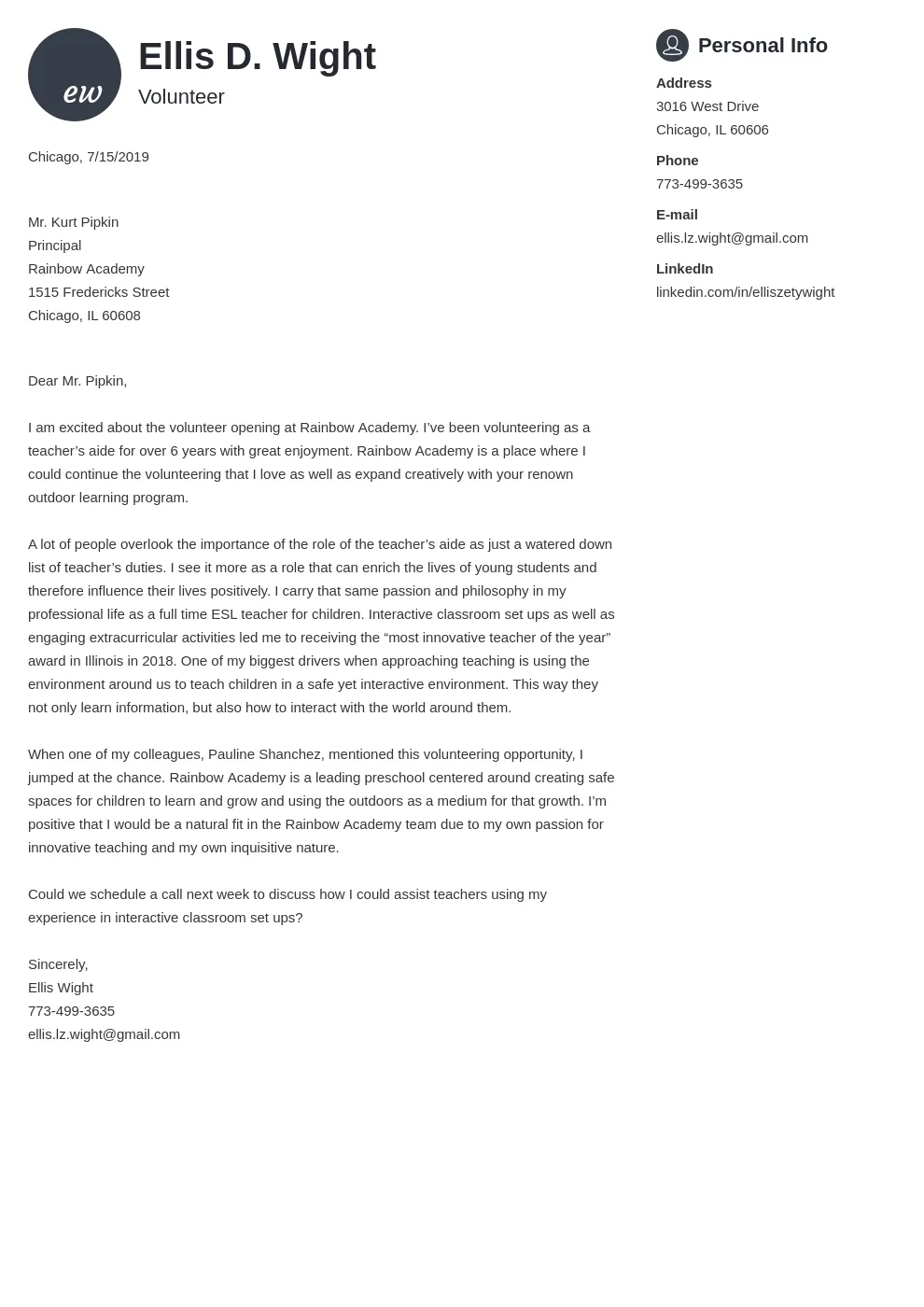
The Power of Volunteer Experience in Your Cover Letter
A well-crafted cover letter is your chance to shine, and including volunteer experience can significantly boost your application. In today’s competitive job market, employers seek candidates with a diverse skill set and a demonstrated commitment to their community. Highlighting your volunteer work allows you to showcase transferable skills, such as teamwork, communication, problem-solving, and leadership, often developed outside of traditional employment. This can be especially valuable for recent graduates, career changers, or individuals with gaps in their employment history. Volunteer experience provides concrete examples of how you’ve applied your abilities and contributed to a common goal, making you a more compelling candidate.
Highlighting Volunteer Experience
Effectively showcasing your volunteer work is crucial. Treat it with the same importance as paid employment. Instead of simply listing your responsibilities, focus on the skills and achievements you gained. The key is to connect your volunteer roles to the specific requirements of the job you’re applying for. Analyze the job description carefully and identify the skills and experiences the employer values. Then, highlight the volunteer experiences that align with these needs. Use action verbs to describe your accomplishments and quantify your results whenever possible to make your impact more tangible. This approach helps the hiring manager see the direct relevance of your volunteer work to the position.
Choosing the Right Volunteer Experiences

Not all volunteer experiences are created equal, so strategically select the ones most relevant to the job. Prioritize experiences that demonstrate skills and qualities the employer is seeking. For example, if applying for a project management role, highlight volunteer projects where you coordinated teams, managed budgets, or met deadlines. If applying for a customer service position, emphasize volunteer roles where you interacted with the public, resolved issues, or provided support. Consider the type of organization where you volunteered. Were they well-known? Did they have a positive reputation? Showcasing volunteer work in reputable organizations can enhance your credibility and make a positive impression. Only include relevant experiences; otherwise, the hiring manager could be distracted.
Quantifying Your Accomplishments
Numbers speak louder than words. Whenever possible, quantify your accomplishments in your volunteer roles. Instead of saying “Managed social media,” say “Increased social media engagement by 30% within six months.” Instead of “Organized fundraising events,” say “Raised $10,000 through the organization of three successful fundraising events.” Provide concrete data to showcase the impact of your volunteer efforts. This demonstrates your ability to achieve measurable results and adds credibility to your claims. Quantifying your achievements also helps the hiring manager easily understand the value you bring to the table. Furthermore, it highlights your analytical and goal-oriented approach.
Formatting Your Volunteer Experience Section
Format your volunteer experience section consistently with your paid work experience. Include the organization’s name, your role, the dates of your involvement, and a concise description of your responsibilities and achievements. Use bullet points to make your accomplishments easily scannable. This structured approach allows the hiring manager to quickly grasp your contributions. If you have extensive volunteer experience, consider creating a dedicated section in your cover letter or resume titled “Volunteer Experience” or “Community Involvement.” If you have limited experience, you can integrate it into your experience section, highlighting the skills and achievements you developed in each volunteer role.
The Structure of a Winning Cover Letter

A well-structured cover letter is essential. It serves as your initial introduction to the hiring manager and should immediately capture their attention. Your cover letter should follow a standard format, including a header with your contact information, a salutation, an opening paragraph, body paragraphs highlighting your skills and experiences, a closing paragraph, and a call to action. Each part plays a crucial role in creating a positive and memorable first impression. Careful attention to the structure and flow ensures your key strengths are clearly communicated and your application stands out.
Header and Salutation Essentials
Start with a professional header that includes your name, contact information (phone number and email address), and optionally, your LinkedIn profile link. Then, address your cover letter to the hiring manager, if possible. Research the company and find the name of the person responsible for hiring. If you can’t find a name, use a general salutation like “Dear Hiring Manager” or “Dear [Company Name] Team.” Avoid outdated salutations like “To Whom It May Concern.” A personalized salutation shows you’ve done your research and are genuinely interested in the position.
Crafting a Compelling Opening
Your opening paragraph is your first opportunity to make a strong impression. Clearly state the position you’re applying for and how you learned about the opportunity. Briefly introduce yourself and express your enthusiasm for the role and the company. Consider starting with a compelling statement that immediately grabs the reader’s attention. This could be a brief summary of your most relevant skill, a notable achievement, or a specific aspect of the company or role that excites you. Avoid generic opening lines; instead, personalize your introduction to demonstrate your genuine interest and distinguish yourself from other applicants.
The Body Paragraphs Your Selling Points

The body paragraphs are the core of your cover letter where you highlight your skills, experience, and accomplishments. This is the place where you showcase your volunteer experience. Focus on demonstrating how your skills and experience align with the job requirements, using specific examples to support your claims. Explain how your volunteer work has equipped you with the necessary abilities for the role, providing evidence and quantifying your achievements. This is where you demonstrate that you have what it takes to succeed, making sure the hiring manager understands the value you will bring. Tailor each paragraph to the specific job description and requirements.
Showcasing Skills and Achievements
Use action verbs to describe your accomplishments and quantify your results. Instead of saying “assisted with event planning,” say “coordinated logistics for a fundraising gala, resulting in a 20% increase in donations.” Provide specific examples of how you’ve applied your skills. If the job requires communication skills, describe situations in your volunteer roles where you effectively communicated with different stakeholders. If leadership skills are required, mention a project or role where you demonstrated leadership and guided a team to achieve a common goal. Highlight any awards, recognition, or positive feedback you received for your volunteer contributions.
Connecting Volunteer Work to the Target Role
Carefully analyze the job description and identify the key requirements. Then, connect your volunteer experiences to those requirements. For each skill or quality the employer is seeking, provide a specific example from your volunteer work that demonstrates your ability. Explain how the skills you gained through volunteering are transferable and applicable to the job duties. This helps the hiring manager see the direct relevance of your volunteer work and how it prepares you to succeed in the role. If you volunteered as a team leader, you might connect this to the need for teamwork or communication abilities.
The Closing and Call to Action

Conclude your cover letter with a strong closing paragraph. Summarize your key qualifications and reiterate your enthusiasm for the position. Express your gratitude for the hiring manager’s time and consideration. End with a clear call to action, such as “I am eager to discuss my qualifications further in an interview” or “I look forward to hearing from you soon.” Be polite, concise, and confident in your closing. Proofread your entire cover letter before sending it, ensuring that it is free of grammatical errors and typos.
Common Mistakes to Avoid in Your Cover Letter
Avoid common pitfalls that can undermine your application. A well-written cover letter should create a positive impression, and it is important to know what will have the opposite effect. Ensure your cover letter is easy to read and conveys your message clearly and effectively. Careful attention to detail is important in order to ensure your application makes a great impression.
Generic Language and Clichés
Avoid using generic language and clichés. Statements like “I am a team player” or “I am a hard worker” are often overused and don’t provide specific information about your skills or experience. Instead of using generic phrases, provide concrete examples of how you’ve demonstrated these qualities. For instance, demonstrate teamwork skills by describing a successful team project. Similarly, showcase your work ethic by mentioning specific achievements. Generic language makes your cover letter sound impersonal and doesn’t allow you to stand out from other applicants.
Focusing Solely on Responsibilities

Don’t simply list your responsibilities. Your cover letter should highlight your achievements and the impact of your contributions. While it’s important to mention your responsibilities, focus on the results you achieved and the skills you developed. Describe specific accomplishments, quantify your results whenever possible, and show how your efforts benefited the organization. By focusing on achievements, you demonstrate your ability to make a difference and provide concrete evidence of your skills. This is much more compelling than a list of duties.
Proofreading and Editing
Always proofread and edit your cover letter carefully. Typos, grammatical errors, and formatting mistakes can create a negative impression and undermine your credibility. Read your cover letter aloud to catch any awkward phrasing or errors. Have a friend or colleague review your cover letter. They can provide a fresh perspective and identify any areas for improvement. Pay close attention to detail, ensure your formatting is consistent, and use spell-check and grammar-check tools.
Final Thoughts and Next Steps
Writing a cover letter that incorporates your volunteer experience is a crucial step in the job application process. By highlighting your skills, achievements, and the impact of your volunteer work, you can create a compelling narrative that captures the attention of hiring managers. By following the guidelines above, you can significantly increase your chances of landing an interview and securing your dream job. Take your time to craft a cover letter that showcases your abilities and enthusiasm. Make your volunteer experience a valuable part of your application to stand out from the competition.