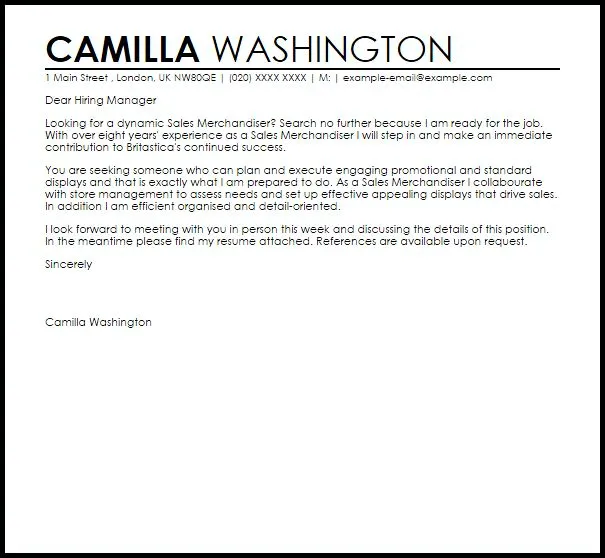
Why a Cover Letter is Crucial for Visual Merchandisers
In the competitive world of visual merchandising, a well-crafted cover letter is your first opportunity to make a lasting impression. It goes beyond simply listing your skills and experience; it’s your chance to showcase your personality, passion, and understanding of the role. A cover letter allows you to connect with the hiring manager on a personal level, demonstrating your enthusiasm and how your unique talents align with the company’s needs. It offers a narrative, a story that brings your resume to life, highlighting your accomplishments and explaining why you’re the perfect fit for the position. By taking the time to write a compelling cover letter, you significantly increase your chances of landing an interview and ultimately, securing the job of your dreams.
Highlighting Your Visual Merchandising Skills
Your cover letter is the perfect place to spotlight your specific visual merchandising skills. This includes expertise in areas like display design, space planning, and understanding of lighting and color theory. Don’t just list these skills; provide context. Explain how you’ve utilized these skills in previous roles to achieve specific results. For example, mention your proficiency in using relevant software such as Adobe Creative Suite, including Photoshop, Illustrator, or other design programs, as these are often essential tools in visual merchandising. Demonstrate your ability to create visually appealing and functional displays that enhance the customer experience and drive sales. It’s crucial to show, not just tell, how your skills can contribute to the company’s success.
Showcasing Your Creativity and Design Eye

Visual merchandising is, at its core, a creative field. Your cover letter should therefore demonstrate your creativity and design eye. Share examples of innovative displays you’ve designed, emphasizing the concepts and inspiration behind them. Describe how you approach a new project: Do you start with a mood board? Do you research current trends? Discuss your ability to translate brand identity into tangible, visually stunning displays. Highlight your ability to think outside the box and your knack for creating eye-catching presentations. Detail any unique design elements or techniques you’ve employed that resulted in positive outcomes. Showcasing your creativity is vital for demonstrating your potential to bring fresh ideas and perspectives to the role.
Demonstrating Your Knowledge of Current Trends
The world of retail and visual merchandising is ever-changing. Trends in display design, customer behavior, and product presentation evolve rapidly. Your cover letter should demonstrate that you are up-to-date with current trends. Mention specific trends you’re knowledgeable about, such as sustainable design, experiential retail, or the integration of technology in displays. Discuss how these trends can be applied to the specific role and the company’s brand. Highlight your ability to adapt to new ideas and integrate modern merchandising techniques. This shows that you’re not just experienced, but also forward-thinking and able to contribute to the brand’s ongoing success. Knowledge of trends also shows that you are eager to always grow.
Emphasizing Your Relevant Experience
While your resume provides a detailed overview of your experience, the cover letter allows you to elaborate on the experiences most relevant to the job you’re applying for. Instead of simply listing your previous roles, highlight the responsibilities and accomplishments that align with the job description’s requirements. Use the STAR method (Situation, Task, Action, Result) to provide concise yet impactful examples. Focus on experiences where you successfully executed visual merchandising projects, managed budgets, or collaborated with teams to achieve specific goals. Tailor your examples to the specific requirements of the role, demonstrating how your past experiences have prepared you for success in this new opportunity. This also helps show your ability to adapt to new challenges.
Quantifying Your Achievements

One of the most effective ways to impress a hiring manager is to quantify your achievements. Instead of saying you “improved sales,” state the percentage increase you achieved. Instead of saying you “managed displays,” specify the number of displays you managed or the square footage you were responsible for. Use numbers to demonstrate the impact of your work. For instance, mention how you increased foot traffic, boosted sales by a specific percentage, or reduced display setup time. Providing quantifiable results not only shows your accomplishments but also provides tangible evidence of your value. When possible, tie these achievements directly to the company’s goals and objectives, demonstrating your understanding of their priorities and how you can contribute to their bottom line.
Providing Specific Examples of Success
Specificity is key when writing a cover letter. General statements about your skills and experience won’t make a lasting impression. Instead, provide concrete examples of your successes. Describe a challenging project you undertook, the steps you took to overcome obstacles, and the positive outcomes you achieved. If you redesigned a window display, explain the initial goals, the design process, the materials used, and the subsequent increase in customer engagement or sales. Share the specific strategies you employed, such as the use of color psychology, strategic placement of products, or creative lighting techniques. These specific examples bring your cover letter to life and demonstrate your ability to think critically, solve problems, and deliver results.
Tailoring Your Cover Letter to the Job
A generic cover letter is easily recognizable and often discarded. The best cover letters are tailored specifically to each job application. This means carefully reviewing the job description and identifying the key requirements and qualifications the employer is seeking. Customize your cover letter to address these specific needs. Highlight the skills and experiences that directly align with the job requirements. Use keywords from the job description, but be sure to incorporate them naturally into your writing. Demonstrate your understanding of the company’s brand and the specific role you’re applying for. This shows the hiring manager that you’ve taken the time to understand the opportunity and that you genuinely want the job. This demonstrates that you’re also taking the time to learn about the company.
Researching the Company and Understanding Their Brand

Before writing your cover letter, research the company thoroughly. Understand their brand identity, target audience, and current merchandising strategies. Visit their website, social media pages, and, if possible, their physical stores. This research will help you tailor your cover letter to demonstrate your understanding of their brand and how your skills and experience can contribute to their success. Identify their core values, their current visual merchandising style, and any recent campaigns. Refer to specific aspects of their brand in your cover letter to show that you’ve done your homework and that you’re genuinely interested in working for them. This attention to detail sets you apart from other candidates and demonstrates your commitment.
Using Keywords from the Job Description
Many companies use Applicant Tracking Systems (ATS) to screen resumes and cover letters for specific keywords. To ensure your cover letter isn’t automatically rejected, carefully review the job description and identify the key skills, qualifications, and keywords the employer is looking for. Incorporate these keywords naturally into your cover letter. Don’t simply list them; use them in context to describe your skills and experience. For example, if the job description mentions “space planning,” make sure to include examples of your experience with space planning. However, avoid keyword stuffing, which can make your cover letter sound unnatural. The goal is to make your letter both readable and effective in highlighting your qualifications.
Maintaining a Professional Tone
Your cover letter should maintain a professional tone throughout. Avoid slang, jargon, or overly casual language. Use formal language and proper grammar and spelling. Focus on clarity and conciseness, making sure your message is easy to understand. Proofread your cover letter carefully to eliminate any errors that could detract from your professionalism. Demonstrate your respect for the hiring manager and the company by using a professional tone. A well-written, professional cover letter will build trust and demonstrate your attention to detail, qualities essential for a successful visual merchandiser.
Formatting and Proofreading Your Letter

The format of your cover letter is just as important as its content. Use a professional font, such as Times New Roman, Arial, or Calibri, and maintain consistent formatting throughout. Use appropriate spacing and margins to create a clean and easy-to-read document. Before submitting your cover letter, proofread it carefully for any grammatical errors, typos, or formatting inconsistencies. Ask a friend or family member to review it as well, as a fresh pair of eyes can often catch mistakes you might miss. A polished, well-formatted cover letter demonstrates your attention to detail and commitment to excellence, which are important qualities for a visual merchandiser.
Ensuring Clarity and Conciseness
Hiring managers are busy, so make sure your cover letter is clear, concise, and to the point. Avoid lengthy paragraphs and wordy sentences. Use bullet points to highlight key skills and accomplishments when appropriate. Focus on the most important information and avoid unnecessary details. Get straight to the point, explaining why you’re interested in the role and how your skills and experience align with the job requirements. Use strong action verbs to describe your achievements and use active voice whenever possible. A clear, concise cover letter demonstrates respect for the hiring manager’s time and makes it easier for them to understand your qualifications.
The Importance of a Strong Call to Action
Your cover letter should conclude with a strong call to action. This is your opportunity to express your enthusiasm for the opportunity and to encourage the hiring manager to take the next step. Clearly state your interest in an interview and reiterate your qualifications. Indicate your availability for an interview and provide your contact information. Thank the hiring manager for their time and consideration. A strong call to action leaves a lasting impression and demonstrates your eagerness to move forward in the hiring process. This reinforces the message that you are ready and eager to get to work.
Expressing Your Enthusiasm for the Opportunity

Your cover letter should reflect your genuine enthusiasm for the opportunity. Explain why you’re interested in the specific role and the company. Share what excites you about the brand, their products, or their values. Highlight any aspects of the job description that particularly appeal to you. Showing genuine enthusiasm can set you apart from other candidates. It demonstrates that you’re not just looking for any job but that you’re passionate about visual merchandising and eager to contribute to their team. Expressing your enthusiasm shows you’re truly invested in the opportunity.
Providing Contact Information and Availability
Make it easy for the hiring manager to contact you. Provide your phone number, email address, and any other relevant contact information, such as your LinkedIn profile. Indicate your availability for an interview. State when you are available to start the role, if you know. Make sure your contact information is accurate and up-to-date. A simple and professional closing, such as “Thank you for your time and consideration. I look forward to hearing from you,” is often the best approach. Providing this information is a sign of professionalism and ensures that the hiring manager can easily take the next steps to connect with you.