Crafting a Compelling Cover Letter
A cover letter is your first impression, a chance to showcase your skills and passion before the resume. It’s not just a formality it’s an opportunity to tell your story, highlighting why you’re the perfect fit for the role and the company. A well-crafted cover letter should be concise, engaging, and tailored to the specific job. It should go beyond simply repeating your resume, offering a narrative that explains your motivations, your enthusiasm for the opportunity, and what you bring to the table that sets you apart. A compelling cover letter immediately grabs the reader’s attention and encourages them to delve deeper into your qualifications.
Highlighting Your Programming Skills
Your cover letter is the place to demonstrate how your programming skills align with the job requirements. Be specific. Instead of saying ‘I’m proficient in Java,’ elaborate. For example, ‘I have extensive experience developing Java-based applications, including [specific project], where I utilized [specific technologies] to achieve [specific results].’ This level of detail immediately demonstrates that you understand the technical demands of the role and have the skills to meet them. Focus on skills that are mentioned in the job description and always provide context. Don’t just list technologies, explain how you used them and what you accomplished.
Showcasing Technical Expertise

Dive deep into your technical skills. Mention specific programming languages, frameworks, and tools you’re proficient in. If the job requires experience with Python and React, mention projects where you used these technologies, and briefly describe your role and contributions. Use action verbs to describe your experience. Instead of saying you ‘worked on’ a project, say you ‘developed,’ ‘implemented,’ or ‘optimized’ it. This shows that you are proactive and results-oriented. Whenever possible, mention any certifications or special training you have received that are relevant to the position. This adds extra credibility to your expertise.
Quantifying Achievements
Numbers speak louder than words. Instead of saying you improved code efficiency, quantify it. ‘I optimized the database queries, resulting in a 30% reduction in processing time.’ Use metrics to demonstrate your impact. Did you lead a team to complete a project ahead of schedule? Did your code reduce errors? Provide concrete examples whenever possible. If you improved website performance, state the percentage increase. If you streamlined a process, mention the time saved. These quantifiable results are what employers are looking for and prove the value you would bring to the organization. It differentiates you from the competition.
Emphasizing Relevant Projects
Choose projects that best showcase your skills and align with the job requirements. If the role focuses on mobile app development, highlight your experience with iOS or Android projects. Briefly describe each project, your role, the technologies you used, and the results. Tailor your descriptions to align with the job posting, emphasizing the skills and experiences the employer is seeking. If you’ve worked on open-source projects or have a portfolio, provide links. This enables the hiring manager to easily see your work in action and gives them a sense of your capabilities beyond what’s written in the cover letter.
Tailoring the Cover Letter to the Job

A generic cover letter is a quick path to the rejection pile. Each cover letter should be custom-made for the specific job and company. Generic templates do not impress anyone. Your cover letter must demonstrate that you understand the company, the role, and its requirements. This shows genuine interest and effort. Take the time to understand the job description thoroughly. Identify the key skills and experiences the employer is looking for, and then highlight how your background aligns with those needs. Avoid simply restating your resume; instead, use the cover letter to elaborate on the most relevant points and provide additional context and detail.
Researching the Company and Role
Before writing your cover letter, do thorough research on the company and the role. Visit their website, read their mission statement, and check their social media profiles. Understand their products or services, their company culture, and their current projects. This information will help you tailor your letter and demonstrate your enthusiasm. Research the specific role, understand the job responsibilities, and the required skills. Use this information to customize your cover letter to showcase why you are uniquely suited to the position. This proves you’ve taken the time to understand the company’s needs.
Matching Skills to Job Requirements
Carefully review the job description and identify the key skills and qualifications the employer is seeking. Then, align your cover letter to mirror these requirements. Use the same keywords and phrases from the job description, where appropriate. If the job posting emphasizes experience with cloud computing, make sure to highlight your relevant cloud experience. This shows the hiring manager that you’ve read the job description carefully and that you understand the requirements. The goal is to show how your skills and experience directly translate into the job requirements, making you a strong candidate.
Using Keywords Effectively

Keywords are critical for getting your cover letter noticed. Employers and applicant tracking systems (ATS) often scan cover letters for specific keywords. Identify the most important keywords in the job description and incorporate them naturally into your letter. Don’t stuff your cover letter with keywords, but make sure they appear in relevant contexts, such as describing your skills and experiences. Use a mix of hard skills (e.g., Python, Java, SQL) and soft skills (e.g., communication, teamwork, problem-solving). This helps your cover letter pass through applicant tracking systems and capture the attention of the hiring manager.
Formatting and Presentation
A well-formatted cover letter is essential for making a professional impression. Use a clear, easy-to-read font like Arial or Times New Roman. Keep the font size between 10 and 12 points. Use standard margins (1 inch on all sides) and single-spacing. Break up the text into paragraphs to make it easier to read. Use bullet points to highlight key skills, accomplishments, or projects. This format improves readability and helps the hiring manager quickly grasp the essential information. Proper formatting also shows you pay attention to detail. Ensure your formatting is consistent throughout the document.
Choosing the Right Tone
The tone of your cover letter should be professional, enthusiastic, and confident. Avoid sounding arrogant or overly informal. Use a positive and engaging tone that reflects your personality and passion for programming. Show your excitement for the opportunity and your interest in the company. Avoid negative language or complaining about past experiences. Use a friendly but professional tone. The language you choose should reflect a balance of confidence and humility. Ensure it’s clear, concise, and respectful. Your goal is to project a positive image and build rapport with the hiring manager.
Proofreading for Errors

Proofreading is crucial. Errors in grammar, spelling, and punctuation can undermine your credibility. Before submitting your cover letter, carefully proofread it multiple times. If possible, have a friend, colleague, or career counselor review it. Even minor mistakes can create a negative impression. Use spell-check and grammar-check tools, but don’t rely on them entirely. Read your cover letter aloud to catch awkward phrasing or sentences. Ensure that names, titles, and company information are accurate. Attention to detail is a critical skill for programmers, and a polished cover letter demonstrates your commitment to accuracy and professionalism.
Best Practices and Examples
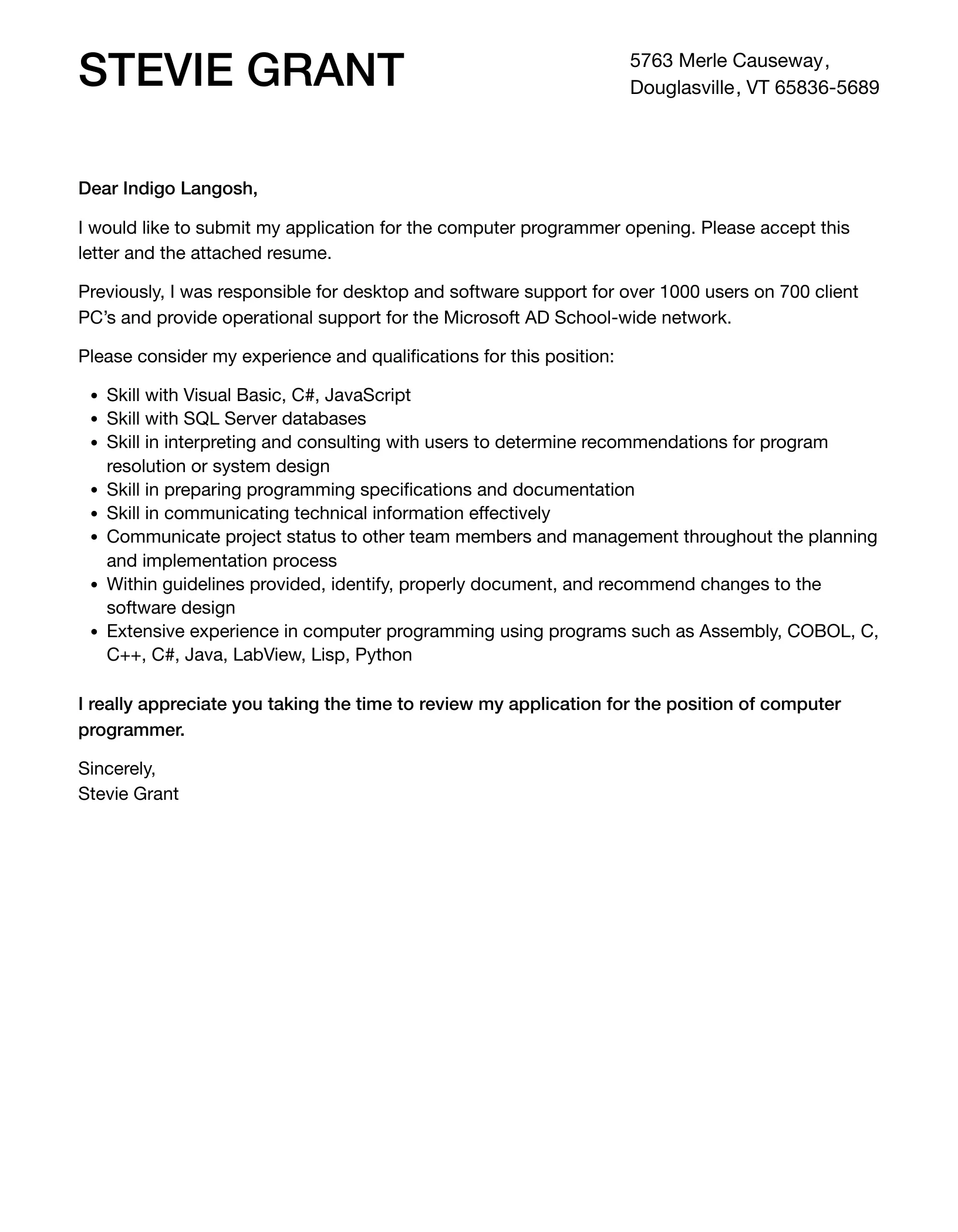
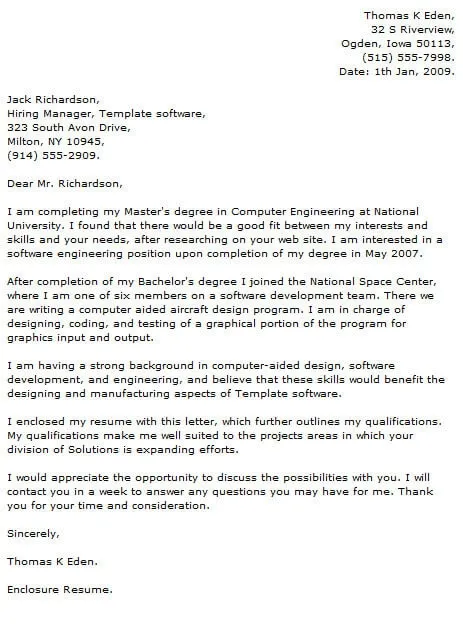
Reviewing examples can provide valuable insights into cover letter best practices. Look at various cover letter templates and examples to get ideas for structure, formatting, and language. However, avoid simply copying these examples. Instead, use them as inspiration to craft your unique cover letter. Focus on adapting the examples to your own experience and skills. Study different styles and formats. Use online resources to find a variety of cover letter samples. By studying various examples, you can learn how to effectively present your skills and experiences in the most compelling way.
Cover Letter Do’s
Tailor your cover letter to each job. Highlight relevant skills and accomplishments. Quantify your achievements with specific metrics. Use keywords from the job description. Proofread carefully for errors. Show enthusiasm for the role and company. Keep it concise, generally no more than one page. Focus on what you can offer the employer. Include a strong call to action, such as expressing your interest in an interview. Make sure to format the cover letter professionally, and choose a clear and readable font. Be sure to use action verbs to describe your accomplishments.
Cover Letter Don’ts
Do not use a generic, one-size-fits-all cover letter. Avoid repeating your resume verbatim. Do not include irrelevant information. Do not use jargon or overly technical language that the hiring manager might not understand. Do not be negative or complain about previous employers. Do not make spelling or grammatical errors. Avoid using long paragraphs; instead, keep your sentences and paragraphs concise. Don’t exceed one page. Don’t forget to include a call to action, for example, stating your availability for an interview.
Reviewing Cover Letter Examples
Examining cover letter examples can provide valuable guidance. Look for examples that match your experience level and the type of job you are applying for. Pay attention to how the examples are structured, how they highlight skills, and how they express enthusiasm for the opportunity. Adapt these examples to your own experience and skills, ensuring that your cover letter is unique. Don’t copy directly, but learn from the structure, language, and style. Use these samples as a guide to showcase your strengths and make your application stand out. Analyzing well-written cover letters is an excellent way to learn the essential elements of a successful cover letter.