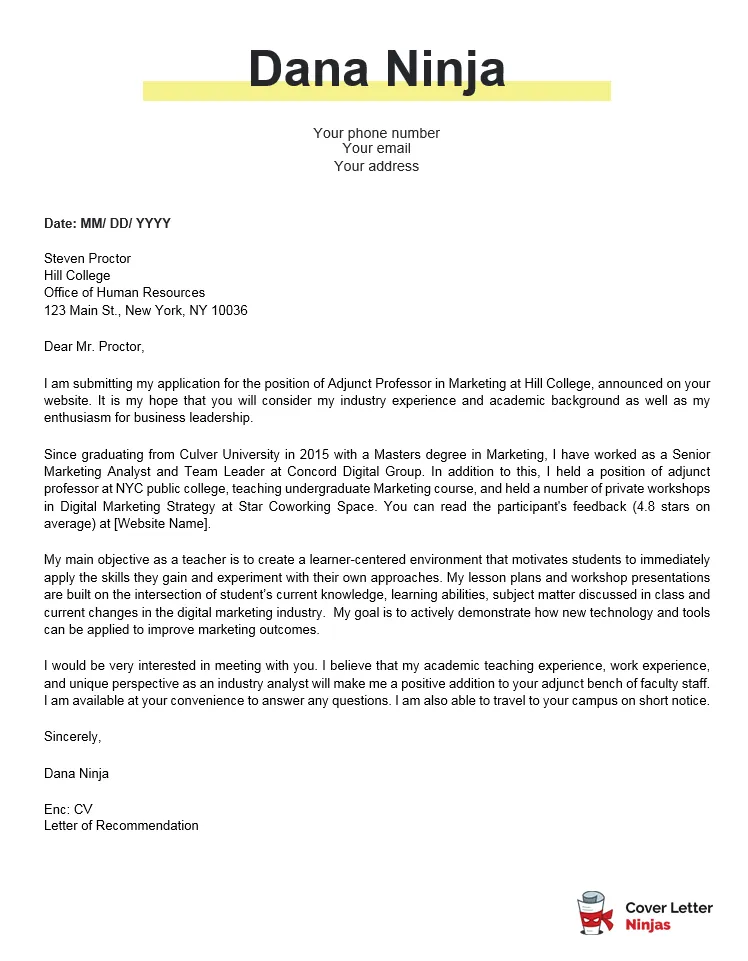
Crafting a compelling cover letter is crucial for academics seeking to advance their careers. It’s your first impression, a snapshot of your professional identity, and a chance to showcase your potential. Unlike general cover letters, an academic cover letter requires a specific approach, emphasizing research, teaching, and fit within the institution. This guide unveils seven essential secrets to help you create a standout cover letter that grabs attention and secures you an interview. Remember, the goal is to articulate your value proposition and demonstrate why you are the ideal candidate. Mastering these secrets will significantly increase your chances of landing your dream academic position.
7 Cover Letter Secrets for Academics
This list provides the keys to a successful academic cover letter. Use these secrets to enhance your chances of impressing the hiring committee and getting the job.
Highlighting Research Experience
Research is the cornerstone of academic life, so it’s vital to highlight your research experience effectively. Briefly summarize your research interests, methodologies, and key findings. Mention publications, presentations, and any grants or awards you’ve received. Quantify your contributions whenever possible, such as the number of publications or citations. Demonstrate how your research aligns with the institution’s research focus or strategic plan. Explain the impact of your research, and its relevance. Be specific and avoid generic statements. The goal is to demonstrate your productivity, impact, and alignment with the institution’s research priorities. Make sure you are easily readable by the committee.
Quantifying Achievements

Numbers speak louder than words. Whenever possible, quantify your achievements to demonstrate your impact. Instead of saying “managed several projects”, state “managed three research projects, securing $X in funding and publishing Y articles.” Instead of “taught many students”, write “taught over 200 students, with a student satisfaction score of 4.5 out of 5.” Using metrics makes your accomplishments more tangible and credible. Be sure your numbers are accurate, and provide context. Focus on achievements that are most relevant to the position and the institution’s priorities. This shows your value proposition in a clear and compelling way.
Showcasing Teaching Abilities
Teaching is a significant component of most academic positions. Describe your teaching experience, including the courses you’ve taught, your teaching philosophy, and any innovative teaching methods you’ve used. Mention any teaching awards or positive student evaluations you’ve received. Provide examples of how you engage students, foster critical thinking, and promote a positive learning environment. Highlight any curriculum development experience or experience in mentoring students. Be specific about the types of courses you’ve taught and the level. The goal is to showcase your skills and commitment to teaching excellence, emphasizing your ability to effectively educate and inspire students.
Tailoring to the Specific Institution
Generic cover letters are easily identified and often discarded. Tailor each cover letter to the specific institution and position. Research the institution’s mission, values, and strategic plan. Demonstrate how your research, teaching, and service align with the institution’s goals. Mention specific faculty members or research groups you’re interested in collaborating with. Show that you’ve put in the effort to understand the institution and that you’re genuinely interested in joining their community. This level of personalization demonstrates your sincere interest and helps you stand out from other candidates.
Emphasizing Your Fit

Beyond qualifications, demonstrate how you fit within the institution’s culture. Highlight your ability to collaborate with colleagues, contribute to departmental initiatives, and engage with the broader academic community. Mention any relevant experience in committee work, outreach activities, or professional service. Show that you’re not just a qualified candidate but also a good fit for the department and the university as a whole. This demonstrates your understanding of academic citizenship. Show that you are a team player and can contribute positively to the department.
Addressing the Selection Criteria
Carefully review the job description and address each of the required and preferred qualifications. Use the same keywords and phrases from the job posting in your cover letter. Provide specific examples that demonstrate your qualifications. Don’t just state that you possess a skill; provide evidence of your ability. For instance, instead of saying “I have strong communication skills,” write “In my role as X, I presented my research findings to a diverse audience of over Y people, resulting in Z.” Addressing the selection criteria directly shows the hiring committee that you understand the requirements of the position and have the necessary skills and experience.
Proofreading and Polishing
A polished cover letter is crucial. Proofread your letter multiple times for grammar, spelling, and punctuation errors. Have a colleague or mentor review your cover letter for feedback. Ensure the tone is professional and engaging. Use a clear and concise writing style. The cover letter should be well-formatted and easy to read. Poor writing reflects poorly on you and can lead to an immediate rejection. Proofreading is the final step, but it’s the one that ensures that all of your hard work pays off. Your cover letter is representing you, and it needs to be perfect.
In conclusion, crafting a compelling academic cover letter requires careful attention to detail, a strong understanding of your strengths, and a clear articulation of your value. By following these seven secrets – highlighting your research, quantifying your achievements, showcasing your teaching, tailoring to the institution, emphasizing your fit, addressing the selection criteria, and proofreading meticulously – you’ll significantly increase your chances of landing that coveted interview and advancing your academic career. Good luck!