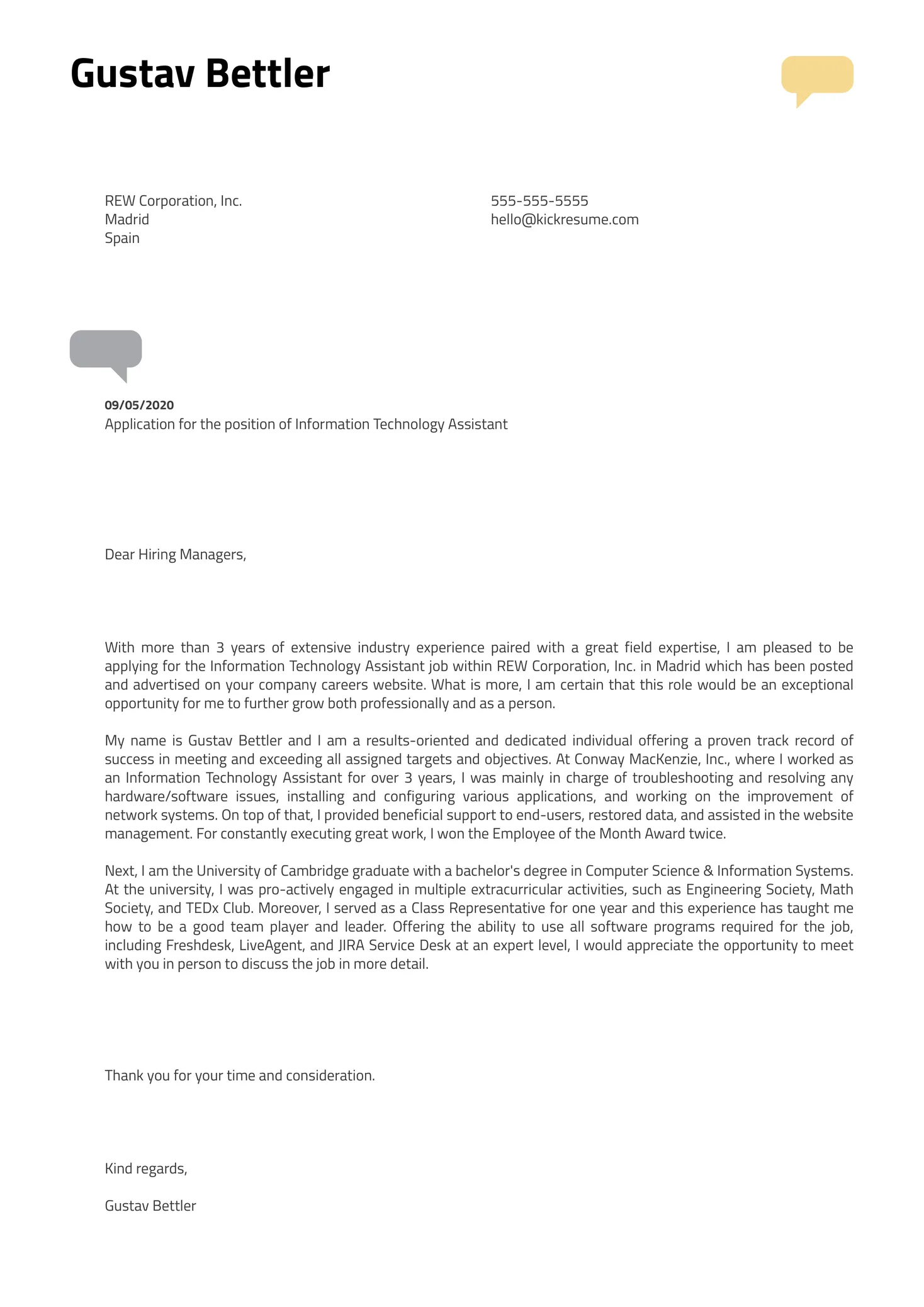
Cover Letter Sample Technology Introduction
In today’s competitive job market, a well-crafted technology cover letter is your key to unlocking your dream role. It serves as your first impression, showcasing your skills, experience, and passion for the tech industry. A stellar cover letter goes beyond simply restating your resume; it tells a compelling story about why you’re the perfect fit for the specific opportunity. This guide will provide you with the knowledge and tools to create a cover letter that grabs attention and gets you noticed by hiring managers. Let’s explore the crucial elements that make a technology cover letter shine.
Understanding the Importance of a Technology Cover Letter
Why does a cover letter matter so much in the tech world? Unlike resumes, cover letters allow you to demonstrate your personality and enthusiasm. They provide context to your achievements, explaining how your skills align with the company’s needs and the specific role. A strong cover letter also lets you address any potential gaps in your resume, such as career changes or a lack of formal education in a specific area. Furthermore, it’s an opportunity to show that you’ve researched the company, understand their mission, and are genuinely interested in contributing to their success. A generic or absent cover letter signals a lack of genuine interest and effort, making it less likely that your application will be considered.
Highlighting Relevant Skills and Experience

Your cover letter’s primary goal is to highlight your most relevant skills and experience. This isn’t just about listing keywords; it’s about demonstrating how you’ve applied those skills to achieve results. Focus on the requirements outlined in the job description, and provide specific examples of how you’ve utilized your expertise. Quantify your achievements whenever possible; use numbers and data to illustrate the impact of your contributions. For example, instead of saying “Improved website performance,” state “Improved website loading speed by 30%, resulting in a 15% increase in user engagement.” Tailor your skills section to match the job; don’t include everything you’ve ever done. Instead, select the skills most relevant to the target role.
Identifying Key Technology Skills
Identify the skills the employer is seeking. Common technology skills include programming languages (Python, Java, JavaScript, etc.), cloud computing (AWS, Azure, GCP), data analysis (SQL, data visualization tools), cybersecurity, DevOps, and project management methodologies (Agile, Scrum). Research which skills are most in-demand within the specific industry and for the particular role you’re targeting. The best cover letters match the language of the job description. If a job posting emphasizes “experience with Python and data manipulation,” ensure you highlight these skills and mention relevant projects where you used them. The clearer you are about the intersection of your skills and the needs of the company, the better.
Showcasing Technical Projects and Achievements
Go beyond simply listing your job duties and responsibilities. In your cover letter, give specific examples of projects you’ve worked on, highlighting your role, the challenges you overcame, and the outcomes you achieved. Use the STAR method (Situation, Task, Action, Result) to structure your examples. Describe the situation, the task you were assigned, the actions you took, and the positive results you achieved. Did you develop a new software feature? Did you lead a successful cybersecurity audit? Did you improve a system’s efficiency? Quantify your results with numbers and metrics whenever possible. For instance, “Led a team to develop a new mobile application that increased user engagement by 40% in the first quarter.”
Tailoring Your Cover Letter to the Specific Job

A generic cover letter is easy to spot, and it tells the hiring manager that you haven’t put in the effort to understand the role or the company. Tailoring your cover letter is crucial for showing that you are genuinely interested in the specific opportunity. This involves researching the company, analyzing the job description, and customizing your content to align with the specific requirements and expectations. The more you customize your letter, the more likely you are to capture the attention of the hiring manager.
Researching the Company and the Role
Before writing your cover letter, thoroughly research the company. Visit their website, read their “About Us” section, and explore their social media presence. Understand their mission, values, recent projects, and news. What are their current challenges and goals? Identify the company’s culture and values; this will help you tailor your language and demonstrate that you’re a good fit. Analyze the job description carefully. Identify the key requirements, skills, and qualifications the company is seeking. What are the essential responsibilities, and what are the desired qualifications? Understanding the needs of the company and role gives you the ability to tailor your letter to align your skills with their specific needs.
Customizing the Content for the Job Description
Once you’ve researched the company and analyzed the job description, it’s time to customize your cover letter. Use the keywords and phrases from the job description throughout your letter. This helps the applicant tracking system (ATS) recognize your application and demonstrates that you understand the role’s requirements. Highlight the skills and experiences that are most relevant to the job. Give specific examples of how your past achievements align with the responsibilities outlined in the job description. Tailor your language and tone to match the company’s culture. If the company values innovation, use language that reflects your creativity and forward-thinking approach. If the company emphasizes teamwork, highlight your collaborative experiences.
Structuring Your Technology Cover Letter

A well-structured cover letter is easy to read and highlights the most important information. The standard structure includes an introduction, body paragraphs, and a conclusion. Each section should serve a clear purpose, guiding the reader through your qualifications and demonstrating your interest in the role. Make sure to format your cover letter professionally with a readable font, clear spacing, and concise paragraphs.
Formatting and Layout
Choose a professional font such as Arial, Calibri, or Times New Roman. Keep the font size between 10 and 12 points. Use single spacing within paragraphs and double spacing between paragraphs. Left-align your text and use a standard one-inch margin on all sides. Include your contact information at the top of the letter, including your name, phone number, email address, and LinkedIn profile URL. If the job posting provides a specific format or instructions, adhere to them. Use headings and bullet points to break up large blocks of text and make your letter more scannable. Use a clean and professional layout that is easy on the eyes.
Writing a Compelling Opening
Your opening paragraph is your opportunity to grab the hiring manager’s attention. Start with a strong statement that immediately highlights your interest in the role and the company. Mention where you saw the job posting and why it caught your eye. Briefly state your relevant experience and skills, and emphasize your enthusiasm. Instead of a generic opening, try a personalized approach. If you know someone at the company, mention their name. Show that you have researched the company and are excited about their work. Make sure your opening paragraph is concise, engaging, and sets the tone for the rest of your letter. The goal is to quickly establish why you are an excellent candidate.
Crafting a Strong Body Paragraph

The body paragraphs are where you expand on your qualifications and demonstrate how your skills and experience align with the job requirements. Focus on a few key skills or experiences and provide specific examples to illustrate your accomplishments. Use the STAR method (Situation, Task, Action, Result) to structure your examples. Discuss the situation, the task you were assigned, the actions you took, and the positive results you achieved. Quantify your achievements with numbers and metrics. Tailor your examples to match the job description and emphasize the skills and experiences the employer is seeking. Highlight your problem-solving skills, your ability to work in a team, and your passion for technology. Aim for clarity, conciseness, and impact in each paragraph.
Creating a Powerful Conclusion
Your conclusion should reiterate your interest in the role and the company, and it should also include a call to action. Reiterate your enthusiasm for the opportunity and summarize why you are the ideal candidate. Express your confidence that you possess the necessary skills and experience to excel in the role. State that you are eager to learn more and discuss your qualifications further. Thank the hiring manager for their time and consideration. Provide your contact information again, and indicate that you are available for an interview. Avoid simply restating information from the body of your letter; instead, use your conclusion to leave a lasting positive impression.
Using Action Verbs
Using strong action verbs in your cover letter makes your accomplishments more impactful and demonstrates your proactive approach. Start each sentence with a powerful action verb to make a strong impression. Choose action verbs that accurately describe your skills and accomplishments. Here are some examples of strong action verbs to consider: Developed, implemented, designed, managed, led, created, improved, optimized, analyzed, researched, and collaborated. Replace weak verbs like “was responsible for” or “assisted with” with more active verbs like “managed” or “implemented”. By using strong action verbs, you make your cover letter more dynamic, compelling, and memorable. Your cover letter will showcase your achievements and demonstrate your ability to take initiative and deliver results.
Avoiding Common Mistakes in Technology Cover Letters

Avoiding common mistakes is crucial to ensure that your cover letter makes a positive impression. Some common errors can lead to your application being rejected. Pay close attention to detail and review your cover letter carefully before submitting it.
Grammar and Spelling Errors
Grammar and spelling errors can undermine your credibility and make you appear unprofessional. Proofread your cover letter carefully for any typos, grammatical errors, or inconsistencies. Use a spell-checker and grammar-checker, but also proofread the letter yourself. Read your cover letter aloud to catch any awkward phrasing or errors you might have missed. Have a friend or colleague proofread your cover letter as well. Errors can be particularly detrimental in technology roles, where precision and attention to detail are highly valued. A polished, error-free cover letter demonstrates that you pay attention to details and take pride in your work.
Generic and Uninspired Content
Generic cover letters that are not tailored to the specific role or company rarely make a strong impression. Avoid using generic phrases or clichés, and instead, show that you have researched the company and understand their needs. Customize your cover letter to match the job description and the company’s values. Highlight your specific skills and experiences that are relevant to the role, and demonstrate your enthusiasm. Provide specific examples of your accomplishments and quantify your results whenever possible. Showcasing your personality and authentic interest in the position is crucial to standing out from the crowd.
Ignoring the Job Description

Failing to address the requirements outlined in the job description is a critical mistake. Analyze the job description carefully and identify the key skills, qualifications, and responsibilities the company is seeking. Customize your cover letter to align with these requirements. Use the keywords and phrases from the job description to demonstrate that you understand the role’s needs. Provide specific examples of how your skills and experience match the job’s needs. Make sure your cover letter shows the hiring manager that you understand the role and are qualified to excel in it.
Technology Cover Letter Samples and Examples
Reviewing cover letter samples and examples can provide valuable insights into how to structure and write a compelling cover letter. Look for examples that are relevant to your industry and experience level. Pay attention to the language, tone, and formatting used in the examples. Adapt the examples to your own situation by customizing the content and highlighting your unique skills and accomplishments. Use cover letter samples as a guide, but make sure your cover letter is original and reflects your personal brand and style. By learning from these examples, you can build a well-crafted cover letter to showcase your capabilities.
Sample Cover Letter for a Software Engineer
A software engineer cover letter should highlight your coding skills, experience with specific programming languages, and your experience in developing and deploying software applications. Emphasize your problem-solving abilities, your experience with software development methodologies, and your familiarity with testing and debugging. Include examples of projects where you’ve built and deployed software systems, emphasizing your role, the technologies used, and the results. Your cover letter should also demonstrate your understanding of software engineering best practices.
Sample Cover Letter for a Data Scientist

Your cover letter should highlight your analytical skills, experience with statistical modeling, machine learning, and data visualization. Emphasize your expertise in Python, R, or other relevant programming languages, and your experience with data mining and analysis tools. Provide examples of projects where you’ve used data to solve business problems or generate insights. Show your ability to analyze large datasets, develop predictive models, and communicate findings effectively. Emphasize your understanding of data science methodologies and your ability to translate data into actionable insights.
Sample Cover Letter for an IT Support Specialist
Your cover letter should highlight your technical support experience, your communication skills, and your ability to troubleshoot technical issues. Demonstrate your knowledge of operating systems, hardware, and software applications, and your experience in providing technical assistance to end-users. Give examples of your experience in resolving technical problems, providing excellent customer service, and supporting IT infrastructure. Show your understanding of network configurations, security protocols, and IT best practices.
Tips for Proofreading and Editing Your Cover Letter
Thorough proofreading and editing are essential to ensure that your cover letter is polished and professional. Read through your cover letter multiple times, checking for grammar, spelling, and punctuation errors. Use a spell-checker and grammar-checker, but don’t rely on them entirely. Read your cover letter aloud to catch any awkward phrasing or errors you might have missed. Have a friend, colleague, or career advisor proofread your cover letter as well. Consider asking someone with experience in the tech industry to review your cover letter. Pay close attention to your word choice, sentence structure, and overall flow. A well-proofread cover letter demonstrates attention to detail and professionalism.
Tools and Resources for Cover Letter Writing
There are numerous online tools and resources available to assist you in writing your cover letter. Utilize these resources to improve your writing skills, find inspiration, and create a compelling cover letter. Consider using online cover letter templates to save time and ensure your letter is well-structured. Explore cover letter examples specific to your industry and experience level. Use grammar-checkers, spell-checkers, and readability tools to improve your writing. Seek feedback from career advisors or mentors on your cover letter. Leverage online writing guides, career websites, and professional development resources to refine your skills and enhance your career prospects.
Cover Letter Sample Technology Conclusion
Writing a stellar technology cover letter requires careful planning, research, and execution. By understanding the importance of a cover letter, highlighting your relevant skills and experience, tailoring your content to the specific job, and avoiding common mistakes, you can create a cover letter that grabs attention and increases your chances of landing an interview. Use the information and the guidelines provided in this guide as a starting point. Tailor your cover letter to each job application, and remember that your cover letter is a reflection of your qualifications and your passion for the technology industry. Good luck!