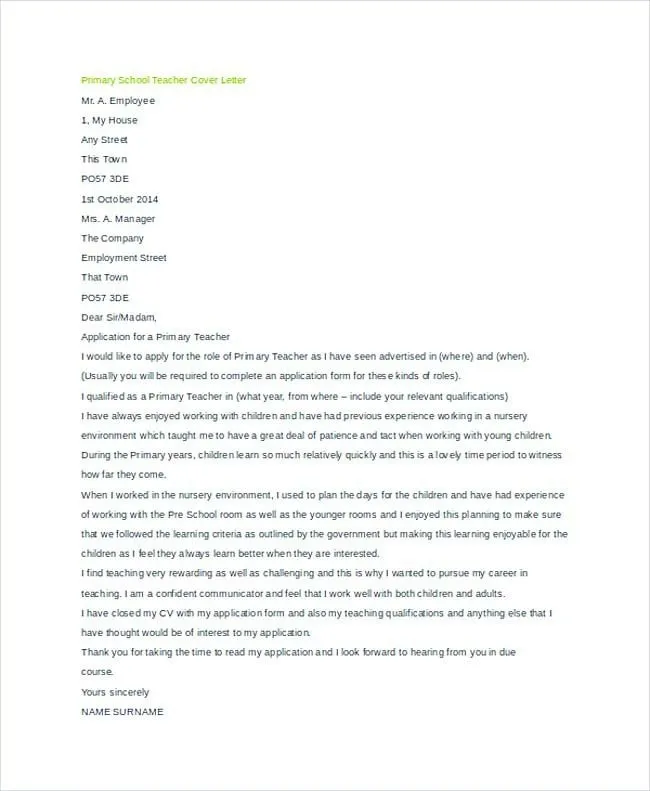
What is a Teaching Application Cover Letter?
A teaching application cover letter is a crucial document that accompanies your resume when applying for a teaching position. It serves as your first impression, allowing you to introduce yourself, highlight your qualifications, and express your enthusiasm for the role. Unlike a resume, which provides a factual overview of your experience, the cover letter offers you a chance to tell your story, elaborate on your skills, and demonstrate why you are the ideal candidate for the specific position and the school.
The Importance of a Strong Cover Letter for Teaching Applications
In the competitive field of education, a compelling cover letter can significantly increase your chances of securing an interview. It allows you to personalize your application, showcasing your personality, passion, and understanding of the school’s needs. A well-written cover letter demonstrates your communication skills, attention to detail, and ability to articulate your value proposition, setting you apart from other applicants. It provides an opportunity to connect with the hiring committee on a more personal level, making them eager to learn more about you.
Key Components of a Stellar Teaching Application Cover Letter

A standout teaching application cover letter consists of several key components that work together to present you as a strong candidate. Each element should be carefully crafted to convey your qualifications, enthusiasm, and suitability for the position. By addressing each aspect effectively, you can create a cover letter that captivates the hiring committee and motivates them to invite you for an interview. Ensure to include all the key component, to make the application stand out.
Header and Contact Information
Start with a professional header that includes your name, contact information (phone number and email address), and the date. If you know the name of the hiring manager or the principal, address the letter to them directly. If not, use a general salutation like “Dear Hiring Committee” or “Dear [School Name] Hiring Team.”
Addressing the Hiring Committee
Research the school and the specific position to understand the needs and values. Address the hiring manager or committee by name whenever possible. Tailor your letter to show your genuine interest in the school and its mission, using phrases like “I am impressed by [school’s mission/values]” or “I am excited by the opportunity to contribute to [school’s programs].”
Opening Paragraph — Grab Their Attention

Begin with a compelling opening that immediately grabs the reader’s attention. State the position you are applying for and briefly mention how you learned about it. Highlight your key strength or a specific achievement that aligns with the school’s needs. Avoid generic opening statements and instead create a personalized introduction that sets you apart. For instance, if the school emphasizes innovative teaching methods, you might begin by mentioning your experience with a specific teaching approach.
Highlighting Your Qualifications and Skills
In the body of your letter, elaborate on your qualifications and skills. Focus on the requirements listed in the job description and provide specific examples of how you have demonstrated those skills in the past. Quantify your achievements whenever possible. For example, instead of saying, “Improved student test scores,” say, “Improved student test scores by 15% in one year.” This demonstrates your ability to achieve results.
Showcasing Relevant Teaching Experience
Detail your teaching experience, including the grade levels and subjects you have taught. Explain your roles and responsibilities in each position. Highlight any special programs or initiatives you were involved in. Mention any awards, recognitions, or positive feedback you have received. Emphasize your ability to create engaging lesson plans, manage classroom behavior, and differentiate instruction to meet the needs of diverse learners.
Demonstrating Your Passion for Education

Show your enthusiasm for education by describing why you are passionate about teaching. Discuss your love of working with children and your commitment to student success. Mention any professional development activities you have participated in to enhance your teaching skills. Demonstrate your eagerness to learn and grow as an educator. Share your personal philosophy of teaching and how you strive to create a positive learning environment.
Emphasizing Your Alignment With the School’s Values
Research the school’s mission, values, and goals. Explain how your teaching philosophy and practices align with those values. Provide specific examples of how you have demonstrated those values in your previous roles. For instance, if the school values collaboration, discuss your experience working with other teachers and parents. If the school emphasizes a particular pedagogical approach, describe your experience with that approach and how you plan to implement it in your classroom. This will show you’re a good fit.
Providing Concrete Examples and Achievements
Don’t just list your skills and qualifications; provide concrete examples of how you have used them to achieve results. Use the STAR method (Situation, Task, Action, Result) to describe your accomplishments. For instance, “In my previous role (Situation), I noticed that students struggled with [Task]. To address this, I implemented [Action], which resulted in [Result].” This provides tangible evidence of your abilities and makes your cover letter more persuasive.
Elaborating on Your Teaching Philosophy

Include a brief statement of your teaching philosophy, explaining your beliefs about how children learn and what makes for effective teaching. Discuss your commitment to creating a supportive and inclusive classroom environment. Mention your approach to classroom management, assessment, and parent communication. This provides insight into your teaching style and helps the hiring committee understand your approach to education.
Highlighting Professional Development and Certifications
Mention any relevant professional development activities, workshops, or certifications you have completed. This shows your commitment to continuous learning and your desire to stay current with best practices in education. Highlight any special skills or areas of expertise that would benefit the school, such as experience with specific software, curriculum, or teaching methodologies. Include any awards or recognition for excellence in teaching that you have received.
Tailoring Your Cover Letter to Each Application
Never send a generic cover letter. Customize your cover letter for each position you apply for. Research the school, the specific role, and the hiring manager to understand their needs and expectations. Highlight the skills and experiences most relevant to the job description. Use keywords from the job posting to show you understand the requirements. Personalize your letter to demonstrate your genuine interest in the specific opportunity and the school’s mission.
Closing Paragraph and Call to Action

In your closing paragraph, express your enthusiasm for the opportunity and reiterate your interest in the position. Thank the hiring committee for their time and consideration. Include a clear call to action, such as “I look forward to the opportunity to discuss my qualifications further in an interview” or “I am eager to learn more about this exciting opportunity.” Provide your contact information again and indicate your availability for an interview.
Proofreading and Editing Your Cover Letter
Before submitting your cover letter, carefully proofread it for any grammatical errors, spelling mistakes, or typos. Ask a friend, mentor, or career counselor to review your letter as well. A polished cover letter demonstrates your attention to detail and professionalism. Ensure the formatting is consistent and easy to read. Pay close attention to sentence structure and word choice to make sure your message is clear and concise. A well-written and error-free cover letter can make a significant difference in the impression you make on the hiring committee.
Common Mistakes to Avoid in Your Cover Letter
To increase your chances of success, avoid common mistakes that can undermine your application. These errors can create a negative impression and lead to your application being overlooked. By being aware of these pitfalls, you can ensure your cover letter highlights your strengths and presents you as a strong candidate.
Overusing Generic Language

Avoid using generic phrases or clichés that could apply to any candidate. Instead, use specific examples and tailor your letter to the specific position and school. Replace vague statements with concrete details that demonstrate your qualifications and experience. This will allow the reader to better connect with your letter and see your value.
Failing to Tailor the Letter
Sending a generic cover letter to multiple schools demonstrates a lack of effort and interest. Always customize your letter for each position, highlighting the skills and experiences most relevant to the job description. Research the school and address the hiring manager or committee by name. Tailoring your letter shows that you care about the specific opportunity.
Focusing Solely on Yourself
While it’s important to highlight your qualifications, also focus on how you can contribute to the school. Discuss how your skills and experience align with the school’s mission, values, and needs. Explain what you can bring to the classroom and the school community. Show the hiring committee that you understand their needs and that you are committed to their success.
Ignoring Formatting and Presentation
A cover letter should be well-formatted, easy to read, and visually appealing. Use a professional font, such as Times New Roman or Arial. Maintain consistent margins and spacing. Proofread your letter carefully to catch any typos or grammatical errors. A clean and well-presented cover letter shows attention to detail and professionalism.
Seeking Feedback and Reviewing
Before submitting your cover letter, ask a trusted friend, mentor, or career counselor to review it. They can provide valuable feedback on the content, clarity, and overall impression of your letter. Consider their suggestions and make revisions as needed. Multiple perspectives can help ensure your cover letter is polished and effective. Seeking feedback can also help you identify any potential weaknesses or areas for improvement.
Resources and Templates for Teaching Application Cover Letters
Many online resources and templates can help you craft a compelling teaching application cover letter. Websites like The Balance Careers, Indeed, and Resume Genius offer examples, guides, and templates. Adapt these resources to your specific experience and the requirements of the job. Be sure to personalize the templates to reflect your unique qualifications and the specific role you’re applying for. Remember that the goal is to create a cover letter that stands out and showcases your strengths. By tailoring the templates to your individual needs and highlighting your experiences, you’ll be able to submit an outstanding cover letter.