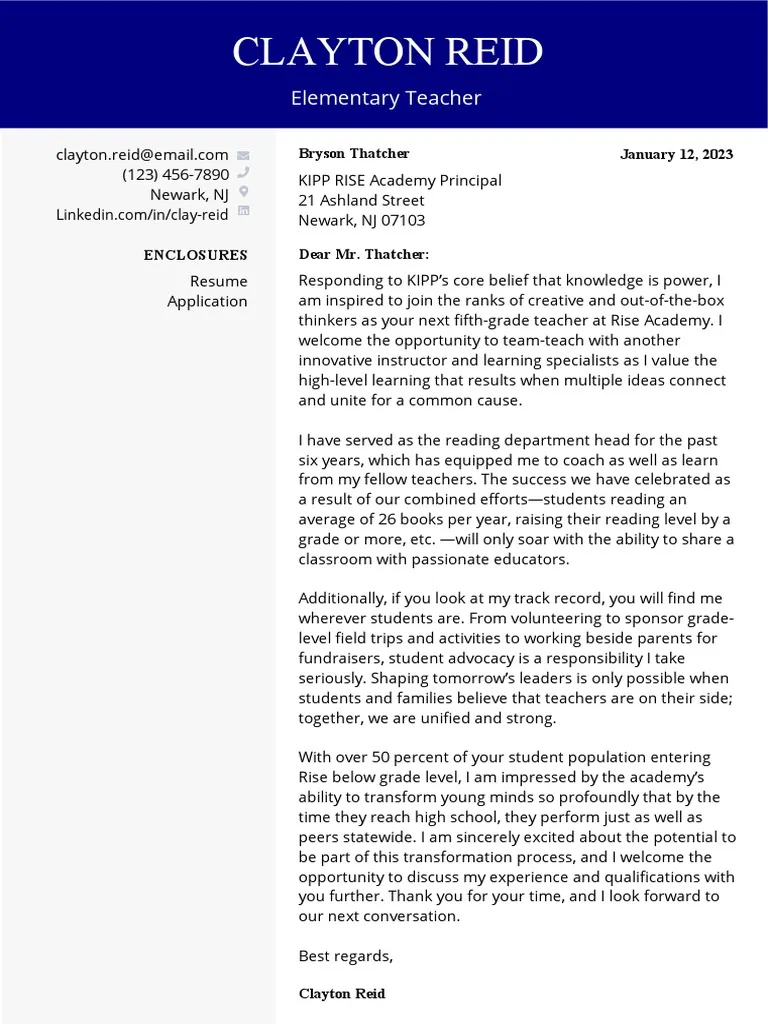
Understanding the Elementary School Teacher Cover Letter
An elementary school teacher cover letter is your first introduction to a potential employer, and it’s your chance to make a strong impression. It’s not just a formality; it’s a crucial document that provides a snapshot of your qualifications, experience, and passion for teaching. Think of it as a sales pitch tailored specifically to the school and the teaching position you’re applying for. This guide will walk you through the essential components and best practices for crafting a compelling cover letter that will grab the attention of hiring managers and increase your chances of landing an interview. A well-written cover letter is often the deciding factor in whether your application proceeds to the next stage, so it’s worth investing time and effort to make it shine. A poorly written cover letter can quickly lead to your application being discarded, no matter how strong your resume may be.
Why a Cover Letter is Crucial for Teachers
In the competitive field of education, a cover letter is your opportunity to stand out from the crowd. It allows you to elaborate on your resume, providing context and depth to your qualifications. While your resume lists your skills and experience, your cover letter allows you to demonstrate your personality, teaching philosophy, and enthusiasm for working with children. It enables you to connect with the hiring manager on a more personal level and showcase your unique strengths. Moreover, it allows you to explain any gaps in your employment history or career changes. A cover letter also demonstrates your writing skills, which are essential for effective communication with students, parents, and colleagues. This gives you the chance to present yourself as a well-rounded and passionate educator, capable of making a significant contribution to the school community. A cover letter also shows that you are detail-oriented and care about making a positive impression, qualities that are highly valued in teachers.
Key Components of an Elementary Teacher Cover Letter

A well-structured cover letter should include several key components to effectively communicate your qualifications. Each section of the cover letter serves a specific purpose, contributing to the overall impact of your application. From the header to the closing, it’s essential to provide clear, concise, and relevant information. This section outlines the essential elements you should include to create a compelling cover letter. By including these elements, you can create a professional and persuasive document that highlights your key strengths and increases your chances of securing an interview. Remember to tailor each component to the specific job and school you are applying to, showcasing your understanding of their needs and values. Remember, the goal is to present yourself as the ideal candidate by highlighting your key strengths and passion for teaching elementary school students.
Header and Contact Information
Start with a professional header that includes your full name, address, phone number, and email address. It’s important to ensure your contact information is up-to-date and easy to read. Also, include the date and the hiring manager’s name and title, if available. This demonstrates attention to detail and professionalism. Use a clear and legible font, and avoid using any creative or overly stylized designs in your header. This information should be consistently formatted across your resume and cover letter to create a cohesive application package. Make sure your email address sounds professional; avoid using nicknames or informal language. Double-check the contact information to ensure its accuracy, as any errors could lead to missed opportunities. A well-formatted header sets a positive first impression.
The Salutation How to Address the Hiring Manager
Use a formal salutation, such as “Dear Mr./Ms./Mx. [Last Name],” if you know the hiring manager’s name. This shows that you’ve taken the time to research the school and personalize your application. If the name is unavailable, use a professional alternative like “Dear Hiring Committee” or “Dear Principal.” Avoid generic greetings like “To Whom It May Concern,” as they can make your letter feel impersonal. Addressing the hiring manager by name demonstrates that you are genuinely interested in the position. Always double-check the spelling of the hiring manager’s name and title to avoid errors that could negatively impact your application. This personal touch can make a significant difference in setting a positive tone from the outset. Proper salutations show respect and attention to detail.
Crafting a Compelling Opening Paragraph

The opening paragraph is your first chance to grab the reader’s attention. Start by clearly stating the position you are applying for and how you learned about the opportunity. Then, briefly highlight your most relevant qualifications and express your enthusiasm for the school and the teaching role. Make your opening concise, engaging, and tailored to the specific job description. This should immediately convey your key strengths and your passion for education. Try to include a sentence or two that reflects your understanding of the school’s values or mission. A strong opening paragraph will make the hiring manager want to read more about you. Also, it sets the tone for the rest of your letter, so make sure it is professional, enthusiastic, and focused on the school’s needs. Your goal is to make a memorable first impression.
Highlighting Your Qualifications and Experience
This section is where you showcase your skills and experience. Focus on the qualifications most relevant to the elementary school teaching position. Provide specific examples of how you have successfully applied these skills in the classroom. Tailor your examples to match the requirements outlined in the job description. Use action verbs to describe your accomplishments and responsibilities. This section should include your educational background, certifications, and any relevant professional development or training. Whenever possible, quantify your achievements to demonstrate the impact of your work. Consider including specific examples of how you have improved student outcomes, implemented innovative teaching strategies, or contributed to a positive learning environment. Your goal is to show how your skills align with the school’s needs. Use details and concrete examples to paint a clear picture of your teaching abilities.
Showcasing Relevant Skills and Achievements
Beyond your qualifications, highlight your key skills. This could include classroom management, curriculum development, differentiation, communication, and collaboration. Provide specific examples of your successes in these areas. For example, describe a time you successfully managed a challenging classroom situation, developed an engaging lesson plan, or collaborated with colleagues to improve student learning. Quantify your achievements whenever possible; for instance, indicate the percentage increase in student test scores or the number of students who benefited from a specific program you implemented. Tailor your list of skills to match the needs of the school and the specific job description. Be sure to explain the context of your accomplishments, highlighting the positive impact of your efforts on student learning and the overall school environment. By showcasing your achievements, you provide concrete evidence of your ability to excel in the role.
Quantifying Your Accomplishments

Whenever possible, use numbers and data to quantify your accomplishments. This adds credibility and demonstrates the impact of your work. Instead of saying, “Improved student performance,” state, “Increased student test scores by 15% within one year.” Instead of saying “Managed a classroom effectively”, you could say “Maintained a positive classroom environment with an average of only 2 disciplinary incidents per week.” Quantifying your achievements helps the hiring manager understand the real value you bring to the table. Use data to show the impact of your teaching on student outcomes, the efficiency of your classroom management strategies, or the success of any initiatives you’ve implemented. When providing quantifiable data, be sure to provide the context, explaining the methods used or the programs implemented to achieve the results. This highlights the significant impact of your contributions and makes your application more compelling.
Demonstrating Passion for Education
Express your passion for teaching and your commitment to student success. Explain why you love teaching and what motivates you to work with children. Demonstrate your knowledge of current educational trends and your commitment to lifelong learning. Show how you create a supportive and engaging learning environment for students. Convey your enthusiasm for the specific school and its mission, and explain why you would be a great fit. Include a short paragraph that outlines your teaching philosophy. Highlight your dedication to fostering a love of learning. By demonstrating your passion, you show the hiring manager that you’re not just looking for a job, but a fulfilling career. Your passion will show through in your letter and make you a more memorable candidate. Your enthusiasm can often be the deciding factor.
The Body Paragraphs: Building Your Case
The body of your cover letter is where you build your case for why you are the best candidate. Use this section to elaborate on the key qualifications and experiences. This is where you provide more in-depth examples of your successes and demonstrate how your skills and experience align with the school’s needs and values. Explain how your experience in curriculum development or classroom management has prepared you to meet the challenges. Ensure that your writing is clear, concise, and focused on the school’s requirements. This should include several well-structured paragraphs, each focusing on a specific aspect of your qualifications and experience. Each paragraph should support your overall message, demonstrating your suitability for the position and making your application more persuasive.
Tailoring Your Letter to the Specific School

Always tailor your cover letter to the specific school and the job you are applying for. Research the school’s mission, values, and programs, and then highlight how your skills and experience align with their needs. Mention any specific initiatives or programs that resonate with you. This shows you are genuinely interested in the opportunity and have taken the time to learn about the school. Tailor your skills and experience to the specific requirements in the job description. If the school emphasizes technology integration, highlight your experience with educational technology. If the school promotes collaborative learning, showcase your experience working in teams. This personalization sets your application apart. Personalization can involve mentioning specific programs or initiatives offered by the school or highlighting how your teaching philosophy aligns with the school’s mission and values. Show that you want to work at that school, not just any school.
Emphasizing Your Teaching Philosophy and Approach
Clearly articulate your teaching philosophy and approach. Briefly describe your beliefs about education, student learning, and classroom management. Explain how you create a positive and engaging learning environment. Describe your approach to differentiated instruction, assessment, and parent communication. By clearly stating your philosophy, you provide insight into your teaching style and how you create a positive learning environment. Be sure to align your teaching philosophy with the school’s values and mission. Show how you foster a love of learning, promote student growth, and cultivate a supportive classroom community. Consider explaining how your teaching philosophy supports the school’s overall educational goals. Highlight your dedication to creating a positive and inclusive learning environment. This showcases your understanding of educational principles.
Providing Examples of Classroom Success
Provide specific examples of your classroom successes to support your claims. Describe situations where you’ve implemented effective teaching strategies, improved student outcomes, or resolved classroom challenges. Use the STAR method (Situation, Task, Action, Result) to structure your examples. This helps to present your achievements in a clear and concise manner. This could include examples of successful lesson plans, innovative projects, or classroom management techniques. Focus on positive outcomes. Instead of simply listing your responsibilities, describe what you accomplished and the impact it had. When describing your examples, be as specific as possible, including details about the students, the context, and the specific steps you took. The goal is to demonstrate your ability to create a positive impact in the classroom and provide evidence of your effectiveness.
The Closing Paragraph: Making a Strong Impression

The closing paragraph should summarize your key qualifications and reiterate your enthusiasm for the position. Express your gratitude for the hiring manager’s time and consideration. Clearly state your availability for an interview and how the hiring manager can contact you. This is your final opportunity to make a strong impression and ensure that the hiring manager remembers you. Make it easy for the hiring manager to take the next step by including a clear call to action. Your closing paragraph is as important as your opening, as it leaves the reader with a final impression. Consider adding a brief and compelling statement that reflects your passion for teaching and highlights your commitment to student success. End your cover letter with a professional closing, like “Sincerely” or “Respectfully,”, followed by your typed name.
Expressing Gratitude and Offering Availability
Express your gratitude for the hiring manager’s time and consideration. Reiterate your enthusiasm for the position. State your availability for an interview and the best way to contact you. Thank the hiring manager for considering your application. This is a courteous and professional way to end your cover letter. You can express your appreciation in a single, concise sentence. Make it easy for the hiring manager to contact you by providing your phone number and email address. Reiterate your interest in the position, restating your commitment to student success. Make a positive and lasting impression.
The Call to Action Encouraging Contact
Include a clear call to action, encouraging the hiring manager to contact you. State that you are available for an interview and provide your contact information. Make it easy for the hiring manager to take the next step by providing a clear path. Consider a sentence like: “I am eager to learn more about this opportunity and discuss how my skills and experience can benefit your students. I am available for an interview at your earliest convenience.” This increases your chances of receiving an interview. Including a clear call to action is a crucial step that encourages the hiring manager to take action and contact you. This increases your chances of receiving an interview.
Proofreading and Formatting Tips

Before submitting your cover letter, carefully proofread it for any errors. Errors in grammar, spelling, and punctuation can create a negative impression. Ensure your cover letter is well-formatted and easy to read. A polished cover letter demonstrates professionalism and attention to detail. Taking the time to proofread and format your letter correctly is a crucial step in making a positive first impression. Poor grammar and formatting can distract the reader and undermine your application. Properly formatting your cover letter is critical to creating a professional and polished document.
Common Mistakes to Avoid in Your Cover Letter
Avoid common mistakes. Refrain from generic cover letters. Always tailor your letter to the specific school and job description. Avoid typos and grammatical errors. Use a professional tone and avoid informal language. Do not include irrelevant information or overly long paragraphs. Steer clear of negative language or complaining about previous employers. Focus on your strengths and how you can contribute. It’s crucial to avoid common pitfalls that can undermine your application. Review your cover letter to ensure it is free from common errors, like typos, grammatical mistakes, and formatting issues. Make sure you haven’t included generic statements that could apply to any job, as this shows a lack of personalization and genuine interest in the position. Also avoid using jargon or technical terms that the hiring manager may not understand.
Proofreading for Errors and Clarity
Proofread your cover letter multiple times. Check for errors in grammar, spelling, and punctuation. Read your cover letter aloud to catch any awkward phrasing or sentences. Have a friend or family member review your cover letter for clarity. A carefully proofread cover letter demonstrates attention to detail, which is a critical quality for teachers. Double-check all names, dates, and contact information to ensure its accuracy. Proofreading is an essential step that ensures your application is free of errors and conveys professionalism. Correct any errors and rewrite any confusing sentences. Accuracy shows your commitment to excellence.
Formatting Your Letter Professionally

Use a professional font, such as Times New Roman, Arial, or Calibri, in a readable size. Maintain consistent formatting throughout your letter. Use clear headings and subheadings to organize your content. Use a standard margin size (1 inch) and use single spacing between lines. The layout and format should be consistent. A well-formatted cover letter is easy to read. This makes a good first impression and makes it easy for the hiring manager to focus on your qualifications. Use a professional font and layout to create a document that is easy on the eyes. Proper formatting demonstrates that you care about making a positive impression, an essential quality for an educator. Make sure that the layout is consistent and visually appealing.
Cover Letter Examples for Elementary Teachers
Review cover letter examples for elementary teachers to get inspiration and guidance. Adapt these examples to fit your own qualifications, experience, and the specific job description. Analyze the structure, language, and tone used in the examples, noting how they highlight the candidate’s strengths and enthusiasm. Cover letter examples can be a valuable resource for teachers. Look for examples of successful cover letters online. By studying various examples, you will gain insights into effective writing strategies. Use them to create your own tailored cover letter. Reviewing samples helps you gain insights. When using examples, be sure to tailor them to your unique qualifications and the specific job for which you are applying.