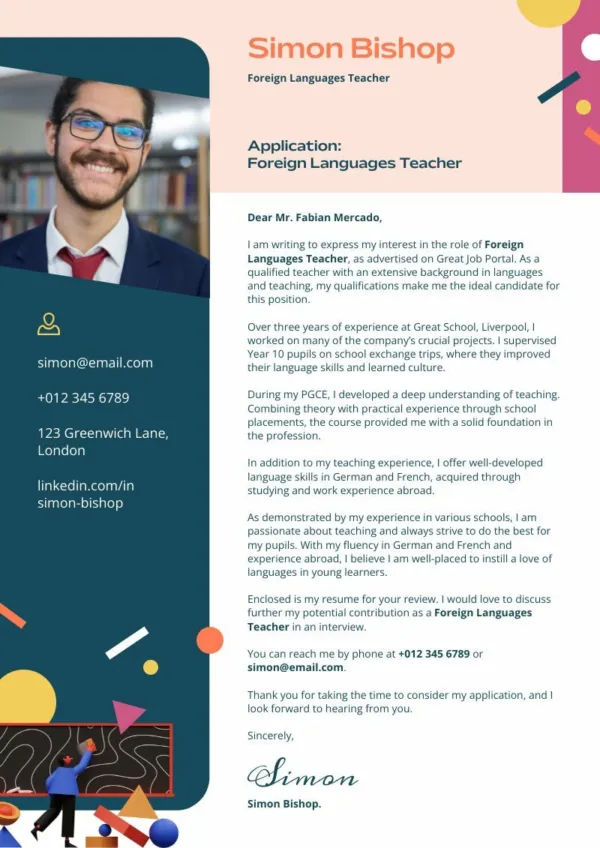
Crafting a Compelling Teacher Cover Letter
A well-crafted teacher cover letter is your first opportunity to make a strong impression and secure an interview. It goes beyond your resume, allowing you to showcase your personality, passion for teaching, and how your skills align with the specific needs of the school. It’s not merely a formality; it’s a crucial marketing tool that can significantly increase your chances of landing your dream teaching position. This guide provides a comprehensive template and strategies to help you create a cover letter that will capture the attention of hiring managers and set you apart from the competition, ultimately leading to more interview opportunities.
Understanding the Purpose of a Cover Letter
The primary purpose of a teacher cover letter is to introduce yourself, express your interest in a specific teaching position, and highlight your qualifications. Unlike a resume, which provides a factual overview of your experience and skills, the cover letter allows you to tell your story and demonstrate how your values and teaching philosophy align with the school’s mission and values. It provides context for your resume, elaborating on key achievements, explaining career changes, and expressing your enthusiasm for the role and the school community. Consider it as your personal introduction to the hiring team.
Highlighting Your Qualifications

Your cover letter is your chance to shine a light on the qualifications that make you an ideal candidate. Focus on the aspects of your experience and skills that directly relate to the job description. Don’t just list your qualifications; show how you’ve applied them and the positive results you’ve achieved in previous roles. Use specific examples to illustrate your teaching abilities, classroom management skills, and ability to engage students. This is where you can make your resume come alive with vivid details and concrete proof of your competence.
Skills to Showcase in Your Cover Letter
When crafting your cover letter, highlight essential teaching skills. This includes curriculum development, lesson planning, classroom management, and student assessment. Mention your ability to differentiate instruction, cater to diverse learning needs, and create a positive and inclusive classroom environment. Demonstrating proficiency in technology integration and communication skills, both with students and parents, is also crucial. Furthermore, showcase your commitment to ongoing professional development and your understanding of current educational trends and best practices.
Education and Certifications
Clearly state your educational background, including the degrees you hold, the institutions you attended, and the dates of graduation. Mention any teaching certifications you possess, such as a state teaching license or specialized certifications in areas like special education or ESL. If you’re a recent graduate, highlight relevant coursework, student teaching experiences, and any academic achievements. Ensure that your certifications align with the requirements of the position you are applying for.
Experience and Achievements

Provide specific examples of your teaching experience and the accomplishments you’ve achieved. Describe your roles, responsibilities, and the grades or subjects you’ve taught. Quantify your achievements whenever possible; for example, mention the percentage increase in student test scores, the number of students who participated in your extracurricular activities, or any awards or recognitions you’ve received. Use action verbs to describe your contributions and the positive impact you had on students and the school.
Tailoring Your Cover Letter
Generic cover letters are easily spotted and often discarded. To make your application stand out, tailor your cover letter to each specific job and school. This demonstrates your genuine interest in the position and shows that you’ve taken the time to understand the school’s values, mission, and needs. Mentioning the school by name and referencing specific programs, initiatives, or values shows that you’ve done your research and are genuinely interested in becoming a part of their community.
Researching the School and Position
Before you start writing, research the school thoroughly. Visit their website to learn about their mission, values, and educational philosophy. Explore their programs, extracurricular activities, and any special initiatives they have. Understand the specific requirements of the position you are applying for, including the grade level, subject matter, and any specific skills or qualifications they are seeking. Use this information to customize your letter and demonstrate that you are a good fit for their school.
Customizing Your Letter

Once you have a good understanding of the school and position, customize your cover letter to reflect your knowledge. Address the specific requirements and preferences mentioned in the job description. Highlight your skills and experiences that align with the school’s needs and values. Mention any specific programs or initiatives that resonate with you and explain why you are interested in contributing to their community. By customizing your letter, you show that you are not just sending out a generic application, but that you are genuinely interested in the specific opportunity.
Formatting and Structure
A well-formatted cover letter is easy to read and visually appealing. Use a clear and professional font, such as Times New Roman or Arial, and maintain consistent formatting throughout the document. Keep the letter concise, aiming for one page in length, unless the job description specifically requests otherwise. Use proper spacing between paragraphs and sections to ensure readability. Proofread the entire document carefully to eliminate any typos or grammatical errors.
Header and Contact Information
At the top of your cover letter, include your name, address, phone number, and email address. If you have a professional website or online portfolio, include the link as well. Below your contact information, include the date and the hiring manager’s name and address. If the name of the hiring manager is not available, address the letter to the hiring committee or the principal of the school. Ensure the formatting is consistent and easy to read.
Opening Paragraph

The opening paragraph should immediately grab the reader’s attention. State the specific position you are applying for and where you saw the job posting. Briefly express your enthusiasm for the opportunity and the school. Mention a key skill or qualification that makes you a strong candidate. Avoid generic opening lines like “I am writing to express my interest.” Instead, aim for a compelling hook that makes the reader want to continue reading.
Body Paragraphs
The body paragraphs are where you expand on your qualifications and experiences. Use these paragraphs to highlight your skills, achievements, and teaching philosophy. Provide specific examples of how you’ve applied your skills in the classroom and the positive outcomes you’ve achieved. Tailor these paragraphs to align with the requirements and values of the school. Quantify your achievements whenever possible and use action verbs to describe your contributions. Aim to create a narrative that paints a clear picture of your abilities and enthusiasm.
Closing Paragraph
In the closing paragraph, reiterate your interest in the position and the school. Thank the hiring manager for their time and consideration. Express your availability for an interview and provide your contact information again. Maintain a professional and enthusiastic tone. Make it clear that you are eager to learn more about the opportunity and discuss how you can contribute to the school’s success. End with a formal closing, such as “Sincerely” or “Respectfully,” followed by your name.
Writing an Effective Cover Letter

Writing an effective cover letter requires careful attention to detail and a strategic approach. It is not just a formality; it’s your opportunity to present yourself as a well-rounded professional and a dedicated educator. By incorporating the best practices, you increase your chances of making a positive first impression and securing that all-important interview. Remember that your cover letter is not simply a summary of your resume but a narrative showcasing why you are the right fit for the teaching position and the school.
Using Action Verbs
Action verbs bring your cover letter to life and make your achievements more impactful. Use strong, dynamic verbs to describe your accomplishments and responsibilities. Instead of saying “Responsible for,” use verbs like “Developed,” “Implemented,” “Managed,” “Led,” “Created,” or “Collaborated.” Action verbs make your descriptions more vivid and demonstrate your proactive approach to teaching. This helps to show what you did and the impact of your actions.
Quantifying Your Achievements
Quantifying your achievements provides concrete evidence of your impact and success. Whenever possible, use numbers and statistics to demonstrate your accomplishments. For instance, instead of saying “Improved student test scores,” say “Increased student test scores by 15%.” Instead of “Managed classroom effectively,” say “Managed a classroom of 25 students with consistent positive results.” This helps the hiring managers see the tangible benefits you bring to a teaching position.
Proofreading and Editing

Proofreading and editing your cover letter is crucial for ensuring it’s polished and professional. Carefully check for any typos, grammatical errors, or inconsistencies. Read the letter aloud to catch any awkward phrasing. Ask a friend, family member, or career counselor to review it and provide feedback. A well-edited cover letter demonstrates your attention to detail and professionalism and ensures that you make a positive impression.
Common Mistakes to Avoid
Avoiding common mistakes is just as important as incorporating best practices when creating your cover letter. These errors can undermine your application and diminish your chances of getting an interview. Review your cover letter carefully to ensure that you avoid these common pitfalls.
Generic Letters
Avoid sending generic cover letters that can be used for any job. Tailor each letter to the specific position and school to demonstrate your genuine interest and qualifications. Show that you have researched the school and understand their needs. Use the job description as your guide and highlight your skills and experiences that align with their requirements.
Typos and Grammatical Errors
Typos and grammatical errors can create a negative impression, suggesting that you lack attention to detail. Carefully proofread your letter multiple times and consider using spell-check and grammar-check tools. Ask someone else to review your letter for any errors you may have missed. A polished cover letter reflects your professionalism and commitment to excellence.
Ignoring the Specifics of the Job
Ignoring the specifics of the job is a major mistake. Failing to address the requirements and preferences outlined in the job description shows a lack of attention to detail. Tailor your cover letter to the specific position and highlight the skills and experiences that are most relevant. Demonstrate that you understand what the school is looking for and that you are a good fit for their community.
Submitting Your Cover Letter
Submitting your cover letter correctly is the final step in the application process. Follow the instructions carefully and make sure you’ve included all the required materials. Ensure that your cover letter is formatted correctly, is easy to read, and is free of errors. Proofreading and editing is essential before submitting your cover letter.
Following Instructions
Always follow the instructions provided in the job posting. If the posting specifies a particular format or method of submission, adhere to these guidelines. If they ask for a cover letter, a resume, and any additional documents, make sure to include them. Failure to follow instructions can make your application to be instantly rejected.
Sending Your Letter
When sending your cover letter, use a professional email address and a clear subject line. If you are sending a hard copy, make sure it is printed on high-quality paper and neatly presented. Double-check that all contact information is accurate, so the hiring manager can easily contact you. Ensure your letter is well-formatted, easy to read, and free of errors. With a well-crafted cover letter, you’re one step closer to securing an interview and landing your dream teaching position.