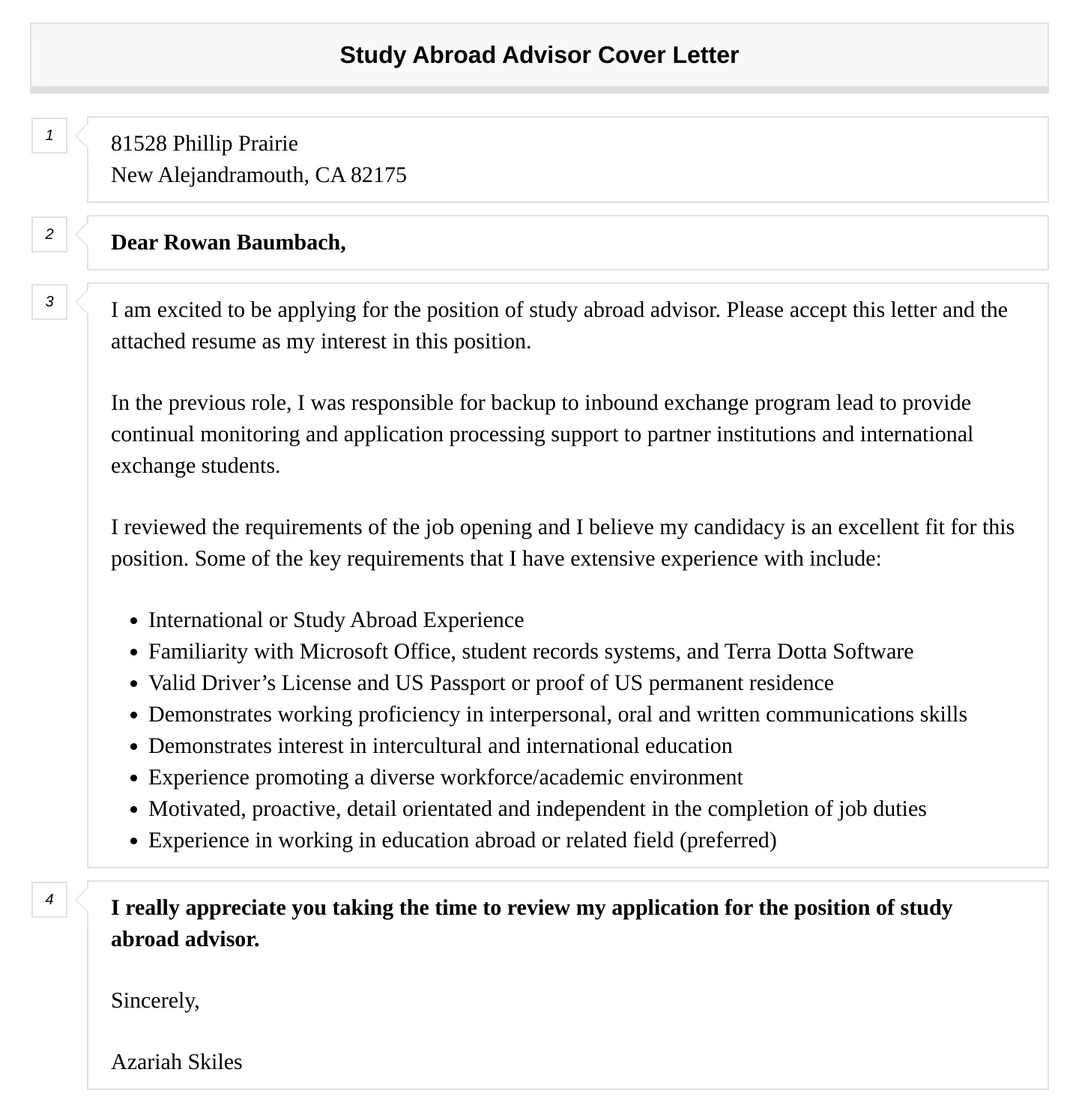
Crafting a Study Abroad Advisor Cover Letter
A compelling cover letter is your first introduction to a potential employer. For a Study Abroad Advisor position, it’s more than just a formality; it’s your opportunity to showcase your understanding of the role, your passion for international education, and your ability to contribute to the institution’s mission. This guide will provide you with a step-by-step approach to create a cover letter that captures the attention of hiring managers and significantly increases your chances of landing your dream job. By following these guidelines, you will be well-equipped to articulate your qualifications and enthusiasm effectively. Remember, the goal is not just to apply but to stand out from the crowd and demonstrate why you are the perfect fit for the position.
Understanding the Role of a Study Abroad Advisor
Before crafting your cover letter, it’s crucial to understand the core responsibilities of a Study Abroad Advisor. This role typically involves guiding students through the process of selecting and applying to study abroad programs, providing pre-departure orientations, and offering support during their time overseas. Advisors work closely with students, faculty, and international partners to ensure a successful and enriching experience. Understanding the multifaceted nature of the role—from administrative tasks to student support—will enable you to highlight the most relevant skills and experiences in your cover letter. This insight will help you frame your qualifications in a way that directly addresses the needs of the position and the institution.
Key Responsibilities and Skills

Study Abroad Advisors require a diverse set of skills. Key responsibilities often include advising students on program selection, managing applications, coordinating pre-departure orientations, and providing ongoing support throughout the study abroad experience. Skills to emphasize in your cover letter include excellent communication (both written and verbal), organizational abilities, intercultural competence, problem-solving skills, and a strong understanding of international education systems. Additionally, demonstrate your ability to work independently and as part of a team, handle confidential information, and adapt to changing circumstances. Highlighting these competencies will demonstrate your readiness and suitability for the position.
Highlighting Relevant Experience
Your cover letter is the ideal place to showcase your relevant experience. This can include previous roles in education, student affairs, or international programs. Clearly describe your accomplishments and responsibilities in past positions, using specific examples to illustrate your skills. For instance, detail how you successfully managed a large number of student applications, organized effective orientation sessions, or resolved issues for students studying abroad. Quantify your achievements whenever possible (e.g., “Increased student participation in study abroad programs by 20%”). Tailor your examples to the specific requirements outlined in the job description to make your experience as relevant as possible.
Showcasing Your Passion for International Education
A genuine passion for international education is a significant asset for a Study Abroad Advisor. Convey your enthusiasm for helping students gain global perspectives and enriching their lives. You can express this through your personal experiences with international travel, study, or work. Briefly share any transformative moments that shaped your interest in the field. In your cover letter, articulate your belief in the power of international education to foster cross-cultural understanding, personal growth, and academic development. Demonstrate your commitment to creating meaningful and impactful experiences for students. Your passion will resonate with the hiring committee and set you apart from other candidates.
Tailoring Your Cover Letter

Avoid using a generic cover letter; instead, customize it for each position you apply for. Tailoring your letter shows the employer that you’ve researched the institution and are genuinely interested in the specific role. Carefully review the job description and highlight the skills and experiences most relevant to the position. Use the institution’s name and address, and address the hiring manager by name if possible. Customizing your cover letter demonstrates your attention to detail and your commitment to the application process. This personalization makes you more memorable and increases your chances of a positive response.
Researching the Institution
Before you start writing, thoroughly research the institution and its study abroad programs. Visit their website to learn about their mission, values, and the specific opportunities they offer. Pay attention to the types of programs they support, the countries they partner with, and any unique features of their international initiatives. Understanding the institution’s approach to international education will allow you to align your skills and experiences with their needs. Use your research to demonstrate your interest and tailor your letter to their specific programs and values. This level of detail shows that you are serious about the opportunity.
Customizing Your Content
Once you have researched the institution, use your findings to customize the content of your cover letter. Align your qualifications with the specific requirements of the job and the institution’s programs. For example, if the institution has a strong focus on programs in a particular region, highlight any relevant experience or knowledge you have in that area. Mention any specific programs or initiatives that appeal to you and explain why you’d be a good fit. Show that you understand the institution’s priorities and how you can contribute to their goals. This focused approach will set your application apart from generic submissions.
Formatting and Tone

Your cover letter’s format and tone are critical in creating a positive impression. Use a professional and easy-to-read font, such as Times New Roman or Arial, with a font size of 11 or 12 points. Maintain a formal and respectful tone throughout the letter. Keep the language clear, concise, and focused. Avoid using jargon or overly complex sentences. The tone should be enthusiastic but professional. Be positive and show confidence in your skills and abilities. Ensure the layout is clean and well-organized, with clear paragraphs and appropriate spacing. This will make your cover letter visually appealing and easier for the hiring manager to read and understand.
Essential Components of Your Cover Letter
Every cover letter should include essential components to convey a complete picture of your qualifications. These components ensure that you present a well-rounded profile and highlight your suitability for the role. A well-structured letter makes it easy for the hiring manager to understand your background and how you can contribute to the institution.
Opening Statement
The opening statement should immediately grab the reader’s attention and clearly state the position you are applying for. Mention where you found the job listing and briefly explain why you are interested in the role. If possible, reference something specific about the institution that caught your interest. Make a strong first impression by expressing your enthusiasm and summarizing your key qualifications. This initial paragraph sets the tone for the entire letter and encourages the hiring manager to continue reading.
Body Paragraphs

The body paragraphs are where you detail your skills, experience, and qualifications. Use separate paragraphs to address the key requirements outlined in the job description. Provide specific examples of your accomplishments and responsibilities, quantifying your achievements whenever possible. For each point, explain how your skills align with the needs of the institution. Tailor the content to demonstrate how you can contribute to their study abroad programs. Use strong action verbs (e.g., managed, coordinated, advised) to make your descriptions more dynamic and engaging. The body should provide a clear and compelling case for your candidacy.
Closing Statement
The closing statement should reiterate your interest in the position and thank the hiring manager for their time and consideration. Reiterate your key qualifications and express your eagerness to discuss the opportunity further. Include a call to action, such as suggesting a meeting or interview. Provide your contact information, including your phone number and email address, for easy communication. A strong closing reinforces your interest and makes it easy for the hiring team to follow up.
Proofreading and Editing
Proofreading and editing are critical steps in ensuring your cover letter is polished and professional. Carefully review your letter for any grammatical errors, spelling mistakes, or typos. Ensure your sentences are clear and concise. Read your letter aloud to catch any awkward phrasing or unclear language. Consider asking a friend, family member, or career advisor to review your cover letter for feedback. A well-edited cover letter demonstrates your attention to detail and commitment to quality. Taking the time to proofread can significantly improve your chances of a favorable response.
Common Mistakes to Avoid

Avoiding common mistakes can drastically improve your cover letter’s effectiveness. These mistakes can detract from your qualifications and leave a negative impression on the hiring manager. By being aware of these pitfalls, you can ensure your cover letter highlights your strengths and increases your chances of securing an interview.
Lack of Specificity
One of the most common mistakes is a lack of specificity. Avoid using general statements or vague descriptions of your skills and experience. Instead, provide concrete examples and quantifiable achievements. For example, instead of saying “I have experience managing student applications,” specify the number of applications you managed or the percentage increase in applications under your supervision. Detail the methods you used, and the results you achieved. Specificity demonstrates your practical skills and your ability to deliver results, making your cover letter more compelling.
Generic Language
Generic language is another mistake that can undermine your cover letter. Avoid using clichés, generic phrases, and buzzwords that don’t provide meaningful information about your qualifications. Instead, use strong, action-oriented verbs and precise language. Tailor your language to the specific requirements of the job description and the institution’s mission. Showing that you have put time and thought into your application by avoiding generic language will make your application stand out from the crowd and increase your chances of success.
Ignoring the Job Description

Ignoring the job description is a critical error. Failing to address the specific requirements and qualifications outlined in the job posting shows a lack of attention to detail and a lack of understanding of the role. Carefully review the job description and use it as a guide for structuring your cover letter. Highlight the skills and experiences that align with the stated needs of the position. Ensure that your cover letter directly addresses the key requirements and demonstrates how you can fulfill the responsibilities of the role. Tailoring your letter to the job description shows that you understand the position and are a good fit for the role.
Following Up After Submission
Following up after submitting your cover letter can show your continued interest in the position. Send a polite email to the hiring manager a week or two after the application deadline to inquire about the status of your application. In your email, reiterate your interest, thank the hiring manager for their time, and briefly reference your key qualifications. However, avoid being overly persistent; a single follow-up email is usually sufficient. Following up demonstrates your proactive nature and commitment to the opportunity. This simple step can potentially set you apart and increase your chances of being considered for an interview.