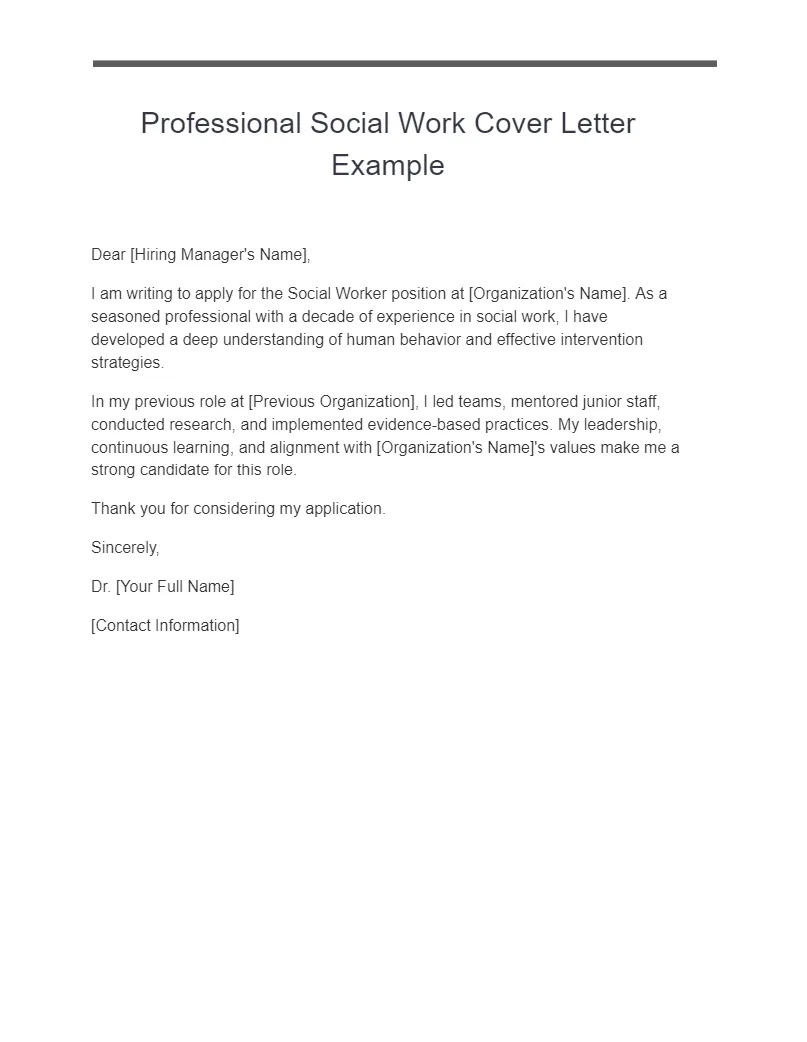
Crafting Your Social Work Cover Letter
A well-crafted social work cover letter is a crucial tool in your job search arsenal. It serves as your introduction to potential employers, allowing you to showcase your skills, experience, and passion for the field. This guide will provide you with a comprehensive social work cover letter template and the essential knowledge to create a compelling letter that stands out from the competition. Learning how to write a good cover letter is a skill that will serve you well throughout your career. Mastering the art of the cover letter is a must for anyone serious about their social work job search.
Understanding the Purpose of a Social Work Cover Letter
The primary purpose of a social work cover letter is to introduce yourself and your qualifications to a potential employer. It should explain why you are interested in the specific position and the organization. Think of it as a narrative that complements your resume. While your resume lists your accomplishments, your cover letter provides context and personality. A strong cover letter demonstrates your communication skills, your understanding of the role, and your enthusiasm for the opportunity. It shows you’re not just sending out generic applications; you’re specifically targeting this job and this organization.
Highlighting Your Social Work Skills and Experiences

Your cover letter is the perfect platform to highlight your relevant skills and experiences. Focus on the skills and experiences that align with the job description. Consider the specific requirements and tailor your letter to showcase how you meet those needs. This may involve discussing your experience with specific populations, your proficiency in certain therapeutic approaches, or your ability to work in a team environment. Use action verbs to describe your accomplishments and quantify your achievements whenever possible. This will make your letter more impactful and memorable. For example, instead of saying “Assisted clients,” say “Provided counseling to 20+ clients weekly, resulting in a 15% decrease in reported anxiety.”
Essential Components of a Social Work Cover Letter
A well-structured social work cover letter template includes several key components. Each element plays a crucial role in conveying your qualifications and making a positive impression. Let’s break down the essential parts.
Contact Information
Begin your cover letter with your contact information, including your full name, address, phone number, and email address. This should be at the top of the letter, either left-aligned or centered. Ensure your email address is professional (e.g., john.doe@email.com) and that your voicemail message is also professional. This allows the employer to easily reach you. Double-check for accuracy to avoid any missed opportunities.
Professional Salutation

Address the hiring manager by name if possible. Research the organization’s website or LinkedIn to find the appropriate contact person. If you cannot find a specific name, use a professional salutation like “Dear Hiring Committee” or “Dear [Department Name] Hiring Team.” Avoid generic salutations like “To Whom It May Concern,” which can make your letter feel impersonal. Addressing the letter to a specific individual shows you’ve done your homework and are genuinely interested in the opportunity.
Opening Paragraph
The opening paragraph should immediately capture the reader’s attention. State the specific position you are applying for and where you found the job posting. Briefly mention your key qualifications or the most relevant experience. Express your enthusiasm for the role and the organization. Consider starting with a brief anecdote or statement that demonstrates your passion for social work or highlights a relevant skill. This will set the tone for the rest of your letter and make the reader want to learn more.
Body Paragraphs
The body paragraphs are where you showcase your skills and experiences in detail. Use this space to provide specific examples of your accomplishments and how they align with the job requirements. Each paragraph should focus on a specific skill or experience, using the STAR method (Situation, Task, Action, Result) to provide a clear and concise overview of your contributions.
Showcasing Relevant Experience

Detail your relevant work experience, including internships, volunteer work, and previous positions. Describe your responsibilities and the populations you have served. Highlight any specialized training or certifications you possess. Make sure to focus on experiences that directly relate to the job you’re applying for. For instance, if the job involves working with children, emphasize your experience with child welfare or related areas. Quantify your accomplishments whenever possible, using numbers to demonstrate the impact of your work.
Demonstrating Passion for Social Work
Express your genuine passion for social work. Explain what motivates you and why you are drawn to this field. Share your values and how they align with the organization’s mission. Show your commitment to serving others and making a positive difference in the community. This can be done by discussing personal experiences that fueled your interest in social work, the populations you are most passionate about serving, or your long-term career goals in the field. Showing you care is key.
Quantifying Your Achievements
Use quantifiable data to demonstrate your achievements. Instead of saying “Improved client outcomes,” say “Increased client success rates by 20% through implementation of a new intervention program.” Use numbers, percentages, and specific examples to showcase the impact of your work. Quantifying your achievements makes your letter more compelling and gives the hiring manager concrete evidence of your abilities. This helps you to stand out from other applicants.
Concluding Paragraph

In your concluding paragraph, reiterate your interest in the position and express your enthusiasm for the opportunity. Summarize your key qualifications and briefly mention how you can contribute to the organization. Thank the hiring manager for their time and consideration, and state your availability for an interview. Be sure to mention that you look forward to hearing from them soon. End on a positive and confident note, reinforcing your suitability for the role.
Complimentary Closing
Use a professional closing, such as “Sincerely,” “Respectfully,” or “Best regards.” Leave a few lines for your signature if you are submitting a hard copy, and then type your full name below the closing. This adds a polished and professional touch to your social work cover letter template.
Formatting Your Social Work Cover Letter
Proper formatting is essential for making your cover letter easy to read and visually appealing. A well-formatted letter shows attention to detail and professionalism. Use these formatting tips when writing your social work cover letter.
Choosing the Right Font and Size

Select a professional and easy-to-read font, such as Times New Roman, Arial, or Calibri. Use a font size between 10 and 12 points. Ensure consistent formatting throughout the letter. Use appropriate spacing (single-spaced within paragraphs, double-spaced between paragraphs) to enhance readability. A clean and well-formatted letter reflects your professionalism and attention to detail. Always ensure that the font is clear and does not distract from the content.
Using Proper Grammar and Spelling
Proofread your cover letter carefully for any grammatical errors or typos. Use a grammar checker to identify and correct mistakes. Ensure your sentences are well-structured and easy to understand. Pay close attention to punctuation. A polished cover letter demonstrates your communication skills and attention to detail. Errors can create a negative impression and may disqualify you from consideration. Accuracy is key.
Proofreading Your Cover Letter
Proofreading is a critical step. Proofread your cover letter multiple times. Consider having a friend, mentor, or career advisor review it as well. Fresh eyes can often catch mistakes you may have missed. Check for consistency in formatting, language, and tone. Ensure the information is accurate and up-to-date. Proofreading shows your commitment to quality and professionalism. It’s the last line of defense against making a negative impression.
Tailoring Your Cover Letter
Tailoring your cover letter to each specific job is essential for demonstrating your genuine interest and qualifications. Generic cover letters are often discarded. Customize your letter to align with the specific requirements and values of the organization. This shows that you’ve invested time and effort in applying for the position, making you a more competitive candidate.
Researching the Organization
Before writing your cover letter, research the organization and the specific role. Visit their website, read their mission statement, and review their recent news and publications. Understand their values, culture, and the populations they serve. This information will help you tailor your letter to align with their needs. You can use this information to make specific references to their initiatives and demonstrate your understanding of their work.
Customizing Your Letter for Each Position
Carefully review the job description and identify the key requirements and desired qualifications. Highlight the skills and experiences that directly match these requirements. Use the language from the job description to demonstrate your understanding of the role. This includes incorporating relevant keywords and phrases. Show how your background and skills make you the ideal candidate. Customize each letter, don’t just send the same document to every employer.
Social Work Cover Letter Template: Best Practices
Following best practices can significantly increase your chances of success. Adhere to these guidelines to make your social work cover letter as effective as possible.
Reviewing Cover Letter Samples
Reviewing cover letter samples can provide valuable inspiration and guidance. Search online for social work cover letter samples and templates. Pay attention to the formatting, tone, and content. Adapt the samples to reflect your own skills and experience. Avoid simply copying a sample; instead, use them as a starting point to create your own unique and compelling letter.
Seeking Feedback
Seek feedback from trusted sources, such as career advisors, mentors, or experienced social workers. Ask them to review your cover letter and provide constructive criticism. They can offer insights into your writing style, content, and overall presentation. Be open to suggestions and willing to revise your letter based on their feedback. This can help you identify areas for improvement and ensure your letter is as strong as possible.
Avoid Common Mistakes
Be aware of common mistakes to avoid. Avoid generic language, typos, and grammatical errors. Don’t simply restate your resume; provide additional details and context. Don’t include irrelevant information. Avoid negative language or criticizing previous employers. Make sure your cover letter is concise and focused on the job requirements. Keep it brief; aim for one page, if possible. Avoiding these pitfalls will improve your chances of making a positive impression.
By following these guidelines and using the social work cover letter template provided, you can create a compelling cover letter that will impress potential employers and increase your chances of landing your dream job. Remember to tailor your letter to each specific position, highlight your relevant skills and experiences, and demonstrate your passion for social work. Good luck with your job search!