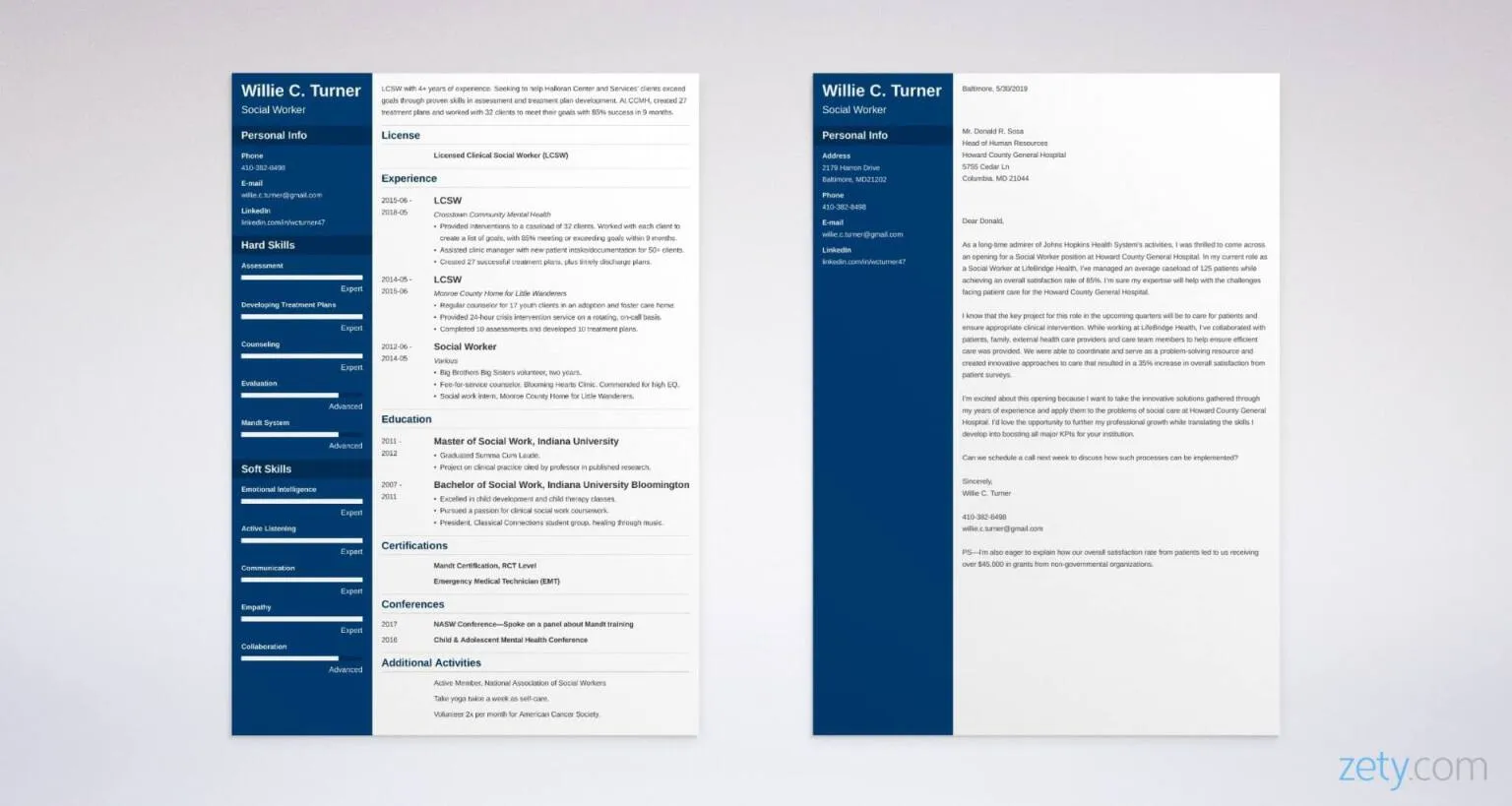
Why a Stellar Social Work Cover Letter Matters
In the competitive field of social work, a well-crafted cover letter is your first impression. It’s your opportunity to showcase your passion, skills, and experience to potential employers. Unlike a resume, which provides a factual overview of your qualifications, a cover letter allows you to tell your story, highlighting why you are the perfect fit for the specific social work position. It demonstrates your communication skills, your understanding of the role, and your enthusiasm for the organization’s mission. A compelling cover letter can set you apart from other applicants, securing you an interview and ultimately, the job.
Highlighting Your Social Work Skills & Experience
Your cover letter is the perfect platform to showcase your relevant skills and experiences. Begin by identifying the key skills required for the social work position you’re applying for. Then, provide specific examples from your past experiences where you demonstrated these skills. For instance, if the job description emphasizes crisis intervention, describe a situation where you successfully de-escalated a crisis and the positive outcome. If teamwork is crucial, highlight your collaborative efforts in a previous role. Always tailor your skills section to match the requirements of the specific job, emphasizing the qualifications that align best with the position’s needs. This targeted approach immediately shows the employer that you understand what they’re looking for.
Emphasizing Relevant Social Work Experience

When highlighting your experience, go beyond simply listing your job titles and responsibilities. Instead, focus on what you accomplished in each role. Use the STAR method (Situation, Task, Action, Result) to provide context and demonstrate your abilities. Describe the situation you faced, the task you needed to complete, the specific actions you took, and the positive results you achieved. For instance, if you worked with vulnerable populations, describe the challenges they faced, the support you provided, and how your efforts improved their well-being. This approach brings your experience to life and shows the employer the tangible value you bring to the table. This approach makes the employer understand your value and achievements.
Showcasing Your Achievements and Impact
Don’t be shy about showcasing your achievements. Social work is about making a difference, so highlight the impact you’ve made in previous roles. Did you improve client outcomes? Did you implement a new program that benefited the community? Did you receive any awards or recognition for your work? Quantify your achievements whenever possible. Instead of saying you ‘managed a caseload of clients’, say you ‘successfully managed a caseload of 40 clients, resulting in a 15% increase in client satisfaction’. Showing measurable results demonstrates your effectiveness and your commitment to achieving positive outcomes.
Quantifying Your Accomplishments in Social Work
Numbers speak volumes. Whenever possible, use quantifiable data to illustrate your accomplishments. Instead of saying you ‘helped many clients’, state that you ‘assisted over 100 clients with accessing essential resources’. If you improved client outcomes, specify the percentage of improvement. For example, ‘reduced the number of client relapses by 20% through implementing a new counseling approach’. This level of detail provides concrete evidence of your skills and contributions, making your cover letter much more impactful. Quantifiable accomplishments give the employer a strong reason to hire you.
Tailoring Your Cover Letter for Each Position

One of the biggest mistakes job seekers make is sending out generic cover letters. Each social work position is unique, requiring different skills and experiences. Therefore, it’s crucial to tailor your cover letter for each job you apply for. Carefully review the job description, identify the key requirements, and highlight the skills and experiences that directly align with those needs. Use the same keywords and phrases used in the job description to demonstrate that you understand the role and possess the necessary qualifications. This level of customization shows the employer that you are genuinely interested in the position and have taken the time to understand their specific needs.
Researching the Organization
Before you start writing, thoroughly research the organization you are applying to. Understand their mission, values, and the specific services they provide. This information will help you tailor your cover letter to align with their objectives and demonstrate your genuine interest. Visit their website, read their annual reports, and explore their social media channels to gain a comprehensive understanding. Mentioning specific initiatives or programs that resonate with you shows that you have taken the initiative to learn about the organization and that you are a good fit for their culture. Knowing about the organization shows a level of care and commitment.
Customizing Your Letter
Once you have researched the organization, customize your cover letter accordingly. Address your letter to the hiring manager, if possible. Use specific examples from your experience that align with the organization’s mission and values. For example, if the organization prioritizes community outreach, highlight your experience in community engagement and how you contributed to the well-being of vulnerable populations. If they emphasize a particular approach to social work, such as trauma-informed care, mention your training and experience in that area. This level of personalization demonstrates your understanding of the organization and enhances your chances of getting noticed.
Formatting Your Social Work Cover Letter

The format of your cover letter is just as important as its content. A well-formatted letter is easy to read and visually appealing. Use a professional font, such as Times New Roman or Arial, and maintain a consistent font size. Keep the letter concise, ideally within one page. Use clear headings and subheadings to break up the text and make it easy to scan. Use bullet points to highlight key skills and accomplishments. Ensure your letter is free of errors and typos. A clean, organized format reflects your professionalism and attention to detail.
Using a Professional Tone
Maintain a professional and respectful tone throughout your cover letter. Avoid slang, jargon, or overly casual language. Use formal language and address the hiring manager appropriately. Show enthusiasm for the position and the organization, but avoid being overly effusive. Clearly articulate your skills and experience, but avoid making grandiose claims that you cannot substantiate. Your goal is to present yourself as a knowledgeable, capable, and passionate social worker who is a strong fit for the role. This creates a positive impression.
Proofreading and Editing
Proofreading and editing your cover letter is absolutely essential. Errors, typos, and grammatical mistakes can undermine your credibility and potentially disqualify you from consideration. Read your letter carefully multiple times. Ask a friend or family member to proofread it as well. Use spell check and grammar check tools, but don’t rely on them entirely. Pay attention to sentence structure, word choice, and overall clarity. A polished, error-free cover letter demonstrates your attention to detail and your commitment to excellence. This shows your quality of work.
Common Mistakes to Avoid in Your Cover Letter

Avoid these common pitfalls to ensure your cover letter makes a positive impression. These can easily make or break your chances of getting an interview. It’s important to note that an excellent cover letter will help you stand out from the other candidates.
Generic Language
Avoid using generic language that could apply to any job. Instead, be specific and tailored to the social work position you are applying for. Avoid phrases like ‘hard worker’ or ’team player’. Use examples to demonstrate those qualities. For instance, instead of saying ‘I am a team player’, describe a situation where you collaborated effectively with colleagues to achieve a positive outcome. Generic statements demonstrate a lack of effort and can make your letter appear uninspired.
Typos and Grammatical Errors
Typos and grammatical errors are a major turnoff. They suggest a lack of attention to detail and a lack of professionalism. Always proofread your cover letter carefully and ask someone else to review it before submitting. Mistakes, even small ones, can undermine your credibility and make it appear that you don’t care about the position. It is a reflection of your effort and how you work.
Failing to Address the Specific Requirements

Carefully read the job description and address the specific requirements outlined in the job posting. Failing to address these requirements demonstrates a lack of understanding of the position. Highlight the skills and experiences that match the requirements. Show the hiring manager that you are capable of the work. It shows that you are a strong candidate for the position. Addressing the specific requirements is very important when applying for the job.
Example Social Work Cover Letter
Your Name Your Address Your Phone Number Your Email
Date Hiring Manager Name (if known) Organization Name Organization Address
Dear [Hiring Manager Name],
I am writing to express my keen interest in the Social Worker position at [Organization Name], as advertised on [Platform]. With [Number] years of experience in social work, I am eager to bring my skills in [Skill 1], [Skill 2], and [Skill 3] to your team.
In my previous role at [Previous Organization], I successfully managed a caseload of [Number] clients, providing comprehensive support services including [Service 1] and [Service 2]. I am particularly proud of [Achievement], which resulted in [Quantifiable Result].
I am passionate about [Organization’s Mission] and I am impressed by [Specific Program or Initiative]. I am confident that my skills and experience align perfectly with your requirements, and I am eager to contribute to your mission.
Thank you for your time and consideration. I have attached my resume for your review and look forward to hearing from you soon.
Sincerely, [Your Name]
Cover Letter Template for Social Work Positions
Use a template to create your cover letter. Here’s a basic template you can adapt:
[Your Name] [Your Address] [Your Phone Number] [Your Email]
[Date]
[Hiring Manager Name] (If known, otherwise use title) [Hiring Manager Title] [Organization Name] [Organization Address]
Dear [Mr./Ms./Mx. Last Name or Hiring Manager],
[Opening Paragraph - State the position you are applying for, where you saw the advertisement, and your enthusiasm for the role.]
[Body Paragraph 1 - Highlight your most relevant skills and experience. Mention how your qualifications match the job requirements. Provide specific examples.]
[Body Paragraph 2 - Elaborate on your achievements and the impact of your work. Quantify your accomplishments whenever possible. Show the employer your value.]
[Body Paragraph 3 - Express your interest in the organization and its mission. Demonstrate your understanding of the organization’s work and values. Explain why you are a good fit.]
[Closing Paragraph - Thank the hiring manager for their time and consideration. Express your eagerness for an interview. Include a call to action to contact you.]
Sincerely, [Your Name]
Final Thoughts on Writing a Winning Cover Letter
Writing a compelling cover letter is a critical step in the job application process. By following the guidelines outlined in this article, you can create a cover letter that showcases your skills, experience, and passion for social work. Remember to tailor each letter to the specific position, highlight your achievements, and use clear, concise language. Proofread carefully, and always present yourself professionally. A well-crafted cover letter can significantly increase your chances of securing an interview and landing your dream job in the field of social work. A cover letter can show the employer that you are the best person for the job.