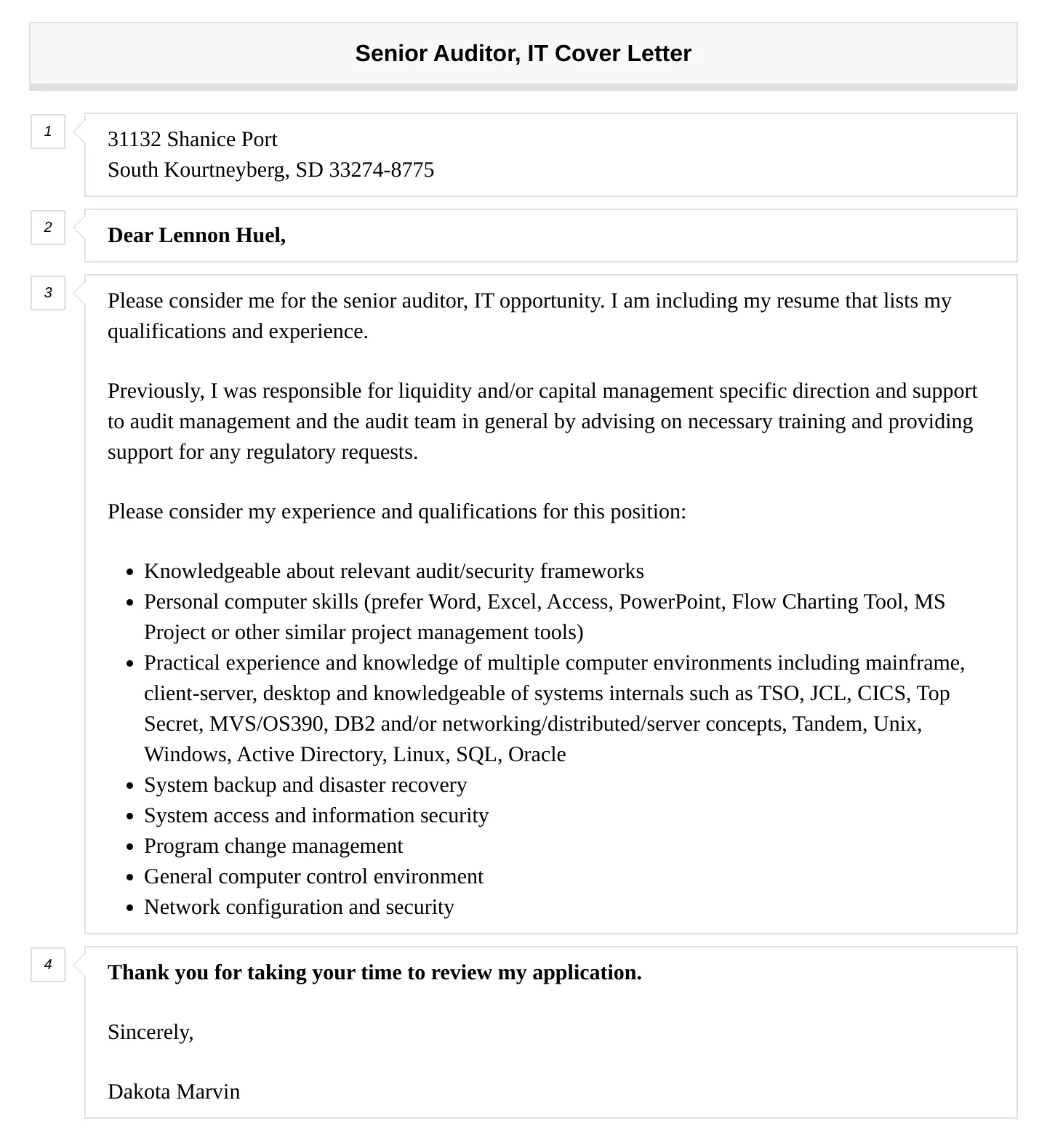
A Senior Auditor cover letter is your first impression on a potential employer. It’s your chance to showcase your skills, experience, and enthusiasm for the role. A well-crafted cover letter can significantly increase your chances of landing an interview, while a poorly written one could lead to your application being overlooked. This guide provides comprehensive advice on how to write a Senior Auditor cover letter that impresses and gets you noticed. We’ll delve into every aspect, from research to formatting, equipping you with the knowledge to create a compelling document that sets you apart from the competition. Remember, your cover letter is not just a formality; it’s a powerful tool in your job search arsenal.
Crafting a Powerful Senior Auditor Cover Letter
Crafting a compelling cover letter is an art. It is more than a summary of your resume; it’s your opportunity to tell a story and demonstrate your genuine interest in the company and the position. This involves thorough preparation and a strategic approach to ensure every element works together to create a persuasive document. By following key best practices, you can create a cover letter that not only meets the requirements but also actively convinces the recruiter or hiring manager that you are the perfect candidate.
Researching the Company & Role
Before starting to write your cover letter, proper research is essential. Understanding the company and the specific requirements of the Senior Auditor role will allow you to tailor your letter to resonate with the employer. Demonstrating this understanding shows initiative and a genuine interest in the opportunity, both of which are critical for capturing the attention of the hiring manager. The more you know, the better you can align your skills and experience with the employer’s needs and expectations.
Understanding the Company’s Mission and Values

Explore the company’s mission, values, and culture. Visit their website, read recent news articles, and review their social media presence. Identify what the company prioritizes – is it innovation, employee development, or customer satisfaction? Look for keywords and themes that you can integrate into your cover letter to demonstrate your alignment with their values. Understanding their core principles allows you to position yourself as someone who not only has the skills but also shares the company’s vision. Use their mission statement as a framework for expressing how you can contribute to their goals.
Analyzing the Job Description
Carefully review the job description. Highlight the key skills, experiences, and qualifications the employer is seeking. Identify the most important responsibilities and expectations. Use this information to customize your cover letter, emphasizing how your experience aligns with their needs. Ensure you address each requirement, using examples from your past experiences. Make sure to incorporate keywords from the job description to help your cover letter pass through applicant tracking systems (ATS) and catch the eye of the recruiter.
Highlighting Relevant Experience & Skills
Your cover letter should highlight your most relevant experience and skills, focusing on what makes you the best fit for the role. This is where you showcase your qualifications and demonstrate how you meet the employer’s needs. Avoid simply restating your resume. Instead, provide specific examples and achievements that prove your capabilities and contributions in previous roles. This ensures your letter is not just informative but also persuasive, demonstrating your value to the organization.
Quantifying Achievements

Quantify your achievements whenever possible. Use numbers and metrics to demonstrate the impact of your work. For example, instead of saying “Improved audit efficiency,” say “Improved audit efficiency by 15% through the implementation of new software.” Quantifying your accomplishments provides concrete evidence of your skills and makes your cover letter more compelling. Use data to show how you have saved costs, increased revenue, improved processes, or enhanced compliance in your previous roles. This helps the employer understand the tangible benefits of hiring you.
Demonstrating Technical Skills
Senior Auditor roles require a strong foundation of technical skills. Be sure to highlight skills such as knowledge of auditing standards (e.g., GAAP, IFRS), experience with audit software (e.g., ACL, IDEA), and proficiency in data analysis techniques. Provide examples of how you have applied these skills in your previous roles. For instance, you could describe your experience in leading audit teams, performing risk assessments, and preparing financial statements. These details show the employer that you possess the necessary expertise to excel in the position.
Showcasing Soft Skills
While technical skills are crucial, soft skills are equally important. Highlight your communication, leadership, problem-solving, and teamwork abilities. Give examples of how you have successfully collaborated with teams, resolved complex issues, and communicated findings to stakeholders. For instance, describe your experience in presenting audit results to management or training junior auditors. Showing your ability to work well with others and lead effectively is a critical aspect of presenting yourself as a well-rounded candidate.
Structuring Your Cover Letter Effectively

A well-structured cover letter is easy to read and conveys your message clearly. It should follow a standard format, typically consisting of an opening paragraph, body paragraphs, and a closing paragraph. Each section should serve a specific purpose, building a coherent narrative that highlights your qualifications and interest in the role. Ensure your writing is concise, well-organized, and professional. A structured approach allows you to present your skills and experience in a logical and persuasive manner.
The Opening Paragraph
Start with a strong opening that immediately grabs the reader’s attention. State the position you’re applying for and how you learned about the opportunity. Briefly mention your most relevant qualifications and express your enthusiasm for the role and the company. Avoid generic opening lines. Instead, try to personalize your introduction to reflect the company’s values or the specific job requirements. For example, if the company is known for its commitment to innovation, start by mentioning how your innovative approach to auditing aligns with their goals.
Body Paragraphs
The body paragraphs are the core of your cover letter. In this section, provide specific examples of your experience and achievements. Use the STAR method (Situation, Task, Action, Result) to structure your responses and provide clear, concise details. Align your skills with the job description’s requirements and emphasize how you have used these skills to achieve successful outcomes in previous roles. Each paragraph should focus on a different aspect of your qualifications, providing a detailed view of your capabilities and contributions.
The Closing Paragraph

Conclude your cover letter with a strong closing paragraph. Reiterate your interest in the position and express your enthusiasm for the opportunity. Include a call to action, such as expressing your availability for an interview or providing your contact information. Thank the reader for their time and consideration. A confident and professional closing reinforces your interest and leaves a positive impression. It’s your final chance to solidify your candidacy and leave a lasting positive impact.
Formatting and Proofreading
The format of your cover letter impacts how the reader perceives your professionalism. It’s essential to follow formatting guidelines to ensure readability and accuracy. Proofreading your letter is equally critical, as errors can undermine your credibility. By paying attention to detail, you can create a polished document that highlights your strengths and makes a positive impression on the hiring manager.
Choosing the Right Font and Layout
Choose a professional and readable font, such as Times New Roman, Arial, or Calibri. Use a font size between 10 and 12 points. Ensure your layout is clean and organized, with clear headings, ample white space, and consistent margins. Avoid using flashy fonts or overly complex layouts. A simple, well-structured design is best. This makes your cover letter easy to read and projects a sense of professionalism. A well-formatted letter ensures your message is easy to follow, making it more likely to be read and understood.
Proofreading for Errors

Proofread your cover letter multiple times. Check for grammatical errors, spelling mistakes, and punctuation errors. Ask someone else to review your letter as a fresh pair of eyes can often catch errors you might miss. Ensure all the information is accurate, including the recipient’s name and the company’s details. Errors can undermine your credibility, so it’s essential to present a polished and error-free document. Take the time to thoroughly review your letter; it is a crucial step in the application process.
Tailoring Your Cover Letter
Tailoring your cover letter to each specific job application is vital. Avoid using a generic cover letter; customize your letter to address the specific requirements of the role and the company’s needs. This shows that you have taken the time to understand the position and are genuinely interested in the opportunity. Personalizing your cover letter increases your chances of being selected for an interview, as it demonstrates your unique fit for the role. Take the time to adapt your letter to each job; it will be worth the effort.
In conclusion, a well-crafted Senior Auditor cover letter is a critical component of your job application. It’s your chance to make a strong first impression, showcase your skills, and express your interest in the role. By following the guidelines outlined in this guide, you can create a compelling cover letter that highlights your qualifications and helps you stand out from the competition. Remember to research the company, tailor your letter to each job, quantify your achievements, and proofread carefully. A well-written cover letter is an investment in your career, increasing your chances of securing an interview and ultimately, landing the job.