Understanding the Importance of a Cover Letter
In the competitive world of job searching, a well-crafted cover letter is your first impression. It’s your opportunity to go beyond the confines of your resume and showcase your personality, passion, and suitability for the role. A sample cover letter job search tool can be invaluable in guiding you. This guide will explain the significance of a cover letter and provide you with the knowledge and tools needed to create a compelling one that grabs the hiring manager’s attention. A strong cover letter can be the deciding factor in whether your application gets noticed or ends up in the digital trash bin. Don’t underestimate its power; it’s your voice, your story, and your chance to shine. Understanding the nuances of how to write a cover letter can significantly boost your chances of landing an interview and ultimately, the job. A carefully constructed cover letter isn’t just a formality; it’s a strategic move in your job search arsenal.
Why a Cover Letter Matters in Your Job Search
Why should you bother with a cover letter? Because it offers you a chance to make a personal connection. While your resume presents your experience, a cover letter allows you to articulate your motivation for the role and demonstrate how your skills align with the company’s needs. It’s your chance to show you’re not just qualified but also genuinely interested. Many companies appreciate a cover letter, seeing it as a sign of a candidate’s seriousness. A cover letter lets you address any potential gaps in your resume or explain why you’re switching careers. It can also highlight your soft skills, like communication and enthusiasm, which are often difficult to convey through a resume alone. Tailoring your cover letter to each job is key, as it shows you’ve done your research and are committed to the specific opportunity.
Key Components of a Cover Letter

A sample cover letter for job search typically includes several essential components that work together to create a cohesive and persuasive document. These elements will make your letter stand out to hiring managers. From the initial salutation to the closing paragraph, each part plays a vital role in conveying your message effectively. Understanding these building blocks will help you construct a cover letter that is both informative and engaging, which is what is needed to move your application to the top of the pile and get you closer to landing an interview. Taking the time to perfect these components will significantly enhance your chances of success in the job application process.
Your Contact Information and Date
Start with your contact details: name, phone number, email, and optionally, your LinkedIn profile URL. This ensures the hiring manager can easily reach you. Include the date below your contact information, and then the hiring manager’s or company’s address. Always use a professional email address. Ensure your contact information is accurate, consistent, and easy to find. Double-check everything to avoid errors. Using a professional format shows attention to detail and respect for the hiring process. This is the foundation of your cover letter and sets the stage for the rest of the content.
Addressing the Hiring Manager
Whenever possible, address the hiring manager by name. This personal touch immediately shows you’ve done your research and are serious about the role. If you can’t find the name, use a professional salutation such as ‘Dear Hiring Manager’. Avoid generic greetings like ‘To Whom It May Concern’, which lack the personal touch. Finding the name of the hiring manager can be a small task, but it is worth the extra effort, as it makes your cover letter more personalized and appealing. Use LinkedIn or the company website to find the appropriate person. This shows initiative and attention to detail, setting a positive tone from the start of your letter.
Crafting a Compelling Opening Paragraph

Your opening paragraph is your hook. It should immediately grab the reader’s attention. State the position you’re applying for and how you found it. Briefly mention something that excited you about the role or the company. The opening paragraph is not just a formality; it is a chance to make a great first impression. Show your enthusiasm, and make a quick connection with the reader. Tailor it to the specific job, showing you understand the requirements. The opening should set a positive and professional tone, inviting the reader to continue. Always state the position you are applying for in this paragraph.
Highlighting Your Skills and Experience
The body of your cover letter is where you showcase how your skills and experience align with the job requirements. Use specific examples to illustrate your accomplishments and quantify your achievements whenever possible. Connect your skills directly to the needs of the job. Use keywords from the job description to show you’ve read it carefully. This part of your cover letter is about convincing the hiring manager that you are the perfect candidate. Use clear and concise language to explain your qualifications. Don’t just list your skills; explain how you’ve used them successfully. Show that you not only meet the requirements but exceed them.
Using Action Verbs
Use strong action verbs to describe your accomplishments. Words like ‘managed,’ ’led,’ ‘developed,’ ‘achieved,’ and ‘implemented’ are more impactful than passive verbs. Action verbs help make your accomplishments more dynamic and compelling. They show initiative and a proactive approach. When you use action verbs, your accomplishments appear more significant and better demonstrate your capabilities. This approach makes your cover letter more engaging and helps you stand out from other candidates.
Quantifying Achievements

Whenever possible, quantify your achievements with numbers. Use metrics to show the impact of your work. For instance, ‘Increased sales by 15% in six months’ is more compelling than ‘Improved sales.’ Numbers provide concrete evidence of your success. This will showcase your value to a prospective employer, and will help the reader to visualize the impact of your work. Quantifying your accomplishments demonstrates your effectiveness and provides concrete proof of your capabilities. This demonstrates your ability to create real results.
Expressing Your Enthusiasm and Fit
Show your genuine interest in the company and the role. Explain why you’re excited about the opportunity and what attracts you to the company’s mission or values. Your enthusiasm will make you memorable. Show how your career goals align with the company’s objectives. Connect your skills and experience to the company’s needs. Your passion can be as crucial as your qualifications. Expressing your enthusiasm can make you appear as a better cultural fit, which is a factor hiring managers take into consideration.
Writing a Strong Closing Paragraph
In your closing paragraph, reiterate your interest and summarize your key qualifications. Thank the hiring manager for their time and consideration. Include a call to action, such as ‘I look forward to hearing from you’ or ‘I am available for an interview at your earliest convenience.’ Keep the tone professional and confident. A good closing paragraph should leave a lasting positive impression. Ensure that you express your eagerness to discuss the role in detail. Make it easy for the hiring manager to contact you.
Formatting and Proofreading Your Cover Letter

The appearance of your cover letter is just as important as its content. A well-formatted and error-free letter demonstrates professionalism and attention to detail. It makes your application easier to read and more appealing. Make sure the layout is easy to read and visually appealing. Always proofread your cover letter. Attention to detail is crucial in the job application process. A polished cover letter can significantly increase your chances of making a positive impression. Your cover letter will provide a reflection of your professionalism to potential employers.
Choosing the Right Font and Layout
Choose a professional font such as Times New Roman, Arial, or Calibri. Keep the font size between 10 and 12 points. Use a standard, easy-to-read font. Ensure your layout is clean and organized, with clear margins. Use bullet points or numbered lists if necessary to highlight key points. Maintain consistent spacing. A well-formatted document is easier to read and makes a better impression. Make sure the formatting is clear and professional.
Proofreading for Errors
Proofread your cover letter meticulously for any spelling, grammar, or punctuation errors. Have someone else review your letter to catch any mistakes you may have missed. Errors can create a negative impression and detract from your qualifications. Pay attention to detail and check for clarity and conciseness. Proofreading is a critical step in the application process. Always make sure the language you are using conveys your value, and shows your qualifications.
Sample Cover Letter Templates

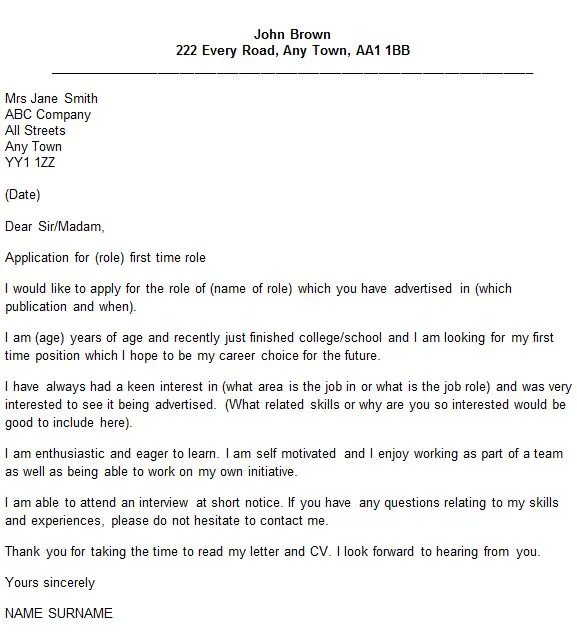
Using a sample cover letter can provide a great starting point. You can find templates online that are specifically designed for different situations. These templates can help you structure your cover letter and provide a framework for highlighting your skills and experience. Be sure to tailor the template to your specific needs. Customizing the template is essential, and will ensure that the cover letter conveys a clear reflection of your experience and skills.
Template for Entry-Level Positions
For entry-level positions, focus on your education, internships, and any relevant coursework or projects. Highlight any transferable skills. Mention your enthusiasm for the company and the role. Show your willingness to learn and grow. Tailor the template to the specific job requirements. This approach shows your adaptability and readiness to start in your field. Ensure that you convey your value.
Template for Experienced Professionals
For experienced professionals, focus on your key accomplishments and how you’ve made an impact in previous roles. Quantify your achievements with numbers. Highlight your relevant skills and expertise. Demonstrate your leadership abilities. Customize the template to showcase your specific experience. This template lets you highlight your experience and skill set, and makes sure the letter reflects your career achievements.
Template for Career Changers

For career changers, address the transition and explain why you’re interested in the new role. Highlight any transferable skills from your previous experience. Show your willingness to learn and adapt. Express your enthusiasm for the new career path. Tailor the template to highlight relevant skills and experiences. Show your transferable skill set and how they can translate to a new career.
Tips for Customizing Your Cover Letter
Customizing your cover letter is key to making a strong impression. It demonstrates your genuine interest in the specific role and the company. Personalization shows that you are serious about the opportunity and have put in the effort to tailor your application. It’s a simple way to make your cover letter stand out. To customize your cover letter effectively, you must research the job and company, and address specific requirements. It’s what sets you apart.
Researching the Company and Job
Before writing your cover letter, thoroughly research the company and the specific job. Understand the company’s mission, values, and culture. Review the job description carefully to identify the key skills and qualifications the employer is looking for. Find out more about the team and the role to show you align. Use this information to tailor your letter, as your research helps you to highlight the parts of your background that align with the job.
Tailoring Your Letter to the Specific Role
Make sure your cover letter directly addresses the job requirements. Highlight how your skills and experiences match the job description’s requirements. Use keywords from the job description. Provide specific examples of your accomplishments. Your cover letter should reflect the job requirements. This will show you’ve read the job posting carefully and understand the employer’s needs. Customize your letter to the specific job, so your application speaks to the specific needs of the role. Focus on relevant skills.
Adapting to Different Industries
Adapt your cover letter to the specific industry you’re applying to. Use industry-specific language and terminology. Tailor your tone and style to match the industry’s standards. Research and understand industry expectations. Adapt your cover letter to fit the industry. By doing this, you show that you understand the industry, and are well versed in the jargon and the tone of the industry.