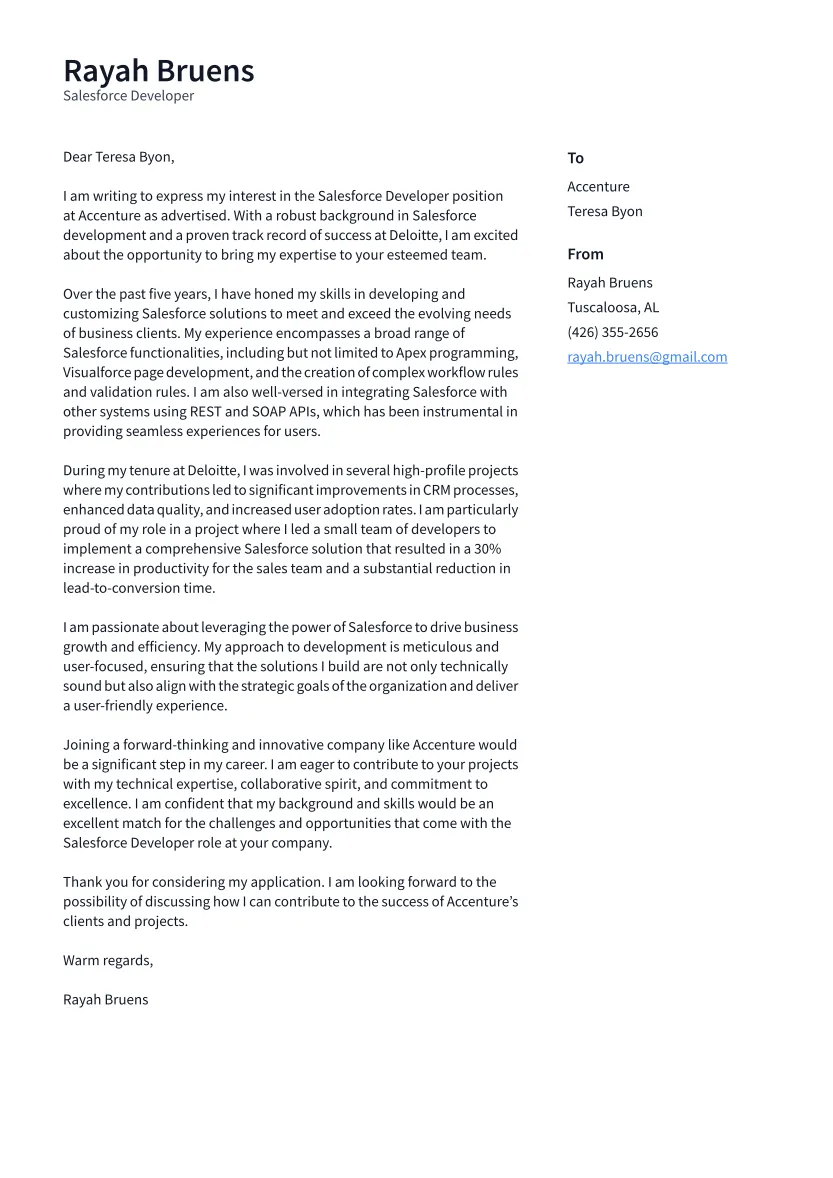
What is a Salesforce Cover Letter
A Salesforce cover letter is a crucial document that accompanies your resume when applying for a Salesforce-related job. It serves as your introduction to the hiring manager, providing an opportunity to showcase your skills, experience, and enthusiasm for the role. Unlike a resume, which lists your qualifications, a cover letter allows you to tell your story and demonstrate why you are the perfect fit for the specific position and company. This document should be tailored to each job application, highlighting the aspects of your background that align with the requirements outlined in the job description. A well-crafted cover letter can significantly increase your chances of getting an interview and ultimately landing your dream Salesforce job. It’s your chance to make a strong first impression and set yourself apart from other candidates.
Why is a Salesforce Cover Letter Important
In the competitive world of Salesforce jobs, a cover letter is more than just a formality; it is a strategic advantage. It provides a platform to expand on the information in your resume, allowing you to elaborate on your accomplishments and explain how your skills and experience align with the job requirements. It shows your genuine interest in the role and the company. Hiring managers often appreciate candidates who take the extra step to demonstrate their enthusiasm and understanding of the company’s mission and values. By customizing your cover letter for each application, you demonstrate attention to detail and a commitment to excellence, both of which are highly valued in the Salesforce ecosystem. It’s your chance to present yourself as a well-rounded professional, capable of not only performing the job but also contributing to the company’s success.
Key Components of a Salesforce Cover Letter

Your Contact Information
Start your cover letter with your full name, address, phone number, and email address. This information should be clearly displayed at the top of the letter, allowing the hiring manager to easily contact you. Ensure that your email address is professional and that your phone number is up-to-date and accessible. This section sets the foundation for your application and ensures that the employer can reach you without any hassle. It’s a small detail, but it can make a significant difference in the hiring process.
Recruiter’s Contact Information
Directly beneath your contact information, include the hiring manager’s or recruiter’s name, title, and the company’s address. If you do not know the name of the hiring manager, research it on LinkedIn or the company website. Addressing your letter to a specific person shows that you have taken the time to learn more about the company and the hiring process. If you are unable to find a specific name, you can use a more general salutation, such as “Dear Hiring Manager,” but always try to personalize your letter whenever possible. Make sure the details here are correct; a small error here can make you look careless.
The Opening Paragraph

Your opening paragraph is your first chance to make a positive impression. Start by clearly stating the position you are applying for and where you saw the job posting. Briefly mention why you are excited about the opportunity and the company. This section should be concise and compelling, immediately grabbing the reader’s attention. Consider including a brief statement of your most relevant skill or accomplishment to pique their interest. Aim to convey your enthusiasm and make them want to read more. This introduction should set the tone for the rest of your letter, showcasing your personality and professionalism.
Highlighting Your Salesforce Skills
This is where you demonstrate your expertise. Identify the key skills mentioned in the job description and explain how your skills align with the requirements. Provide specific examples from your previous experiences where you have successfully utilized these skills. Whether it’s experience with Salesforce Sales Cloud, Service Cloud, or custom development, make sure you showcase your proficiency. Use keywords from the job description to show you have understood the requirements. Be specific and provide tangible examples of how you have leveraged your skills to achieve positive outcomes. This section must provide a clear and concise overview of your qualifications.
Quantifying Your Achievements
Instead of just listing your skills, quantify your accomplishments whenever possible. For example, instead of saying “Improved sales processes,” say “Improved sales processes by 15%, resulting in a $100,000 increase in revenue.” Using numbers makes your achievements more impactful and demonstrates your ability to drive results. Focus on outcomes and provide data-driven evidence to support your claims. This section is crucial for highlighting your value and demonstrating the tangible impact you can bring to the new role. Quantifiable achievements help the hiring manager quickly assess your contributions.
Addressing the Job Requirements

Carefully review the job description and directly address each requirement. Explain how your skills, experience, and qualifications match the listed criteria. This shows that you have paid attention to the specific needs of the role and have the capabilities to succeed. Use the job description as a guide and structure your cover letter to mirror the key responsibilities. By doing so, you clearly demonstrate your suitability for the position. This also shows that you have understood the role and what it entails.
Demonstrating Passion for Salesforce
Express your passion for Salesforce and the company’s mission. Explain why you are interested in working for this specific organization and what excites you about their work. This may include mentioning specific products, services, or company culture aspects that resonate with you. Your enthusiasm is a key factor that distinguishes you from other applicants. Show that you are not just looking for a job but a career. This demonstrates that you are invested in the long-term success of the company.
The Closing Paragraph
In your closing paragraph, reiterate your interest in the position and thank the hiring manager for their time and consideration. Include a call to action, such as expressing your availability for an interview. Keep it concise and professional, expressing your eagerness to discuss your qualifications further. Make sure to mention how you can be reached if you have not already mentioned it. This should reaffirm your interest and encourage the hiring manager to contact you.
Formatting and Design Tips
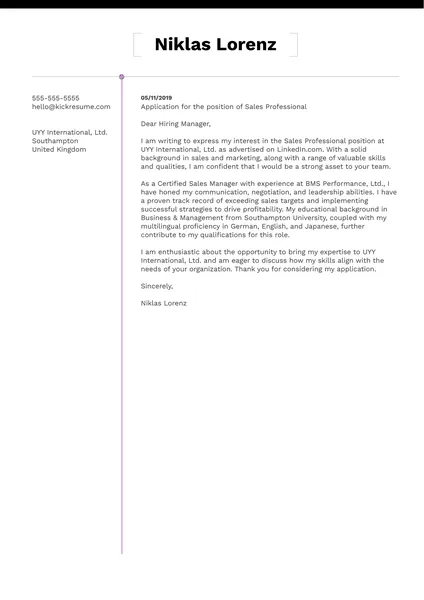
Choosing the Right Font
Select a professional and easy-to-read font, such as Arial, Calibri, or Times New Roman. The font size should be between 10 and 12 points. Ensure that the font is consistent throughout the entire document. A clear font enhances readability and makes a positive first impression. Avoid using overly decorative or distracting fonts. The goal is to create a clean and organized document that is easy for the hiring manager to read.
Using Headings and Bullet Points
Use headings and bullet points to organize your content and make it easier to read. Headings break up large blocks of text, while bullet points highlight key skills, achievements, and responsibilities. This formatting makes your cover letter more visually appealing and allows the hiring manager to quickly scan for relevant information. Keep your bullet points concise and impactful, and ensure that your formatting is consistent throughout the document. Proper formatting makes the document more accessible.
Keeping it Concise

Keep your cover letter concise and to the point, aiming for no more than one page. Hiring managers are busy and do not have time to read lengthy documents. Focus on the most important information and avoid unnecessary details. Every word should contribute to your message. Your goal is to provide enough detail to grab their attention and encourage them to read your resume and call you for an interview. Make sure your language is direct and effective.
Proofreading and Editing
Always proofread and edit your cover letter before submitting it. Check for any grammatical errors, typos, and spelling mistakes. Have someone else review your cover letter as a second pair of eyes can catch errors you may have missed. A well-written and error-free cover letter demonstrates attention to detail and professionalism. Ensure that your cover letter reflects your best self, as errors can create a negative impression.
Tailoring Your Cover Letter
Researching the Company

Before writing your cover letter, research the company to understand its mission, values, and culture. This information will help you tailor your letter to the specific requirements of the role and the organization. Visit their website, review their social media profiles, and read any recent news or articles about the company. Use this knowledge to demonstrate your understanding of their business and explain how you can contribute to their success. This research shows your genuine interest and makes your letter more relevant.
Matching Skills to the Job Description
Carefully read the job description and identify the key skills and qualifications the company is looking for. Align your cover letter with these requirements, highlighting your relevant experience and skills. Use keywords from the job description throughout your letter to show that you are a good fit for the role. Tailoring your cover letter to the job requirements increases your chances of getting noticed and getting an interview. Clearly showcase your match to all the needs of the hiring manager.
Showcasing Your Unique Value Proposition
Think about what makes you unique and what specific value you can bring to the company. This could be your experience with specific Salesforce products, your industry expertise, or your ability to solve complex problems. Highlight these unique aspects in your cover letter. Show how you can help the company achieve its goals. Consider this as your unique selling point and express this clearly in your cover letter. It’s what differentiates you from other applicants.
Salesforce Cover Letter Examples
Example 1 For a Salesforce Administrator Role
In this example, the cover letter would highlight experience in user management, data migration, and system configuration, demonstrating a deep understanding of Salesforce administration best practices. Focus on achievements such as improving system efficiency or user adoption rates. Mention any certifications such as Salesforce Administrator certification. The focus will be on demonstrating the practical abilities required to be a great administrator.
Example 2 For a Salesforce Developer Role
A cover letter for a Salesforce Developer role would showcase experience in Apex, Visualforce, Lightning components, and API integrations. Include projects where you developed custom solutions or enhanced existing features. Highlight any experience with version control systems such as Git and any certifications such as Salesforce Platform Developer I certification. Detail how you can use your coding skills to bring about great results.
Example 3 For a Salesforce Consultant Role
For a Salesforce Consultant role, demonstrate your experience in gathering requirements, designing solutions, and implementing Salesforce projects. Mention your ability to communicate effectively with clients and stakeholders. Highlight any experience with project management methodologies or Salesforce certifications. Use words like “strategic” and “collaborative” to show you are capable of the demands of a consulting role.
Common Mistakes to Avoid
Generic Content
Avoid using a generic cover letter that you send to all applications. Tailor each letter to the specific job and company. Generic cover letters show a lack of attention to detail and a lack of genuine interest. This can severely damage your chances of getting an interview. Always take the time to customize your cover letter to each role.
Typos and Grammatical Errors
Carelessly making typos or grammatical errors can immediately disqualify your application. Proofread your cover letter carefully before submitting it. Poor writing can make you appear unprofessional and careless, diminishing your credibility. Use spell check and grammar check tools, but always double-check manually. Have a friend or colleague review your cover letter. A well-written, error-free cover letter is a must to make a great first impression.
Lack of Customization
Do not send a cover letter that does not address the specific requirements of the job or the company. Customize your letter to demonstrate that you understand the role and have the skills and experience to excel. A lack of customization will make it appear you’re not serious about the role. Show that you did your research and can tailor your skills and experiences to the job description.
Ignoring the Job Description
One of the biggest mistakes is ignoring the job description when writing your cover letter. Ensure you clearly address the job requirements and demonstrate how your skills and experience align with the listed criteria. Use keywords from the job description to show that you have the required qualifications. Your cover letter must showcase your understanding of the role and how you can contribute to the company. Failure to follow this greatly decreases your chances of getting hired.