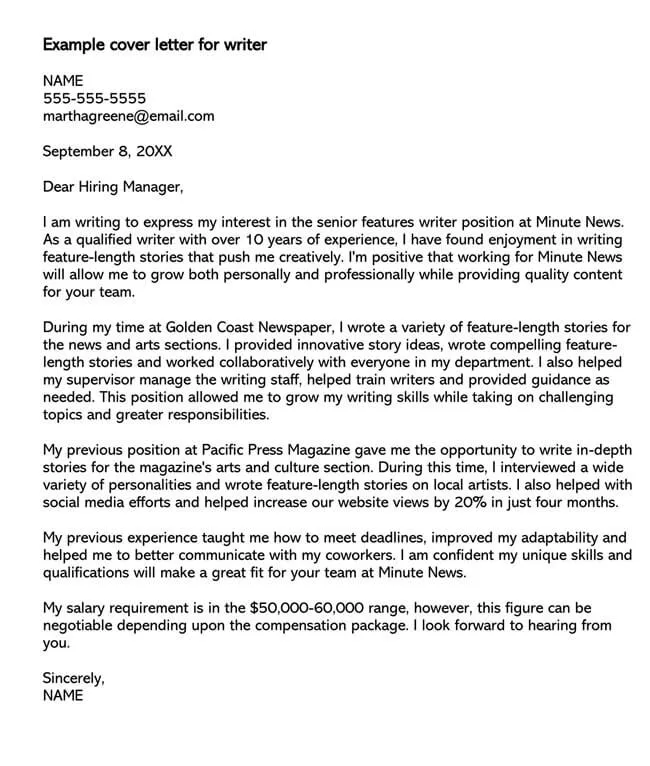
Understanding Salary Expectations in Cover Letters
The cover letter serves as your initial introduction to a potential employer, making it crucial to present yourself professionally and strategically. One of the key areas to address is your salary expectations. While it might seem daunting to discuss money so early in the process, doing so correctly can demonstrate your understanding of the job market and your value. Knowing how to address your salary range in a cover letter can significantly impact your chances of moving forward in the application process, showing that you’ve done your homework and are serious about the role.
Why Mentioning Salary Range Matters
Including your salary expectations in your cover letter is a proactive step that shows you’ve considered the role’s value and your financial needs. This allows employers to quickly assess whether your expectations align with their budget. It can prevent both parties from wasting time on applications where there is a significant salary mismatch, ensuring that the conversation moves forward efficiently. Mentioning your salary range also shows you’re serious about the position and that you’ve taken the time to research the market and understand the typical compensation for similar roles.
Demonstrating Proactive Approach

By including your salary range, you demonstrate initiative and a proactive approach to your job search. It shows that you’re not afraid to address important aspects of the employment relationship, and that you understand the need to balance your financial requirements with the employer’s budget. This proactive attitude is something that employers often appreciate, as it indicates a candidate who is prepared and thoughtful.
Aligning with Employer Expectations
Including a salary range helps ensure that your expectations align with what the employer is willing to offer. While you don’t want to price yourself out of the running, you also need to ensure that the role meets your financial needs. By providing a range, you allow the employer to determine whether your expectations are realistic for the position and their company’s budget. This can save both parties time and effort and increase the likelihood of a successful negotiation if you receive an offer.
Crafting Your Salary Range Statement
When crafting your salary range statement, it’s essential to strike a balance between being clear and providing enough flexibility. You want to provide the employer with a realistic expectation while also allowing for negotiation. There are several key components to consider when formulating your salary expectations in your cover letter. Preparing a well-thought-out statement that is both realistic and demonstrates your understanding of the market can set a positive tone and significantly increase your chances of landing an interview.
Researching Salary Ranges

Before you mention a salary range, do your homework. Researching the typical salary for the role and your experience level is crucial. This helps you create a realistic expectation and demonstrates your understanding of the market. There are many resources available to help you, and taking advantage of them can make your salary range statement more credible and effective.
Using Online Salary Resources
Several websites offer salary data for various positions and locations. Websites like Glassdoor, Salary.com, and Payscale provide comprehensive salary ranges based on job title, experience, and location. Utilize these resources to get a general idea of what you should expect. It’s important to note that these are estimates, and the actual salary may vary depending on the company and specific job requirements. Gathering data from multiple sources ensures you are as informed as possible.
Checking Industry Standards
Industry-specific salary surveys can provide even more detailed information. Many professional organizations conduct salary surveys for their members. Research industry standards and average pay for similar roles in your location to get a better understanding of what’s reasonable to expect. This level of preparation demonstrates that you have done your due diligence and are aware of the market standards for the position, which can enhance your credibility with the employer.
Structuring Your Salary Statement

Once you have researched the salary range, you can craft your salary statement. The goal is to be clear, concise, and professional. Think of it as providing relevant information in a way that leaves the employer feeling they have a good understanding of your financial needs. The way you structure your statement can significantly influence the impression you leave with the hiring manager. It’s important to find the right balance between being open and presenting your value.
Stating Your Desired Range Clearly
State your desired salary as a range rather than a fixed number. This gives you room for negotiation while still providing a clear understanding of your expectations. For example, you might say, ‘My salary expectations are in the range of $X to $Y per year.’ The lower end of the range should be the minimum you would accept, and the higher end should reflect your ideal salary based on your research and experience. This approach allows flexibility for both parties and shows that you are open to discussion.
Providing Context and Justification
Consider briefly justifying your range. This could be as simple as, ‘Based on my experience and the responsibilities of this role, I am seeking a salary in the range of…’ This shows that you have given the matter some thought and haven’t just pulled numbers out of thin air. If you have specific skills or accomplishments that justify a higher salary, you can also briefly mention them. For instance, ‘Given my proven track record in X, I am looking for a salary in the range of…’
Tips for Different Scenarios

The way you address salary expectations in your cover letter can vary depending on the specific situation. Knowing how to adapt your approach to different circumstances can increase your chances of a positive outcome. Whether you’re responding to a job posting with a specified range or navigating a situation where the salary is not mentioned, strategic preparation is important. Understanding the best ways to handle different scenarios can provide a strategic advantage in the job search.
When the Job Posting Specifies a Range
If the job posting specifies a salary range, it’s usually best to address it directly. You can state that your expectations align with the posted range and, if appropriate, mention where you fall within it. For example, ‘I am highly interested in the position, and my salary expectations align with the posted range of $X to $Y.’ This demonstrates that you read the job description carefully and have considered the company’s budget. If you have particularly strong qualifications, you might mention that you’re looking for a salary toward the higher end of the range.
When the Job Posting Doesn’t Mention Salary
When the job posting doesn’t mention a salary, it’s perfectly acceptable to include your expectations. This shows that you’re not afraid to address this important aspect of the employment relationship. In this case, you can provide a range that’s based on your research of similar positions. For instance, ‘Based on my research of similar roles, I am seeking a salary in the range of $X to $Y.’ Make sure your range is realistic and reflects your experience level. This approach can also serve as a proactive step, making sure you are on the same page as the employer from the start.
Dealing with Salary History Requests

Some employers might ask for your salary history. However, providing this information can put you at a disadvantage, as your past salary doesn’t always reflect your current value. If you’re asked for your salary history, you might reply by saying something like, ‘While I am comfortable discussing my salary expectations, I prefer to focus on the value I can bring to this role rather than my past compensation.’ Then, provide your desired salary range. This response allows you to be transparent while shifting the conversation to your current worth and value.
Common Mistakes to Avoid
While discussing salary expectations in your cover letter can be beneficial, it’s important to avoid certain common mistakes. Making these mistakes can be detrimental to your application and could potentially result in you being excluded from the interview process. Understanding the pitfalls and knowing how to avoid them will allow you to present yourself and your financial needs in the most professional light.
Being Too Vague or Too Specific
Being too vague about your salary expectations can give the impression that you haven’t thought about it, which is not ideal. On the other hand, being too specific can limit your negotiation flexibility. A well-defined range is the best approach. Avoid stating an exact number unless the job posting explicitly requests it. Providing a range shows flexibility and allows room for discussion, while still ensuring your expectations are clear.
Focusing Solely on Salary

Do not let your cover letter solely focus on salary. The cover letter is your opportunity to highlight your qualifications and express your interest in the role and the company. While it is important to address salary expectations, the main focus should be on demonstrating how you can contribute to the company. Emphasize your skills, experience, and how you can solve their problems. A balanced approach that places salary in its appropriate context is the most effective strategy.
How to Effectively Close Your Cover Letter
The closing of your cover letter is your final opportunity to make a positive impression. It should reiterate your interest, emphasize your qualifications, and encourage the employer to contact you. A well-crafted closing can increase your chances of receiving an interview, leaving a lasting impression.
Reiterating Your Interest and Qualifications
In your closing paragraph, reiterate your interest in the role and briefly highlight how your skills and experience align with the job requirements. This serves as a reminder of your value and reinforces why you’re a good fit for the position. Make sure to tailor this to the specific job, mentioning any skills or experiences that the employer specifically highlighted in the job posting. This helps demonstrate your attention to detail and enthusiasm for the role.
Expressing Enthusiasm for the Opportunity
End your cover letter with a statement of enthusiasm for the opportunity. This shows that you are genuinely interested in the position and are excited about the prospect of joining the company. You can express your interest in the company’s mission, their values, or any specific projects that caught your eye. For example, ‘I am excited about the opportunity to contribute to [Company Name] and am eager to discuss how my skills can help achieve your goals.’ A strong, positive closing can leave a lasting positive impression and increase your chances of getting an interview.