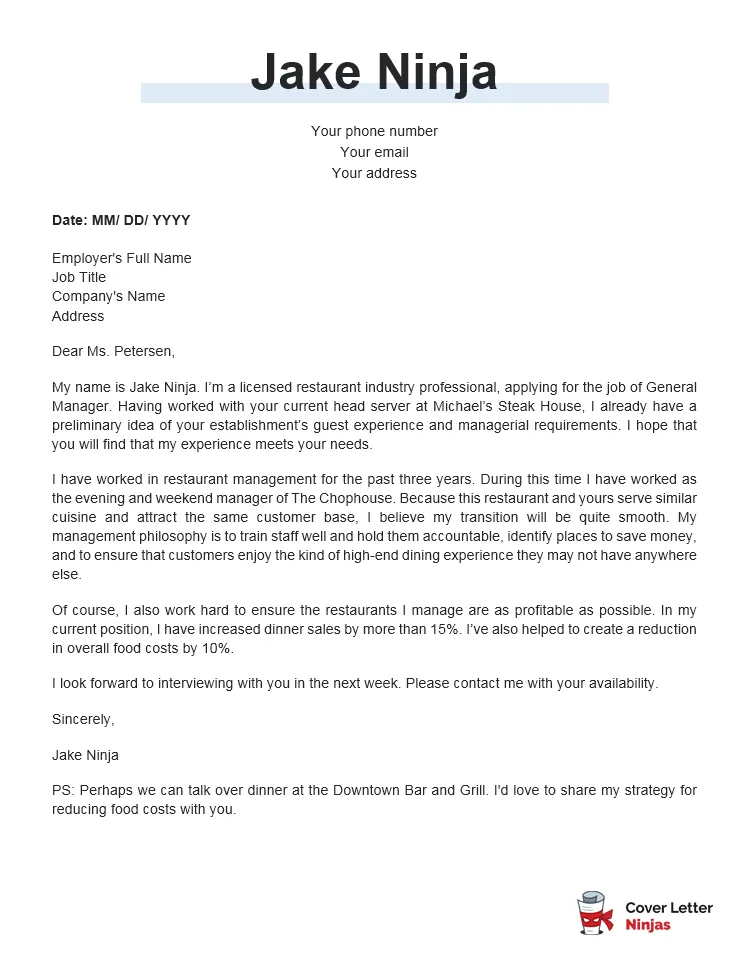
Understanding the Restaurant General Manager Role
The role of a Restaurant General Manager (GM) is multifaceted and demanding, serving as the central hub for all restaurant operations. A successful GM ensures the smooth functioning of the establishment, from overseeing staff and managing finances to guaranteeing customer satisfaction and maintaining quality standards. Understanding the core responsibilities and required skills is the first step in crafting a compelling cover letter that grabs the attention of potential employers. This understanding will provide you with the foundation needed to showcase your qualifications effectively, making your application stand out from the competition. Therefore, let’s delve deeper into the essence of this critical position.
Key Responsibilities of a Restaurant GM
Restaurant GMs juggle a diverse range of duties daily. These responsibilities include managing staff, which involves hiring, training, scheduling, and performance evaluations. They are also responsible for ensuring compliance with health and safety regulations. Furthermore, GMs oversee the operational aspects of the restaurant, such as inventory management, ordering supplies, and maintaining the physical condition of the premises. Customer satisfaction is another priority, necessitating the handling of complaints and the implementation of strategies to enhance the dining experience. Moreover, they are accountable for financial performance, monitoring budgets, controlling costs, and striving to increase revenue. A comprehensive understanding of these areas will help you align your experience with the employer’s needs, making your cover letter highly relevant.
Skills Required for a Restaurant GM Position

To thrive as a Restaurant GM, a wide array of skills is necessary. These skills are not only vital for daily operations but also critical for long-term success. Strong leadership and management skills are essential to motivate and direct staff effectively. Excellent communication skills, both written and verbal, are required for interacting with employees, customers, and vendors. A solid grasp of financial management, including budgeting and cost control, is also crucial. Problem-solving skills are necessary to address unexpected issues and maintain smooth operations. Furthermore, a customer-centric approach and the ability to provide excellent service are essential for ensuring customer loyalty and positive reviews. You must demonstrate these skills in your cover letter to underscore your suitability for the role.
Crafting a Compelling Cover Letter
Your cover letter is your initial opportunity to make a positive impression. It needs to be carefully crafted to capture the hiring manager’s attention and highlight your relevant skills and experiences. A well-written cover letter demonstrates your professionalism, communication skills, and enthusiasm for the position. It complements your resume by providing a more detailed narrative of your qualifications and explaining why you are the ideal candidate. In this section, we will cover the key components to help you create a compelling cover letter.
Header and Contact Information
Start your cover letter with a professional header that includes your name, address, phone number, and email address. This information ensures that the hiring manager can easily contact you. Following the header, include the date and the hiring manager’s name and title, if available. Addressing the letter to a specific person shows that you have done your research and that you are genuinely interested in the position. If the hiring manager’s name is unavailable, use a general greeting like ‘Dear Hiring Manager’.
Greeting and Opening Paragraph

Your opening paragraph should immediately grab the reader’s attention. Begin by stating the position you are applying for and where you found the job posting. Briefly explain why you are interested in the role and the company. Convey your enthusiasm and highlight a key skill or experience that makes you stand out. This sets the tone for the rest of your letter and encourages the hiring manager to keep reading. A compelling opening paragraph is crucial for piquing the interest of the hiring manager and making them want to learn more about your qualifications for the position.
Highlighting Your Relevant Experience
The main body of your cover letter should detail your experience, emphasizing how your skills align with the job requirements. Use the job description as a guide to identify the key qualifications the employer seeks. Provide specific examples of your accomplishments, using the STAR method (Situation, Task, Action, Result) to describe your experiences. Quantify your achievements whenever possible to demonstrate the impact you have made in previous roles. For example, instead of saying “Improved customer satisfaction,” state “Increased customer satisfaction scores by 15% through implementing new training programs.”
Quantifying Achievements
Quantifying your achievements is a key part of making your cover letter stand out. Instead of vague statements, provide concrete numbers and data to illustrate your successes. This shows the hiring manager the tangible results you have achieved in past positions. For example, instead of saying “Managed a team,” say “Managed a team of 20 employees and reduced staff turnover by 20% within one year.” Using metrics like these demonstrates your ability to deliver results, improving your chances of getting an interview and landing the job. Always back up your claims with specific data points, and be ready to elaborate during an interview.
Showcasing Skills and Abilities

In addition to highlighting your experience, your cover letter should showcase your skills and abilities. This includes both hard skills (such as financial management and inventory control) and soft skills (such as leadership and communication). Provide examples of how you have used these skills in previous roles. For instance, you can mention that you successfully implemented a new inventory system that reduced waste and saved the restaurant money. Emphasize the skills that align with the job description. This shows the hiring manager that you have the specific capabilities they seek. Providing this information in an organized and concise manner enhances the overall effectiveness of your cover letter.
Leadership and Management Skills
Demonstrate your leadership and management skills by providing specific examples. Describe how you have motivated teams, resolved conflicts, and created a positive work environment. Mention any training programs you have implemented or initiatives you have led to improve employee performance. For instance, ‘Successfully led a team of 30 employees, implementing a new performance review system that increased employee engagement by 25%.’ Furthermore, demonstrate how you have adapted your management style to fit the needs of different individuals. Being able to effectively lead and manage is a crucial aspect of the GM role, and showcasing your abilities in this area is vital.
Customer Service and Problem-Solving
Highlight your customer service and problem-solving skills by describing how you have handled customer complaints, resolved conflicts, and ensured customer satisfaction. Provide specific examples of how you have gone above and beyond to meet customer needs. For example, ‘Resolved over 90% of customer complaints within 24 hours, resulting in improved customer loyalty.’ Emphasize your ability to remain calm under pressure and find creative solutions to unexpected challenges. Mention any customer service training you have received or any awards you have received for excellent service. Demonstrating your skills in these areas is crucial for showing that you can maintain a positive dining experience.
Financial Management and Profitability

Showcase your financial management skills by detailing your experience with budgeting, cost control, and revenue generation. Provide examples of how you have improved profitability in previous roles. For instance, ‘Implemented cost-saving measures that reduced food costs by 10% and increased profit margins by 8%.’ Mention your experience with financial reporting, inventory management, and vendor negotiations. Use specific data to illustrate your ability to achieve financial goals and maximize revenue. Highlighting your financial skills will demonstrate that you can drive profitability and contribute to the restaurant’s success.
Expressing Enthusiasm and Fit
In your cover letter, express your enthusiasm for the position and the company. Explain why you are interested in working at that specific restaurant and what attracts you to their brand. Mention anything that resonates with you about their mission, values, or reputation. Briefly describe why you believe you are a good fit for the company culture. This can be accomplished by referencing the company’s website or any recent publications. Tailoring your cover letter to the specific restaurant and demonstrating your knowledge and interest will help you make a memorable impression.
Call to Action and Closing
Conclude your cover letter with a strong call to action. State your interest in an interview and make it easy for the hiring manager to contact you. Provide your phone number and email address again. Thank the hiring manager for their time and consideration, and express your anticipation of hearing from them. Keep your closing brief, professional, and enthusiastic. A confident closing will help ensure the hiring manager remembers you and reaches out for an interview. Always proofread the entire cover letter before sending it.
Formatting and Proofreading Your Cover Letter

The appearance of your cover letter is just as important as its content. A well-formatted and error-free letter shows that you pay attention to detail and take pride in your work. Poor formatting and grammatical errors can undermine your credibility and make you appear unprofessional. The following sections will guide you through choosing the right formatting and proofreading your cover letter thoroughly.
Choosing the Right Font and Style
Choose a professional and easy-to-read font such as Times New Roman, Arial, or Calibri. Use a font size between 10 and 12 points. Ensure that your cover letter is well-organized, with clear headings and subheadings to guide the reader. Use adequate spacing between paragraphs and sections to create visual appeal. Use bullet points to highlight your accomplishments and make the information easier to digest. Consistency in formatting throughout your cover letter will make it more readable and professional. Keep the overall layout clean and uncluttered for maximum impact.
Proofreading for Errors
Before submitting your cover letter, proofread it carefully for any grammatical errors, spelling mistakes, and typos. Use a spell checker and grammar checker, but do not rely on them entirely. Read your cover letter out loud to catch any awkward phrasing or inconsistencies. Ask a friend or family member to proofread it as well, as a fresh pair of eyes can often spot errors that you might miss. Ensure that all the information is accurate and that your contact details are correct. Taking these steps will significantly enhance the professionalism and effectiveness of your cover letter.
Reviewing and Refining Your Cover Letter

After writing your cover letter, review it multiple times to ensure it is clear, concise, and compelling. Make sure that your cover letter highlights the skills and experience that are most relevant to the job. Check to make sure that the tone is professional and enthusiastic. Tailor your cover letter to each specific job application. Reviewing and refining your cover letter is an ongoing process, and it’s worth taking the time to ensure that it accurately reflects your qualifications and makes a strong positive impression. This can be the difference between getting the job or not.