Crafting an RA Cover Letter
A well-crafted Resident Assistant (RA) cover letter is your first opportunity to make a strong impression. It’s not just a formality; it’s your chance to showcase your personality, skills, and enthusiasm for the role. This guide will walk you through the essential steps to create a cover letter that captures the attention of the hiring committee and highlights why you’re the ideal candidate. Remember, this document complements your resume and provides a deeper understanding of your qualifications. Let’s delve into how to craft a cover letter that sets you apart from other applicants and increases your chances of landing an interview. A great cover letter demonstrates your understanding of the RA role and your eagerness to contribute to a supportive and thriving residential community. Your cover letter is the first step toward making a positive impact.
Researching the Role & Institution
Before you start writing, thorough research is crucial. Understand the specific responsibilities of an RA at the institution you’re applying to. Review the job description carefully, paying close attention to the required skills and qualities. Visit the university’s website to learn about its mission, values, and student life initiatives. This knowledge will help you tailor your cover letter to the institution’s specific needs and demonstrate your genuine interest. Investigate the residential life programs, and understand the community you are applying to join. Mention specific events or programs that resonate with you, showing that you’ve taken the time to learn about the environment you hope to contribute to. Showing this research will show the hiring committee your attention to detail and your commitment to the role.
Highlighting Relevant Skills

Focus on the skills that are most relevant to the RA position. Common skills include leadership, communication, problem-solving, conflict resolution, and empathy. Provide specific examples of how you have demonstrated these skills in the past. Instead of simply stating that you possess leadership skills, describe a situation where you took initiative, motivated a team, or resolved a conflict. When mentioning communication, give examples of how you effectively conveyed information or mediated between different parties. Customize your cover letter to match the language and requirements outlined in the job description. By carefully selecting and highlighting relevant skills, you demonstrate to the hiring committee that you are well-equipped to succeed in the RA role and contribute to the residential community.
Demonstrating Leadership
Leadership is a core component of the RA role. Illustrate your leadership abilities with concrete examples. Did you lead a team in a project, organize an event, or mentor a peer? Describe the situation, your role, the actions you took, and the positive outcomes. Quantify your accomplishments whenever possible. For example, ‘Led a team that increased resident participation in hall events by 20%.’ Highlight your ability to motivate others, make decisions, and take responsibility. Show how you can inspire and guide your residents. Demonstrate your ability to create a positive and inclusive environment. These experiences provide the hiring committee with tangible evidence of your leadership potential and how you will contribute to the student community.
Showcasing Communication Skills
Effective communication is essential for RAs. Detail how you have effectively communicated with others in various situations. Share examples of how you’ve listened actively, provided clear instructions, or mediated disputes. Highlight any experience with public speaking, presentations, or written communication. Showcase your ability to adapt your communication style to different audiences, whether it’s residents, staff, or faculty. Explain how you’ve used communication to build rapport, resolve conflicts, or convey important information. Demonstrate your ability to articulate ideas clearly and concisely. Emphasize your ability to remain composed and professional even in stressful situations. These examples demonstrate your proficiency and confidence in your communication abilities, showcasing how you will be a reliable and supportive resource for the residents.
Emphasizing Problem-Solving Abilities

RAs often encounter problems, from roommate disputes to emergencies. Your cover letter should demonstrate your ability to handle such challenges. Share specific instances where you identified a problem, analyzed it, and implemented a solution. Describe your problem-solving process, including the steps you took and the outcome. Highlight your critical thinking skills and your ability to remain calm under pressure. Show how you’ve used resources, sought advice, and collaborated with others to resolve issues. Emphasize your commitment to finding effective and fair solutions. Demonstrating your problem-solving skills will reassure the hiring committee of your ability to manage complex situations effectively. Emphasizing your ability to remain calm under pressure is also an important asset in the RA position.
Quantifying Achievements
Whenever possible, quantify your achievements. Instead of saying you improved event attendance, state by how much the participation increased. Instead of saying you resolved conflicts, mention the number of conflicts resolved or the positive impact on resident satisfaction. Use numbers to demonstrate your impact. Quantifying your achievements adds credibility to your claims and provides concrete evidence of your abilities. This approach enables the hiring committee to clearly understand your contributions. Data-driven examples make a stronger impression and underscore your value as a potential RA. Remember to include statistics and percentages, showcasing your results and demonstrating the tangible impact of your work.
Formatting & Structure
Your cover letter should be well-formatted and easy to read. Use a professional font, such as Times New Roman or Arial, and maintain consistent formatting throughout. Keep the tone professional and avoid slang or overly casual language. Start with a formal salutation, such as ‘Dear [Hiring Manager Name],’ if known. Use clear and concise language. Divide your cover letter into well-defined paragraphs, each addressing a specific point. Proofread carefully for any grammatical errors or typos. A well-structured cover letter shows attention to detail and professionalism. A well-formatted cover letter shows the hiring committee that you care about the details and have taken the time to present yourself professionally. Make sure your contact information is accurate and clearly displayed.
Writing a Compelling Opening
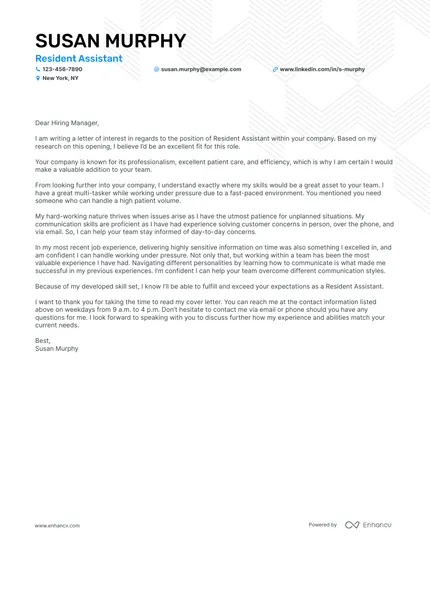
The opening of your cover letter is crucial. It should immediately grab the reader’s attention and make them want to learn more. Start by expressing your enthusiasm for the RA position and the institution. State clearly why you are interested in the role. Briefly mention any key qualifications or experiences that make you a strong candidate. You might begin by referencing a specific program or initiative that you admire. A compelling opening will set the tone for the rest of your letter and encourage the reader to continue. A strong opening makes a great first impression and encourages the hiring committee to read on and discover your unique qualifications and experience.
Elaborating on Your Experiences
The body of your cover letter is where you elaborate on your experiences and skills. Provide detailed examples that support your claims. Use the STAR method (Situation, Task, Action, Result) to structure your responses. Describe a situation, the task you were assigned, the actions you took, and the results achieved. Show how your previous experiences have prepared you for the RA role. Focus on experiences that align with the responsibilities of an RA, such as conflict resolution, peer support, and leadership. Tailor your examples to match the requirements of the job description. Provide concrete examples that illustrate your skills and qualities, demonstrating your ability to handle the key responsibilities of an RA effectively. Use each section to highlight your experience to ensure the hiring committee understands your capabilities.
Closing with Confidence
End your cover letter with a strong closing. Reiterate your enthusiasm for the role and your commitment to the institution. Thank the hiring committee for their time and consideration. Reiterate your interest in an interview and provide your contact information. Consider adding a call to action, such as ‘I am eager to discuss my qualifications further’ or ‘I look forward to hearing from you soon.’ Proofread your cover letter carefully before submitting it. The conclusion should be professional, positive, and leave a lasting positive impression. A confident and well-written closing is an excellent way to leave a lasting positive impression, increasing your likelihood of being selected for an interview. A strong closing leaves a positive impression on the reader and increases the chances of your application being successful.