Office Manager Cover Letter How To [Easy Guide]
Securing an Office Manager position often hinges on a well-crafted cover letter. This guide offers a step-by-step approach to creating a compelling cover letter that highlights your skills, experience, and achievements. A strong cover letter is your first opportunity to make a positive impression on a potential employer, setting the stage for a successful job application. It’s not just a formality; it’s a crucial tool for demonstrating your suitability for the role and distinguishing yourself from other candidates. By following this easy guide, you will be able to write a cover letter that stands out from the crowd.
Crafting Your Office Manager Cover Letter
The process of crafting an effective cover letter begins with understanding its purpose. It should be a concise yet comprehensive summary of your qualifications, tailored specifically to the Office Manager position you’re applying for. Your cover letter should not simply reiterate your resume; it should expand on key points, providing context and demonstrating your personality. Think of it as a narrative that tells the story of your career and how it aligns with the needs of the company. This is your chance to shine, so make sure you take the time to create a good first impression.
Understanding the Importance of a Cover Letter

A well-written cover letter is more than just a formality; it’s a vital tool for securing an interview. It allows you to communicate your personality, enthusiasm, and specific skills in a way that a resume alone cannot. It provides an opportunity to connect with the hiring manager on a more personal level, demonstrating your understanding of the company and the role. A great cover letter can be the deciding factor in whether you get an interview, so it’s essential to invest time and effort in its creation. Without a solid cover letter, your application might be passed over, even if you’re highly qualified.
Key Components of an Effective Office Manager Cover Letter
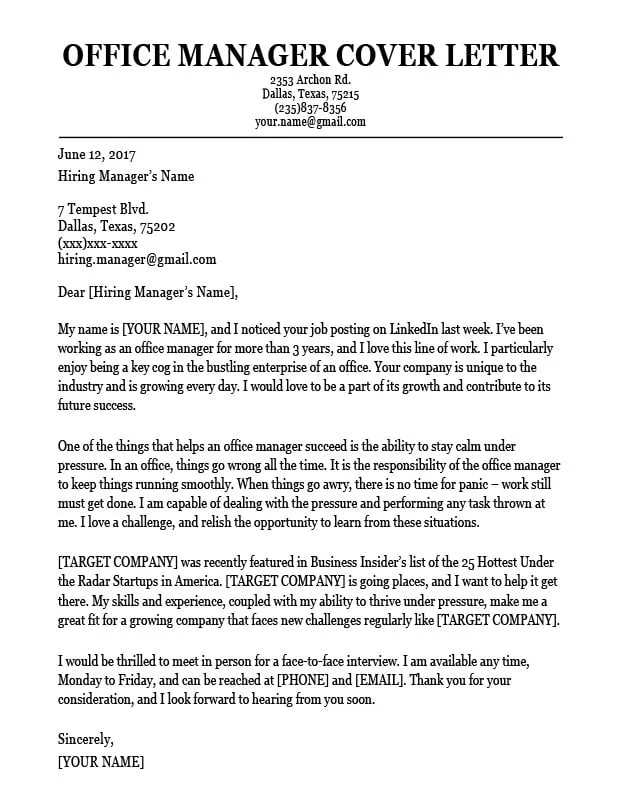
An effective Office Manager cover letter should include several key components. Begin with your contact information, the date, and the employer’s contact details. Then, craft a compelling opening paragraph that states the position you are applying for and briefly explains why you are interested. The body of the letter should highlight your relevant skills, experience, and achievements. Tailor your letter to the specific requirements listed in the job description. Finally, conclude with a strong closing paragraph, expressing your enthusiasm and outlining your next steps, such as requesting an interview.
Contact Information and Formatting
Begin your cover letter by including your full name, address, phone number, and email address at the top. Following this, add the date and the hiring manager’s name, title, and company address. Proper formatting is crucial for presenting a professional image. Use a standard business letter format with a clear, easy-to-read font like Arial or Times New Roman. Keep the letter concise, ideally within one page. Use single-spaced lines with a space between paragraphs. Make sure the layout is neat, clean, and well-organized to make it easy for the reader to scan and absorb the information.
Opening the Cover Letter Effectively

The opening paragraph sets the tone for your entire cover letter, so make it count. Start by clearly stating the position you are applying for and where you found the job posting. Briefly mention why you are interested in the role and the company. Consider using a hook, such as a brief statement that showcases your enthusiasm or a key skill that aligns with the job requirements. Avoid generic openings; instead, show that you have researched the company and understand its values and goals. A strong opening paragraph grabs the reader’s attention and encourages them to continue reading.
Highlighting Your Skills and Experience
In the body of your cover letter, highlight your skills and experience relevant to the Office Manager position. Focus on skills such as organizational abilities, communication skills, leadership qualities, and proficiency in office software. Provide specific examples of how you have successfully used these skills in previous roles. Use the job description as a guide to identify the key requirements and demonstrate how your experience aligns with them. Make sure your cover letter reflects the specific needs of the employer.
Showcasing Relevant Achievements and Accomplishments
Instead of just listing your responsibilities, showcase your accomplishments. Use the STAR method (Situation, Task, Action, Result) to provide context and demonstrate your impact. For example, describe a situation where you improved office efficiency, the task you undertook, the actions you took, and the positive results you achieved. Quantify your achievements whenever possible, such as by stating the percentage of cost savings you achieved or the number of projects you successfully managed. These achievements provide tangible evidence of your capabilities and make your application more compelling.
Tailoring Your Cover Letter to the Job

One of the biggest mistakes is sending a generic cover letter. Always tailor your cover letter to the specific job description and company. Carefully read the job posting and identify the key requirements and desired skills. Customize your letter to address these specific points. Show that you have researched the company and understand its mission, values, and culture. Personalize your letter by mentioning something that resonates with you about the company or the role. This shows the hiring manager that you are genuinely interested and have put in the effort to understand their needs.
Matching Skills with Job Requirements
A key aspect of tailoring your cover letter is aligning your skills with the job requirements. Analyze the job description and create a list of the required skills and qualifications. Then, in your cover letter, explicitly state how your skills and experience match these requirements. Provide specific examples of how you have demonstrated these skills in previous roles. This makes it easy for the hiring manager to see that you are a good fit. Be honest and accurate, and don’t exaggerate your abilities. Focus on the skills that align best with the job description and use concrete examples to support your claims.
Quantifying Your Achievements with Numbers
Whenever possible, quantify your achievements to make your cover letter more impactful. Use numbers and data to demonstrate your successes. Instead of saying, “Improved office efficiency,” say “Improved office efficiency by 15%.” Instead of saying, “Managed multiple projects,” say, “Managed over 20 projects simultaneously, completing all on time and within budget.” Numbers add credibility and make your accomplishments more tangible. They show the impact you had in previous roles and provide concrete evidence of your skills. This is an effective strategy for making your cover letter more compelling and memorable.
Closing Your Cover Letter Professionally

Your closing paragraph should be just as carefully crafted as your opening. Express your enthusiasm for the position and reiterate your interest in the company. Clearly state your expectations for next steps, such as requesting an interview. Thank the hiring manager for their time and consideration. Keep the tone professional and enthusiastic, and avoid sounding desperate. Make sure to proofread your closing for any typos or grammatical errors. A well-written closing paragraph leaves a positive lasting impression and encourages the hiring manager to take action.
Expressing Enthusiasm and Next Steps
In your closing, express your genuine enthusiasm for the opportunity. Show that you are eager to learn more about the role and the company. Then, clearly state your expectations for next steps. For example, you might write, “I am eager to discuss my qualifications further in an interview and would welcome the opportunity to do so.” Also, consider adding a call to action, such as providing your availability for an interview. This proactive approach shows your interest and helps move the application process forward. Make it easy for the hiring manager to contact you.
Proofreading and Editing Your Cover Letter
Before submitting your cover letter, proofread it carefully. Errors in grammar, spelling, and punctuation can damage your credibility and make a negative impression. Use a grammar checker to catch any mistakes. Read the letter aloud to ensure that it flows smoothly and makes sense. Ask a friend or colleague to review your letter and provide feedback. Proofreading is an essential step in ensuring your cover letter is polished and professional. Pay close attention to detail and make sure the letter is free of errors.
Common Mistakes to Avoid

Avoid common mistakes that can undermine your application. Don’t use generic, impersonal language. Avoid clichés and overly formal phrases. Don’t just repeat your resume; instead, expand on key points and provide context. Do not include irrelevant information. Be sure to research the company before you apply. Make sure your cover letter is easy to read and visually appealing. Finally, do not send a cover letter with errors. By avoiding these common pitfalls, you can significantly increase your chances of success.
Formatting and Visual Appeal
Formatting and visual appeal are important. Use a professional font like Times New Roman or Arial. Keep your letter to one page, if possible. Use clear headings and white space to make the letter easy to read. Make sure the layout is neat, clean, and well-organized. Proper formatting makes a positive impression and shows that you pay attention to detail. A well-formatted cover letter is more likely to be read and considered.
Tips for Sending Your Cover Letter
When sending your cover letter, follow the instructions provided in the job posting. If the application requires you to submit the cover letter as a separate document, use a PDF format to preserve the formatting. If the application requires you to paste your cover letter into the body of an email, ensure the formatting remains intact. Always include your name and the job title in the subject line of the email. Send your cover letter promptly. By following these tips, you’ll increase your chances of making a positive impression and securing an interview.