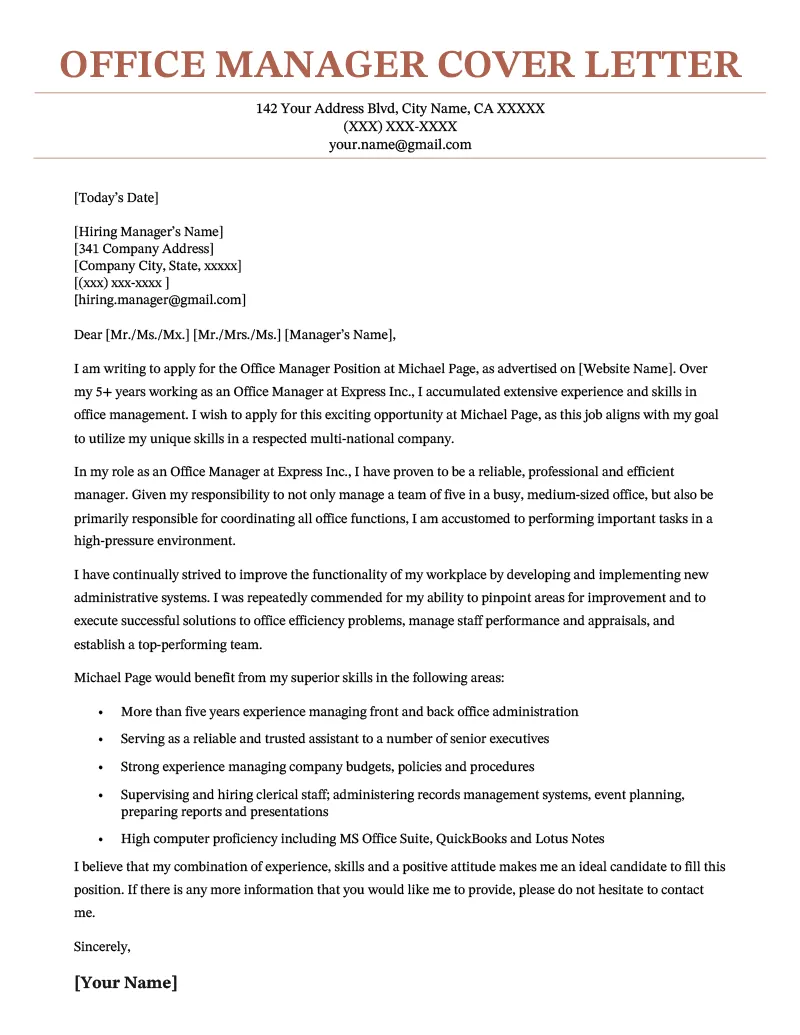
Understanding the Importance of a Cover Letter for Office Jobs
In the competitive landscape of office job applications, a well-crafted cover letter is your first opportunity to make a lasting impression. It serves as a crucial tool to introduce yourself, highlight your qualifications, and demonstrate your genuine interest in the position. Unlike a resume, which provides a factual overview of your work history and skills, a cover letter allows you to showcase your personality, communication skills, and enthusiasm for the role. It enables you to tell your story, explaining why you are the ideal candidate and how your unique experiences and abilities align with the specific requirements of the office job.
Moreover, a cover letter gives you the chance to address any potential gaps or weaknesses in your resume. Perhaps you have a career transition, a period of unemployment, or a lack of direct experience in a particular area. A cover letter provides a space to proactively explain these situations, providing context and reassurance to the hiring manager. It also allows you to emphasize your transferable skills, your willingness to learn, and your proactive approach to your job search, which are highly valued in today’s job market. Essentially, your cover letter is your personal marketing tool, effectively selling your qualifications and compelling the reader to delve deeper into your resume.
Key Components of a Compelling Office Job Cover Letter
Creating a standout cover letter requires a strategic approach. The following components are fundamental to effectively presenting your qualifications and increasing your chances of securing an interview. Each part contributes to an overall positive impression, highlighting your professionalism and suitability for the office job.
Contact Information and Date

Begin your cover letter by including your contact information at the top left corner. This should include your full name, phone number, email address, and optionally, your LinkedIn profile URL. Following your contact details, place the date of the letter. This information allows the hiring manager to easily contact you and also demonstrates that you have meticulously prepared the letter.
The Recipient’s Information
On the left, below your contact information and the date, include the recipient’s details. If possible, address the letter to a specific person (e.g., the hiring manager) by finding their name through the company website or LinkedIn. If you cannot find a specific name, use a professional salutation like “Dear Hiring Manager.” Always ensure you have the correct title and department, as it shows that you are paying attention to detail.
Professional Greeting
Start your cover letter with a professional greeting. “Dear Mr./Ms./Mx. [Last Name]” is the most common and preferred method. If you are unsure of the recipient’s gender, use a neutral greeting such as “Dear Hiring Manager.” Avoid overly casual greetings to maintain a professional tone. Make sure your greeting is appropriate and reflects your level of professionalism and respect for the role.
Opening Paragraph Crafting a Strong First Impression

Your opening paragraph is critical, setting the tone for the entire letter. Immediately state the position you are applying for and how you found it (e.g., on LinkedIn, company website). Briefly mention what excites you about the role or the company. This should be a clear, concise statement that immediately grabs the reader’s attention. The opening statement can demonstrate your enthusiasm and understanding of the job. Make a statement to pique the reader’s curiosity. The goal is to quickly convey why you are a suitable candidate and to encourage them to read the rest of your letter.
Highlighting Relevant Skills and Experience
This is where you showcase your skills and experience. Analyze the job description and identify the key requirements. Then, provide specific examples of how your past experiences demonstrate those skills. For example, if the job requires strong organizational skills, you could describe how you managed projects or handled administrative tasks in previous roles. Each highlighted skill should be substantiated with concrete examples of how you applied it to achieve positive results, such as improving efficiency, streamlining processes, or contributing to team success.
Quantifying Achievements with Data
Whenever possible, quantify your accomplishments. Using numbers and data makes your claims more credible and impactful. Instead of saying “Improved customer service,” state “Improved customer satisfaction scores by 15% through implementing a new training program.” This provides tangible evidence of your capabilities. Data can include the percentage of improvement, the number of people trained, or the monetary value of the results you achieved. This shows employers the real value you can bring to the office job.
Tailoring Your Cover Letter to the Job Description

Customize your cover letter for each job application. Generic cover letters do not impress hiring managers. Carefully read the job description, identify keywords, and adjust your letter accordingly. Mention how your skills and experiences align with the specific needs of the position. Demonstrate that you have researched the company and understand its values, mission, and culture. Tailoring your letter demonstrates that you are genuinely interested in the specific opportunity and have taken the time to understand what the employer is looking for. This demonstrates your investment and will set you apart from those who send out generic applications.
Showcasing Your Enthusiasm for the Role and Company
Express your enthusiasm for the role and the company. Briefly explain why you are interested in the opportunity and what attracts you to the company. Show that you have researched the company’s mission, values, and recent achievements. Highlight how your career goals align with the position and the company’s objectives. Convey your enthusiasm by highlighting specific aspects of the role or company that resonate with you. This genuine interest will make you more memorable and demonstrates your commitment to the role.
Writing a Powerful Closing Paragraph
In your closing paragraph, restate your interest in the position and summarize why you are the ideal candidate. Reiterate your most relevant skills and experiences, and express your confidence in your ability to contribute to the company. Make sure the closing paragraph is as compelling as the opening. It should underscore your qualifications and your keen interest in the position. Emphasize what you can bring to the table and summarize the key reasons why you should be considered for the role.
Expressing Gratitude and Next Steps

Thank the reader for their time and consideration. State that you look forward to hearing from them soon. Indicate your availability for an interview and provide your contact information one last time. Expressing gratitude is a sign of professionalism. The final words should leave a positive impression and reassure the hiring manager of your eagerness to move forward in the hiring process. Consider including a call to action by saying something like, “I am eager to discuss how my skills and experience can benefit your team.”
Formatting and Proofreading for a Polished Look
The appearance of your cover letter reflects your professionalism and attention to detail. Ensure your letter is well-formatted, easy to read, and free of errors. A polished cover letter is essential for making a positive first impression. Use the right format to convey your ideas. It is a direct reflection of your personality and skills. Poorly formatted cover letters will leave a bad taste in the reader’s mouth.
Font Selection and Readability
Choose a professional and easy-to-read font, such as Times New Roman, Arial, or Calibri. Use a font size between 10 and 12 points. Keep your letter concise, aiming for a single page. Use clear headings and bullet points to organize the information and make it easier to scan. Avoid using complex fonts or designs that might distract from the content. Consistent formatting throughout the document shows professionalism.
Proofreading and Editing

Proofread your cover letter multiple times for any grammatical errors, spelling mistakes, or typos. Ask a friend, family member, or career counselor to review your letter as well. Fresh eyes can often catch mistakes that you may have missed. Ensure that your writing is clear, concise, and free from any jargon or overly complex sentences. A clean and error-free cover letter demonstrates your attention to detail and professionalism.
Cover Letter Samples for Various Office Job Roles
Use cover letter samples as a guide to understand different formats and styles. There are many samples available online for a variety of office jobs, such as administrative assistant, data entry clerk, receptionist, and office manager. Adapt these samples to fit your experiences and the requirements of the job you are applying for. Customize them to match your specific qualifications and the specific role you are targeting. Tailor the cover letter to reflect your own experiences, skills, and the job requirements.
In conclusion, a well-crafted cover letter is an invaluable tool for your office job search. By following these guidelines and tailoring your letter to each opportunity, you can significantly increase your chances of making a strong impression and securing an interview. Always remember to highlight your qualifications, quantify your achievements, and express your enthusiasm for the role and the company. Proofread meticulously, and take advantage of cover letter samples to showcase your unique strengths and secure the desired office job.