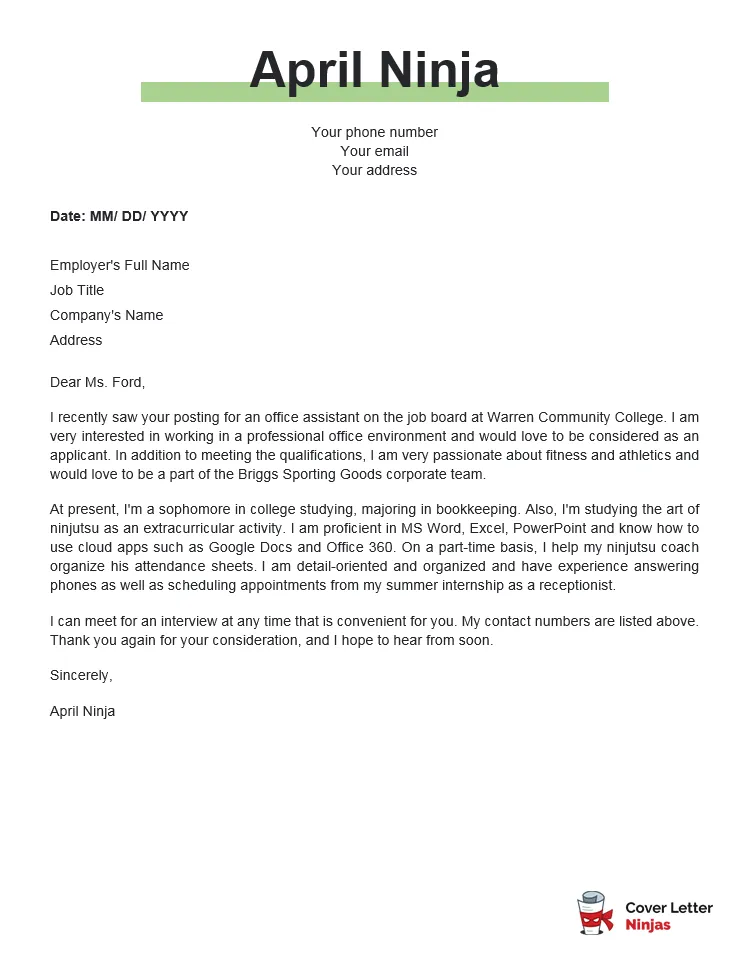
Crafting the Perfect Office Assistant Cover Letter
A compelling cover letter can be your ticket to securing an interview for an office assistant role. It serves as your introduction to the hiring manager and provides a chance to highlight your relevant skills and experience. This guide offers a step-by-step approach to writing a cover letter that grabs attention and showcases why you are the ideal candidate for the job. By following these tips, you will be able to create a strong application that maximizes your chances of getting hired. Crafting a perfect office assistant cover letter is a combination of presenting a professional image with the necessary skills required for the job.
Understanding the Purpose of a Cover Letter
The primary purpose of an office assistant cover letter is to introduce yourself to the hiring manager and explain your interest in the position. It’s more than just a formality; it’s your opportunity to provide context for your resume and to demonstrate why you are the perfect fit for the role and the company. Your cover letter is a chance to showcase your personality, enthusiasm, and understanding of the company’s needs. It’s a persuasive tool, designed to convince the reader that you deserve an interview. Use it to show how your accomplishments align with the job’s requirements, setting the stage for a successful application and an interview.
Highlighting Relevant Skills and Experience

Your cover letter should focus on the skills and experience that directly match the office assistant role’s requirements. This is where you connect your resume to the job description. Ensure that the hiring manager knows that you understand the role and what is required to be successful in it. Provide specific examples of how you’ve used your skills in prior roles. Rather than merely listing your abilities, demonstrate how you have used them to achieve positive results, showing the value that you will bring to the company. This will show the hiring manager why you’re a perfect match for their company.
Administrative and Organizational Skills
Office assistants need to be highly organized and efficient. Highlight any experience you have with scheduling, managing calendars, and handling correspondence. Mention any organizational systems you’ve implemented or any workflow processes that you’ve improved in previous jobs. Provide details of any situations where you’ve successfully handled multiple tasks simultaneously, met deadlines, and kept things running smoothly. For example, you might have experience with organizing filing systems, managing office supplies, or coordinating meetings. Show that you are capable of prioritizing tasks and maintaining a tidy, efficient workspace as these are crucial skills for the role.
Communication and Interpersonal Abilities
Office assistants often interact with clients, colleagues, and vendors, making strong communication skills essential. Emphasize your ability to communicate clearly and professionally, both in writing and verbally. Mention your experience in handling phone calls, emails, and in-person interactions. Give examples of how you’ve resolved conflicts, handled difficult customers, or built positive relationships with clients. Show your capacity to be friendly, approachable, and able to represent the company positively. Good interpersonal skills are fundamental to creating a welcoming and efficient office environment.
Technical Proficiency

In today’s digital world, proficiency in computer skills is crucial. Mention your knowledge of the Microsoft Office Suite (Word, Excel, PowerPoint, Outlook), and any other relevant software, such as CRM systems or project management tools. If the job description calls for experience using specific software, make sure to highlight it. You should also list experience using other software that is relevant to the role, like Adobe or any other relevant software. Include your typing speed and accuracy. If you’re quick to learn new software, mention this as well. You should also include any relevant training or certifications you possess.
Tailoring Your Cover Letter to the Job Description
Generic cover letters don’t make a good impression on hiring managers. Tailoring your cover letter to each job application is crucial. This shows you’ve taken the time to comprehend the company’s needs and the specific requirements of the role. Carefully review the job description to determine what skills and qualifications the employer wants. Then, use your cover letter to demonstrate how your skills and experiences align with those requirements. It helps you highlight the most relevant information and shows your genuine interest in the position.
Analyzing the Job Requirements
Start by thoroughly reading the job description. Note the specific responsibilities, required skills, and desired qualifications. Identify the keywords and phrases that the employer uses throughout the description. These are the terms they consider most important. Does the job require expertise with specific software? Does the role center on customer service, organization, or data entry? Understanding the needs of the hiring manager will enable you to create a more targeted and effective cover letter.
Matching Your Skills to the Requirements

Once you’ve analyzed the job description, match your skills with the stated requirements. Look for areas where your experience aligns with the employer’s needs. Use the keywords from the job description in your cover letter, but don’t overuse them. Provide concrete examples of how you have demonstrated the required skills in previous roles. Quantify your achievements whenever possible – for example, mention how you improved efficiency or reduced costs. This makes your cover letter more compelling and shows your ability to deliver results.
Formatting and Structure for Impact
The format and structure of your cover letter are very important. A well-organized and easy-to-read letter will make a great impression on the hiring manager. Pay attention to your layout, font, and overall presentation. Clear formatting helps the letter to be easy to read and makes your key points stand out. Use a professional font, such as Times New Roman or Arial, with a font size of 11 or 12 points. Keep your letter concise, typically no more than one page, to maintain the reader’s interest.
Header and Contact Information
Start with a professional header containing your full name, address, phone number, and email address. Ensure your contact information is up-to-date and accurate. Include your LinkedIn profile URL if you have one. The header should be clean and organized, making it easy for the hiring manager to contact you. Include the date and the hiring manager’s name and title, if known, followed by the company’s name and address. Addressing the letter to a specific person shows you’ve done your research, demonstrating attention to detail.
Opening Paragraph

The opening paragraph is your initial opportunity to capture the hiring manager’s attention. Specify the position you’re applying for and where you saw the job posting. Briefly explain your interest in the role and why you’re a good fit. Be enthusiastic and concise, demonstrating your understanding of the company and the position. Highlight one or two key skills or accomplishments that make you stand out. Your aim is to create a positive first impression and encourage the reader to continue reading.
Body Paragraphs Highlighting Achievements
The body paragraphs are where you showcase your skills and experience in detail. Use this section to elaborate on your qualifications and provide specific examples of your achievements. Focus on the skills and experiences that are most relevant to the job description. Use the STAR method (Situation, Task, Action, Result) to structure your examples, making them clear, concise, and impactful. Quantify your accomplishments whenever possible to demonstrate the value you bring. Each paragraph should focus on a specific skill or experience, supporting your overall message.
Closing Paragraph and Call to Action
In your closing paragraph, restate your interest in the position and thank the hiring manager for their time and consideration. Express your enthusiasm for the opportunity and your confidence in your ability to contribute to the company’s success. End with a clear call to action, such as “I look forward to the opportunity to discuss my qualifications further in an interview.” Include your availability for an interview or indicate that you will follow up. The closing should be professional, confident, and leave the reader with a positive impression.
Proofreading and Editing Your Cover Letter

Carefully proofread and edit your cover letter before submitting it. A cover letter with errors can damage your credibility and harm your chances of an interview. Check for grammatical errors, spelling mistakes, and punctuation errors. Ensure your sentences are clear, concise, and well-structured. Read the letter aloud to find awkward phrasing and inconsistencies. It helps to have a second pair of eyes review your cover letter. Ask a friend, family member, or career advisor to proofread it for you. A fresh perspective can help you to find mistakes that you might have missed.
Common Mistakes to Avoid
Avoid these common mistakes to increase your chances of a successful application. Many applicants make mistakes in their cover letters, which may be the reason they are not chosen. Attention to detail can increase your chances of being chosen for the job.
Overusing Generic Phrases
Avoid using generic phrases that add no value to your letter. Phrases like “I am a hard worker” or “I am a team player” are overused and do not provide information about your skills or experience. Instead, give specific examples and quantifiable achievements to show your abilities. Be specific and show, don’t tell. Use active language and focus on what you can bring to the employer. Make your cover letter stand out by demonstrating your unique qualifications and personality.
Ignoring the Company’s Culture

Research the company’s culture and values before you write your cover letter. Adjust your tone and language to reflect the company’s personality. If the company is known for a formal environment, keep a formal tone in your cover letter. If the company values innovation, show these qualities in your writing. Showing that you appreciate and respect the company’s culture shows your interest and helps you connect with the hiring manager.
Failing to Proofread
Proofreading your cover letter is extremely important. Spelling and grammar mistakes can be red flags to hiring managers. They show a lack of attention to detail. Before submitting your cover letter, review it carefully for any errors. Read it aloud to detect awkward phrasing. A polished, error-free cover letter demonstrates professionalism and boosts your chance of getting an interview. Have a friend or career advisor review your letter for you.
By following these steps, you can make a compelling cover letter that highlights your skills, experience, and enthusiasm, and increases your chances of securing an office assistant role. Good luck with your job search!