Why a Nursing Cover Letter is Crucial
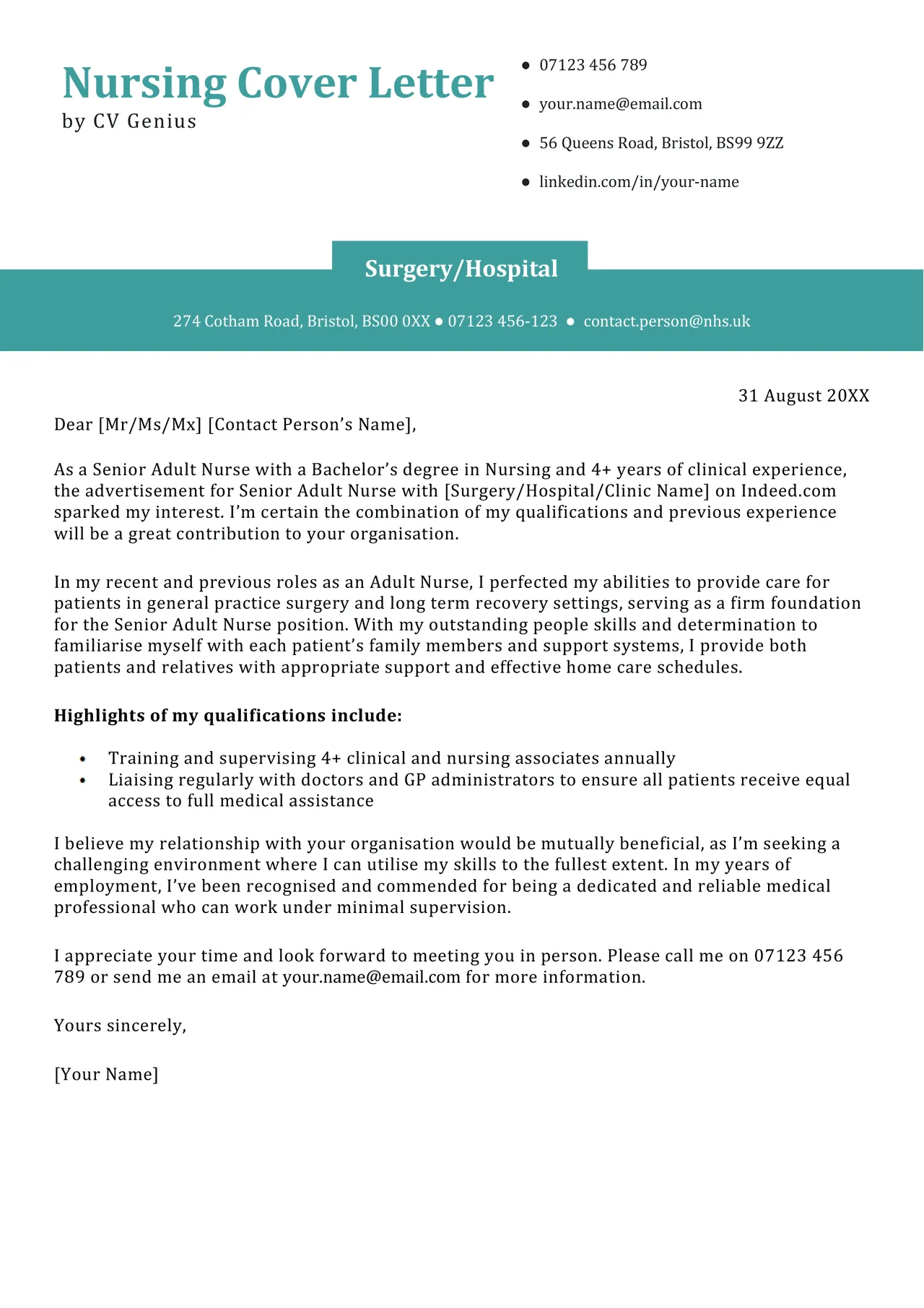
A well-crafted nursing cover letter is your first opportunity to make a strong impression on a potential employer. It serves as a crucial introduction, allowing you to showcase your skills, experience, and passion for nursing in a way that a resume alone cannot. This document provides a platform to explain your career aspirations, highlight your relevant qualifications, and express your genuine interest in the specific nursing position and the healthcare organization. In a competitive job market, a compelling cover letter can significantly increase your chances of securing an interview and ultimately landing your dream nursing role.
Key Components of a Nursing Cover Letter
A successful nursing cover letter comprises several key elements that work together to create a professional and persuasive document. These components include a clear and concise header with your contact information, a personalized greeting addressing the hiring manager by name whenever possible, and a compelling opening that immediately grabs the reader’s attention. The body of the letter should highlight your relevant skills and experience, demonstrate your passion for nursing, and quantify your achievements with data and specific examples. Finally, a professional closing that reiterates your interest, expresses gratitude, and includes a call to action is essential.
Header and Contact Information

The header of your nursing cover letter should be clean, professional, and easy to read. Include your full name, address, phone number, and email address. Ensure that the contact information is accurate and up-to-date, as this is how the employer will reach you. Consider using a professional-looking font and format, such as Times New Roman or Arial, and keep the header concise, usually within a few lines. Proper formatting demonstrates attention to detail and professionalism from the very beginning of your application. See image examples [nursing-cover-letter-header.webp]
Addressing the Hiring Manager
Whenever possible, address the hiring manager by name. Research the organization to find out the name of the person responsible for hiring. This personal touch shows that you have taken the time to learn about the company and are genuinely interested in the position. If you cannot find the hiring manager’s name, use a professional salutation like “Dear Hiring Manager” or “Dear [Department Name] Hiring Team.” Avoid generic greetings like “To Whom It May Concern,” which can make your cover letter feel impersonal. Personalizing your letter makes it more engaging and shows you’re serious about the role.
Opening with Impact
The opening of your nursing cover letter is crucial for grabbing the reader’s attention and setting the tone. Start with a strong statement that immediately captures the hiring manager’s interest. You might mention your enthusiasm for the position, highlight a key accomplishment, or briefly explain why you are a good fit for the role. Avoid generic phrases and instead focus on what makes you unique and qualified. For example, if you have a specific certification or a particular area of expertise, mention it in the opening. The opening should entice the reader to continue reading and learn more about your qualifications and experience. See image examples [nurse-skills-experience.webp]
Highlighting Your Skills and Experience

The body of your cover letter should showcase your relevant skills and experience. Tailor your letter to match the specific requirements outlined in the job description. Highlight the skills and experiences that align with the position, such as clinical skills, patient care, communication, and leadership. Provide specific examples of how you have utilized these skills in previous roles. Use action verbs to describe your accomplishments, and quantify your achievements whenever possible. This will demonstrate your ability to make a real impact on the patient’s care and the nursing team. Focus on your relevant experience.
Demonstrating Your Passion for Nursing
Your cover letter is an excellent opportunity to demonstrate your passion for nursing. Share your motivations for choosing this profession and what makes you excited about patient care. Discuss your interest in the specific nursing specialty or the healthcare setting. Convey your commitment to providing high-quality patient care and your desire to make a positive impact on patients’ lives. Show your empathy, compassion, and dedication to the well-being of others. Let the hiring manager know why you’re passionate about the role and how it aligns with your career goals. [nursing-passion-patient-care.webp]
Quantifying Your Achievements
Whenever possible, quantify your achievements with data and specific examples. Instead of saying, “Improved patient satisfaction,” provide details such as, “Increased patient satisfaction scores by 15% through implementation of new patient communication strategies.” Numbers and data make your accomplishments more concrete and demonstrate your ability to deliver results. Use metrics to showcase your impact, such as the number of patients you have cared for, the improvements you have made to patient outcomes, or the cost savings you have generated. Quantifiable achievements make your cover letter more persuasive and show your effectiveness. See image examples [quantifying-nursing-achievements.webp]
Tailoring Your Cover Letter to the Job

Customize your cover letter for each job you apply for. Avoid using a generic cover letter that is not tailored to the specific requirements of the position. Review the job description carefully and align your skills and experience with the employer’s needs. Address the key qualifications and requirements mentioned in the job posting. Research the organization and tailor your letter to align with their values and mission. Demonstrating that you have taken the time to understand the role and the organization will significantly increase your chances of getting an interview. [tailoring-cover-letter-job.webp]
Closing the Cover Letter Professionally
Close your cover letter with a professional and confident tone. Reiterate your interest in the position and express your enthusiasm for the opportunity. Thank the hiring manager for their time and consideration. Include a call to action, such as, “I am eager to discuss my qualifications further in an interview.” Provide your contact information again and express your availability for an interview. Proofread your closing carefully to ensure there are no errors. A strong closing leaves a positive impression and encourages the hiring manager to contact you.
Reviewing and Proofreading Your Cover Letter
Before submitting your cover letter, review it carefully for any errors. Proofread for typos, grammatical errors, and inconsistencies. Ensure that the formatting is consistent and professional. Ask a friend, colleague, or career counselor to review your letter for feedback. Fresh eyes can often catch mistakes that you might have missed. A polished and error-free cover letter demonstrates your attention to detail and professionalism, leaving a positive impression on the hiring manager. Ensure that your letter is clear, concise, and easy to read.
5 Nursing Cover Letter Examples

Here are examples for different nursing positions: Registered Nurse (RN), Nurse Practitioner (NP), Licensed Practical Nurse (LPN), Nursing Student, and Experienced Nurse.
Example 1 Registered Nurse (RN)
Dear [Hiring Manager Name], I am writing to express my enthusiastic interest in the Registered Nurse position at [Hospital Name], as advertised on [Platform]. With five years of experience in critical care, I am confident in my ability to provide exceptional patient care, collaborate with multidisciplinary teams, and contribute to a positive work environment. During my time at [Previous Hospital], I consistently exceeded expectations in patient satisfaction scores and received commendations for my compassionate approach and effective communication skills. I am proficient in EMR systems, adept at managing complex medical conditions, and passionate about continuous learning to improve patient outcomes. My goal is to enhance the quality of life for every patient and support the mission of [Hospital Name].
Example 2 Nurse Practitioner (NP)
Dear [Hiring Manager Name], I am writing to apply for the Nurse Practitioner position at [Clinic Name], as advertised on [Platform]. With a Doctorate in Nursing Practice and a specialization in family medicine, I am confident in my ability to provide comprehensive patient care, diagnose and treat illnesses, and educate patients on preventive health measures. During my clinical rotations, I excelled in collaborating with physicians and other healthcare providers, ensuring continuity of care, and achieving outstanding patient outcomes. I am particularly drawn to [Clinic Name]’s commitment to community health and patient-centered care, and I am eager to contribute my skills and expertise to your team. I look forward to discussing my qualifications in detail.
Example 3 Licensed Practical Nurse (LPN)

Dear [Hiring Manager Name], I am writing to express my interest in the Licensed Practical Nurse position at [Nursing Home Name], as advertised on [Platform]. As a dedicated LPN with three years of experience in long-term care, I am committed to providing compassionate and high-quality care to residents, assisting with daily activities, and administering medications under the supervision of registered nurses. My experience includes documenting patient vital signs, assisting with wound care, and implementing care plans. I am a detail-oriented and empathetic individual, and I am eager to contribute to the supportive and caring environment at [Nursing Home Name]. I am excited to learn more about this opportunity.
Example 4 Nursing Student
Dear [Hiring Manager Name], I am writing to express my interest in the Nursing Assistant position at [Hospital Name], as advertised on [Platform]. As a nursing student at [University Name], I am eager to apply my foundational knowledge and gain practical experience in a healthcare setting. My coursework has prepared me with essential skills in patient care, communication, and teamwork. During my clinical rotations, I have demonstrated the ability to assist patients with daily activities, monitor vital signs, and provide emotional support. I am committed to providing exceptional patient care and excited about the opportunity to grow and learn within the supportive environment at [Hospital Name]. I am excited to be a part of a team that provides exceptional care.
Example 5 Experienced Nurse
Dear [Hiring Manager Name], I am writing to apply for the Nursing Supervisor position at [Hospital Name], as advertised on [Platform]. With over ten years of experience in nursing leadership and management, I am confident in my ability to lead and mentor a team of nurses, ensure high standards of patient care, and implement effective operational strategies. In my previous role as Nurse Manager at [Previous Hospital], I successfully improved staff retention, decreased patient readmission rates, and streamlined clinical workflows. I am skilled in conflict resolution, performance management, and regulatory compliance. I am passionate about creating a positive and supportive work environment and excited to contribute to the success of [Hospital Name].
Common Mistakes to Avoid

Avoid common mistakes to make sure your cover letter stands out for the right reasons. Pay attention to details to make a strong impression. These mistakes can undermine your chances.
Formatting Errors
Formatting errors, such as inconsistent font choices, poor spacing, and misaligned text, can make your cover letter look unprofessional. Use a clean and easy-to-read font, such as Times New Roman or Arial, and maintain consistent formatting throughout the document. Ensure that your contact information, headings, and body text are clearly separated. Always proofread your letter carefully to make sure there are no formatting issues. Properly formatted documents show that you pay attention to detail.
Generic Cover Letters
Submitting a generic cover letter that is not tailored to the specific job or organization can be a major mistake. Avoid using a template without customizing it to match the job description and the employer’s needs. Show that you have researched the organization and understand its mission and values. Highlight the skills and experiences that are most relevant to the position. Personalize your letter by addressing the hiring manager by name and showing genuine interest in the role. Take the time to show why you are a perfect fit for the organization.
Typos and Grammatical Errors

Typos and grammatical errors can damage your credibility and make your cover letter look unprofessional. Before submitting your letter, carefully proofread it for any errors. Use spell-check and grammar-check tools, but also read the letter aloud to catch any mistakes. Ask a friend, colleague, or career counselor to review your letter for feedback. A well-written cover letter demonstrates your attention to detail and your commitment to quality.
Lack of Enthusiasm
A cover letter that lacks enthusiasm and passion can fail to capture the hiring manager’s attention. Show your excitement for the position and your genuine interest in the organization. Highlight your motivations for choosing nursing and what inspires you about patient care. Use positive and engaging language to convey your passion and commitment to the role. Let the hiring manager know that you are eager to contribute your skills and expertise to the team. Demonstrate your desire to make a positive impact.
Tips for Writing a Strong Cover Letter
Follow these tips to help you write a strong cover letter that will impress the hiring manager.
Research the Employer
Before writing your cover letter, thoroughly research the employer and the specific position. Visit the organization’s website to learn about its mission, values, and culture. Review the job description carefully to understand the required skills, experience, and qualifications. Tailor your letter to align with the employer’s needs and demonstrate how you can contribute to their goals. Knowledge of the organization will make your letter more effective and show you are serious about the role.
Use Action Verbs
Use strong action verbs to describe your accomplishments and responsibilities. Action verbs make your cover letter more dynamic and engaging, highlighting your achievements and demonstrating your skills. Instead of using passive phrases like “responsible for,” use active verbs like “managed,” “implemented,” “coordinated,” or “achieved.” Action verbs will bring your accomplishments to life and make a lasting impression on the hiring manager. See image examples [nurse-action-verbs.webp]
Show, Don’t Tell
Instead of simply stating your skills and abilities, demonstrate them with specific examples and evidence. Provide concrete examples of how you have utilized your skills in previous roles and the positive outcomes you have achieved. Quantify your accomplishments whenever possible, using data and metrics to show your impact. For instance, when describing your leadership skills, share a specific instance where you led a team to achieve a specific goal. Showing, rather than telling, makes your cover letter more compelling and persuasive. See image examples [patient-care-focus.webp]
Focus on the Patient
As a nurse, your primary focus should be on the patient. Emphasize your commitment to patient care and highlight your ability to provide compassionate, empathetic, and high-quality care. Describe how you have positively impacted patients’ lives and improved their outcomes. Share any experiences where you went above and beyond to meet a patient’s needs or provide emotional support. Demonstrating your patient-centered approach will make your cover letter more effective and show the hiring manager your dedication to this very important job.
Conclusion
A well-written nursing cover letter is a crucial tool for showcasing your qualifications, experience, and passion for nursing. By following the tips and examples provided, you can create a compelling cover letter that captures the hiring manager’s attention and increases your chances of landing your dream nursing job. Remember to tailor your letter to each job, highlight your key achievements, and express your genuine enthusiasm for the role. Good luck with your job search!