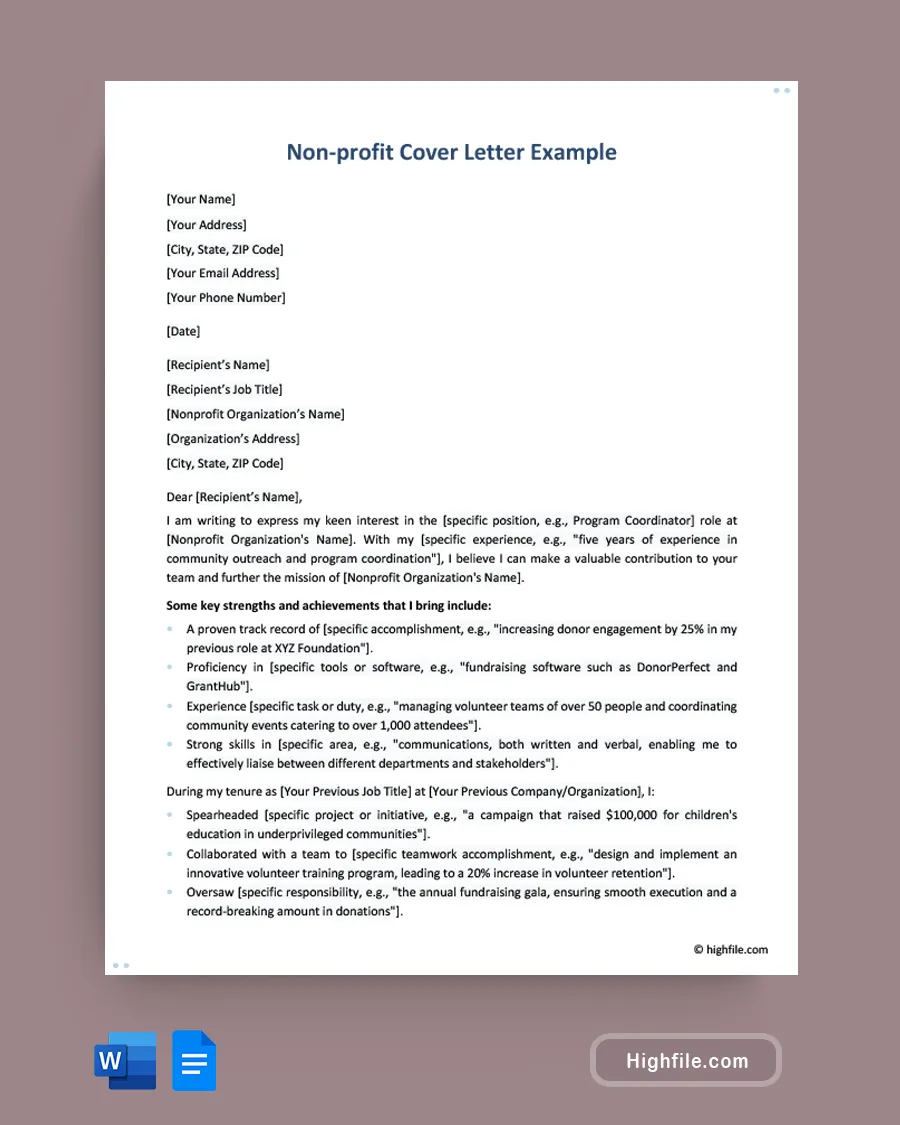
7 Nonprofit Cover Letter Secrets
Landing a job in the nonprofit sector can be incredibly rewarding, but the competition is often fierce. A well-crafted cover letter is your key to unlocking the door to your dream role. It’s your chance to shine, showcase your passion, and demonstrate why you’re the perfect fit for the organization. In this guide, we’ll reveal the top 7 secrets to writing a standout nonprofit cover letter that grabs attention and gets you an interview. Learn how to avoid common pitfalls, structure your letter effectively, and highlight your unique qualifications. Get ready to transform your job applications and make a lasting impression on potential employers. Let’s dive in and unlock the secrets to nonprofit cover letter success. Your journey toward making a difference starts here.
Highlighting Your Passion for the Cause
Nonprofit organizations are driven by passion, so your cover letter must reflect your genuine interest in the cause. Start by clearly stating your enthusiasm for the organization’s mission and the impact it makes. Explain why you’re drawn to their specific work. Show that you’ve researched their programs and values and that you align with their goals. Share a personal story or anecdote that illustrates your commitment to the cause. This will resonate with the hiring manager and demonstrate that you’re not just looking for a job but are genuinely invested in the organization’s success. Passion is contagious, and it’s what sets you apart in the nonprofit world. Conveying this passion helps to make a significant impact.
Showcasing Relevant Skills and Experience

While passion is essential, skills and experience are equally important. Carefully review the job description and identify the key skills and qualifications the organization is seeking. Then, provide concrete examples from your past experiences that demonstrate you possess these skills. Use action verbs to describe your accomplishments. For example, instead of saying “I helped with fundraising,” say “I spearheaded a fundraising campaign that raised $10,000.” Be specific about your role and the impact you made. Quantify your achievements whenever possible. Demonstrate how your experience has prepared you for the role and the value you would bring to the organization. Use your cover letter as a tool to show how you match their requirements, emphasizing how you can contribute.
Tailoring Your Letter to the Specific Role
Generic cover letters are easily discarded. Your letter must be tailored to each specific role and organization. Start by researching the organization and understanding its mission, values, and programs. Then, analyze the job description and identify the key requirements. Use the language from the job description and customize your letter to highlight how your skills and experience align with those requirements. Avoid using a generic template. Show the hiring manager that you’ve taken the time to understand their needs and that you’re genuinely interested in the specific opportunity. This level of personalization demonstrates your commitment and increases your chances of getting noticed. This step shows dedication to the application process.
Demonstrating Your Understanding of the Organization
Your cover letter should demonstrate a clear understanding of the organization’s mission, values, and programs. Before writing, thoroughly research the organization. Visit their website, read their annual reports, and follow their social media accounts. Identify their current projects and initiatives, and show how your skills and experience can contribute to their goals. Mention specific programs or projects that resonate with you and explain why you’re excited about the organization’s work. This shows that you’re not just applying for a job but that you’re also interested in the organization’s mission. This deep understanding helps you stand out from the competition and prove your commitment. This process is a significant sign of interest.
Using Strong Action Verbs

Action verbs bring your accomplishments to life and make your cover letter more engaging. Instead of using passive language, use strong action verbs to describe your skills and experiences. For example, instead of “Responsible for managing social media,” use “Managed and grew the organization’s social media presence, increasing follower engagement by 20%.” Use verbs such as “spearheaded,” “implemented,” “achieved,” “collaborated,” “led,” “created,” and “developed.” This will help you highlight your achievements and demonstrate your capabilities. The more action verbs you use, the more vivid and impactful your letter will be. Always use strong verbs as it is a great indicator of what you accomplished.
Quantifying Your Achievements
Numbers and data make your accomplishments more compelling and show the impact you’ve made. Whenever possible, quantify your achievements. Use numbers to demonstrate the scope and results of your work. For example, instead of saying “Increased donations,” say “Increased donations by 15% in one year.” Instead of “Managed a team,” say “Managed a team of 10 volunteers.” Quantifying your achievements provides concrete evidence of your skills and experience. It also helps the hiring manager understand the value you would bring to their organization. Quantifiable results immediately improve your application and make a strong impression.
Proofreading and Editing Your Letter
Errors can undermine your credibility and professionalism. Before submitting your cover letter, proofread it carefully for any typos, grammatical errors, or formatting mistakes. Read it aloud to catch any awkward phrasing or sentence structure issues. Ask a friend, colleague, or career counselor to review your letter for feedback. Pay attention to the tone, clarity, and overall impact of your letter. A polished and error-free cover letter demonstrates attention to detail and respect for the hiring manager’s time. It is an easy step that could greatly enhance your application. Always proofread and edit before submitting; it makes a huge difference.
Why a Great Cover Letter Matters

A great cover letter serves as your introduction to a potential employer. It’s the first impression you make, and it can significantly impact your chances of landing an interview. In the competitive nonprofit sector, a well-crafted cover letter can set you apart from other applicants and demonstrate your suitability for the role. It’s more than just a formality. It provides a space to highlight your passion, skills, and experience, and also showcases how you align with the organization’s mission and values. This is a chance to make a good first impression that can lead to landing your dream job. A great cover letter should be used to the fullest potential.
The Impact of a Compelling Cover Letter
A compelling cover letter can make a significant impact on your job application. A well-written cover letter attracts the attention of the hiring manager. This helps you to stand out. It can create a positive first impression. It conveys your enthusiasm and genuine interest in the role and the organization. It allows you to articulate how your skills and experience match the job requirements and the organization’s mission. It also allows you to highlight your unique qualifications. A compelling cover letter helps you move from the applicant pile to the interview stage. It makes you more memorable and increases your chances of securing an interview.
Cover Letters First Impressions
Your cover letter is often the first point of contact with a potential employer. It sets the tone for your entire application. A strong cover letter can capture the hiring manager’s attention and encourage them to review your resume. It presents you as a well-prepared, passionate, and qualified candidate. It is a chance to make a great first impression. Make sure that your cover letter is professional, well-written, and tailored to the specific role and organization. By making a great first impression, you set the stage for a successful job search. It is your opportunity to shape how the hiring manager perceives you. This can lead to an increased chance of being called for an interview.
Common Mistakes to Avoid

Avoiding common mistakes can significantly improve your cover letter’s effectiveness. Being aware of these pitfalls helps you create a polished and professional document that will impress potential employers. These mistakes can be easily corrected and help enhance your cover letter and increase your chances of success. By avoiding them, you can present yourself in the best possible light. Let’s explore the common mistakes to avoid and how to fix them.
Generic Language and Lack of Personalization
Using generic language and failing to personalize your cover letter is a major mistake. Generic cover letters don’t show that you have researched the organization or understand the specific role. They fail to demonstrate your genuine interest and enthusiasm. To avoid this, always tailor your cover letter to the specific organization and role. Show that you understand the organization’s mission, values, and programs. Use the language from the job description and highlight how your skills and experience align with the requirements. Show that you have taken the time to understand their needs. This personalization demonstrates your commitment and increases your chances of getting noticed.
Focusing Solely on Yourself
While it’s important to highlight your skills and experience, focusing solely on yourself can make your cover letter seem self-centered. Nonprofit organizations are looking for candidates who are passionate about their mission and understand their needs. When crafting your letter, strike a balance. Show how your skills and experience can benefit the organization and help them achieve their goals. Demonstrate your understanding of their work. Explain how you can contribute to their mission. By shifting the focus from yourself to the organization, you will show that you have a clear interest in helping them succeed.
Typos and Grammatical Errors

Typos and grammatical errors can damage your credibility and make you appear unprofessional. These mistakes can create a negative impression. Always proofread your cover letter carefully before submitting it. Check for any typos, grammatical errors, and formatting mistakes. Read your letter aloud to catch any awkward phrasing or sentence structure issues. Ask a friend, colleague, or career counselor to review your letter for feedback. A polished and error-free cover letter demonstrates attention to detail and respect for the hiring manager’s time. This is a quick and effective way to improve your chances.
Formatting Errors and Poor Presentation
Poor formatting and presentation can make your cover letter difficult to read and detract from your message. Use a professional and easy-to-read font, such as Arial or Times New Roman. Ensure your paragraphs are well-structured and easy to read. Use clear headings and subheadings to organize your content. Pay attention to the overall layout and ensure there is sufficient white space. This allows the reader to easily navigate your letter. A well-formatted cover letter is a sign of professionalism and attention to detail. It improves the reader’s experience and helps you get your message across effectively. This enhances your overall impact.
Crafting a Compelling Opening
The opening of your cover letter is the most crucial part. It’s your first chance to grab the reader’s attention and make them want to learn more about you. A compelling opening sets the tone for the rest of your letter. It is an invitation to the reader to consider your application. It can make the difference between a cover letter that gets read and one that ends up in the rejection pile. Here are strategies to ensure that your cover letter opens strong and makes a positive impact.
Grabbing the Reader’s Attention Immediately

To grab the reader’s attention, avoid generic openings. Instead, begin with a hook. Start with a compelling statement or a brief anecdote that shows your passion for the cause. You could share a specific achievement. Make it clear from the start why you are interested in the organization and the specific role. This immediate engagement piques the reader’s interest. It makes them want to continue reading. Use the opening paragraph to set the tone. This shows you have put time and effort into the application process. A creative opening is more likely to stand out in the crowd.
Expressing Your Enthusiasm for the Organization
The opening of your cover letter is a great time to express your enthusiasm for the organization. Show that you have a genuine interest in their mission and values. Mention a specific program or project that resonates with you. Explain why you are excited about the organization’s work. This demonstrates your passion for the cause. It shows that you have researched the organization. Make the hiring manager feel that you are excited to be a part of their organization. Make the tone authentic. This connection helps to grab the reader’s attention. A genuine enthusiasm can set you apart from the other applicants.
Linking Your Skills to the Job Requirements
In the opening, it is useful to briefly link your skills to the job requirements. Briefly mention a few key skills. Show that you have what the organization is looking for. Mention your experience, and explain how you meet the requirements. This helps the hiring manager understand why you are the right candidate for the role. This will increase the impact of your application. Be sure to show how you can contribute to the organization’s goals. This immediate alignment with the job requirements makes a strong first impression. It ensures your application stands out from the others.
Structuring Your Cover Letter for Success
A well-structured cover letter is easy to read and conveys your message effectively. A clear structure helps the hiring manager understand your qualifications and enthusiasm. It also ensures you provide all of the relevant information. A good structure is a key element of an effective cover letter. A well-organized letter makes it easy for the hiring manager to find the information. Here’s a guide to creating a successful cover letter structure.
The Importance of a Clear and Concise Structure
A clear and concise structure is essential for an effective cover letter. Organize your letter into distinct sections. Start with an engaging opening. Then, discuss your skills and experiences. End with a strong closing statement. Use headings and subheadings to guide the reader through your letter. Keep each section focused and to the point. This makes it easy for the hiring manager to understand your qualifications. A clear structure ensures you include all essential information. It improves the overall readability and impact of your cover letter.
Writing an Engaging Middle Section
The middle section is where you provide details about your skills, experiences, and accomplishments. Focus on the key requirements of the job description. Provide specific examples of your achievements. Quantify your achievements to show the impact of your work. Use action verbs to describe your responsibilities. Explain how your experience aligns with the organization’s mission. Provide a compelling narrative that highlights your strengths. A well-written middle section will demonstrate your qualifications and make a strong case for your candidacy.
Creating a Strong Closing Statement
The closing statement is your final chance to make a lasting impression. Reiterate your interest in the position and the organization. Summarize your key qualifications. Express your enthusiasm for the opportunity to contribute to their mission. Include a clear call to action. State that you are available for an interview. Thank the hiring manager for their time and consideration. Be professional and enthusiastic. Make the closing statement memorable. This ensures your cover letter leaves a positive and lasting impression.
Highlighting Your Qualifications
Highlighting your qualifications is crucial for demonstrating your fit for the role. By emphasizing your skills, experience, and accomplishments, you make a strong case for why you are the ideal candidate. Carefully align your qualifications with the job description. This shows you understand the organization’s needs. This makes your cover letter more effective. Here’s how to effectively highlight your qualifications.
Showcasing Your Relevant Skills and Experience
Start by identifying the key skills and experiences required for the job. Then, provide examples from your past experiences. This will demonstrate that you possess those skills. Use concrete examples to show how you have applied these skills in previous roles. Mention specific projects or responsibilities. Focus on achievements. Be specific about your role. Emphasize your impact and your contribution. By connecting your skills and experience to the job requirements, you create a compelling case. This increases the likelihood of getting an interview.
Providing Specific Examples of Your Achievements
Provide specific examples of your achievements to showcase the impact of your work. Instead of general statements, use concrete details. Quantify your achievements. This provides evidence of your success. Use action verbs to describe your responsibilities. Show the hiring manager the value you bring to the organization. Examples can show you go above and beyond. This will show how you made a difference. This builds your credibility and makes your qualifications more compelling. By sharing specific accomplishments, you make your cover letter more persuasive.
Aligning Your Experience with the Job Description
Aligning your experience with the job description is important. Carefully review the job description. Identify the key requirements and responsibilities. Tailor your cover letter to these requirements. Highlight the skills and experiences that directly match the job requirements. Use the same keywords and phrases. Show that you understand what the organization is looking for. Demonstrate your ability to meet their needs. By aligning your experience with the job description, you show the hiring manager that you are a perfect match for the role. This increases your chances of getting an interview.
Showcasing Your Personality and Passion
Your cover letter is an opportunity to showcase your personality and passion for the mission. Nonprofit organizations value candidates who are enthusiastic. Your passion can set you apart from other applicants. By letting your personality shine through, you demonstrate your genuine interest in the organization. It also helps you build a connection with the hiring manager. Here are strategies for effectively showcasing your personality and passion.
Letting Your Personality Shine Through
Your cover letter should reflect your personality. This is because it helps the hiring manager to get to know you. Use a professional but authentic tone. Show your enthusiasm for the cause and the organization. Share a personal story or anecdote. This helps to demonstrate your commitment. Be confident. Show your enthusiasm for the work. Let your personality shine through. This makes your cover letter more memorable. This increases your chances of making a positive impression. By showing personality, it helps you stand out from the crowd.
Expressing Your Passion for the Nonprofit’s Mission
Expressing your passion for the nonprofit’s mission is essential for making a good impression. Demonstrate your commitment. Show your interest in the cause. Mention the organization’s mission. Show how your values align with theirs. Share why the organization’s work resonates with you. This shows that you are genuinely invested in the organization’s success. It will help you make a strong connection. Express your enthusiasm for the opportunity. This makes your cover letter more compelling. This also makes it memorable. Showcasing your passion is essential for making a positive impact.
Demonstrating Your Commitment to the Cause
Demonstrate your commitment to the cause by sharing relevant experiences. Mention volunteer work, advocacy efforts, or any other activities that showcase your dedication. Explain how these experiences have shaped your passion. Show that you understand the challenges and rewards of working in the nonprofit sector. By demonstrating your commitment, you show the hiring manager that you are not just looking for a job. You are also committed to making a positive difference. This commitment increases your chances of being selected. Show that you are ready to contribute to the organization’s mission.