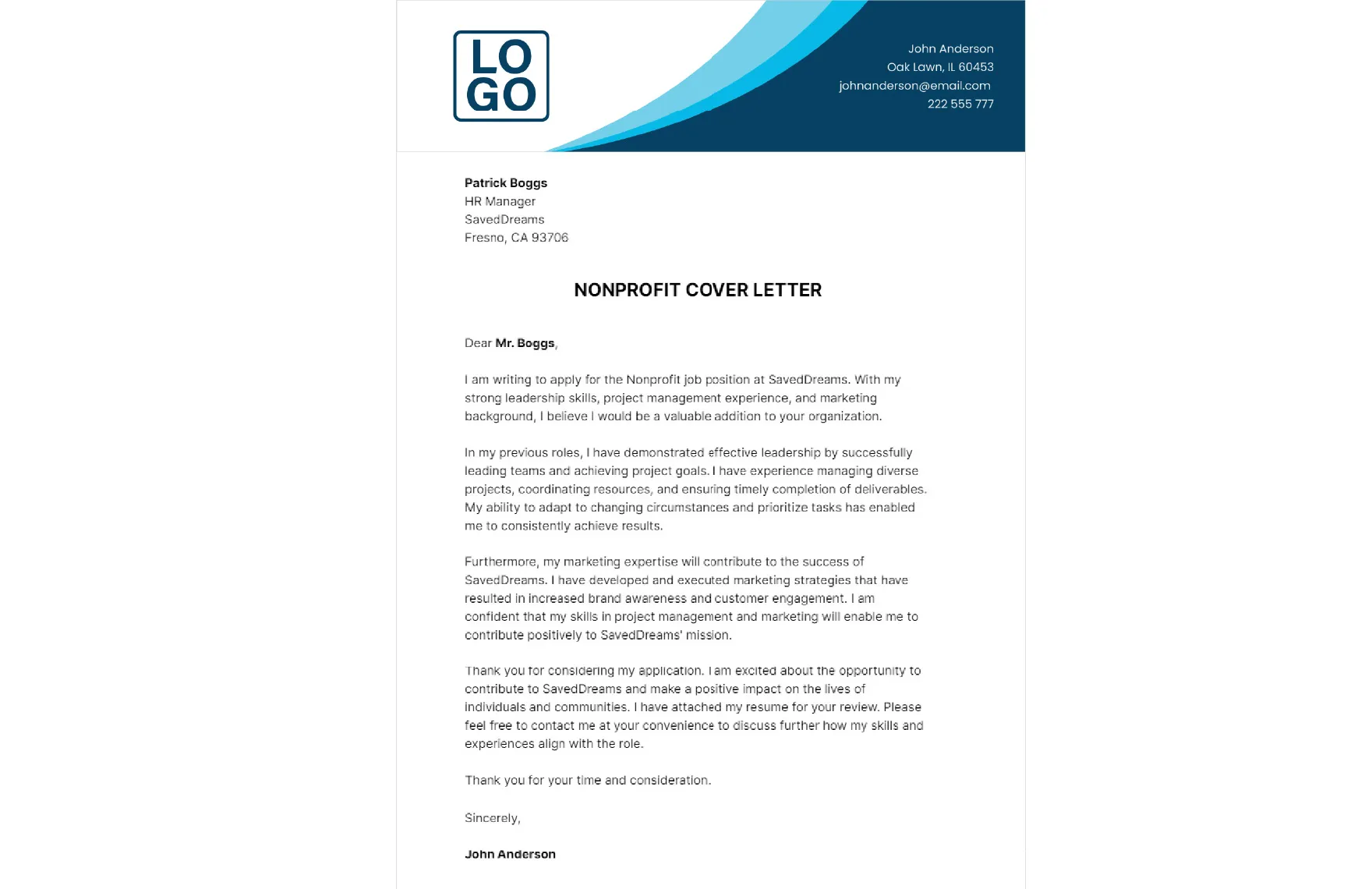
Crafting a Stellar Nonprofit Cover Letter
A well-crafted cover letter is your first opportunity to make a strong impression on a nonprofit organization. It’s not just a formality; it’s a critical tool to showcase your passion, skills, and alignment with the organization’s mission. Unlike a resume, which lists your experience, a cover letter allows you to tell your story, connecting your qualifications to the specific needs of the role and the values of the nonprofit. A compelling cover letter increases your chances of getting an interview, which is the first step toward securing your dream job within a cause you care about. This guide provides a comprehensive overview of how to write a cover letter that gets noticed by nonprofit organizations, helping you stand out from the competition.
Understanding the Nonprofit Landscape
Before you start writing, take time to understand the nonprofit sector. Nonprofit organizations operate with a unique set of goals and values. They are driven by a mission, not by profit, and they often rely on the generosity of donors and the dedication of volunteers. This understanding is crucial because it informs your approach to the cover letter, shaping the language you use, and the skills you highlight. Showcasing your understanding of their mission and values will help you get noticed. When writing for a nonprofit organization, you’re not just selling your skills; you’re showing how those skills will contribute to their mission. Nonprofit organizations appreciate candidates who understand their challenges and their impact.
Researching the Organization

Thorough research is the cornerstone of a standout cover letter. Visit the organization’s website, read their mission statement, and explore their recent projects and initiatives. Identify their core values and the specific impact they aim to make. Look at their social media presence to understand their voice and the issues they care about. This information is not just for background; it will directly inform the content of your cover letter. Demonstrating that you understand the organization’s specific goals and challenges will demonstrate your genuine interest and make your application more appealing. This is especially important when applying to a nonprofit, as they want to see that you understand their goals and how your skills and experiences align with their mission. Researching the organization also allows you to identify specific individuals or projects you can reference, personalizing your cover letter and showing that you have taken the time to understand their work.
Highlighting Relevant Skills
Nonprofits seek candidates with a range of skills, often including fundraising, program management, communications, grant writing, and volunteer coordination. Carefully review the job description and identify the specific skills and experiences the organization is seeking. Then, in your cover letter, highlight your relevant skills using clear and concise language. Instead of just listing skills, provide concrete examples of how you have used those skills in the past. For example, if the job description mentions the need for strong communication skills, provide a specific example of a project where you successfully communicated with donors, the public, or other stakeholders. By demonstrating how you’ve used your skills to achieve positive results, you’ll make a much stronger case for your candidacy. Align your skills with the needs of the organization and demonstrate how you can contribute to their success.
Making Your Cover Letter Stand Out
Tailoring Your Letter to the Role

A generic cover letter will likely get overlooked. Each cover letter should be tailored to the specific job and organization. Begin by addressing the letter to the hiring manager or the person listed in the job description. If you can’t find a name, call the organization. Avoid using generic greetings. Customize your letter to address the specific requirements of the role. Review the job description carefully and highlight the skills and experiences that align with the role’s requirements. Explain how your qualifications directly address the organization’s needs. Use keywords from the job description throughout your letter. This demonstrates that you have carefully reviewed the job posting and understand what the organization is looking for. A tailored cover letter shows that you care about the specific opportunity and that you’ve invested the time to create a compelling application.
Showcasing Your Passion
Nonprofit organizations are driven by passion and a commitment to their mission. Express your enthusiasm for the cause and the organization. Explain why you are drawn to their work and what motivates you to contribute. Share any personal experiences that have shaped your values and inspired you to pursue a career in the nonprofit sector. The best way to showcase your passion is to make a genuine connection with the organization’s mission. Show that you are not just looking for a job but that you are genuinely invested in the cause and the work of the organization. Demonstrating your passion will make your cover letter more memorable and help you connect with the hiring manager on a personal level. This will differentiate your application from others and make you a more compelling candidate.
Structuring Your Nonprofit Cover Letter
Header Essentials

Begin your cover letter with a professional header that includes your contact information: your name, address, phone number, and email address. Include the date and the name and address of the hiring manager or organization. This format ensures that your letter is easily identifiable and that the hiring manager can quickly reach you. Make sure your contact information is up-to-date and accurate. Use a professional-looking email address. Consider using a resume template to format the header consistently. The header is the first thing a hiring manager sees, so make sure it looks polished and professional. It is very important to make sure that the header is easy to read and provides all the necessary contact information.
Opening Paragraph that Grabs Attention
Your opening paragraph is your opportunity to grab the reader’s attention and make a strong first impression. Avoid generic opening lines. Instead, state the specific position you are applying for and how you learned about the opportunity. Express your enthusiasm for the role and the organization. Briefly state why you are a good fit for the position and what you hope to achieve. Immediately convey your enthusiasm and how your skills and experience will add value to the organization. Use a compelling hook to capture the reader’s attention. The goal is to show the reader immediately why you are interested in the position. The opening paragraph sets the tone for the rest of the letter. Make sure it is clear, concise, and engaging.
Body Paragraphs Key Information
The body of your cover letter should provide more detail about your qualifications and why you are a good fit for the role. Break it into two or three paragraphs. In the first paragraph, highlight your most relevant skills and experiences. Provide specific examples of how you have used these skills to achieve positive results. Use action verbs to describe your accomplishments and avoid simply listing your responsibilities. In the second paragraph, discuss your passion for the cause and the organization’s mission. Explain why you are drawn to their work. The body paragraphs are where you make the case for why the hiring manager should consider you for the role. Make sure the information in the body paragraphs is relevant, concise, and compelling. Keep your paragraphs focused and avoid rambling. Use keywords from the job description to demonstrate that you understand the requirements of the role and the mission of the organization.
Closing the Letter with Impact

Your closing paragraph should reiterate your interest in the position and the organization. Reiterate your key qualifications and summarize why you believe you are a strong candidate. Express your gratitude for the hiring manager’s time and consideration. Include a call to action. State that you are available for an interview and provide your contact information again. A strong closing paragraph leaves a lasting positive impression on the reader. Thank them for their time, restate your enthusiasm and include an invitation for an interview. This will make your application more memorable and increases the chances of getting a response. Always include a professional closing, such as “Sincerely” or “Best regards,” followed by your full name.
Proofreading and Editing
Ensuring Clarity and Conciseness
Clarity and conciseness are essential for an effective cover letter. Ensure that your writing is easy to understand and that your message is clear and concise. Use simple language and avoid jargon or overly complex sentences. Keep your paragraphs short and to the point. Proofread your letter carefully to ensure that your message is clear and that you have not used too many words. Cut out any unnecessary words or phrases. Make sure you’re conveying your message in a way that is easy to read and digest. Aim for a tone that is professional and enthusiastic, and edit for length and clarity. A concise and clear cover letter shows that you value the hiring manager’s time and respect their attention.
Checking for Errors

Typos, grammatical errors, and inconsistencies can undermine your credibility. Proofread your cover letter multiple times. Read your letter aloud to catch any awkward phrasing or errors that you might miss when reading silently. Use a spell checker and grammar checker, but don’t rely on them entirely. Ask a friend or family member to review your letter as a second pair of eyes can often spot mistakes that you might miss. Double-check all names, dates, and contact information. A well-proofread cover letter demonstrates attention to detail and professionalism. Correcting errors is one of the most critical steps in writing a cover letter. Make sure that your cover letter is free from all errors and presents you in the best possible light.
Additional Tips for Success
Using Action Verbs Effectively
Action verbs bring your accomplishments to life and make your cover letter more engaging. Use strong, dynamic verbs to describe your achievements and responsibilities. Instead of saying “Responsible for fundraising,” say “Managed and exceeded fundraising goals.” Instead of “Assisted with program development,” try “Developed and implemented successful program initiatives.” Action verbs help you showcase your skills and experiences in a way that is more compelling and memorable. Replace passive language with active verbs. A cover letter that is filled with strong action verbs will capture the attention of the hiring manager. They demonstrate that you are a proactive and results-oriented individual. Make sure to use the appropriate action verbs in your cover letter to demonstrate your results effectively.
Quantifying Your Achievements

Quantifying your achievements provides concrete evidence of your impact and makes your cover letter more persuasive. Use numbers and data to demonstrate your successes. For example, instead of saying “Increased donations,” say “Increased donations by 20% in one year.” Instead of “Managed a team,” say “Managed a team of 10 volunteers.” Quantifying your accomplishments gives the hiring manager a clear understanding of your capabilities and the value you can bring to the organization. By quantifying your results, you provide concrete evidence of your abilities. These examples will highlight your skills and make your achievements more tangible, showing hiring managers the value you can bring. Numerical data adds a layer of credibility to your claims and demonstrates your ability to achieve results.
Following Up The Next Steps
After submitting your cover letter and resume, it’s appropriate to follow up. If you haven’t heard back within the timeframe specified in the job posting, send a brief, polite email to the hiring manager. Briefly reiterate your interest in the position, reference the application, and ask if they need any additional information. Following up demonstrates your continued interest in the role and shows that you are proactive. However, avoid sending multiple follow-up emails. Send a single follow-up email no more than one or two weeks after submitting your application. If you don’t get a response after the follow-up, it might be time to move on. Following up is a professional courtesy. Doing so, demonstrates your genuine interest in the position and the organization. It is a good practice to follow up unless explicitly instructed otherwise.