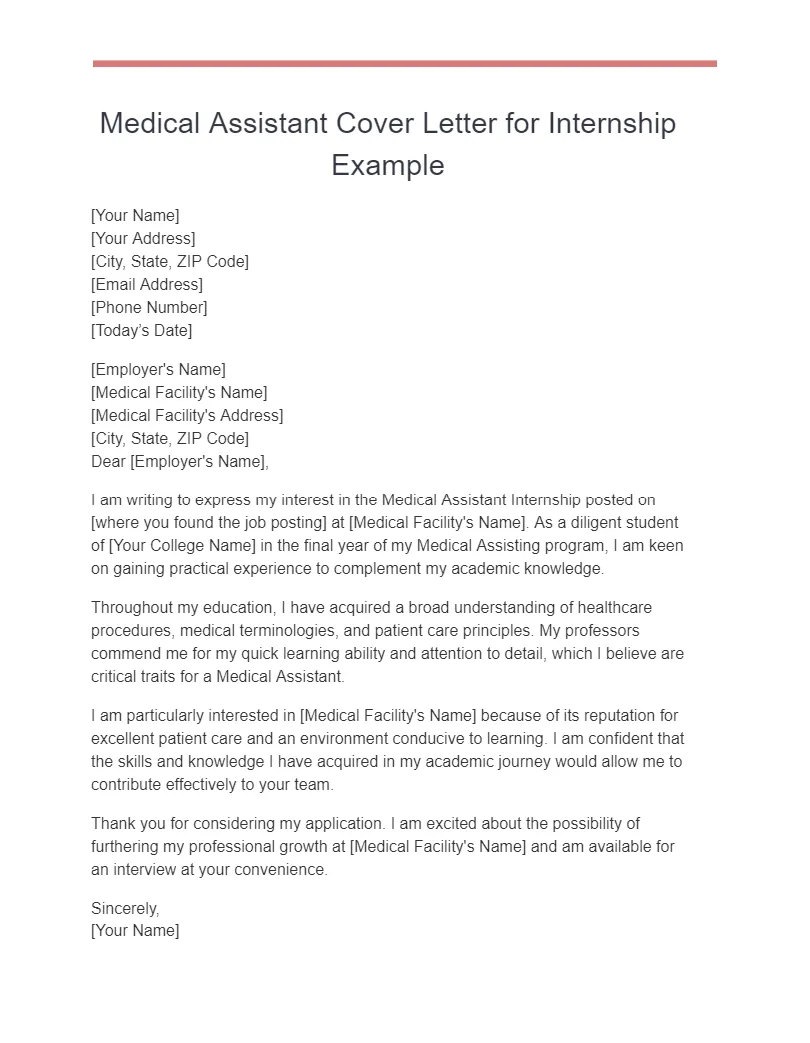
Crafting Your Medical Assistant Cover Letter
Securing a medical assistant position without prior experience can seem daunting, but a well-crafted cover letter is your key to unlocking opportunities. It’s your chance to shine, demonstrating to potential employers that you possess the skills, qualities, and drive to excel in the role, even without a traditional background. Your cover letter is not just a formality; it’s a narrative of your capabilities and aspirations. It allows you to showcase how your unique background and transferable skills align with the requirements of the job. By focusing on your strengths, expressing genuine enthusiasm, and presenting yourself professionally, you can significantly increase your chances of landing an interview and ultimately, getting hired. This guide will provide you with the essential steps to create a compelling medical assistant cover letter that will make you stand out from the competition.
Highlighting Transferable Skills
Even if you lack direct experience as a medical assistant, you likely possess transferable skills that are highly valued in the healthcare field. These are skills you’ve acquired in previous roles, volunteer work, educational pursuits, or personal experiences. Think about skills like communication, organization, problem-solving, and attention to detail. For example, if you’ve worked in customer service, you have experience communicating with diverse individuals and resolving conflicts. If you’ve been involved in managing projects or coordinating events, you demonstrate organizational skills. Consider any experience where you had to multi-task, manage deadlines, or work collaboratively. Identifying and highlighting these transferable skills is crucial because they show the hiring manager that you have the foundational abilities needed to succeed in the role, even if you’re new to healthcare. Be specific. Don’t just say “good communication skills;” instead, give an example of a time you successfully communicated complex information to someone.
Focusing on Soft Skills

Soft skills, also known as interpersonal or people skills, are incredibly important for medical assistants. These skills are critical for interacting with patients, collaborating with healthcare teams, and managing the daily tasks of a medical office. Emphasize your abilities to communicate clearly, listen actively, show empathy, and work effectively under pressure. Highlight instances where you’ve demonstrated these skills in previous roles or personal situations. Examples include resolving conflicts, providing support to others, or adapting to changing circumstances. These soft skills contribute significantly to providing high-quality patient care and creating a positive work environment. Show how you have used your soft skills to de-escalate a tense situation, comfort someone in distress, or work collaboratively to achieve a goal. Use concrete examples to show these skills rather than simply listing them, providing evidence of your capabilities to a hiring manager.
Researching the Clinic or Practice
Before writing your cover letter, take the time to research the clinic or practice you’re applying to. This shows you’re genuinely interested in the opportunity and allows you to tailor your letter to their specific needs. Visit their website, read patient reviews, and explore their social media presence. Identify their mission, values, and the types of services they provide. Understand what makes this particular clinic or practice unique. You might find they specialize in a particular area of medicine or have a specific approach to patient care. The information you gather will help you personalize your cover letter, allowing you to address their specific needs and highlight how your skills and qualities align with their culture and goals. Mentioning specific programs, services, or values of the clinic shows that you’ve done your homework and are genuinely interested in joining their team.
Demonstrating Enthusiasm and Passion
Your cover letter is your opportunity to express your genuine enthusiasm for the medical assistant role and your passion for healthcare. Show that you are excited about the prospect of contributing to patient care and supporting a healthcare team. Share your reasons for wanting to work as a medical assistant and what motivates you to pursue a career in this field. This can be due to a personal experience, a fascination with medicine, or a desire to help others. Your enthusiasm will help you stand out, showing that you’re not just looking for a job but are genuinely committed to making a difference. Share specific examples of what interests you about medicine or healthcare. Even if you don’t have direct experience, your passion will make a difference in how you’re perceived, and it can make you stand out from other candidates who may have more experience.
Showcasing Relevant Coursework

If you’ve completed any coursework, such as a medical assisting program or related courses in biology, anatomy, or medical terminology, be sure to highlight this. Include the names of the courses and the skills you gained during them. Even if you haven’t completed a full program, any relevant coursework, workshops, or online certifications demonstrate your commitment to learning and acquiring the necessary knowledge. This can include first aid and CPR certifications. Detail the specific skills you learned, such as taking vital signs, assisting with medical procedures, or understanding medical documentation. By mentioning relevant coursework, you show potential employers that you have a foundation of medical knowledge. This can help compensate for the lack of direct experience, demonstrating that you’re prepared to learn quickly and contribute to the team.
Addressing the Lack of Experience Directly
It’s important to address the elephant in the room—your lack of experience—directly. Don’t shy away from it, but frame it positively. Rather than simply stating you have no experience, emphasize your willingness to learn and your eagerness to contribute. You can say something like, “While I may not have direct experience as a medical assistant, I am a fast learner and possess a strong foundation of skills…” or “I am excited to begin my career in healthcare and contribute to patient care.” Use the opportunity to focus on your transferable skills, education, and enthusiasm. Reassure the employer that you are committed to becoming a valuable member of their team. By proactively addressing the issue, you show confidence and initiative, turning a potential weakness into a strength. Demonstrate how you plan to acquire new skills and knowledge.
Structuring Your Cover Letter Effectively
The structure of your cover letter is crucial for making a positive impression. Use a clear, concise, and professional format. Start with your contact information, the date, and the employer’s contact information. Then, follow these essential sections: an introductory paragraph, body paragraphs to highlight your skills and qualifications, and a closing paragraph to express your interest. Each section should have a specific purpose and contribute to your overall goal: convincing the employer that you’re a good fit for the role. The structure should flow logically, and it should be easy for the hiring manager to follow. Maintain a professional tone throughout the letter, and use proper grammar and spelling.
The Opening Paragraph: Making a Strong First Impression

Your opening paragraph is your first chance to capture the reader’s attention. Make a strong first impression by stating the position you’re applying for and briefly mentioning how you learned about the opportunity. Then, include a concise statement about why you’re interested in the role and what you bring to the table. This is where you should show your enthusiasm. You can mention a skill or experience that immediately relates to the job requirements. Your goal is to pique the reader’s interest and encourage them to continue reading. This paragraph should be brief but compelling, setting the tone for the rest of the letter. Keep the focus on what you can offer the employer and highlight your eagerness to contribute.
The Body Paragraphs: Highlighting Your Value
The body paragraphs are where you provide details about your skills, qualifications, and experiences. Use these paragraphs to highlight your transferable skills, relevant coursework, and any other experiences that demonstrate your ability to excel as a medical assistant. Provide specific examples. Don’t just list skills; show how you’ve used them in practice. For example, if you have excellent communication skills, describe a situation where you successfully communicated with a difficult customer or patient. If you’re highlighting your organizational skills, provide an example of a project you managed or a task you organized efficiently. Emphasize your soft skills and show how you collaborate with others, solve problems, and adapt to changes. Make each paragraph purposeful and ensure that it supports your key message: you are a suitable candidate for the medical assistant position.
The Closing Paragraph: Call to Action
In your closing paragraph, reiterate your interest in the medical assistant position and express your enthusiasm for the opportunity. Thank the employer for their time and consideration. Include a call to action, inviting them to contact you for an interview. This shows initiative and confidence. Provide your contact information again to make it easy for them to reach you. Keep it short and professional, leaving the reader with a clear understanding of your desire to move forward in the hiring process. Ending with a strong call to action reinforces your interest and increases your chances of being contacted for an interview. Keep it positive, expressing your excitement about the prospect of contributing to their team.
Proofreading and Editing

Before submitting your cover letter, carefully proofread and edit it. Ensure that your letter is free of grammatical errors, spelling mistakes, and typos. Poor grammar and spelling can create a negative impression, suggesting a lack of attention to detail. Read the cover letter aloud to catch awkward phrasing and ensure that the letter flows smoothly. Ask a friend, family member, or career counselor to review your letter. A fresh pair of eyes can often catch errors you might miss. Double-check the employer’s contact information and the job title to ensure accuracy. A well-proofread and edited cover letter demonstrates your professionalism and commitment to excellence, increasing your chances of making a positive impression.
Medical Assistant Cover Letter Examples
Reviewing medical assistant cover letter examples can be extremely beneficial. Look for examples that reflect different approaches and formats. Pay attention to how other applicants address the lack of experience and how they showcase their transferable skills. Analyzing examples can give you ideas for structuring your cover letter and choosing the right language. However, make sure to personalize your letter and avoid simply copying an example. The most effective cover letters are those that reflect your unique experiences and aspirations. Adapt the examples to fit your individual background, highlighting your strengths and demonstrating why you are a good fit for the particular role and organization. Use these examples as inspiration rather than a template.