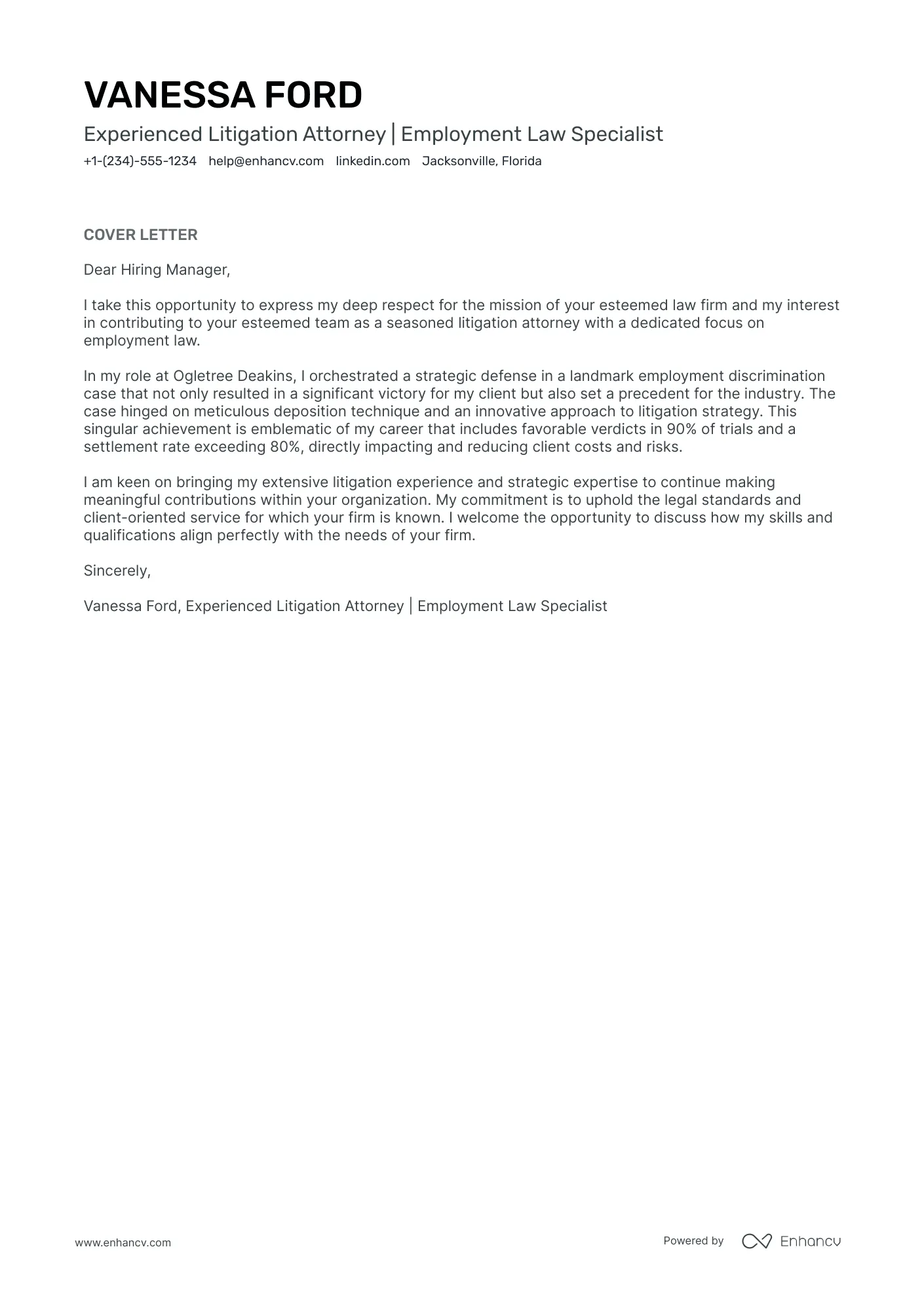
Understanding the Litigation Attorney Cover Letter
A litigation attorney cover letter is a crucial document that accompanies your resume when applying for legal positions. It serves as your introduction to a potential employer and offers an opportunity to showcase your qualifications, skills, and experience in a way that your resume alone cannot. Unlike a resume, which provides a factual overview of your background, a cover letter allows you to highlight your personality, express your interest in the specific role and firm, and demonstrate your communication skills. A well-crafted cover letter can significantly increase your chances of landing an interview and ultimately securing the job. This guide provides the essential steps to create a compelling cover letter that gets you noticed.
Why Is a Cover Letter Important?
In the competitive field of litigation, a cover letter provides a vital edge. It’s your first impression, setting the tone for the employer’s perception of you. A strong cover letter indicates your writing proficiency, an essential skill for litigation attorneys. It enables you to personalize your application, demonstrating genuine interest in the specific firm and role. By highlighting relevant experiences and tailoring your letter to the job description, you show the employer how your skills align with their needs. This personalized approach helps you stand out from other applicants who may rely solely on their resumes. Furthermore, a well-written cover letter can address any potential weaknesses in your application, such as gaps in employment or lack of experience in a specific area. Essentially, it allows you to control the narrative, presenting yourself as the ideal candidate for the position.
Key Components of a Litigation Attorney Cover Letter

A successful litigation attorney cover letter comprises several key components, each playing a critical role in presenting you as a strong candidate. These elements work in concert to create a cohesive and compelling narrative. The structure helps the reader easily understand your qualifications and your enthusiasm for the role. A well-structured cover letter not only highlights your skills and experience but also demonstrates your attention to detail and professionalism, both essential qualities for a litigation attorney.
Heading and Contact Information
Begin your cover letter with your contact information, including your full name, address, phone number, and professional email address. Ensure this information is accurate and up-to-date. The heading sets the stage for a professional presentation, making it easy for the employer to contact you. Use a clear and readable font, and ensure the information is well-formatted. Also, include the date of the letter, which is useful for record-keeping. Using a professional email address is crucial, avoiding any informal or unprofessional handles. This initial section is the first step in making a positive impression.
Recipient’s Information
Direct your cover letter to a specific person whenever possible. Research the law firm to identify the hiring manager or the attorney who will be reviewing applications. Addressing the letter by name shows that you have taken the initiative to learn about the firm and demonstrates your attention to detail. If you are unable to find a specific name, address the letter to the ‘Hiring Manager’ or ‘Recruiting Committee’. Include the recipient’s title, the law firm’s name, and the firm’s address. This personalized approach shows respect and initiative.
Opening Paragraph

The opening paragraph is your chance to grab the reader’s attention. State the position you are applying for and where you found the job posting. Immediately express your enthusiasm for the opportunity and the law firm. Briefly mention your key qualifications or a compelling achievement that makes you stand out. This initial paragraph should be concise, engaging, and set the tone for the rest of the letter. It’s important to convey your passion for litigation and your interest in the specific role. Remember, the goal is to make the hiring manager want to read more.
Highlighting Your Skills and Experience
The body of your cover letter should elaborate on your skills and experience, focusing on those most relevant to the position. Carefully review the job description and identify the key requirements. Then, provide specific examples of how your skills and experiences meet those requirements. Use action verbs to describe your accomplishments and responsibilities in previous roles. This helps demonstrate your capabilities and impact. Tailor your letter to the specific firm and role, showcasing how your qualifications align with their needs and values. Avoid simply restating your resume; instead, provide context and depth to your achievements.
Quantifying Your Achievements
Whenever possible, quantify your achievements to demonstrate your impact. Use numbers and data to illustrate your successes. For example, instead of saying ‘Managed a large caseload,’ say ‘Managed a caseload of over 50 cases, resulting in a 90% success rate.’ Quantifiable results provide concrete evidence of your skills and make your accomplishments more compelling. Use metrics to showcase your efficiency, effectiveness, and contributions to previous employers. This adds credibility to your claims and helps the hiring manager understand your value as a litigation attorney. These numbers provide a clear understanding of your impact.
Demonstrating Your Knowledge of Litigation

In your cover letter, explicitly demonstrate your knowledge of litigation. Mention specific areas of law in which you have experience, such as contract disputes, personal injury, or intellectual property. Highlight your familiarity with litigation processes, including discovery, pleadings, motions, and trial preparation. Showcase your understanding of legal research, writing, and analysis skills. Provide examples of successful cases you have handled, emphasizing your role and the outcomes achieved. This section proves your capacity to handle legal matters. Discuss your experience with legal technology and any relevant certifications or specializations you possess. Your goal is to present yourself as a knowledgeable professional.
Tailoring Your Cover Letter
One of the most critical steps in writing a successful cover letter is tailoring it to the specific job and law firm. A generic cover letter is easily recognizable and less likely to impress the hiring manager. Customization shows your genuine interest and demonstrates that you have taken the time to understand the firm’s needs. Research the law firm’s practice areas, values, and recent cases. Then, align your skills and experiences with the firm’s specific requirements. Highlight how your qualifications make you a good fit for the role. Avoid sending a generic letter to all law firms. Make sure it reflects your understanding of the position.
Researching the Law Firm
Before writing your cover letter, thoroughly research the law firm. Visit their website, read their recent news and publications, and review their attorneys’ profiles. Understand their practice areas, clients, and values. This research will help you tailor your letter and demonstrate your genuine interest in the firm. Identify specific cases or projects that resonate with you and mention them in your letter. Show that you understand the firm’s work and can contribute to its success. Researching also gives you insights into the firm’s culture, which can help you align your letter with their values and expectations. Demonstrating that you understand their work is a great way to impress them.
Addressing the Specific Job Requirements

Carefully review the job description and identify the key requirements. Then, tailor your cover letter to address those requirements directly. Provide specific examples of how your skills and experiences align with the job’s needs. Use keywords from the job description to demonstrate that you understand the role. Highlight your relevant experiences, such as your experience with the legal area, your familiarity with certain court procedures, and your communication skills. Show how your qualifications make you a good fit for the specific position. Tailor your letter to show them you’re a perfect match.
Formatting and Style
The formatting and style of your cover letter are crucial for making a positive first impression. A well-formatted letter is easy to read and demonstrates your attention to detail. Use a professional font and maintain a consistent style throughout the document. Ensure that your letter is free of errors and presents a polished image of your capabilities. Poor formatting detracts from your message and can make you appear unprofessional. Choose the right font and proofread everything before submitting it.
Choosing the Right Font and Font Size
Select a professional and readable font for your cover letter. Recommended fonts include Times New Roman, Arial, and Calibri. Maintain a font size between 10 and 12 points. This ensures that your letter is easy to read and visually appealing. Avoid using overly stylized or unusual fonts, which can make your letter appear unprofessional. Stick to a clear, classic font, and make sure the font size is appropriate for easy readability. The correct font and size will make your letter more attractive.
Proofreading and Editing

Proofread and edit your cover letter multiple times. Check for grammatical errors, spelling mistakes, and punctuation errors. Ensure that your sentences are clear, concise, and well-structured. Proofreading is essential to make sure your writing is clear and easy to follow. Have someone else read your cover letter to catch any mistakes you might have missed. Errors can damage your credibility and make you appear careless. Carefully check all aspects of your letter to make sure your letter is professional and error-free. Use proofreading tools or ask a friend to review your letter.
Closing the Cover Letter
The closing of your cover letter is your final opportunity to leave a lasting impression. It is important to express your interest in the position and thank the reader for their time and consideration. Include a call to action, inviting the reader to contact you or review your resume. A strong closing reinforces your enthusiasm and encourages the hiring manager to take the next step. A professional and well-crafted closing reflects well on you.
Expressing Your Interest and Gratitude
In the closing paragraph, reiterate your interest in the position and express your gratitude for the reader’s time and consideration. Reaffirm your enthusiasm for the opportunity and mention why you are a good fit for the role. Thank the hiring manager for reviewing your application and considering your qualifications. This shows respect and professionalism. Use a tone of confidence and eagerness, and emphasize your willingness to contribute to the firm’s success. Be sure to convey your sincere interest in the role.
Call to Action

Include a call to action in your closing paragraph. Invite the reader to contact you to schedule an interview or learn more about your qualifications. You can also state that you look forward to hearing from them soon. Make it easy for the hiring manager to take the next step in the hiring process. Providing a clear call to action encourages the employer to respond. Ensure they know you are eager to move forward.
Common Mistakes to Avoid
Several common mistakes can undermine your litigation attorney cover letter and reduce your chances of getting hired. Avoiding these pitfalls is essential for making a positive impression. By paying close attention to detail and crafting a well-written, personalized letter, you can significantly enhance your prospects of securing an interview and ultimately landing your dream job. Here are some errors to avoid, along with tips on how to write a good cover letter. Be very careful to avoid making these mistakes.
Generic Language
Avoid using generic language and clichés. Do not use phrases that could apply to any job or law firm. Instead, tailor your letter to the specific position and firm. Use specific examples and details to showcase your qualifications and enthusiasm. Generic letters demonstrate a lack of effort and interest. Show that you understand the firm’s work. By avoiding vague terms, you can make your letter much more appealing. Specific language proves you’ve done your research.
Typos and Grammatical Errors

Typos and grammatical errors can damage your credibility and make you appear careless. Proofread your letter carefully, and have someone else review it before submitting. Errors undermine your professionalism and can lead to your application being rejected. Use spell-check and grammar-check tools. Always check every aspect of your cover letter to ensure it’s error-free. Correcting every error is crucial, and shows your ability to pay attention to detail. Proofreading is key to showing the reader you are a professional.
Ignoring the Job Description
Do not ignore the job description. Tailor your cover letter to the specific requirements and keywords outlined in the job posting. Demonstrate how your skills and experiences align with the role’s needs. Failing to address the job description indicates a lack of attention to detail and a lack of interest in the position. Tailoring your letter to the job description significantly improves your chances of being considered. The description will help you highlight your relevant skills.
Finalizing and Submitting Your Cover Letter
Before submitting your cover letter, review it one last time to ensure it is polished and error-free. Pay close attention to the file name and submission instructions. Following these steps will help you submit a professional application. A well-finalized cover letter makes a good impression. By paying attention to these details, you will increase your chances of getting a good job. Before sending, make sure everything is perfect.
Creating a Professional File Name
Create a professional file name for your cover letter. Use your name and the job title or the law firm’s name. This ensures that the hiring manager can easily identify your application. A clear and professional file name makes it easy for the hiring manager to identify your document. It also demonstrates your attention to detail. Include your name in the file name to help the recipient locate the document quickly.
Submitting Your Cover Letter with Your Resume
Always submit your cover letter with your resume unless otherwise instructed. Ensure that both documents are in a professional format and easy to read. Submit your application according to the instructions provided in the job posting. Following these instructions shows that you pay attention to detail. Make sure your cover letter and resume are in the right format. This demonstrates your professionalism and commitment to the application process. Submit your application as requested.