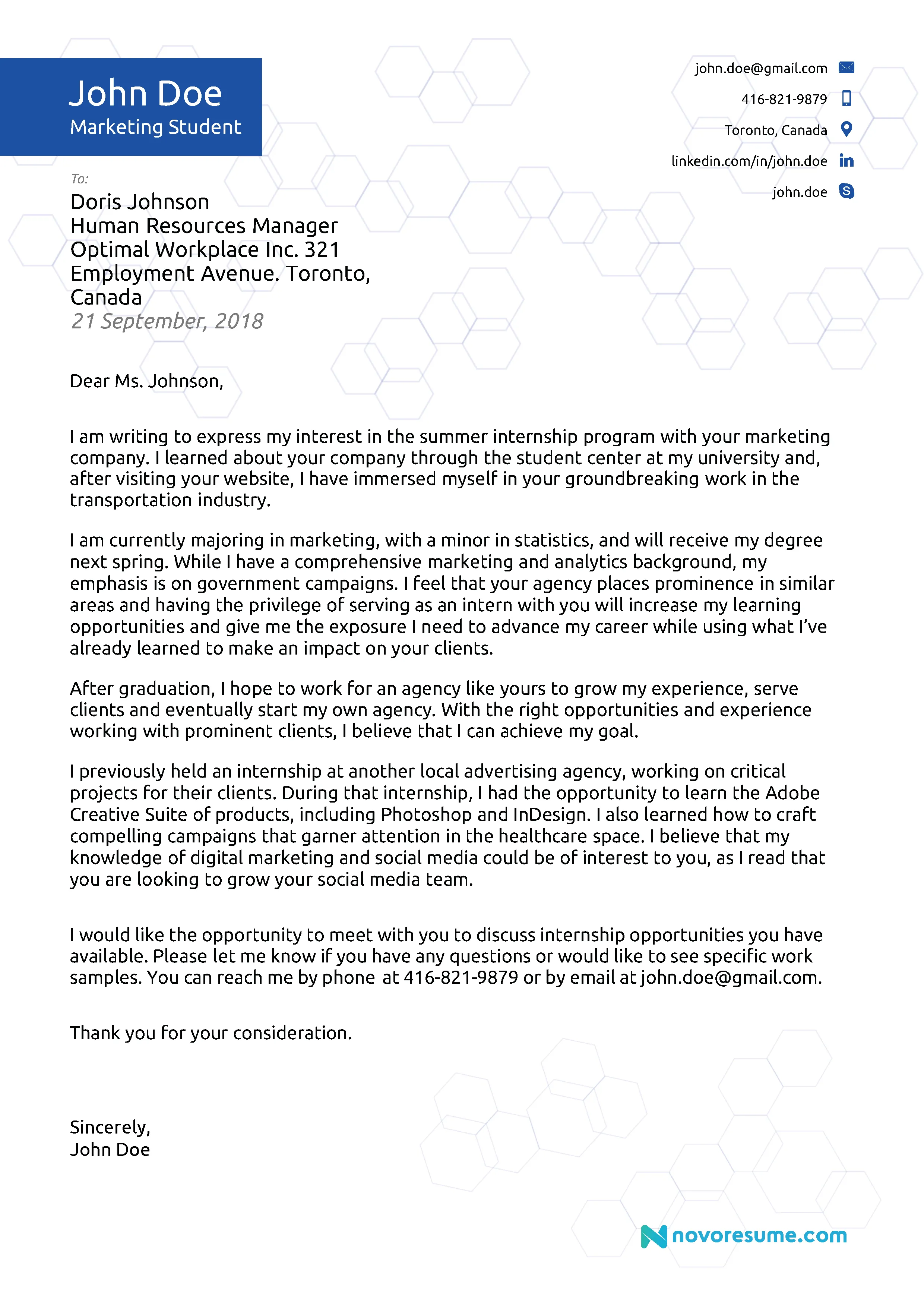
Understanding the Internship Cover Letter Format
A well-formatted internship cover letter is your first introduction to a potential employer. It’s a critical component of your application package, offering you the chance to highlight your qualifications, express your enthusiasm, and demonstrate your understanding of the company and the internship position. Unlike a resume, which is a factual account of your experience, a cover letter allows you to showcase your personality, writing skills, and genuine interest in the opportunity. Mastering the right format is key to making a strong impression and setting yourself apart from other applicants. Consider this document a marketing tool where you’re the product.
Key Components of a Cover Letter for Internship
A standard cover letter format includes several essential components, each serving a specific purpose in conveying your suitability for the internship. Understanding these elements and how they work together is crucial for creating a compelling letter. The key parts of a cover letter include your contact information, the date, the employer’s contact details, a professional salutation, the body paragraphs, a closing paragraph, and your signature. Properly structuring these parts will allow your reader to easily follow your arguments, experience and your passion for the opportunity. Remember, the format itself demonstrates your organizational skills and attention to detail.
Contact Information

Begin with your contact information at the top of the letter. Include your full name, address, phone number, and email address. This information should be clearly visible and easily accessible. Ensure your email address is professional; avoid using nicknames or informal addresses. Presenting your contact information correctly will allow the reader to quickly identify who you are and how to reach you. Make sure to double-check all information for accuracy before sending your letter. A small mistake here could cause a lost opportunity. Your contact information should always be at the top left of your cover letter, so that it’s instantly accessible.
The Header
Immediately below your contact information, include the date. Following the date, add the employer’s contact information, including the hiring manager’s name (if you know it), title, company name, and address. If the name of the hiring manager isn’t listed on the job post, you can find this information on the company’s website or LinkedIn page. Including the hiring manager’s name demonstrates that you’ve done your research and shows that you are serious about the opportunity. This section sets a professional tone for your application, conveying respect and attention to detail. The professional layout helps maintain organization and clarity in the document. It is also important to align your details to the left of the page, for ease of reading.
Salutation
The salutation is your greeting, and it sets the tone for your letter. Always address the hiring manager by name if possible; “Dear Mr./Ms. [Last Name]” is the preferred format. If you are unsure of the hiring manager’s name, use “Dear Hiring Manager” or “Dear [Company Name] Team.” Avoid generic greetings like “To Whom It May Concern” as they can make your letter seem impersonal. The salutation should be followed by a colon. Always be mindful of the company’s culture. This is a good chance to show you have an attention to detail and do your research.
Body Paragraphs

The body of your cover letter is where you make your case for why you’re the perfect fit for the internship. This section should be concise and focused, typically spanning three or four paragraphs. Each paragraph should serve a specific purpose, from grabbing the reader’s attention to highlighting your skills and expressing your enthusiasm. It’s crucial that your body paragraphs flow smoothly and are well-structured to keep the reader engaged. Each paragraph should clearly connect to the previous one. Consider the body of the letter your chance to sell yourself and make the reader want to learn more about you.
First Paragraph: Grab Attention
Start with a strong opening that immediately grabs the reader’s attention. Mention the specific internship you are applying for and where you found the job posting. Briefly state why you are interested in the role and what you hope to achieve. You can highlight a key skill or accomplishment that aligns with the internship requirements. A strong opening paragraph sets the tone for your letter and encourages the reader to continue reading. This is your chance to stand out from the other applicants. Your opening should be interesting, direct, and concise, immediately demonstrating your interest and suitability for the internship. This helps to establish your professionalism.
Second Paragraph: Highlight Skills
In the second paragraph, showcase your relevant skills and experiences. Review the job description and identify the key requirements. Provide specific examples of how your skills align with these requirements. Quantify your accomplishments whenever possible, using numbers and data to demonstrate your impact. For example, “Managed social media accounts, increasing follower engagement by 30%.” This paragraph is an opportunity to show how your abilities will benefit the company. Back up your claims with examples that demonstrate how you’ve successfully applied these skills in the past. This will give the reader a sense of your competence.
Third Paragraph: Show Enthusiasm

Express your genuine enthusiasm for the internship and the company. Explain why you are specifically interested in this opportunity and what you hope to gain from the experience. Research the company’s mission, values, and recent projects to show that you are genuinely interested in their work. Show how the internship aligns with your career goals and how you can contribute to the company’s success. This paragraph is crucial for demonstrating your passion and commitment. Your enthusiasm should be evident and sincere. This will help create a favorable impression.
Fourth Paragraph: Call to Action
Conclude your letter with a clear call to action. State your availability for an interview and express your eagerness to discuss your qualifications further. Thank the hiring manager for their time and consideration. Reiterate your interest in the position. Providing your contact information again will make it simple for the hiring manager to reach you. This final paragraph encourages the next step in the hiring process. A strong closing paragraph leaves a positive and lasting impression.
Closing Paragraph and Signature
End your cover letter with a professional closing, such as “Sincerely” or “Best regards”, followed by your typed name. If you are submitting a digital version, include a digital signature above your typed name. This adds a personal touch and reinforces your professionalism. Ensure your signature is clear and easy to read. A properly formatted closing creates a sense of closure and respect. Your closing and signature should always be aligned to the right of the page.
Formatting Your Internship Cover Letter

The visual presentation of your cover letter is as important as the content. Proper formatting makes your letter easy to read and demonstrates your attention to detail. Consistent formatting creates a professional and polished look. Well-formatted documents showcase your ability to pay attention to details. Follow these formatting guidelines to ensure your cover letter stands out in a positive way.
Font and Font Size
Choose a professional and easy-to-read font, such as Times New Roman, Arial, or Calibri. Maintain a consistent font throughout the entire document. Use a font size between 10 and 12 points. This ensures your letter is readable without appearing too large or small. Avoid using overly stylized fonts, which can make your letter difficult to read. Stick to the font that is appropriate for formal letters. Ensure that the font and font size contribute to a professional presentation.
Margins and Spacing
Use standard one-inch margins on all sides of your cover letter. This provides adequate white space, making the text easier on the eyes. Use single spacing within paragraphs and double spacing between paragraphs. This structure is important for creating visual clarity and readability. Consistent margins and spacing contribute to a clean, professional look, making it easier for the hiring manager to read your letter. Proper spacing makes your letter more appealing.
Proofreading and Editing

Before submitting your cover letter, thoroughly proofread and edit it for any grammatical errors, spelling mistakes, or typos. Errors can create a negative impression and undermine your credibility. Have someone else review your letter to catch any mistakes you might have missed. Ensure that your letter is free of any errors. A well-edited cover letter demonstrates your attention to detail. This can make a positive impression.
Tips for Formatting Success
Follow these additional tips to create a cover letter that is both effective and visually appealing. Customize your cover letter for each internship you apply for. Tailor your letter to the specific requirements and the company culture. Proofread your letter multiple times and ask someone else to review it for you. Use a professional email address. Make sure your email address is appropriate and professional. Save your cover letter in PDF format to preserve the formatting. Make sure it’s saved in a format that the employer can easily access. A well-formatted cover letter demonstrates professionalism.