Understanding the I-751 Form and Cover Letter
Navigating the world of immigration can feel overwhelming, but understanding the necessary paperwork is the first step toward a successful application. The I-751 form, officially known as the Petition to Remove Conditions on Residence, is a crucial form for conditional green card holders seeking to become permanent residents. This guide provides a comprehensive understanding of the form and, more importantly, how to write an outstanding cover letter that strengthens your case. The cover letter serves as your personal introduction to the USCIS officer reviewing your application, giving you a chance to highlight the key aspects of your relationship and provide context for the supporting documents you submit. A well-crafted cover letter can significantly influence the outcome of your petition, so taking the time to prepare it meticulously is a worthwhile investment in your future.
Who Needs to File Form I-751?
Form I-751 is specifically for conditional permanent residents. This status is typically granted to individuals who obtained their green card through marriage to a U.S. citizen or lawful permanent resident, and the marriage was less than two years old at the time the green card was issued. Conditional residency is a temporary status, and the I-751 form is the mechanism by which you petition to remove the conditions and become a permanent resident. This process requires you to demonstrate that your marriage is bona fide and not entered into for the purpose of obtaining immigration benefits. If you meet the requirements and your marriage is genuine, you are eligible to file this form. It is imperative to file within the 90-day period before your conditional green card expires, ensuring you maintain legal status in the United States.
Why is a Cover Letter Important?
The cover letter is more than just a formality; it’s your opportunity to tell your story and provide a clear, concise overview of your situation. While the I-751 form itself requires certain information, the cover letter allows you to elaborate on your relationship, explain any complexities, and provide context for the supporting evidence. It shows the USCIS officer that you are serious about your application and have taken the time to present your case thoughtfully. A well-written letter can make the difference between a smooth approval process and a request for more evidence (RFE), or even a denial. Furthermore, it provides a personalized touch to your application, which can be beneficial, especially in cases with complicated circumstances that you can address preemptively in the letter.
Key Components of an I-751 Cover Letter
Your I-751 cover letter should include several key components to ensure it is comprehensive and persuasive. Begin by clearly stating your purpose; this is an application to remove conditions on your permanent resident status. Include your full name, A-number (Alien Registration Number), and the date. Use a professional tone and address the USCIS officer respectfully. The body of the letter should detail your marriage’s history, highlight the evidence you are providing, and explain any specific circumstances that might require additional clarification. Maintain a positive and honest tone throughout the letter. Do not forget to include a closing statement expressing your gratitude and willingness to cooperate with any further requests from USCIS.
Your Personal Information
Start with a clear introduction that includes your full name, address, A-number, and the date. State your intention to file Form I-751 and remove the conditions on your permanent resident status. This sets the stage for the rest of the letter and ensures the officer immediately understands the purpose of your submission. Make sure all your information is accurate and consistent with what is stated on your I-751 form and other supporting documents. Include any previous names you might have used, if applicable, to avoid any confusion. Keeping your information clear, concise, and accurately aligned across all documents is crucial for a successful application.
Your Relationship with the US Citizen
Provide a brief overview of your relationship with your spouse. Include the date you were married, the location of your wedding, and any significant milestones you have shared together. Mention any shared experiences, hobbies, or values that demonstrate the depth of your relationship. Be authentic and describe your connection as a couple, showing how you support and care for each other. This section should paint a picture of your life together, highlighting your commitment to each other. It should also explain how your relationship has developed since you obtained your conditional residency. Be sure to maintain an optimistic and genuine tone while detailing these aspects.
Evidence of a Bona Fide Marriage
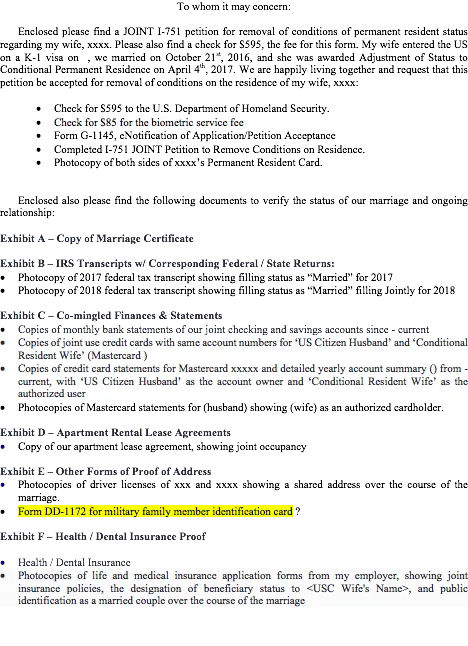
The heart of your cover letter should address the evidence that proves your marriage is authentic. Clearly state that you are including various supporting documents to demonstrate the validity of your marriage. Mention the specific types of evidence you are providing, such as joint bank statements, lease agreements, utility bills, and insurance policies. Cross-reference these items with the actual supporting documentation you’ve included in your application packet. Briefly explain how each piece of evidence supports your claim of a bona fide marriage, emphasizing the shared aspects of your life, finances, and living arrangements. Organize your evidence logically, making it easy for the USCIS officer to review and understand your application.
Shared Finances
Providing evidence of shared finances is a strong indicator of a genuine marriage. Include copies of joint bank statements, credit card statements, and tax returns. Highlight any shared financial responsibilities, such as mortgage payments or loan repayments. Include details about shared investments, such as savings accounts, retirement plans, or other assets. These documents collectively show that you and your spouse manage your finances together, which indicates a committed and integrated relationship. Ensure that you consistently provide the same addresses and names across all financial documents. Present the documents clearly with any important details highlighted so the officer can review them quickly.
Joint Property

If you own property together, provide evidence of this joint ownership. This can include a copy of your deed, mortgage documents, or property tax statements. If you rent, include a copy of your lease agreement, showing both your names. These documents are crucial in demonstrating your shared living arrangements and commitment to building a life together. If you have made improvements to your property together, include receipts or any documentation related to that. This helps to validate your connection to the property and the shared life that you have created. Ensure the documents are organized and clearly labeled.
Birth Certificates of Children
If you have children together, include their birth certificates as evidence of a bona fide marriage. These documents provide direct proof of your relationship as parents. If your children are enrolled in schools or participate in extracurricular activities, include documentation related to these activities. Providing these documents emphasizes the parental bond and shared responsibility, which is a strong indication of a genuine family unit. If your children are listed as beneficiaries on life insurance policies or other similar documents, be sure to include copies of these documents as well.
Additional Supporting Documents
Include any other documentation that supports your claim of a genuine marriage. This can include photos from your wedding and throughout your relationship, correspondence (emails, letters, and cards), and affidavits from friends and family members. Provide evidence of any travel you have done together, such as plane tickets, hotel confirmations, and itinerary details. These items collectively paint a picture of your shared life. Organize the documents in a logical manner, making it easy for the USCIS officer to review them. In addition to the documents, a brief summary of each piece of evidence should be written to explain what you are providing, which makes reviewing the package much easier.
The Tone and Style of Your Letter

Maintain a professional and respectful tone throughout your cover letter. Use clear, concise language and avoid using slang or overly informal language. Be honest and truthful in all your statements. The letter should reflect sincerity and show your commitment to your marriage. Express your appreciation for the opportunity to become a permanent resident, and express your gratitude for the officer’s time and consideration. Ensure the letter is well-written, grammatically correct, and free of errors. Proofread the letter carefully before submitting it to ensure clarity and credibility.
Formatting Your Cover Letter
The formatting of your cover letter is just as crucial as its content. Use a professional font like Times New Roman or Arial, and keep the font size between 11 and 12 points for readability. Use standard margins (1 inch on all sides) and double-space the text for easy reading. Include your full name, A-number, and the date at the top of the letter. Address the letter to the correct USCIS office. Use clear headings and subheadings to organize the content of your letter and use paragraphs to separate your thoughts logically. Ensure the letter is properly formatted and visually appealing.
Proofreading and Editing
Proofreading and editing are essential steps in ensuring your cover letter is free from errors. Review your letter carefully for grammatical mistakes, spelling errors, and punctuation errors. Have a trusted friend, family member, or immigration attorney review the letter as well. A fresh pair of eyes can often catch errors that you might have missed. Ensure the letter is clear, concise, and easy to understand. The final version should be a polished, professional document that represents you and your marriage in the best possible light. Use the right tools to help you, such as grammar and spell checkers.
Common Mistakes to Avoid

Avoid making common mistakes that can negatively impact your I-751 application. Do not provide false information or omit any relevant details. Avoid using overly emotional language or making assumptions. Do not submit a letter that is disorganized, poorly written, or difficult to understand. Do not forget to sign and date the letter. Make sure you have included all the required documentation and that it’s properly organized. Failing to properly prepare your application and cover letter can significantly increase the risk of rejection or a request for additional evidence. Therefore, careful attention to detail is essential to successfully navigate this process.
Submitting Your I-751 Application
When submitting your I-751 application, follow all the instructions provided by USCIS. Make sure you have completed the I-751 form accurately. Compile all the required supporting documentation, and organize your documents logically. Make sure to make copies of everything for your records. Include a check or money order for the correct filing fee. Send your application to the designated USCIS address for your jurisdiction. It’s recommended that you send your application via certified mail with return receipt requested to confirm that USCIS has received it. Make sure to keep track of the tracking number and any other relevant information in case you need it later.
Where to Send Your Application?
The mailing address for your I-751 application depends on the USCIS service center that processes applications from your state of residence. Check the USCIS website or the I-751 form instructions to find the correct address. These addresses can change, so double-check the current information before sending your application. Using the wrong address can delay your application and, at worst, lead to its rejection. Ensure you are using the correct address and following the mailing instructions precisely. If using a courier service, follow any specific instructions for those deliveries, such as separate addresses or requirements.
What to Expect After Filing

After submitting your I-751 application, you will receive a receipt notice from USCIS. This notice confirms that they have received your application and provides your case number. You can use this case number to track the progress of your application online through the USCIS website. You may be required to attend a biometrics appointment, where USCIS will collect your fingerprints, photographs, and signature. USCIS may conduct an interview to verify your information and the validity of your marriage. Keep all communication from USCIS, and respond to any requests promptly. The process can take some time, so be patient and keep your contact information updated with USCIS.
Tips for a Smooth Application Process
To help ensure a smooth application process, gather all required documents as early as possible. Be organized, and keep copies of everything you send to USCIS. Double-check all forms and documents for accuracy. Respond to any USCIS requests promptly. If you need help, consider consulting with an immigration attorney. They can provide guidance and help you prepare your application effectively. Be honest and truthful in all your communications with USCIS. Stay informed about any changes in immigration laws and regulations. Taking these steps can significantly increase your chances of a successful outcome and help you get closer to your goal of permanent residency.