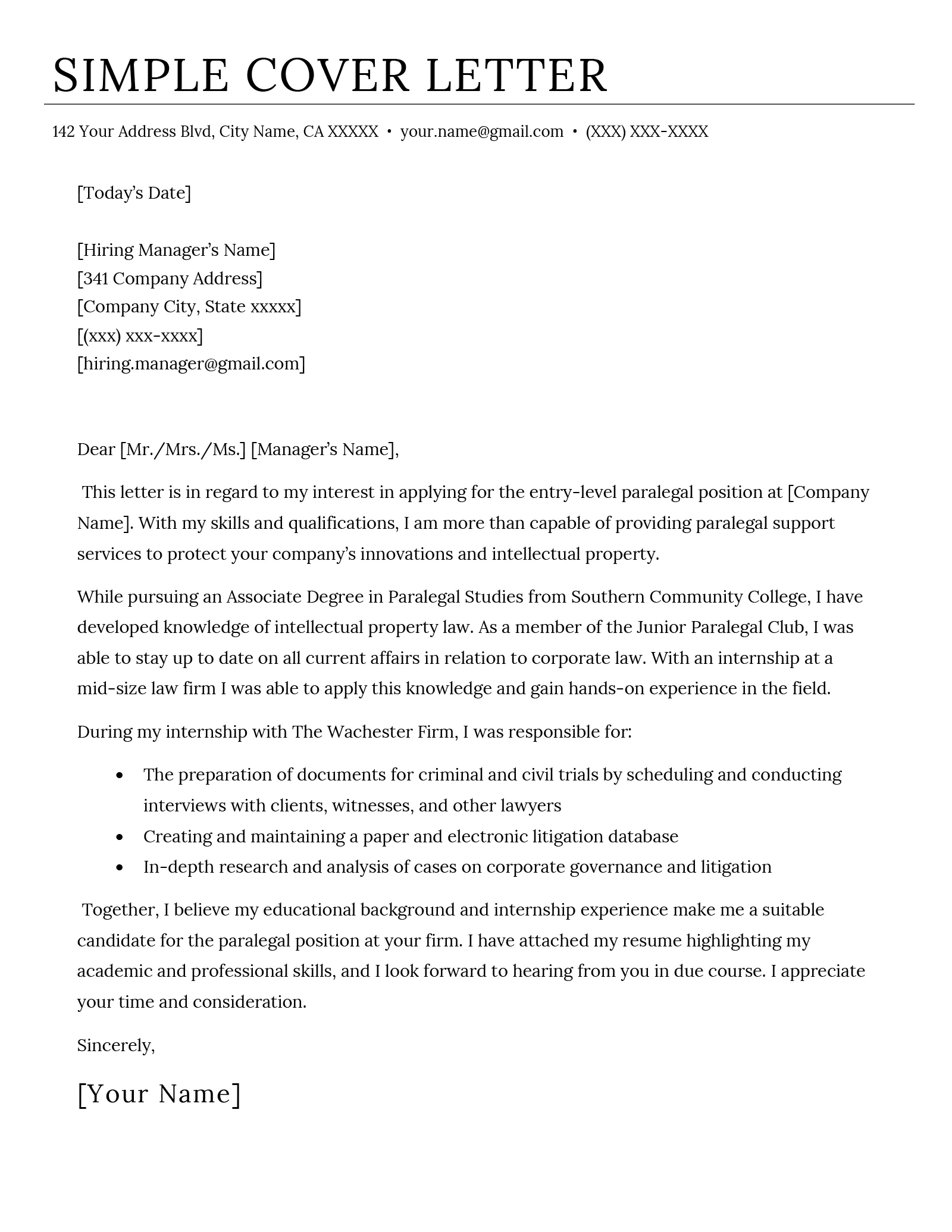
Cover Letter Fundamentals
A cover letter is your first impression. It’s a personalized introduction to your resume, and a chance to demonstrate why you’re the perfect fit for a specific job. It provides context to your qualifications and allows you to showcase your personality, skills, and enthusiasm for the role. Writing a compelling cover letter can significantly increase your chances of landing an interview. Many job seekers underestimate the power of a well-crafted cover letter, but it’s an essential component of any successful job application. A strong cover letter will provide insight into your professional persona and can be a deciding factor for recruiters. Moreover, cover letters can assist the hiring managers to evaluate candidates by presenting a clear and concise overview of your skills, experience, and career goals.
Understand the Purpose of a Cover Letter
The primary purpose of a cover letter is to introduce yourself to a potential employer, highlight your key skills and experiences, and express your interest in a specific job. Think of it as your sales pitch. You’re selling yourself to the hiring manager, demonstrating why you’re the best candidate for the position. It’s also an opportunity to explain any gaps in your resume or to provide additional context for your qualifications. A well-written cover letter will always add a personal touch to your application. It goes beyond the list of qualifications in your resume and provides the employer with a glimpse of who you are. The cover letter enables you to share your career goals and demonstrate your enthusiasm for the position.
Why is a Cover Letter Important?

Cover letters are important because they allow you to provide the hiring manager with crucial information that can’t be conveyed in your resume alone. They allow you to personalize your application and demonstrate that you’ve taken the time to understand the company and the specific job requirements. A cover letter is your chance to showcase your writing skills and make a memorable first impression. They help distinguish you from other candidates and increase your chances of getting an interview. Cover letters highlight your personality and communication abilities. Cover letters also show you’re serious about the opportunity, allowing you to tailor your application to a specific role and demonstrate your genuine interest in the company. This focused approach is essential in today’s competitive job market.
Key Components of a Cover Letter
A standard cover letter typically includes a header with your contact information, a professional salutation, an opening paragraph that grabs the reader’s attention, a few body paragraphs that highlight your relevant skills and experiences, and a closing paragraph that expresses your interest in the position and includes a call to action. The header should contain your name, address, phone number, and email address. The salutation should be professional and address the hiring manager by name, if possible. The body paragraphs should focus on why you’re a good fit for the role and provide examples of your accomplishments. The closing should thank the hiring manager for their time and consideration and state your availability for an interview. This structure ensures that all critical information is clearly communicated and makes your letter easy to read. It is a key step to a cover letter’s success.
Crafting a Compelling Opening
Your opening paragraph is your first chance to grab the hiring manager’s attention. It should immediately state the position you’re applying for and how you learned about it. You should then briefly explain why you’re interested in the role and why you believe you’re a good fit. Avoid generic openings like, ‘I am writing to apply for the position of…’ Instead, try to make it more engaging and relevant. You could also express your enthusiasm for the company or mention a specific accomplishment that aligns with the job requirements. A strong opening paragraph will set the tone for the rest of your letter and encourage the reader to continue reading. This initial impact is crucial because it determines whether your cover letter gets a second look. This is why it must be carefully crafted and tailored to each job application.
Highlight Your Relevant Skills

In the body paragraphs, focus on highlighting your skills and experiences that are most relevant to the job requirements. Carefully review the job description and identify the key skills and qualifications the employer is seeking. Then, provide specific examples of how you’ve demonstrated those skills in the past. Use the STAR method (Situation, Task, Action, Result) to structure your examples, making them more impactful. The STAR method helps you provide context, explain the task, describe the actions you took, and highlight the positive results of your efforts. This will give the hiring manager a clear picture of your capabilities and how you can contribute to the company. Be sure to tailor the skills you highlight to match the specific job you’re applying for; generic descriptions won’t make a good impression.
Quantify Your Achievements
Whenever possible, quantify your achievements to make them more impactful. Instead of saying, ‘I improved sales,’ say, ‘I increased sales by 15% in one quarter.’ Numbers and data provide concrete evidence of your accomplishments and make your claims more credible. Use metrics, percentages, and specific figures to demonstrate the positive impact you’ve had in previous roles. This is a powerful way to showcase your value and demonstrate your ability to deliver results. Quantifying your achievements shows the hiring manager that you are results-oriented and have a track record of success. This approach makes your cover letter more compelling and memorable, and it helps you stand out from other candidates.
Tailoring Your Cover Letter
A generic cover letter is unlikely to impress a hiring manager. To increase your chances of success, tailor your cover letter to each specific job you apply for. This means researching the company, understanding the job requirements, and highlighting the skills and experiences that are most relevant to the role. Don’t just send the same letter to every employer. Tailoring your cover letter shows that you’ve taken the time to understand the company and the position. It demonstrates that you’re genuinely interested in the opportunity and have the skills and qualifications they’re looking for. The more effort you put into tailoring your cover letter, the better your chances of getting noticed and securing an interview.
Research the Company

Before you start writing your cover letter, research the company to understand its mission, values, and culture. Visit the company’s website, read their social media profiles, and look for news articles or press releases about the company. This will give you valuable insights into the company’s priorities and goals. When you tailor your cover letter, you can then demonstrate how your skills and experience align with the company’s needs. Mentioning specific projects or initiatives the company is involved in shows that you’ve done your homework and are genuinely interested in joining their team. This level of detail can make a significant difference in whether your application is seen or ignored.
Match the Job Description
Carefully review the job description and identify the key skills, qualifications, and responsibilities listed. Use the language of the job description to describe your skills and experiences, and make sure to highlight how you meet the requirements. Address each of the major points in the job description and provide specific examples of how you’ve demonstrated those skills in the past. Use keywords from the job description to ensure your cover letter is easily scanned by applicant tracking systems (ATS). Matching the job description shows that you understand the role and have the skills the company is looking for. When you customize your cover letter in this way, it becomes much more effective and increases your chances of landing an interview.
Proofreading and Formatting
Before submitting your cover letter, proofread it carefully to check for any errors in grammar, spelling, or punctuation. Even minor errors can create a negative impression and suggest a lack of attention to detail. Carefully check for any typos or grammatical errors. Use a grammar checker and ask a friend or family member to proofread your letter before you submit it. This ensures that your cover letter is polished and professional. A well-written and error-free cover letter demonstrates your professionalism and increases your chances of making a positive impression. This is a crucial step to showcase yourself as a detail-oriented person.
Check for Grammar and Spelling Errors

Grammar and spelling errors can undermine your credibility and make you appear unprofessional. Take the time to carefully review your cover letter for any mistakes. Use a grammar checker and spell checker to catch any obvious errors. However, don’t rely solely on these tools; they may miss some errors. It is best to also ask a friend or colleague to proofread your letter for you. A fresh pair of eyes can often spot errors that you might have missed. Ensure that all sentences are clear and well-structured and that your tone is professional. Correcting all mistakes improves your chances of making a positive impression on the hiring manager, helping you to secure an interview and land the job.
Formatting Tips
Proper formatting is essential for making your cover letter easy to read and visually appealing. Use a clear, professional font like Times New Roman, Arial, or Calibri. Ensure that your cover letter is well-organized, with clear headings and spacing between paragraphs. Use bullet points to highlight key skills or accomplishments, and keep your paragraphs concise and to the point. Avoid using overly creative fonts or formatting, as this can be distracting. The goal is to present your information in a way that is easy to read and understand. Properly formatted cover letters make a great impression by showing attention to detail. This increases your chances of getting noticed and ultimately landing the job.
Call to Action and Closing
In your closing paragraph, reiterate your interest in the position and include a call to action. Thank the hiring manager for their time and consideration, and express your enthusiasm for the opportunity. State your availability for an interview and provide your contact information again. End your cover letter with a professional closing, such as ‘Sincerely’ or ‘Best regards.’ Be sure to proofread this section as well to ensure it is free of errors. A strong call to action will encourage the hiring manager to take the next step. The final lines are your last chance to leave a positive impression and increase your chances of getting the job.
Express Enthusiasm

Your closing paragraph is your last chance to leave a positive impression. Express your enthusiasm for the position and reiterate your interest in the company. Let the hiring manager know why you’re excited about the opportunity and how you can contribute to their team. Avoid generic phrases and instead, use specific examples of why you’re a good fit. Demonstrating your enthusiasm will show the hiring manager that you’re genuinely interested in the role and that you’re committed to making a positive contribution. By showing your eagerness, you will increase your chances of being offered an interview and ultimately landing the job.
Provide Contact Information
Make it easy for the hiring manager to contact you by providing your phone number and email address in your closing paragraph. Double-check that your contact information is accurate and up-to-date. You might also include a link to your LinkedIn profile if you have one. This ensures that the hiring manager can easily reach you to schedule an interview or ask any follow-up questions. Providing complete and accurate contact information makes the recruitment process easier and will increase your chances of a call back and an interview.