What is a Cover Letter? The Essentials
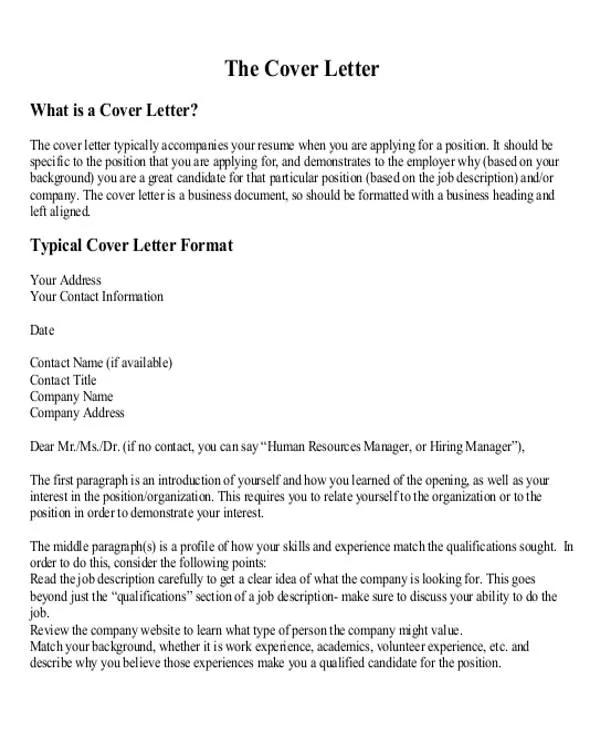
A cover letter is a crucial document that accompanies your resume when applying for a job. It serves as your first introduction to a potential employer, providing an opportunity to showcase your personality, skills, and enthusiasm for the position. Unlike a resume, which is a factual overview of your experience, a cover letter allows you to tell a story and explain why you are the ideal candidate. It’s your chance to make a strong first impression and persuade the hiring manager to read your resume and consider you for an interview. A well-crafted cover letter significantly increases your chances of landing an interview, making it a critical component of any job application.
Purpose of a Cover Letter
The primary purpose of a cover letter is to express your interest in a specific job and to highlight how your qualifications align with the requirements of the role. It allows you to demonstrate your understanding of the company and the position. A cover letter provides context to your resume by explaining your career goals, motivations, and unique value proposition. It is a platform to explain any gaps in employment, career changes, or other relevant information that might not be readily apparent from your resume. Furthermore, a cover letter helps you establish a personal connection with the hiring manager, showcasing your writing skills, communication style, and personality, making you more than just a list of skills and experiences.
Key Elements of a Cover Letter

A well-structured cover letter consists of several key elements that work together to present you as a compelling candidate. These elements include the header, greeting, body paragraphs, closing, and sign-off. Each part of the cover letter contributes to its overall effectiveness. The header provides essential contact information, while the greeting sets the tone of your letter. The body paragraphs are the core of your letter, where you articulate your qualifications and interest in the job. The closing paragraph includes a call to action, and the sign-off adds a professional touch. By carefully constructing each of these elements, you can create a cover letter that captures the reader’s attention and convinces them to consider your application.
Header Information in Cover Letter
The header of your cover letter includes your contact information, the date, and the recipient’s contact information. It’s essential for professional communication. Your contact information should include your name, phone number, email address, and optionally, your LinkedIn profile URL. The date is the day you are sending the cover letter. The recipient’s contact information, includes the hiring manager’s name, title, company name, and address, if known. Correct header information ensures that the hiring manager can easily reach you. It also demonstrates attention to detail and professionalism.
Your Contact Information
Start your header with your full name, making it prominent. Following your name, list your phone number and a professional email address. It’s important to use an email address that sounds professional, such as your first and last name. You can also include a link to your LinkedIn profile to provide the hiring manager with more context about your professional background. Ensuring that this information is correct and up-to-date is key to being contacted for an interview.
Date

Below your contact information, include the current date. This informs the reader when the cover letter was created, which is helpful for record-keeping. Ensure that the date is correctly formatted. Using the correct date format is a small but significant detail that shows attention to detail.
Recipient’s Contact Information
If possible, address your cover letter to the hiring manager by name. Use their title and include the company’s address, which is a sign of thoroughness and shows that you’ve taken the time to research the organization. If you cannot find the hiring manager’s name, use a general greeting such as ‘Dear Hiring Manager’. Double-check this information to ensure it’s accurate.
Greeting The First Impression
The greeting is your first opportunity to capture the reader’s attention. If you know the hiring manager’s name, a personalized greeting, such as “Dear Mr. Smith,” is ideal. This shows that you’ve done your research and that you are genuinely interested in the position. If you don’t know the hiring manager’s name, use a general greeting, such as “Dear Hiring Manager” or “Dear [Company Name] Hiring Team.” It is essential to avoid generic greetings that can make your letter appear impersonal. The greeting sets the tone for the entire letter, so make it warm and professional.
Body Paragraphs What to Include

The body paragraphs are the core of your cover letter, where you persuade the hiring manager that you are the right fit for the job. The body should typically consist of three paragraphs, each focusing on a different aspect of your qualifications and interest. These paragraphs must clearly connect your skills and experience with the job requirements. Each paragraph should provide concrete examples of how you have demonstrated these skills. The body paragraphs are your chance to make a strong case for your candidacy.
First Paragraph State Your Purpose
The first paragraph should state the specific position you are applying for and how you found the job posting. Express your enthusiasm for the opportunity. It’s also a great place to briefly mention why you’re drawn to the company. Keep it concise, immediately informing the hiring manager about your intentions. Mentioning a specific job title and where you saw the advertisement helps clarify the purpose of your letter. A strong opening helps engage the reader and sets the stage for the rest of the letter.
Second Paragraph Highlight Skills
The second paragraph is the most important part of your cover letter, as it highlights your relevant skills and experiences. Focus on the skills and experiences that align with the job description, providing specific examples of how you have used these skills in previous roles. Use the job description to tailor your skills, showing how your qualifications meet their needs. Quantify your achievements whenever possible, providing data and numbers to demonstrate the impact you’ve made. This is where you show why you are a strong candidate for the job.
Third Paragraph Express Enthusiasm

In the third paragraph, reiterate your enthusiasm for the position and the company. Explain why you are interested in the specific company and why you believe you are a good fit for their culture. Discuss how your long-term career goals align with the company’s mission. Show genuine interest and research the company to show your understanding of their values. This paragraph adds a personal touch to your cover letter, making you more memorable.
Closing Paragraph and Call to Action
The closing paragraph summarizes your key qualifications and reiterates your interest in the position. It also includes a call to action, asking for an interview and expressing your availability. Thank the hiring manager for their time and consideration. Keeping the tone positive and professional is crucial, and state that you are looking forward to hearing from them soon. This call to action encourages the hiring manager to take the next step.
Sign-off and Signature
The sign-off is the final step in your cover letter, and it should be professional and courteous. Choose a sign-off such as “Sincerely,” “Best regards,” or “Thank you for your consideration.” Leave space for your handwritten signature if you are printing the letter. If you are submitting your cover letter electronically, you can simply type your full name below the sign-off. The sign-off should be the last thing the hiring manager reads, so ensure it reinforces your professionalism.
Formatting and Design of Cover Letter

Proper formatting and design are crucial for making your cover letter visually appealing and easy to read. Your cover letter should have a clean and professional appearance, with a consistent style throughout. A well-formatted cover letter demonstrates your attention to detail and professionalism. The goal is to create a document that is visually appealing, making it easier for the hiring manager to focus on your qualifications.
Font and Size
Choose a professional and easy-to-read font, such as Times New Roman, Arial, or Calibri. Keep the font size between 10 and 12 points. Avoid using overly decorative fonts, which can be distracting. Consistency in font and size makes the document look neat and makes it easy to read. A clear font choice will help the hiring manager concentrate on the content of your letter.
Margins and Spacing
Set the margins to 1 inch on all sides to provide enough white space and prevent the text from appearing cramped. Use single spacing within paragraphs and double spacing between paragraphs. These spacing guidelines improve readability. Ample white space makes the letter look less cluttered, allowing the hiring manager to easily scan and read the content.
File Format and Naming Your Cover Letter

Save your cover letter as a PDF file. PDF files preserve the formatting, which ensures that the document appears the same on any computer. When naming your file, use your name and the job title, such as ‘JaneDoe_CoverLetter_MarketingManager’. This helps the hiring manager organize their files and quickly identify your application. A professional file name shows that you are organized and detail-oriented.
Tips for Making Your Cover Letter Stand Out
To make your cover letter stand out, it must be tailored to each job, free of errors, and filled with action verbs. These steps will make your application more memorable. A customized cover letter indicates that you have taken the time to understand the job and the organization, which is a critical element for any application. These tips help showcase your skills and enhance your prospects.
Tailor to Each Job
Never send a generic cover letter. Customize each cover letter to the specific job and company. Review the job description carefully, and identify the key skills and qualifications the employer is looking for. Highlight how your skills and experience align with these requirements, providing specific examples. Tailoring your cover letter will significantly increase your chances of being noticed. Customizing your cover letter is an essential step in demonstrating your interest and commitment.
Proofread Carefully
Proofreading is an essential step in writing a cover letter. Carefully check for any typos, grammatical errors, and formatting mistakes. Have a friend or family member review your letter. Errors can make you look unprofessional, so it is important to be as careful as possible. A flawless cover letter shows your attention to detail and commitment to quality.
Use Action Verbs
Use action verbs to describe your skills and experiences. Action verbs create a more dynamic and engaging narrative. They make your accomplishments sound more impressive and show that you take initiative. Start your sentences with strong action verbs such as “managed,” “developed,” “led,” “achieved,” and “implemented.” Action verbs are essential for making your cover letter more impactful.
Common Cover Letter Mistakes to Avoid
Avoid common mistakes that can undermine the effectiveness of your cover letter. These mistakes can lead to your application being rejected, so it’s important to be aware of them. Errors like these can give the hiring manager a negative impression. These are very common mistakes that are easily corrected.
Length
Keep your cover letter concise and to the point. Aim for one page in length. Hiring managers are busy and often do not have time to read long letters. Focus on the most relevant information, and avoid including unnecessary details. A concise cover letter demonstrates your ability to communicate efficiently.
Generic Language
Avoid using generic language and clichés that could apply to any job. Tailor your language to the specific job and company. Focus on your unique qualifications and how you can contribute to the company. Using specific details will show your interest and will make you stand out from the competition. Be original in your writing and avoid sounding like everyone else.
Typos and Grammatical Errors
Typos and grammatical errors can severely damage your credibility. Before submitting your cover letter, carefully proofread it for any errors. It is also recommended that you have someone else review your letter. These errors signal a lack of attention to detail, and it can disqualify your application. Proofreading is essential to ensuring your cover letter’s professionalism.
Review Cover Letter Examples
Reviewing cover letter examples is a helpful way to understand how to structure and write your own cover letter. Look at different examples to understand the best practices, and adapt them to your style. Consider different examples for various roles, as the structure and tone may need to change based on your experience level and the industry you’re applying in. Examples can provide you with valuable insights.
Cover Letter Examples for Different Roles
Cover letter examples can vary based on the role, industry, and your level of experience. Some cover letter examples are designed for entry-level positions, while others are made for experienced professionals. Consider examples tailored to your field. Analyze cover letters for different career change scenarios to see how to highlight transferable skills. Different jobs require different approaches, so the examples can guide you.
Cover Letter Example for Entry-Level Position
An entry-level cover letter should emphasize your education, skills, and any internships or volunteer experience. Highlight your enthusiasm for the field and your willingness to learn. Focus on your transferable skills from previous roles or academic projects. If you lack professional experience, focus on your academic accomplishments and personal projects. It is important to demonstrate your potential and commitment to the role. The goal is to showcase your eagerness and teachability to the hiring manager.
Cover Letter Example for Experienced Professionals
Cover letters for experienced professionals should highlight your career achievements and quantify your results. Provide data and metrics to demonstrate your impact in previous roles. Showcase your leadership skills and industry expertise, and tailor your language and tone to the specific role. Demonstrate your capacity to quickly learn new tasks and your contributions in past jobs. The aim is to showcase the value you can bring to the company.
Cover Letter Example for Career Change
If you’re changing careers, your cover letter should focus on your transferable skills and how your previous experiences are relevant to the new role. Clearly explain your reasons for the career change and express your enthusiasm for the new field. Show how your skills and experiences can contribute to success in the new role. Highlight any training or certifications that apply. Emphasize your adaptability and willingness to learn new skills. It is essential to show how your past can be relevant to your future.
Where to Submit Your Cover Letter
There are several ways to submit your cover letter, including online application systems and emailing your cover letter directly to the hiring manager. Follow the instructions provided in the job posting. Making sure you use the right method can give you the best chance to be noticed by the hiring manager. Ensuring that your cover letter reaches the hiring manager is an important step.
Online Application Systems
Many companies use online application systems to collect resumes and cover letters. Upload your cover letter as directed by the system. Most systems allow you to upload documents easily. Ensure that your cover letter is saved in the required format (usually PDF). Follow all instructions to complete your submission correctly. Pay attention to the requirements of each job posting.
Emailing Your Cover Letter
If the job posting requests you to email your cover letter, attach it as a PDF file. Make sure your subject line is clear and professional. The subject line should contain your name and the job title, such as “Jane Doe - Marketing Manager Application.” In the email body, write a brief introductory paragraph. Include a call to action to encourage the recipient to review your attachments. The goal is to create a positive first impression.
Importance of Cover Letter Follow-Up
Following up after submitting your cover letter demonstrates your interest and initiative. Send a polite follow-up email one to two weeks after submitting your application. Briefly restate your interest in the position and thank the hiring manager for their time. Keep your email concise and professional. A follow-up can remind the hiring manager about your application and show your strong interest. Showing enthusiasm is as important as a perfectly crafted cover letter.