Why a Cover Letter is Still Necessary
In an age dominated by digital applications, many job seekers question if a cover letter is still a necessary part of the job application process. The simple answer is yes. While a resume provides a snapshot of your skills and experience, a cover letter allows you to expand on your qualifications, showcase your personality, and explain why you’re a perfect fit for the specific role and company. It is an opportunity to tell your story, demonstrating your genuine interest and enthusiasm, aspects often missing from a resume. Recruiters often look for candidates who take the time to personalize their applications, and a cover letter is the perfect vehicle for achieving this.
Understanding the Purpose of a Cover Letter
A well-written cover letter serves multiple purposes, beyond simply rehashing your resume. The primary goal is to introduce yourself and highlight your key skills and experiences, connecting them directly to the job requirements. It’s about making a strong first impression, creating intrigue, and compelling the hiring manager to delve deeper into your qualifications. A cover letter communicates your communication skills, attention to detail, and your ability to tailor your application to the specific needs of the employer. It offers you a chance to show the human side of your application, which can greatly improve your chances of getting an interview.
Highlighting Your Unique Selling Points

What sets you apart from other candidates? Your cover letter is your chance to highlight your unique selling points. Identify the skills, experiences, and qualities that make you the ideal candidate. Focus on what you bring to the table and how you can contribute to the company’s success. This could include specific projects, achievements, or even personal qualities, such as leadership skills or a proactive approach. Ensure your selling points align with the job description, demonstrating that you understand the employer’s needs and can deliver results. Always provide specific examples to support your claims.
Crafting a Compelling Cover Letter Opening
The opening paragraph is crucial; it’s your first impression. Avoid generic openings like ‘I am writing to apply for the position…’ Instead, try to immediately capture the reader’s attention. This can be done by referencing a mutual connection, mentioning something specific about the company that resonates with you, or highlighting a key achievement that aligns with the job requirements. The goal is to spark interest and encourage the hiring manager to read on. A strong opening demonstrates your initiative, creativity, and genuine interest in the role and company.
Grabbing the Reader’s Attention
To truly grab attention, consider these techniques; Start with an interesting fact or statistic relevant to the company’s industry. Reference a recent company achievement or news story that excites you. If you know someone at the company, mention their name and your connection. Highlight a specific skill or experience that perfectly matches the job description. Whatever approach you choose, make sure it’s genuine and reflects your personality. An engaging opening sets the tone for the entire letter and encourages the reader to continue.
Showcasing Your Relevant Skills

Go beyond simply listing skills. Explain how you have used them to achieve specific results. Use the STAR method (Situation, Task, Action, Result) to provide concrete examples of your skills in action. Describe a challenge, how you were tasked to solve it, what actions you took, and the positive outcome. This approach brings your skills to life, making them more memorable and impactful. By quantifying your accomplishments, you provide tangible evidence of your abilities and demonstrate your value to the employer. Focus on the most important skills listed in the job description.
Matching Skills to Job Requirements
Carefully review the job description and identify the key skills and qualifications the employer is seeking. Customize your cover letter to directly address these requirements. Use the same keywords and phrases from the job posting to make it easy for the hiring manager to see that you possess the necessary skills. Provide specific examples of how you have used these skills in the past, and how they will benefit the company. This targeted approach demonstrates your attention to detail and your understanding of the role.
Demonstrating Your Value to the Employer
Your cover letter should clearly articulate what you can bring to the employer. Instead of focusing solely on what you want, shift the emphasis to how you can solve their problems and contribute to their goals. Discuss your understanding of the company’s challenges and how your skills can help overcome them. Highlight your achievements and quantify them whenever possible, demonstrating the value you have created in previous roles. By showcasing how you can make a positive impact, you significantly increase your chances of getting hired.
Presenting Your Experience Effectively

When describing your experience, use strong action verbs and focus on results. Don’t just list your responsibilities; explain what you accomplished and how you made a difference. Tailor your experience to the job requirements, highlighting the aspects that are most relevant to the role. Provide concrete examples and quantify your achievements whenever possible. For instance, instead of saying ‘Managed social media accounts’, say ‘Increased social media engagement by 30% in six months’. This detail makes your experience more compelling and memorable.
Structuring Your Cover Letter Body
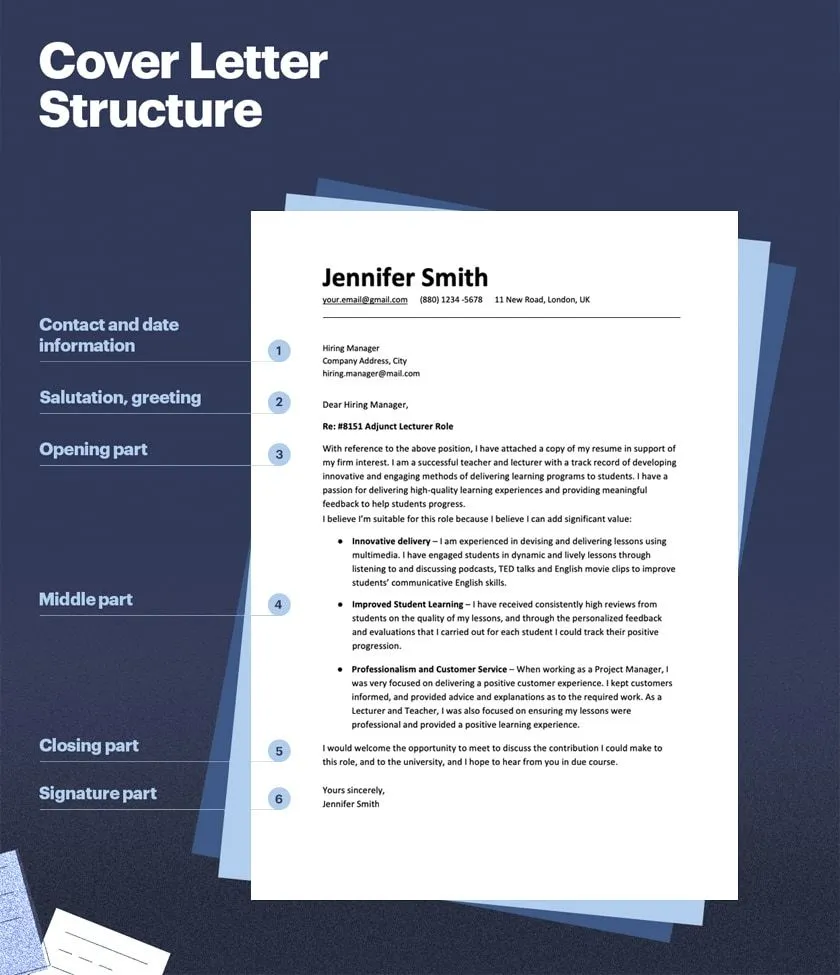
A well-structured cover letter is easy to read and allows the hiring manager to quickly grasp your key qualifications. Generally, a cover letter should consist of three to four paragraphs. The first paragraph should grab attention and state your purpose. The body paragraphs should showcase your skills and experience, providing specific examples and quantifying your achievements. The final paragraph should summarize your interest in the role and encourage the reader to take action. Use clear headings, bullet points, and white space to make your letter visually appealing and easy to scan.
Creating a Clear and Concise Flow
The body of your cover letter should have a logical flow, guiding the reader through your qualifications and experiences. Each paragraph should build on the previous one, creating a cohesive narrative. Use transition words and phrases to connect your ideas and make the letter easy to follow. Keep your sentences and paragraphs concise, avoiding jargon and overly complex language. Your goal is to communicate your message clearly and efficiently, demonstrating your ability to write effectively.
Highlighting Accomplishments with Numbers

Numbers add credibility and impact to your cover letter. Whenever possible, quantify your accomplishments to demonstrate your achievements. Instead of saying ‘Improved sales’, say ‘Increased sales by 20% in one quarter’. Quantifiable results prove your ability to deliver results and create value for the employer. Include metrics such as percentages, dollar amounts, and other relevant data. If you don’t have specific numbers, provide estimates or use industry benchmarks to support your claims.
Writing a Strong Cover Letter Closing
Your closing paragraph is your final opportunity to make a positive impression. Reiterate your interest in the role and company, and express your enthusiasm for the opportunity. Include a call to action, such as ‘I am eager to discuss my qualifications further in an interview’ or ‘I welcome the opportunity to learn more about this exciting role’. Thank the hiring manager for their time and consideration, and provide your contact information. A strong closing reinforces your message and encourages the reader to take the next step.
Expressing Enthusiasm and Next Steps
End your cover letter with a clear expression of your enthusiasm for the opportunity. Indicate your eagerness to learn more about the role and company. Include a call to action, such as stating that you are available for an interview at their earliest convenience. Thank the hiring manager for considering your application. Your closing should be positive, professional, and encourage the next step in the hiring process.
Proofreading and Formatting Your Cover Letter

Before submitting your cover letter, carefully proofread it for any errors in grammar, spelling, and punctuation. Typos and grammatical errors can create a negative impression, suggesting a lack of attention to detail. Use a grammar checker, but also read the letter aloud to catch any mistakes. Ensure the formatting is consistent and easy to read. Use a professional font, such as Times New Roman or Arial, and maintain consistent margins and spacing. A well-formatted and error-free cover letter demonstrates your professionalism and attention to detail.
Ensuring Error-Free Content
Thorough proofreading is critical. Check for typos, grammatical errors, and awkward phrasing. Read your cover letter multiple times, slowly and carefully. If possible, ask a friend, family member, or career counselor to review it for you. A fresh pair of eyes can often catch mistakes that you might miss. Every detail, from spelling to punctuation, matters. An error-free cover letter makes you look more polished and professional.
Optimizing for Applicant Tracking Systems (ATS)
Many companies use Applicant Tracking Systems (ATS) to screen applications. These systems scan your cover letter and resume for keywords, so it’s important to optimize your content. Research the company and the role to identify the key skills and keywords they are looking for. Incorporate these keywords naturally throughout your cover letter, but avoid keyword stuffing, which can make your letter appear unnatural and unprofessional. Use clear headings, bullet points, and a standard font to make it easier for the ATS to read and process your application.
Tailoring Your Cover Letter

A generic cover letter is unlikely to make a strong impression. Tailor each cover letter to the specific job and company you are applying for. Carefully review the job description and identify the key requirements. Then, customize your letter to address these requirements, highlighting your relevant skills, experiences, and achievements. Show that you have taken the time to understand the role and the company’s needs. This personalized approach demonstrates your genuine interest and increases your chances of getting noticed.
Researching the Company and Role
Before writing your cover letter, thoroughly research the company and the role. Visit their website, read their social media profiles, and look for news articles and press releases. Understand the company’s mission, values, and culture. Review the job description carefully, noting the specific skills and qualifications the employer is seeking. This research will help you customize your cover letter and demonstrate your genuine interest. Showcasing your knowledge of the company will significantly improve your chances of impressing the hiring manager.
Customizing Your Letter for Each Application
Avoid the temptation to use a one-size-fits-all cover letter. Take the time to customize each application, even if it requires more effort. Adapt your letter to the specific job requirements and the company’s culture. Highlight the skills and experiences that are most relevant to the role. Mention specific projects or achievements that align with the company’s goals. By personalizing your letter, you increase your chances of capturing the hiring manager’s attention and demonstrating your genuine interest in the opportunity.
Examples of Effective Cover Letters
Reviewing examples of effective cover letters can provide valuable insights and inspiration. Look for examples that are well-structured, tailored to the specific job, and showcase the candidate’s skills and experiences. Pay attention to the language used, the tone, and the overall style. Analyze the opening, body paragraphs, and closing to understand how the candidate effectively conveys their message. Use these examples as a guide, but be sure to write your own unique cover letter that reflects your personality and qualifications. Websites like Indeed, LinkedIn, and career blogs offer numerous examples.
Analyzing Successful Cover Letter Formats
Study various cover letter formats to understand how they are structured and how they present information. Most effective cover letters follow a standard format with an introduction, body paragraphs, and a conclusion. Pay close attention to how the candidate introduces themselves, highlights their skills, and demonstrates their value. Observe how they use action verbs, quantify their achievements, and tailor their language to the job and company. Analyze the overall flow and readability of the letter to identify best practices that you can incorporate into your own writing.
Cover Letter Do’s and Don’ts
Following a few simple guidelines can significantly increase the effectiveness of your cover letter. Do tailor your letter to each job, highlight your skills and experiences, and proofread carefully. Don’t use a generic template, rehash your resume, or include irrelevant information. Avoid clichés and jargon, and always be professional and enthusiastic. Paying attention to these do’s and don’ts will help you create a cover letter that shines and helps you stand out from the competition.
Key Mistakes to Avoid
Certain mistakes can immediately disqualify your application. Avoid using a generic template that doesn’t address the specific job requirements. Do not repeat your resume word-for-word; instead, expand on your qualifications and provide more context. Avoid spelling and grammar errors, as they reflect poorly on your attention to detail. Do not include irrelevant information or personal details that are not related to the job. Keeping these mistakes in mind will help you create a polished cover letter that increases your chances of success.
Cover Letter Checklist for Success
To ensure your cover letter is the best it can be, use a checklist. Does your letter address the specific job requirements? Does it showcase your relevant skills and experiences? Is your opening engaging and attention-grabbing? Does your letter have a clear structure and logical flow? Are your accomplishments quantified and supported by concrete examples? Have you proofread your letter carefully for any errors? Is your closing strong and does it include a call to action? By using a checklist, you can ensure that your cover letter is polished, professional, and increases your chances of getting an interview.