Understanding the Hiring Manager’s Perspective
Before you even begin writing your cover letter, it’s crucial to understand the hiring manager’s perspective. They are busy individuals, sifting through numerous applications, and their primary goal is to find the best candidate who fits the role and the company culture. They look for clear, concise communication, relevant skills, and a genuine interest in the position. Your cover letter is your first chance to make a positive impression and demonstrate that you understand their needs. Consider what the hiring manager is looking for in a candidate; what problems they are trying to solve by filling this position. Think about how your skills and experience align with their priorities. Showing this understanding from the outset significantly increases your chances of capturing their attention.
Researching the Hiring Manager’s Name
One of the most impactful ways to impress a hiring manager is to address them by name. This demonstrates that you have taken the initiative to research the company and the specific role. A personalized greeting, such as “Dear Mr. Smith,” immediately sets you apart from generic applicants. However, it is very important to get the correct spelling and title right, so be very careful in your research. Misspelling or misgendering can quickly create a negative impression. If you can’t find the hiring manager’s name, focus on finding someone else at the company or use a more general, yet still professional, greeting.
How to Find the Hiring Manager

Finding the hiring manager’s name might not always be straightforward, but there are several avenues to explore. The job posting itself might mention the hiring manager or a specific department contact. Check the company website’s “About Us” or “Our Team” sections to identify relevant individuals. If the job posting is through a recruitment agency, the recruiter might be able to provide the name of the hiring manager. Don’t hesitate to reach out to your network to see if anyone has connections within the company. Persistence in research shows your strong interest and attention to detail.
Utilizing LinkedIn for Information
LinkedIn is an invaluable resource for job seekers. Search for the company and look at the profiles of people working there, particularly those in HR or management positions. Reviewing the job posting will often suggest the department or team you will be working with. Look for profiles that match the job title or department listed. Even if you don’t find the exact hiring manager, you can often identify the relevant team or department head. Also, LinkedIn provides insights into their career history, interests, and professional connections, which can help you tailor your cover letter to resonate with their experience.
Crafting a Personalized Salutation
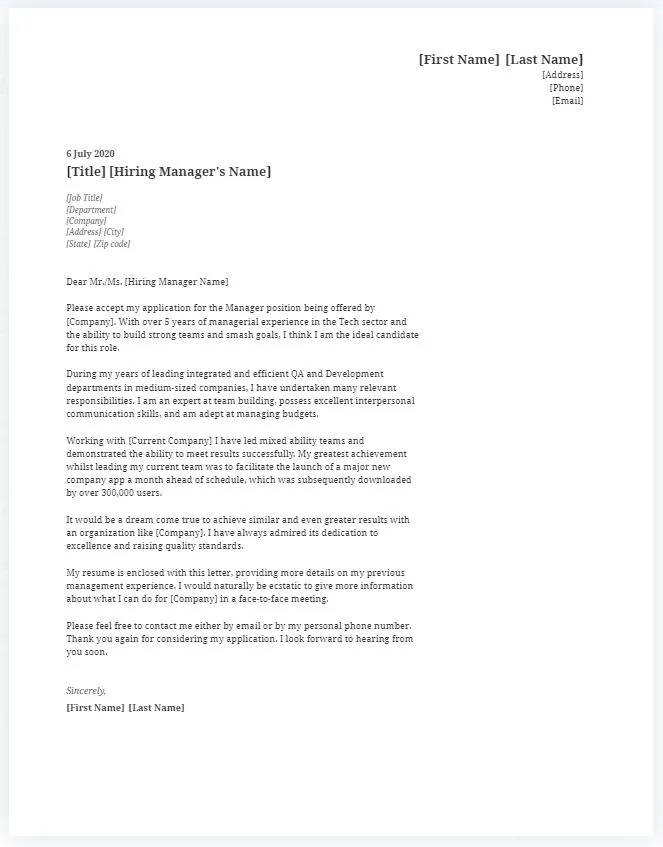
Once you have the hiring manager’s name, a personalized salutation is essential. Avoid generic greetings such as “To Whom It May Concern” or “Dear Sir/Madam.” Instead, use “Dear Mr./Ms./Mx. [Last Name].” If you’re unsure of their gender, using their full name, such as “Dear [First Name] [Last Name],” is a safe and professional option. A personalized salutation shows that you’ve done your homework and are genuinely interested in the opportunity. This small detail can have a significant impact on the hiring manager.
Alternatives to a Generic Greeting

If you are unable to find the hiring manager’s name, there are alternatives to avoid a generic greeting. You can address the hiring team, such as “Dear Hiring Manager,” which is better than a generic greeting, but ideally, you want to identify a specific person. Other professional options include using the department name, such as “Dear Marketing Team,” if you know who will be reviewing the applications. While these alternatives are acceptable, always prioritize finding the hiring manager’s name to make a stronger, more personalized connection.
Showcasing Relevant Skills and Experience
Your cover letter is an opportunity to highlight the skills and experiences that align with the job requirements. Carefully review the job description and identify the key qualifications the employer is seeking. Then, in your cover letter, provide specific examples of how your skills and experiences match those requirements. Use action verbs to describe your accomplishments, quantify your results whenever possible, and emphasize the value you brought to previous roles. This targeted approach demonstrates that you are a strong fit for the position and understand the company’s needs.
Highlighting Accomplishments Effectively
Highlighting your accomplishments is crucial for making a memorable impression. Instead of simply listing your responsibilities, focus on the results you achieved in previous roles. For example, instead of saying “Managed social media accounts,” say “Increased social media engagement by 30% in six months by implementing a new content strategy.” Use the STAR method (Situation, Task, Action, Result) to structure your examples and provide context. This will help the hiring manager understand your impact and value. Specific examples are always more persuasive than general statements.
Tailoring Your Cover Letter to the Job Description

A generic cover letter is unlikely to impress a hiring manager. Tailoring your cover letter to each specific job application is essential. Customize the content to reflect the specific requirements, skills, and values of the company. Research the company’s mission, culture, and recent activities, and incorporate this information into your letter. Show that you’ve taken the time to understand the role and the company. Demonstrate how your skills and experiences make you the ideal candidate for the position. A tailored cover letter clearly shows your interest and enthusiasm for the opportunity.
Demonstrating Enthusiasm and Fit
Expressing your enthusiasm for the role and the company is critical to capturing the hiring manager’s attention. In your cover letter, clearly state why you are excited about the opportunity and what attracts you to the company. Show that you have researched the company, understand its values, and are genuinely interested in contributing to its success. Explain how your career goals align with the role and the company’s mission. Your enthusiasm makes the hiring manager more interested in learning about you and viewing you as a great addition to the team.
The Importance of Proofreading and Editing
Before submitting your cover letter, proofread and edit it meticulously. Errors in grammar, spelling, and punctuation can create a negative impression and undermine your credibility. Take the time to check your letter for clarity, conciseness, and professionalism. Read it aloud to catch any awkward phrasing or mistakes. Consider having a friend or colleague review your letter for any errors you may have missed. A polished cover letter demonstrates your attention to detail and commitment to quality.
Common Mistakes to Avoid in Cover Letters

Several common mistakes can hurt your chances of impressing a hiring manager. Avoid generic cover letters, as they show a lack of effort and interest. Do not repeat your resume word for word, as it demonstrates a failure to engage with the job opportunity. Avoid typos and grammatical errors, as they can be very off-putting. Don’t be negative or complain about previous employers. Instead, focus on your strengths and how you can benefit the new company. Keep it concise and clear, and always proofread before submitting your application. A well-crafted cover letter is the key to making a strong first impression.