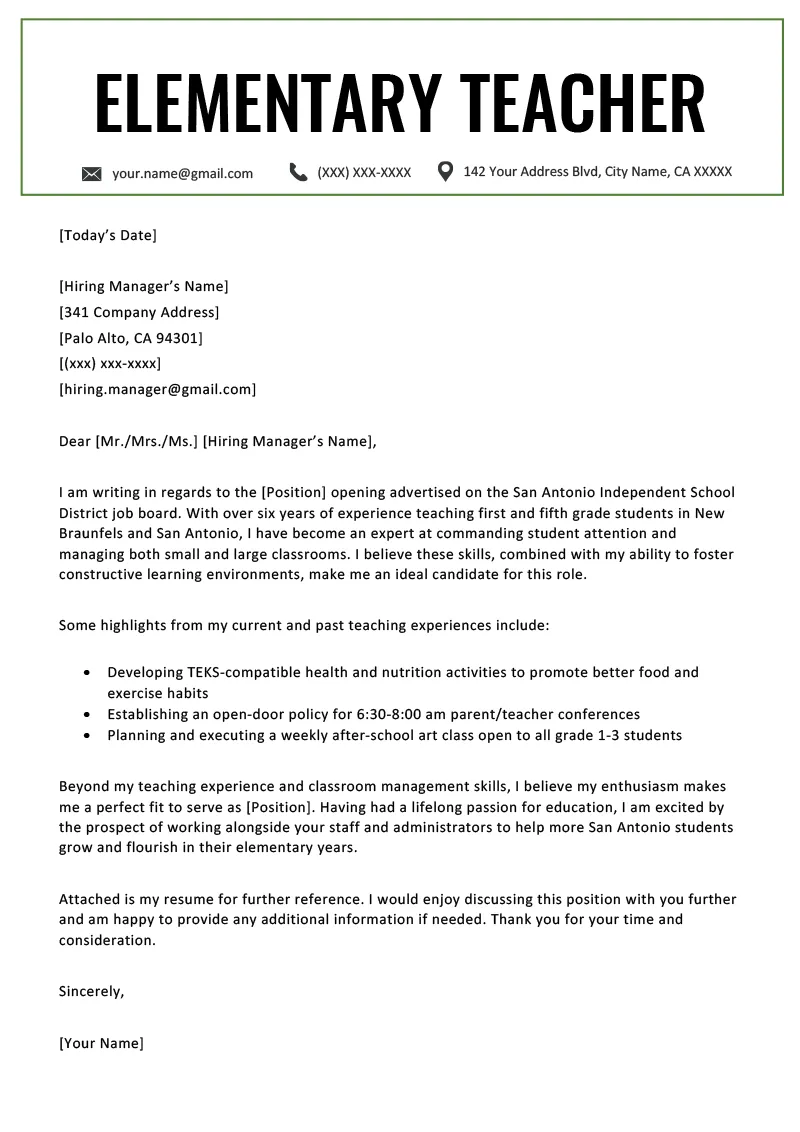
Understanding the Importance of a Teacher Cover Letter
In the competitive field of education, a well-crafted cover letter is your first opportunity to make a strong impression. It’s more than just a formality; it’s a crucial tool that can significantly increase your chances of landing an interview and ultimately securing a teaching position. A compelling cover letter provides the hiring committee with a glimpse into your personality, teaching philosophy, and qualifications, going beyond the information presented in your resume. In today’s job market, where hundreds of applications are common, a standout cover letter is vital for capturing attention and demonstrating why you’re the ideal candidate for the role.
Why a Cover Letter Matters for Teachers
A cover letter allows you to tell your story, providing context and depth to your application. It’s your chance to connect your skills, experiences, and passion for teaching with the specific needs and values of the school. It shows you’ve taken the time to understand the school’s mission and how your teaching aligns with their goals. Furthermore, a cover letter offers the space to highlight specific achievements, teaching methodologies, and classroom management strategies, making your application memorable.
What Makes a Cover Letter ‘Winning’?

A winning teacher cover letter is personalized, professional, and persuasive. It’s not a generic template; it’s tailored to each specific job application. It showcases your passion for teaching, highlights your relevant skills and experiences, and demonstrates your understanding of the school’s culture and needs. It should be free of errors, easy to read, and compelling enough to encourage the reader to learn more about you. Most importantly, it should leave a positive and lasting impression, positioning you as a strong contender for the position.
Key Elements of a Winning Teacher Cover Letter
Header Information
The header of your cover letter provides essential contact information. Make sure that this information is accurate, up-to-date, and easy to find. This section sets a professional tone and makes it simple for the hiring manager to reach you if they are interested in learning more about you. Accuracy is the most important factor. Avoid typos and double-check everything.
Your Contact Information

Include your full name, phone number, email address, and optionally, your LinkedIn profile URL. This information should be clearly displayed at the top of your letter, typically on the left-hand side. Ensure your email address sounds professional. If necessary, create a new one. Make sure your voicemail is set up and professional.
The Hiring Manager’s Contact Information
If possible, address your cover letter to a specific person (e.g., the principal or hiring manager). This shows that you’ve done your research and are genuinely interested in the school. If you can’t find a name, address your letter to the ‘Hiring Committee’ or ‘Dear [School Name] Hiring Manager.’ Always check the school’s website or job posting for the most accurate information.
The Salutation
The salutation sets the tone for your letter. It should be professional and respectful. Use ‘Dear Mr./Ms./Mx. [Last Name]’ if you know the hiring manager’s name. If you don’t know the name, ‘Dear Hiring Committee’ or a similar general greeting is acceptable.
Personalize Your Greeting

Avoid generic greetings like ‘To Whom It May Concern.’ Personalizing your greeting demonstrates that you’ve taken the time to research the school and the position. This small detail can make a big difference in making a positive impression. Whenever possible, find the name of the person who will be reviewing the applications to show you have taken the time to do your research.
Body Paragraph 1 Highlight Your Passion
The first paragraph of your cover letter should grab the reader’s attention and establish your passion for teaching. This is where you express your enthusiasm for the role and the school, setting the stage for the rest of your letter. Begin with a statement that clearly states the position you’re applying for and how you learned about the opportunity.
Express Your Enthusiasm for Teaching
Show your genuine excitement for teaching. Briefly explain why you love teaching and what motivates you. This could include your passion for student success, your commitment to creating a positive learning environment, or your love for a specific subject area. Your enthusiasm can be infectious, making your cover letter stand out.
Showcase Your Relevant Skills and Experience

Quickly highlight your key skills and experience that align with the job requirements. This is a sneak peek into your qualifications and what you can bring to the school. Mention your certifications, specific teaching methods you employ, and any relevant experience working with students.
Body Paragraph 2 Tailor to the School
This section is where you demonstrate your understanding of the school’s culture and values. It’s essential to do your research and tailor your letter to each specific school. Explain why you are a great fit for the specific school rather than writing a generic cover letter. Schools want to know why you want to be a part of their team specifically.
Research the School’s Values
Visit the school’s website, read their mission statement, and learn about their programs and initiatives. Understand their core values, teaching philosophies, and any special programs they offer. Incorporate this information into your cover letter to show that you have taken the time to learn about the school and that your values align with theirs.
Highlight How You Align with Their Mission

Explain how your teaching philosophy, skills, and experience align with the school’s mission and values. Give specific examples of how you can contribute to their educational goals and support their students. Show them that you are not just looking for a job but are genuinely interested in being part of their community.
Body Paragraph 3 Quantify Your Achievements
The third body paragraph should focus on showcasing your achievements and the positive impact you’ve had in previous roles. Use data and concrete examples to demonstrate your effectiveness as a teacher. Backing up claims with measurable results adds credibility to your application.
Use Numbers and Specific Examples
Instead of making vague statements, use numbers to quantify your achievements. For example, mention that you ‘increased student test scores by 15%’ or ‘implemented a new classroom management system that reduced disciplinary incidents by 30%.’ Provide specific examples of how you have improved student outcomes or contributed to a positive learning environment.
Show, Don’t Just Tell Provide Evidence

Don’t just state that you are a good teacher; provide evidence to support your claims. Describe specific projects, initiatives, or strategies you’ve implemented and the results you achieved. For instance, discuss how you incorporated project-based learning and increased student engagement. Use stories and anecdotes to bring your experiences to life and make your cover letter more memorable.
The Closing
The closing of your cover letter should be concise, professional, and leave a lasting positive impression. Reiterate your interest, express your gratitude for the opportunity, and include a call to action.
Reiterate Your Interest
Briefly restate your enthusiasm for the position and the school. Remind the hiring manager why you are a great fit for the role and what you can bring to their school. Show that you’re confident and excited about the possibility of joining their team.
Include a Call to Action
End with a clear call to action, such as ‘I am eager to discuss my qualifications further and welcome the opportunity to interview for this position.’ Provide your contact information again and thank the hiring manager for their time and consideration. This demonstrates your proactive approach and encourages them to take the next step.
Proofreading and Formatting
Proofreading and formatting are essential to ensure that your cover letter is professional and error-free. Errors can undermine your credibility and make a negative impression. Take the time to carefully review your letter and follow formatting guidelines for a polished presentation.
Check for Grammar and Spelling Errors
Thoroughly proofread your cover letter for any grammar and spelling errors. Use a grammar checker and have a friend or colleague review your letter as a second pair of eyes can often catch mistakes you may have missed. Make sure that the name of the school or person is correct. Even the slightest error can make a negative impression and potentially disqualify you from consideration.
Formatting Guidelines
Use a professional font like Times New Roman, Arial, or Calibri. Use a font size between 10 and 12 points. Keep your cover letter concise, aiming for one page. Use clear and easy-to-read formatting with appropriate spacing between paragraphs and sections. Ensure your letter is well-organized and visually appealing. Avoid using excessive jargon or overly complex language. Make it easy for the hiring manager to read and understand your qualifications.