Crafting a Resume & Cover Letter that Shines
In the competitive world of job hunting, your resume and cover letter are your initial introductions to potential employers. These documents must immediately capture attention, highlight your value, and persuade the hiring manager to delve deeper into your qualifications. Crafting a compelling resume and cover letter isn’t merely about listing your past experiences and skills; it’s about strategically presenting yourself as the ideal candidate for the specific role. This guide provides a comprehensive overview of the essential components, formatting techniques, and content strategies needed to create documents that not only shine but also effectively open doors to new career opportunities.
Understanding the Resume and Cover Letter
The resume and cover letter serve distinct yet complementary roles in your job application. The resume provides a concise summary of your professional background, including work experience, education, skills, and achievements. It is a factual document designed to quickly inform the employer of your qualifications. On the other hand, the cover letter allows you to expand on your resume by offering a personalized introduction, expressing your interest in the position, and connecting your skills and experiences to the specific job requirements. It gives you the opportunity to articulate your career goals, demonstrate your understanding of the company, and showcase your personality. Both documents are essential, but they must be tailored to each job application to be effective.
The Importance of a Resume

Your resume acts as a concise snapshot of your career, education, and skills. It’s the first document that most employers will see, and it needs to instantly grab their attention. A well-crafted resume provides an overview of your professional journey, emphasizing the key skills and experiences that make you a suitable candidate for the role. A well-structured resume ensures that recruiters can quickly assess your qualifications, thereby making it easier for you to move to the next stage of the hiring process. Therefore, investing time in perfecting your resume is an investment in your career prospects.
Key Components of a Resume
A strong resume comprises several key sections designed to present your qualifications effectively. Each section must provide relevant and targeted information to the hiring manager. The most common sections are Contact Information, Summary or Objective Statement, Work Experience, Education, and Skills. These elements should be organized clearly and concisely, with an emphasis on your accomplishments and relevance to the job. Each section should be carefully crafted, ensuring that it highlights the most pertinent information and aligns with the requirements of the job for which you are applying.
Contact Information
This section should include your full name, phone number, email address, and optionally, your LinkedIn profile URL. Ensure all information is up-to-date and professional. Double-check for any typos or errors, as incorrect contact details can prevent employers from reaching you. Your email address should be professional; avoid using informal or outdated addresses. Maintain a consistent format across your resume.
Summary or Objective Statement

A summary statement provides a brief overview of your skills and experiences, usually reserved for candidates with extensive experience. An objective statement, more common for entry-level roles, states your career goals. Both should be tailored to the job and provide a snapshot of what you can bring to the role. When writing your summary or objective, be concise and focused, highlighting your most relevant qualifications and career aspirations. Tailor it to each application.
Work Experience
List your work history in reverse chronological order, including job titles, company names, locations, and dates of employment. Use bullet points to describe your responsibilities and achievements, starting each with a strong action verb. Quantify your accomplishments whenever possible (e.g., “Increased sales by 15%”). Focus on results and contributions relevant to the target job, ensuring that each bullet point is impactful and informative, providing concrete evidence of your capabilities and performance in previous roles.
Education
Include your degree, major, university name, and graduation date. If you have a recent degree, list it near the top. Add relevant coursework, honors, or GPA if it enhances your profile. Be precise with your education details and ensure accuracy. Prioritize your most recent and relevant educational achievements to immediately highlight your academic qualifications.
Skills Section

Categorize your skills (technical, soft, etc.) and list those that match the job description. Use keywords from the job posting. This section should be tailored to each job application, highlighting the skills that are most relevant to the position. This will ensure that your resume effectively aligns with the job requirements. This section should be a focused and targeted reflection of your abilities.
The Significance of a Cover Letter
A cover letter serves as your personal introduction to the hiring manager, allowing you to provide context and depth to your resume. It showcases your personality, enthusiasm, and understanding of the role and company. A well-crafted cover letter can significantly increase your chances of getting an interview. Unlike the resume, the cover letter is a chance to tell your story, demonstrating why you are the perfect fit.
Essential Elements of a Cover Letter
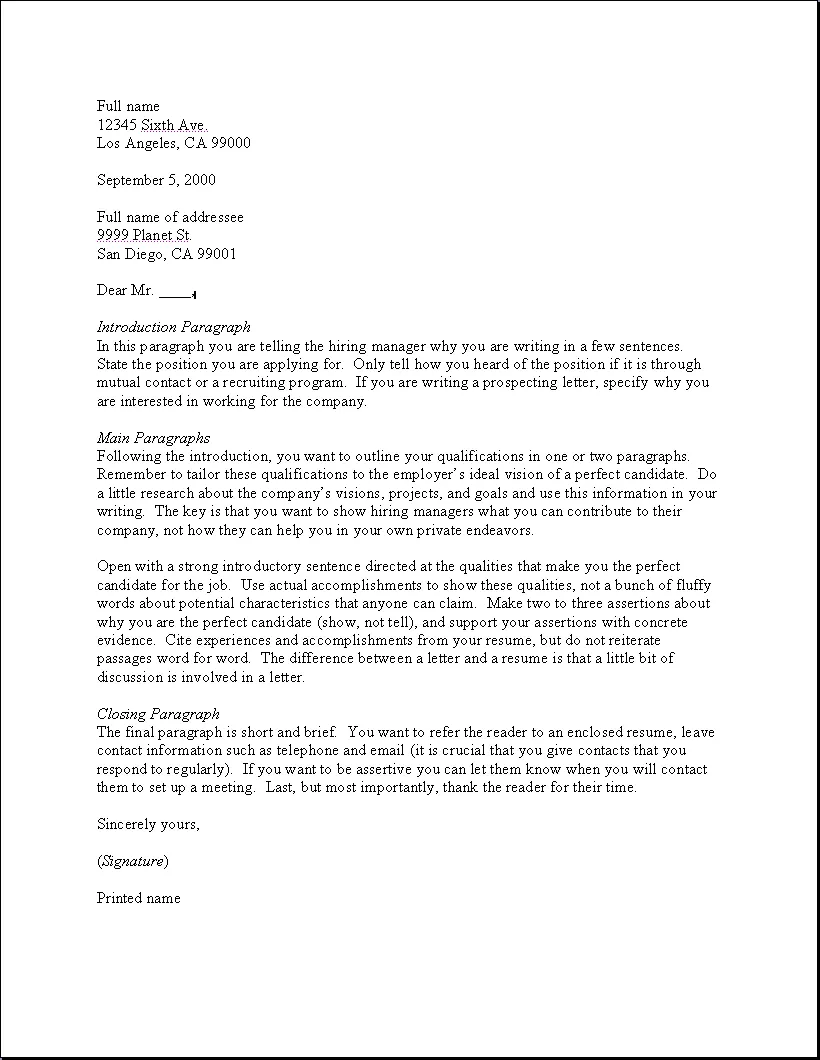
A compelling cover letter typically includes a header with your contact information, a personalized greeting, an engaging introduction, body paragraphs that highlight your skills and experiences, and a strong closing with a call to action. Each element is crucial for creating a positive first impression and making a strong case for your candidacy. Proper formatting and clear writing are essential for making your cover letter stand out. Make sure to address the specific requirements of the job description.
Header and Contact Information

Your header should include your name, address, phone number, email address, and optionally, your LinkedIn profile URL. Ensure that the information matches your resume and is professional. Maintain consistency in formatting between your cover letter and resume to project a unified and professional image.
Greeting and Introduction
Address the hiring manager by name if possible (research their name on LinkedIn or the company website). Start with a compelling opening paragraph that grabs the reader’s attention and states the position you are applying for. Briefly explain why you are interested in the role and the company. Avoid generic greetings and aim for a personalized and enthusiastic approach to create a strong initial impression and set the tone for the rest of your letter.
Body Paragraphs (Highlighting Skills & Experiences)
In the body paragraphs, connect your skills and experiences to the job requirements. Provide specific examples of how you have demonstrated these skills in the past, using the STAR method (Situation, Task, Action, Result) to illustrate your achievements. Tailor the content to the specific job, highlighting relevant experiences, and quantifying your accomplishments to show your impact. Each paragraph should be concise, focused, and clearly demonstrate your value to the employer.
Closing and Call to Action

In your closing, reiterate your interest in the role and the company. Thank the hiring manager for their time and consideration, and include a call to action, such as expressing your eagerness to discuss your qualifications further. Provide your contact information again and make sure the tone is confident and professional. Make a clear and concise statement that summarizes your intentions and sets the stage for the next step in the application process.
Formatting Your Resume and Cover Letter
Proper formatting ensures your documents are readable, professional, and easy to navigate. Consistent formatting across your resume and cover letter creates a professional look. Formatting affects how quickly a recruiter can scan your documents. This helps recruiters quickly identify key information.
Choosing the Right Format
Choose a format that is easy to read and visually appealing. Common formats include chronological, functional, and combination resumes. Chronological resumes are the most common and list your work history in reverse chronological order. Functional resumes focus on skills and abilities rather than work history, useful if you have employment gaps. Combination resumes blend both formats. Select the format that best highlights your strengths and addresses any gaps in your work history. Ensure your format aligns with industry standards and expectations.
Formatting for Applicant Tracking Systems

Many companies use Applicant Tracking Systems (ATS) to scan resumes. Use a simple, clean format without complex tables, graphics, or unusual fonts to ensure your resume is ATS-compatible. Save your resume as a .doc or .docx file. Use clear headings and section titles that an ATS can easily recognize. Make sure to incorporate relevant keywords from the job description. This will help your resume pass through the ATS and reach the hiring manager.
Design and Layout
Keep your design clean and uncluttered, using a readable font like Arial, Calibri, or Times New Roman. Use headings, bullet points, and white space to organize your content. Avoid excessive colors or graphics unless appropriate for the industry. A well-designed document is easy to scan and improves readability. Good layout makes it easier for a hiring manager to focus on your qualifications.
Writing Effective Content
The content of your resume and cover letter must be concise, compelling, and tailored to each job application. The quality of your writing is a direct reflection of your professionalism and attention to detail. Focus on conveying the most relevant information and demonstrating your value to the employer. Effective writing can make a positive impression and significantly enhance your chances of being selected for an interview. Content should also be error-free.
Keywords Optimization for Cover Letter and Resume
Carefully review the job description and identify keywords related to skills, qualifications, and industry jargon. Incorporate these keywords naturally throughout your resume and cover letter. Make sure the keywords are integrated seamlessly into your content. Using relevant keywords increases your chances of being found by ATS and recruiters. Prioritize the keywords that are most important to the role, ensuring your application aligns with the employer’s requirements.
Using Action Verbs and Quantifiable Achievements
Use strong action verbs to describe your accomplishments and responsibilities. Instead of saying “Responsible for,” use verbs like “Managed,” “Implemented,” or “Developed.” Quantify your achievements whenever possible to demonstrate your impact (e.g., “Increased sales by 20%,” “Reduced costs by 15%”). Quantifiable results provide concrete evidence of your contributions and make your application more persuasive. Focus on what you achieved and the results you delivered in your previous roles.
Tailoring to the Job Description
Customize your resume and cover letter for each job application. Highlight the skills, experiences, and accomplishments that are most relevant to the specific role. Address the specific requirements outlined in the job description. Research the company and its values. Tailoring demonstrates your interest and commitment to the role and the company. Customize to each application to make it more effective.
Proofreading and Editing
Thoroughly proofread your resume and cover letter for any errors in grammar, spelling, and punctuation. Use spell check, but also read through the documents carefully to catch any mistakes. Have a friend or career counselor review your documents for feedback. Errors can damage your credibility and create a negative impression. Proofreading and editing demonstrate your attention to detail and professionalism, which is critical for making a positive impression.
Tools and Resources
Various tools and resources can help you create effective resumes and cover letters. These resources can save you time and improve the quality of your documents. Using these resources will assist you in the process of creating your documents.
Resume Builders and Cover Letter Templates
Online resume builders and cover letter templates provide pre-designed formats and guidance to help you create professional documents quickly. Many free and paid options are available, offering customizable templates that can be tailored to your needs. These tools simplify the process and ensure your documents are well-structured and formatted. Use these resources to streamline the process and ensure your documents are visually appealing and professionally presented. They offer a variety of options to fit different needs and industries.
Reviewing Examples and Seeking Feedback
Reviewing examples of successful resumes and cover letters can provide inspiration and guidance. Seek feedback from career counselors, mentors, or friends to identify areas for improvement. Getting feedback from multiple sources can provide a well-rounded perspective and help you refine your documents. Use these resources to gain insights into best practices and ensure your resume and cover letter effectively communicate your qualifications.