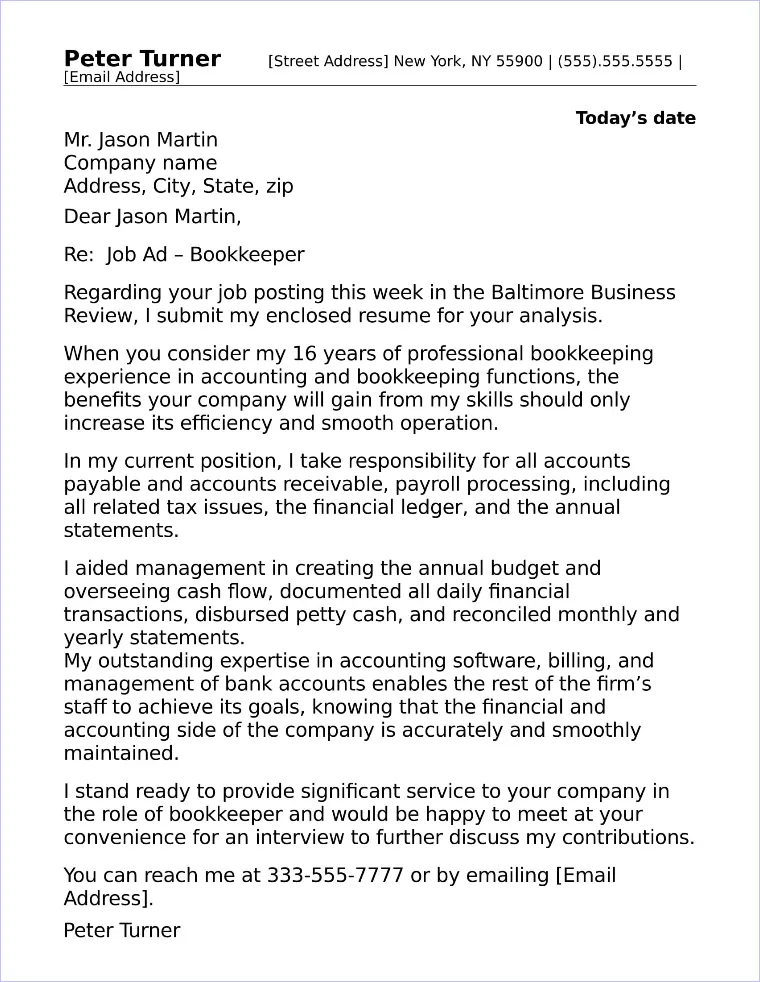
What is a Bookkeeper Cover Letter
A bookkeeper cover letter is a crucial document that accompanies your resume when applying for bookkeeping positions. It serves as your first introduction to a potential employer, allowing you to showcase your personality, skills, and experience in a more personalized way than a resume alone. Unlike a resume, which provides a summary of your qualifications, a cover letter gives you the opportunity to explain why you are the perfect fit for the specific job and company, highlighting your unique value proposition. Therefore, crafting a compelling cover letter can significantly increase your chances of landing an interview and ultimately securing the job. Think of it as your personal sales pitch to the hiring manager.
Why Bookkeeper Cover Letters are Important
In a competitive job market, a well-written cover letter can set you apart from other candidates. It demonstrates your genuine interest in the role and the company, showing that you’ve taken the time to tailor your application. This attention to detail and proactive approach can make a positive first impression. Furthermore, a cover letter allows you to elaborate on experiences and achievements that might not be fully captured in your resume. It’s your opportunity to explain any gaps in employment, address specific job requirements, and express your enthusiasm for the bookkeeping profession. A strong cover letter emphasizes your ability to communicate effectively, a valuable skill in any professional setting, especially for a bookkeeper who must interact with clients and colleagues.
Key Components of a Bookkeeper Cover Letter

A well-structured cover letter includes several key components that work together to create a compelling narrative. Each section plays a vital role in conveying your qualifications, demonstrating your interest, and persuading the hiring manager to consider your application. From the header to the closing, every element contributes to the overall effectiveness of the letter. Proper formatting and clear communication are essential throughout, ensuring that the hiring manager can easily understand your message and appreciate your suitability for the role. Let’s break down the essential parts to help you build a standout cover letter.
Header Section
The header of your cover letter is the first thing the hiring manager will see. It should include your contact information, the date, and the recipient’s contact information. Accuracy and professionalism are key in this section, so double-check everything before submitting your letter. This initial information establishes your identity and provides the necessary details for the employer to reach you if they are interested in moving forward with your application. A clean, organized header sets a professional tone and demonstrates your attention to detail.
Your Contact Information
Include your full name, phone number, email address, and, optionally, your LinkedIn profile URL. Ensure your email address is professional. Avoid using nicknames or casual addresses. Make it easy for the employer to reach you quickly and efficiently. Verify your contact information is current and that your voicemail is set up and ready to receive messages. This allows the recruiter or hiring manager to contact you if they decide to invite you to an interview. Make sure the information is easy to read and clearly formatted.
Date

The date is typically the day you are sending the cover letter. It’s essential for record-keeping purposes, both for you and the employer. Use the standard format (Month Day, Year) – for example, July 20, 2024. The date helps to keep track of the application process and ensures the letter’s validity. Accuracy with the date presents a professional and organized impression. Correct dating is a fundamental aspect of business correspondence and shows attention to detail.
Recipient’s Contact Information
If possible, address your cover letter to a specific person (the hiring manager or the contact person mentioned in the job posting). If you can’t find a name, use the title. If you do not know a name then use title such as ‘Hiring Manager’. Include the recipient’s title, company name, and address. Researching the hiring manager’s name shows initiative and demonstrates your interest in the role. If no name is available, use a professional greeting like “Dear Hiring Manager” and ensure you have the correct company address. Accurate and personalized addressing significantly increases the impact of your letter.
Opening Paragraph
The opening paragraph is your chance to make a strong first impression. It should immediately grab the reader’s attention and clearly state the purpose of your letter – to apply for the bookkeeping position. Begin with a strong opening sentence that highlights your enthusiasm and explains why you are interested in the role. Mention where you saw the job posting and, if applicable, how you were referred. Keep it concise, engaging, and tailored to the specific job. A well-crafted opening sets the tone for the rest of the letter and encourages the hiring manager to continue reading.
Grabbing the Reader’s Attention
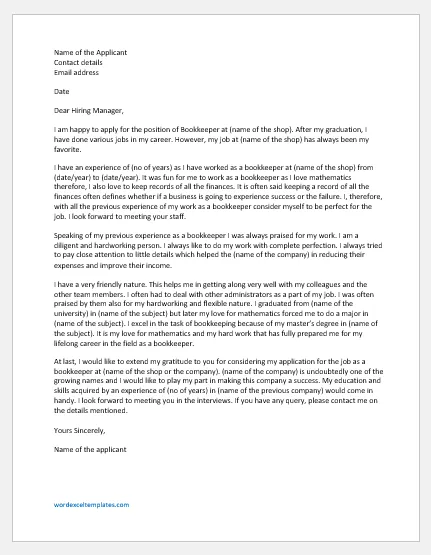
To grab the reader’s attention, start with a compelling hook. This could be a brief statement about your most relevant skill or a mention of your success in a previous role. Avoid generic openings. Instead, tailor your introduction to the specific job requirements and company values. Start by saying something impactful. State clearly the position you’re applying for and then mention something unique. Make them want to know more, making the hiring manager eager to read the rest of your cover letter. For example, you might start by mentioning a significant achievement related to bookkeeping, such as saving a previous employer money or improving efficiency.
Expressing Enthusiasm
Expressing your enthusiasm for the role and the company is crucial. Show that you are genuinely interested in the opportunity and that you have researched the company. Highlight what specifically attracts you to the position or the organization. This could be their mission, values, or recent achievements. Demonstrate that you have a clear understanding of what the company does and how your skills and experience can contribute to their success. Enthusiasm is contagious and can make a positive impression on the hiring manager, making them more likely to consider your application seriously. Your excitement shows that you are not just looking for any job, but that you are genuinely motivated by this specific role.
Body Paragraphs
The body paragraphs are the core of your cover letter, where you showcase your qualifications and demonstrate how your skills and experience align with the job requirements. This is your opportunity to provide specific examples of your achievements and explain how you can contribute to the company’s success. This section should be clear, concise, and tailored to the specific job description. Use keywords from the job posting to highlight your relevant experience. Quantify your achievements whenever possible to demonstrate your impact. The body paragraphs should provide a clear and compelling narrative about why you are the ideal candidate.
Highlighting Relevant Skills

Identify the key skills required for the bookkeeping position and provide examples of how you have used those skills in the past. This might include experience with accounting software (like QuickBooks or Xero), data entry, financial reporting, reconciliation, or accounts payable and receivable. Tailor the skills you highlight to match those listed in the job description. Provide specific examples of how you have successfully applied those skills to achieve positive outcomes in your previous roles. For instance, describe how you used your analytical skills to identify and resolve a significant accounting discrepancy, or how you streamlined a process to improve efficiency. Make sure the skills are clear and easy to understand.
Quantifying Achievements
Whenever possible, quantify your achievements to demonstrate your impact. Use numbers and statistics to show how you have added value in previous roles. Did you reduce costs, improve accuracy, or increase efficiency? Provide specific figures to support your claims. For example, instead of saying “Improved accuracy,” say “Improved accuracy by 15% by implementing a new reconciliation process.” Quantifying your achievements makes your claims more credible and provides concrete evidence of your abilities. Use numbers to show the results you have achieved, such as the amount of money saved or the percentage of improvement.
Showcasing Bookkeeping Experience
Provide details about your relevant bookkeeping experience. Briefly describe your responsibilities and accomplishments in previous roles, focusing on the experiences most relevant to the job you’re applying for. If you have experience with a particular industry or type of business, highlight that. Mention any specific projects you’ve worked on that are relevant to the position. Be sure to explain your expertise, providing clear examples to show that you have what it takes to succeed. Be sure to demonstrate an understanding of bookkeeping principles and industry best practices. Tailor your experience descriptions to the specific requirements of the job.
Tailoring to the Job Description

Carefully review the job description and tailor your cover letter to match its specific requirements. Identify the key skills, qualifications, and experiences the employer is looking for and highlight how your background aligns with those needs. Use keywords from the job description throughout your letter to demonstrate that you understand the role and are a good fit. Avoid sending a generic cover letter; instead, customize it for each position you apply for. Show that you’ve taken the time to understand the employer’s needs and that you have the skills and experience to meet them. Be specific in mentioning the software they use and the key responsibilities. Tailoring shows attention to detail.
Closing Paragraph
Your closing paragraph should reiterate your interest in the position and include a clear call to action. Thank the hiring manager for their time and consideration. This is the final chance to leave a positive and lasting impression. Keep the tone professional and enthusiastic. Ensure that your closing paragraph is concise and leaves the reader with a sense of confidence in your abilities. Proofread the closing carefully to avoid any grammatical errors or typos. Your final paragraph helps create the impression of a professional who is eager to join their team.
Reiterating Interest
In your closing paragraph, reiterate your strong interest in the bookkeeping position and the company. Briefly summarize why you are a good fit for the role, referencing the skills and experience you have discussed. This reinforces your key selling points and reminds the hiring manager of your qualifications. Express your enthusiasm for the opportunity and your desire to contribute to the company’s success. Reiterate your interest in a clear and concise manner, reminding the reader that you are enthusiastic about the opportunity and that you are excited about joining their team.
Call to Action
Include a clear call to action to encourage the hiring manager to take the next step. This could be a request for an interview or an invitation to contact you with any questions. Make it easy for them to reach out to you by providing your contact information again. Express your availability for an interview and your eagerness to discuss the opportunity further. A strong call to action increases the likelihood of receiving a positive response and moving forward in the hiring process. Make it a strong call to action so they know what you want.
Proofreading and Formatting
Proofreading and formatting are critical aspects of creating a professional cover letter. Errors can undermine your credibility and make a negative impression on the hiring manager. Taking the time to review your letter carefully will demonstrate your attention to detail. Ensure that your cover letter is free of grammatical errors, typos, and formatting inconsistencies. Proper formatting, with clear sections and appropriate spacing, makes your letter easy to read and visually appealing. A well-proofread and formatted cover letter shows professionalism and increases your chances of success.
Checking for Errors
Thoroughly proofread your cover letter to catch any errors. Read it multiple times, paying attention to grammar, spelling, punctuation, and sentence structure. Use spell-check and grammar-check tools, but don’t rely on them completely. Sometimes, those tools can miss errors, so having a fresh set of eyes to read it over is a good idea. Ask a friend, family member, or career advisor to review your letter and provide feedback. A second set of eyes can help you identify errors you might have missed. Correct all the mistakes to present yourself in the best possible light. Always make sure to double-check the company name and contact details.
Using a Professional Tone
Maintain a professional tone throughout your cover letter. Use formal language and avoid slang or overly casual expressions. Keep your writing concise and to the point. Focus on conveying your qualifications and enthusiasm without being overly familiar. Ensure that the tone of your letter reflects the company culture and the expectations of the role. Use clear and direct language to express your ideas. Use professional language that reflects your respect for the opportunity. Using a professional tone is essential to be considered by the hiring manager. Maintain this tone for the entirety of the letter.
Formatting Tips
Proper formatting makes your cover letter easy to read and visually appealing. Use a standard font like Times New Roman, Arial, or Calibri, with a font size of 11 or 12 points. Use single spacing within paragraphs and double spacing between paragraphs. Align your text to the left and maintain consistent margins throughout. Ensure that your letter fits on one page. Avoid using excessive bolding, italics, or underlining. Maintain a professional appearance and a well-organized layout, making sure your cover letter is easy to read. Professional formatting improves readability and showcases your attention to detail, which is important for a bookkeeper.