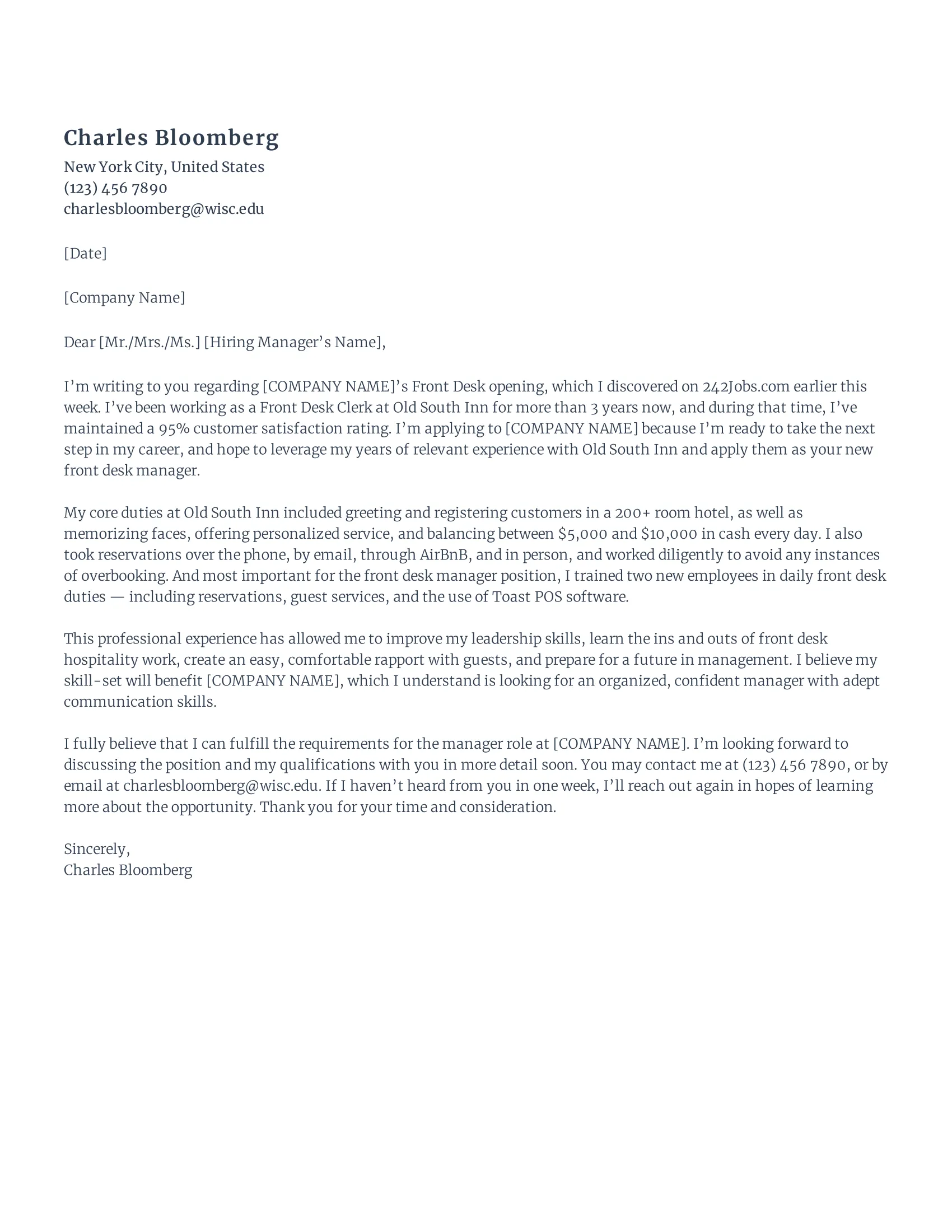
Why Your Hospitality Cover Letter Matters
In the competitive world of hospitality, a well-crafted cover letter is your first opportunity to make a lasting impression. It serves as a crucial introduction, going beyond the basic information provided in your resume. A strong cover letter allows you to showcase your personality, enthusiasm for the role, and understanding of the company’s values. It is your chance to explain why you are the ideal candidate and how your skills align with the specific job requirements. Without a compelling cover letter, your application may be overlooked, regardless of your experience. Therefore, dedicating time and effort to create a standout cover letter is essential for securing your desired position in the hospitality industry.
A cover letter is not just a formality; it’s a vital tool that can differentiate you from other applicants. It demonstrates your communication skills, attention to detail, and genuine interest in the role and the company. By highlighting relevant experiences, skills, and your passion for hospitality, you create a narrative that resonates with the hiring manager. A well-written cover letter sets the stage for your resume and encourages the employer to delve deeper into your qualifications. This initial document is your opportunity to make a memorable first impression, which increases your chances of getting an interview and ultimately landing your dream job.
Highlighting Your Skills and Experience
When crafting your hospitality cover letter, focus on highlighting the skills and experiences most relevant to the specific job you’re applying for. Instead of providing a generic list of skills, tailor your letter to emphasize those that align with the requirements outlined in the job description. This could include customer service, communication, problem-solving, teamwork, and leadership abilities. Providing specific examples of how you have utilized these skills in past roles is essential. For instance, describe a time you resolved a customer complaint, managed a team effectively, or implemented a successful initiative that improved guest satisfaction.
Your experience should also be detailed, providing context and demonstrating your ability to excel in various hospitality roles. Rather than simply listing your job titles and responsibilities, explain the impact you made in each position. This might include increased revenue, improved guest satisfaction scores, or successful event management. By showcasing your achievements, you demonstrate your value and potential to the hiring manager. Use action verbs to describe your accomplishments, such as ‘managed,’ ‘implemented,’ ’led,’ or ‘improved,’ to make your descriptions more impactful and engaging. The goal is to show that you are not just qualified but that you have a proven track record of success.
Quantify Your Achievements

One of the most effective ways to make your cover letter stand out is to quantify your achievements. This means providing specific, measurable results that demonstrate the impact of your work. Instead of saying you ‘improved customer service,’ state that you ‘increased customer satisfaction scores by 15% through implementing a new training program.’ This level of detail provides tangible evidence of your capabilities and gives the hiring manager a clear understanding of your contributions.
When quantifying your accomplishments, use numbers, percentages, and specific data points. For example, if you were responsible for managing a team, you could mention the number of team members you supervised, the revenue generated under your leadership, or the reduction in employee turnover. If you have experience in event planning, you could specify the number of events you organized, the number of attendees, or the budget you managed. Quantifying your achievements not only strengthens your claims but also provides concrete evidence of your skills and expertise. Remember to use metrics and data to support your claims and showcase your ability to drive results.
Tailoring Your Cover Letter for Each Application
A generic cover letter is easily identified and rarely makes a strong impression. To significantly increase your chances of success, it’s crucial to tailor your cover letter to each job application. This involves thoroughly researching the company and the specific role you’re applying for. Visit their website, read about their mission and values, and understand their current projects and initiatives. Then, carefully review the job description and identify the key requirements and skills that the employer is seeking.
Once you understand the company and the role, customize your cover letter to align with their needs. Highlight the skills and experiences that are most relevant to the job description, and provide specific examples of how you have demonstrated those skills in the past. Personalize your letter by mentioning specific aspects of the company that appeal to you, such as their commitment to sustainability, their reputation for excellent service, or their innovative approach to hospitality. Demonstrating that you understand the company and are genuinely interested in the role significantly increases your chances of capturing the hiring manager’s attention and securing an interview.
Formatting and Structure
The formatting and structure of your hospitality cover letter are crucial to make it visually appealing and easy to read. A well-formatted letter ensures that your qualifications and experiences are easily accessible to the hiring manager. Begin with a professional heading that includes your contact information, the date, and the hiring manager’s name and title. Use a clear and readable font, such as Arial or Times New Roman, and maintain a consistent font size throughout the document. Ensure that the spacing between paragraphs and sections is consistent, making the letter easy to scan and digest.
The structure of your cover letter should follow a standard format, including an introduction, body paragraphs, and a conclusion. The introduction should immediately grab the reader’s attention and state the purpose of your letter. The body paragraphs should highlight your key skills and experiences, providing specific examples to support your claims. The conclusion should summarize your qualifications and express your enthusiasm for the role. Keep your letter concise, ideally no more than one page, focusing on the most relevant information. A well-formatted and structured cover letter demonstrates professionalism and attention to detail, both essential qualities in the hospitality industry.
Proofreading and Editing

Proofreading and editing your hospitality cover letter is critical to ensure it is free of errors and presents you in the best possible light. Typos, grammatical errors, and inconsistencies can create a negative impression and undermine your credibility. Before submitting your cover letter, carefully review it for any mistakes. Read the letter aloud to identify awkward phrasing or sentences that don’t flow smoothly. Pay close attention to spelling, grammar, punctuation, and sentence structure. Use a grammar and spell-checking tool, but also manually proofread to catch any errors that the tools might miss.
Beyond proofreading for errors, make sure your cover letter is well-written and engaging. Ensure your language is clear, concise, and professional. Avoid using jargon or overly complex sentences. Seek feedback from a trusted friend, mentor, or career counselor who can provide constructive criticism. Another pair of eyes can often identify errors or areas for improvement that you might have overlooked. A polished, error-free cover letter showcases your professionalism and attention to detail, significantly increasing your chances of making a positive impression on the hiring manager.
The Importance of a Strong Closing
The closing of your hospitality cover letter is your final opportunity to make an impression. It should reiterate your interest in the position and encourage the hiring manager to contact you. Avoid generic phrases like ‘Thank you for your time and consideration.’ Instead, express your enthusiasm for the role and the company. Reiterate your key qualifications and how they align with the job requirements. A strong closing is essential for leaving a lasting positive impression on the hiring manager. It should leave them with a clear understanding of your value and your eagerness to contribute to the company’s success.
In your closing paragraph, include a call to action, inviting the hiring manager to contact you for an interview. Provide your contact information again and express your availability to discuss your qualifications further. Maintain a professional and enthusiastic tone, signaling your eagerness to contribute to the team and your commitment to the hospitality industry. End with a professional closing, such as ‘Sincerely’ or ‘Best regards,’ followed by your name. A well-crafted closing leaves the reader with a positive impression and increases the likelihood of your application being seriously considered.