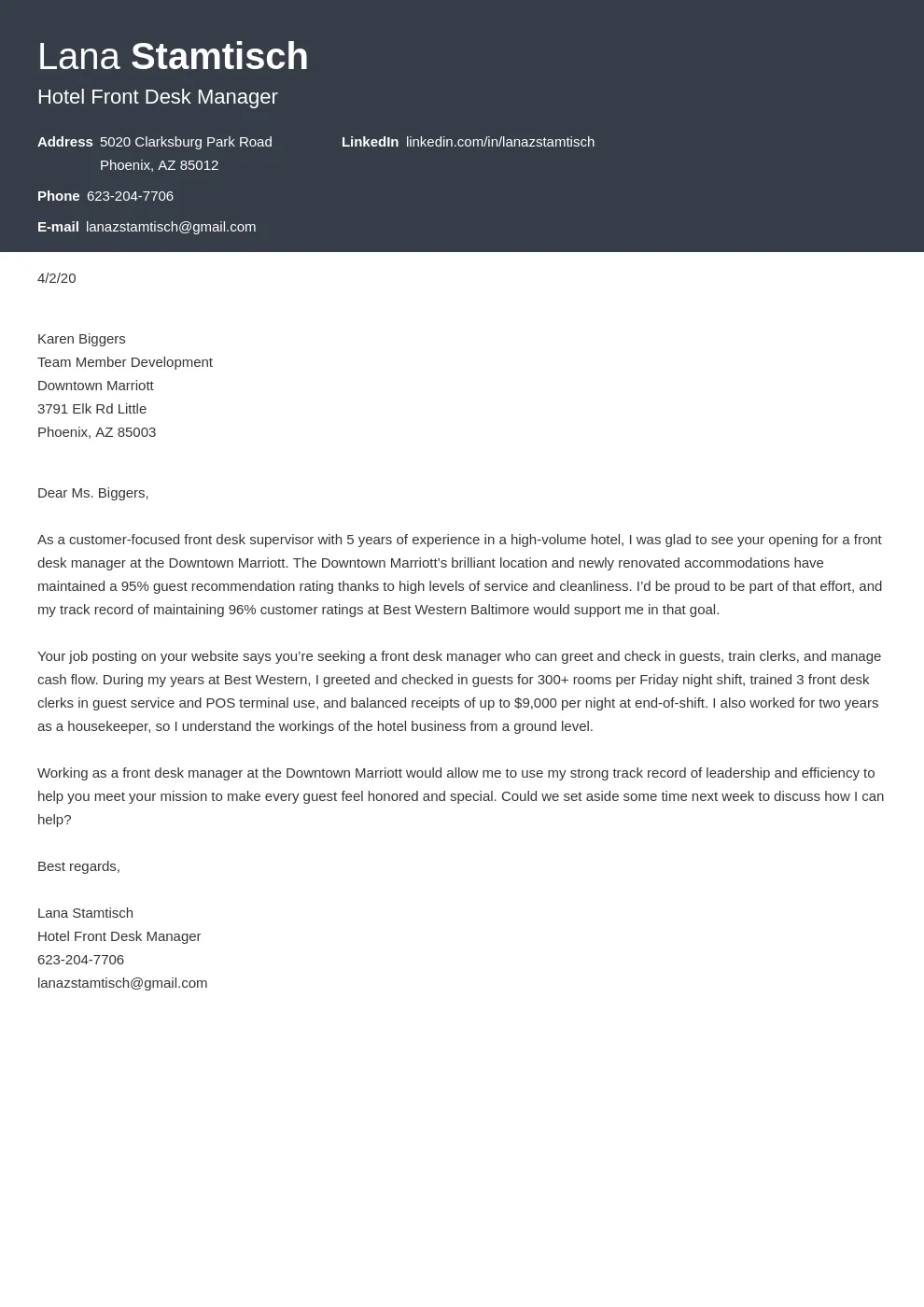
Hospitality Cover Letter Top 5 Secrets
Crafting a compelling hospitality cover letter is your first step toward landing your dream job in this dynamic industry. Your cover letter serves as a crucial introduction, allowing you to showcase your personality, skills, and enthusiasm for the role. It’s your chance to make a memorable first impression and convince the hiring manager that you’re the perfect fit. A well-written cover letter can significantly increase your chances of getting an interview, while a poorly written one can lead to your application being overlooked. In this guide, we’ll reveal the top 5 secrets to writing a winning hospitality cover letter that will set you apart from the competition and help you secure your desired position. Implementing these strategies will equip you with the tools necessary to create a cover letter that effectively highlights your qualifications and demonstrates your genuine interest in the role and the company.
Highlight Your Passion and Enthusiasm
The hospitality industry thrives on individuals who are passionate about providing exceptional service. Your cover letter should immediately convey your genuine enthusiasm for the industry and the specific role you’re applying for. Express your excitement about the opportunity to contribute to a positive guest experience and work within a team. Use words and phrases that demonstrate your passion, such as ’eager to learn,’ ‘committed to excellence,’ or ‘dedicated to creating memorable experiences.’ Share a brief anecdote or personal experience that illustrates your love for hospitality, whether it’s a positive experience you had as a guest or a time you went above and beyond to assist someone. This will help the hiring manager to understand your personality and your true interest in working in this field.
Showcase Relevant Skills

Hospitality roles require a diverse set of skills, ranging from customer service and communication to problem-solving and teamwork. In your cover letter, highlight the skills that are most relevant to the specific job you’re applying for. Carefully review the job description and identify the key skills the employer is seeking. Then, provide concrete examples of how you’ve demonstrated those skills in previous roles or experiences. For instance, if the job requires strong communication skills, describe a situation where you successfully resolved a customer complaint or effectively communicated with a diverse team. If teamwork is emphasized, share an example of how you collaborated with colleagues to achieve a common goal. Tailor your skills to align with the role, making your application stand out from the rest.
Quantify Your Achievements
Instead of simply stating your responsibilities, focus on quantifying your achievements whenever possible. Use numbers and data to demonstrate the impact you’ve made in previous roles. For example, instead of saying ‘Managed guest inquiries,’ you could say ‘Successfully resolved an average of 50 guest inquiries per day, resulting in a 95% satisfaction rate.’ If you improved efficiency, mention the percentage or amount of time saved. If you increased sales, specify the percentage or dollar amount. Quantifiable achievements provide concrete evidence of your skills and abilities, making your cover letter more compelling and memorable. Providing data-driven evidence showcases your ability to deliver tangible results. This approach offers a clear understanding of your capabilities and performance.
Tailor to the Job and Company
Generic cover letters are easily recognizable and often disregarded. To make your application stand out, tailor your cover letter to each specific job and company you’re applying to. Research the company’s mission, values, and culture. Review the job description carefully and identify the key requirements and expectations. In your cover letter, demonstrate your understanding of the company and explain why you’re a good fit for their specific needs. Highlight how your skills and experience align with the job requirements and what you can bring to the table. Customize your language, tone, and examples to reflect the company’s brand and values. Addressing the specific needs of the company and the role demonstrates that you’ve put in the effort and are genuinely interested in the opportunity, significantly increasing your chances of getting noticed.
Proofread and Polish Your Cover Letter

Typos, grammatical errors, and inconsistencies can damage your credibility and make a negative impression on the hiring manager. Before submitting your cover letter, carefully proofread it to ensure it’s free of errors. Check for spelling mistakes, grammatical errors, and punctuation issues. Ensure your sentences are clear, concise, and easy to read. Consider having a friend or family member review your cover letter for a second opinion. A polished and error-free cover letter demonstrates attention to detail and professionalism. It shows that you care about presenting yourself in the best possible light and are committed to excellence. Make sure your cover letter is free of errors to demonstrate your commitment to professionalism and attention to detail.
Common Mistakes to Avoid
Generic Language
Avoid using generic phrases and clichés that could apply to any job. Instead, use specific and compelling language to showcase your unique skills and experiences. For instance, replace phrases like ‘hardworking and dedicated’ with concrete examples of your achievements. Use action verbs and descriptive language to paint a clear picture of your abilities and accomplishments. The hiring manager sees many applications with generic wording. Make your application stand out by avoiding these phrases.
Focusing on Yourself Too Much

While it’s important to highlight your skills and experiences, avoid making your cover letter overly self-centered. Instead, focus on how your skills and experiences can benefit the company and contribute to their success. Demonstrate your understanding of the company’s needs and explain how you can help them achieve their goals. Show the hiring manager that you’re interested in being part of their team and contributing to their success, not just advancing your own career.
Ignoring the Company Culture
Every hospitality company has its own unique culture and values. Before you submit your cover letter, research the company and understand their culture. Tailor your language, tone, and examples to reflect the company’s brand and values. Show the hiring manager that you understand their culture and are a good fit for their team. This shows the hiring manager that you will align with the company’s values and team dynamic.
Not Proofreading
As mentioned earlier, a cover letter riddled with errors can be detrimental to your application. Always proofread your cover letter carefully before submitting it. Check for spelling mistakes, grammatical errors, and punctuation issues. Consider having a friend or family member review your cover letter for a second opinion. A polished and error-free cover letter demonstrates attention to detail and professionalism. Failure to proofread reflects negatively on your professionalism, so make sure to carefully review it.
Cover Letter Examples for Different Roles

Front Desk Representative
A cover letter for a front desk representative should emphasize customer service, communication, and organizational skills. Highlight your experience in handling guest inquiries, managing reservations, and providing excellent customer service. Mention your proficiency in relevant software and your ability to handle difficult situations with professionalism and grace. Demonstrate your friendly and approachable personality and your commitment to creating a positive first impression for guests. Provide metrics around customer satisfaction, and mention any customer feedback you’ve received. This demonstrates your capabilities and the impact of your performance.
Restaurant Server
For a restaurant server position, your cover letter should showcase your customer service skills, teamwork abilities, and knowledge of food and beverage service. Highlight your experience in taking orders, serving food and drinks, and providing excellent customer service. Mention your ability to work under pressure, handle multiple tables efficiently, and maintain a positive attitude. Showcase your familiarity with restaurant procedures and your dedication to creating a memorable dining experience. Mention any experience with upselling, menu knowledge, or any other achievements that improved customer experience and revenue. Demonstrate your passion for hospitality and your ability to work as part of a team.
Hotel Manager

A cover letter for a hotel manager position should highlight your leadership skills, management experience, and business acumen. Showcase your experience in managing hotel operations, overseeing staff, and ensuring guest satisfaction. Quantify your achievements by mentioning improvements in occupancy rates, guest satisfaction scores, and revenue generation. Demonstrate your knowledge of budgeting, cost control, and marketing strategies. Highlight your ability to lead and motivate a team and your commitment to creating a positive and productive work environment. Show your experience in hiring, training, and other responsibilities to show how you contributed to overall success.
Conclusion
Writing a strong hospitality cover letter requires a strategic approach that highlights your passion, skills, and achievements. By following the top 5 secrets outlined in this guide and avoiding common mistakes, you can create a cover letter that sets you apart from the competition and significantly increases your chances of landing your dream job in the hospitality industry. Remember to always tailor your cover letter to the specific job and company, proofread it carefully, and showcase your enthusiasm for the role. Good luck with your job search, and remember to put your best foot forward by creating a compelling cover letter!