Highlighting Your Equipment Expertise
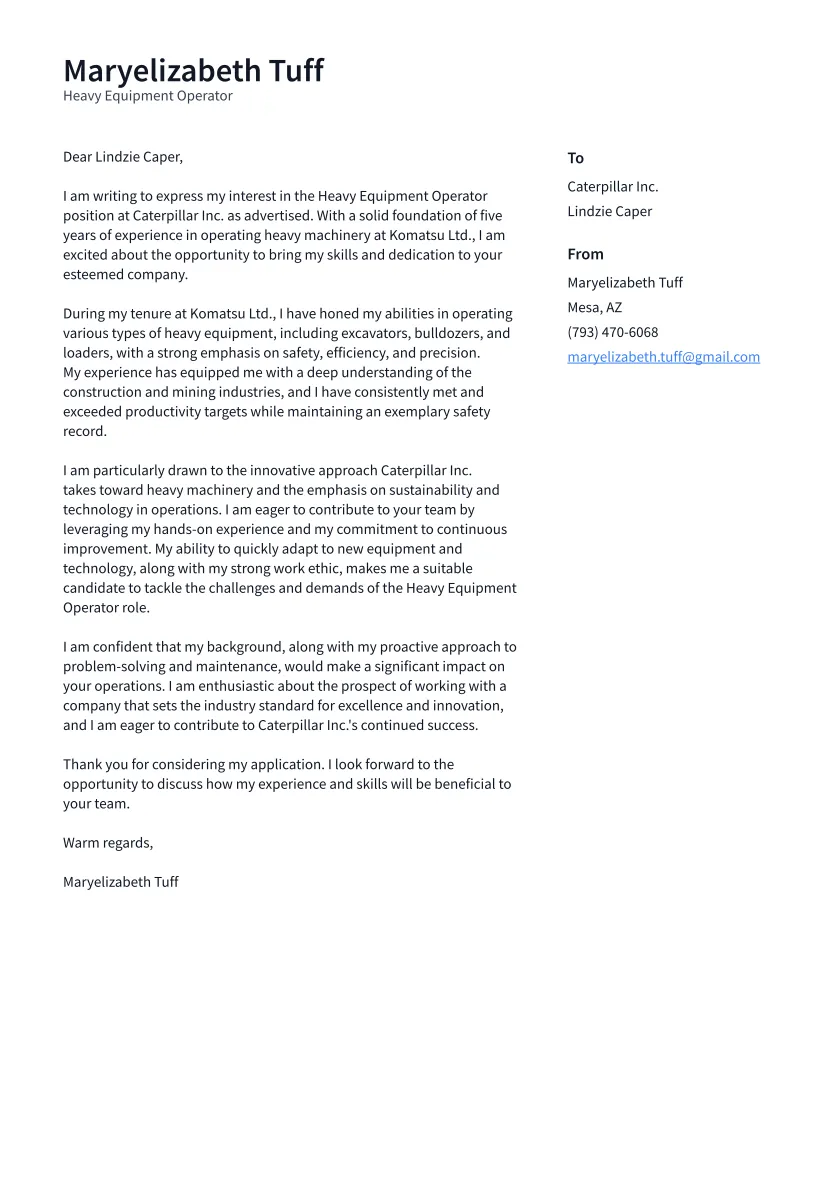
Your equipment operator cover letter is your first chance to impress a potential employer. It’s not just a formality; it’s your opportunity to showcase your skills, experience, and qualifications. Begin by clearly stating your role as an equipment operator and the specific types of machinery you are proficient in operating. This could include bulldozers, excavators, loaders, graders, or any other relevant equipment. Be specific. Vague statements won’t make the cut. Mentioning the brands and models you’re familiar with can also be beneficial, as some companies use specific types of equipment. Highlight your experience in operating these machines in various environments such as construction sites, mining operations, or agricultural settings. Focus on your most relevant skills and experiences that match the job description. Make sure your cover letter reflects that you possess expertise with the equipment relevant to the specific job you’re applying for, making you stand out from other candidates.
Showcasing Relevant Certifications
Equipment operator roles often require specific certifications and licenses. These credentials demonstrate your competence, adherence to safety regulations, and commitment to professional standards. In your cover letter, clearly list all the relevant certifications you possess. This includes, but isn’t limited to, OSHA certifications, CDL (Commercial Driver’s License), and any other specialized licenses required for the equipment or industry. State the issuing body, the date of issue, and any expiration dates. If you have certifications for specific equipment, such as a Caterpillar or Komatsu certification, include these details. Placing this information prominently in your cover letter ensures that the hiring manager immediately understands your qualifications. Also, make sure your certifications are current. Expired certifications may disqualify you from consideration. Demonstrating that you are up-to-date on all essential certifications assures the employer of your eligibility and readiness to operate equipment safely and efficiently.
Mentioning Specific Equipment Experience

Detail your experience operating specific types of equipment. Provide concrete examples of the machinery you have experience with, specifying the make and model whenever possible. This gives the employer a clear picture of your capabilities. If you have experience with bulldozers, excavators, loaders, or graders, explicitly mention it. Describe your experience in different work settings, such as construction sites, mining operations, or agricultural environments. Emphasize the scope and duration of your experience with each type of equipment. For example, state that you have five years of experience operating a Caterpillar D6 bulldozer. Provide details about the projects you have worked on, the tasks you have performed, and the results you have achieved. Mention any specialized attachments or tools you are familiar with. This specificity not only demonstrates your proficiency, but it also makes your cover letter much more compelling. It highlights your suitability for the specific role you are applying for.
Quantifying Achievements and Skills
Instead of simply stating your skills, use numbers and data to showcase your achievements. Quantifying your accomplishments makes your cover letter more impactful and demonstrates your value to a potential employer. Use metrics to highlight your proficiency and efficiency. For example, you might say “Increased site efficiency by 15% by optimizing excavation techniques.” Or, “Completed over 1,000 hours of safe operation without any incidents.” Mention the size or scale of projects you’ve worked on and your contribution to their success. If you have experience with large-scale projects, specify the size and scope. If you have improved efficiency or reduced downtime, provide specific percentages or figures to prove your accomplishments. Quantifying your achievements makes your cover letter more compelling and provides concrete evidence of your skills, showing potential employers the value you bring.
Using Action Verbs and Strong Language
Use action verbs to describe your duties and accomplishments, which can significantly enhance the impact of your cover letter. Action verbs create a sense of activity and provide a clear understanding of your responsibilities and achievements. Examples of effective action verbs for an equipment operator cover letter include operated, maintained, repaired, supervised, managed, coordinated, and optimized. For instance, instead of stating, “Responsible for operating a bulldozer,” you could say, “Operated a bulldozer to grade and clear land for construction projects.” This not only highlights what you did, but how you did it. Replace generic, passive language with more dynamic and assertive language. Avoid vague phrases and use clear, concise language to make sure that your accomplishments are immediately apparent. Be concise and use phrases that highlight your skills in the best possible light.
Providing Examples of Accomplishments

Support your claims with specific examples of your accomplishments. When you’re detailing your experience, provide concrete examples of situations where you successfully utilized your skills. Describe specific projects you’ve worked on and your contributions to their success. Provide details about how you solved problems, improved efficiency, or contributed to a project’s completion. For example, you could mention a time when you efficiently managed a large-scale excavation project, contributing to the project’s on-time completion. Or, highlight a time you used your skills to reduce equipment downtime. Use the STAR method (Situation, Task, Action, Result) to structure your examples. Describe the situation, the task you were assigned, the action you took, and the positive result you achieved. This method provides a clear, concise, and compelling way to demonstrate your abilities. This shows the potential employer how you can bring value to their team.
Customizing the Cover Letter
A generic cover letter won’t make a strong impression. Customizing your cover letter for each job application is an essential step toward securing an interview. Tailoring your letter shows that you have taken the time to understand the specific requirements of the role and the needs of the company. Always read the job description carefully to identify the key skills and qualifications the employer is seeking. Then, highlight how your experience and skills align with their requirements. Use keywords from the job description in your cover letter. This helps the hiring manager quickly see that you meet their criteria and that you are a good fit for the position. Show how your skills and experience align with the specific demands of the role. Addressing the company’s needs makes your application much more compelling.
Researching the Company and Job
Before writing your cover letter, it’s essential to research the company and the specific job you are applying for. Understanding the company’s mission, values, and current projects will help you tailor your letter to their specific needs. Visit the company’s website and read their ‘About Us’ section to gain insights into their business and culture. Review their social media profiles and news articles to understand their recent activities and achievements. This research helps you demonstrate genuine interest and shows the hiring manager that you are dedicated to their company. Learn about the specific requirements of the job. Carefully review the job description and identify the key skills and qualifications that the employer is seeking. Align your qualifications with the job’s requirements. By knowing what the employer is looking for, you can customize your cover letter to showcase your suitability for the role.
Tailoring the Letter to the Specific Job

Once you understand the company and the job requirements, tailor your cover letter to match. Highlight the skills and experiences that are most relevant to the specific position. Focus on the qualifications mentioned in the job description. Make sure to incorporate keywords from the job description to show the hiring manager that you possess the required skills. Explain how your experience aligns with the company’s needs. For example, if the job requires experience with a specific type of equipment, make sure to emphasize your experience with that machinery. Address how you can help the company achieve its goals. Providing specific examples of how your skills can benefit the company demonstrates your value to them. By tailoring your letter to the specific job, you increase your chances of getting noticed and securing an interview.
Formatting and Proofreading for a Professional Look
The appearance of your cover letter says a lot about your professionalism. A well-formatted and carefully proofread letter will make a positive impression on the hiring manager. Choose a clean, easy-to-read font like Arial, Times New Roman, or Calibri. Use a font size between 10 and 12 points. Ensure your cover letter is well-organized, with clear headings, bullet points, and plenty of white space. This makes it easier for the hiring manager to scan and read your letter. Use consistent formatting throughout the document. Maintain the same font style, size, and spacing. Stick to a standard business letter format with your contact information at the top, the date, and the hiring manager’s contact information. Ensure your letter is free from grammatical errors and typos. Proofread your cover letter carefully and consider having someone else review it. This helps you catch any mistakes that you might have missed. A polished cover letter demonstrates attention to detail.
Choosing the Right Font and Style
The font and style you choose can impact your cover letter’s readability and professionalism. Select a font that is easy to read, such as Arial, Times New Roman, or Calibri. These fonts are widely accepted and convey a sense of professionalism. Keep the font size between 10 and 12 points. A font that is too small can be difficult to read, while a font that is too large can appear unprofessional. Use clear headings, bullet points, and plenty of white space. A well-formatted cover letter is easy to scan. These elements create a clean, organized look that is appealing to the reader. Use consistent formatting throughout the document. Keep the same font style, size, and spacing. Consistency makes your cover letter look polished and professional. Avoid using unusual fonts or overly decorative styles. These can distract from the content and make your cover letter look unprofessional.
Proofreading for Errors

Even small errors can damage your chances of getting hired. Proofread your cover letter carefully to make sure it is free from grammatical errors and typos. Read your cover letter multiple times, each time focusing on a different aspect such as grammar, spelling, punctuation, and consistency. Use spell-check and grammar-check tools, but don’t rely on them entirely. These tools can miss certain errors. Always have someone else review your cover letter. A fresh pair of eyes can often catch mistakes that you might have missed. Consider asking a friend, family member, or career advisor to proofread your cover letter. Ensure that all your contact information is correct. Double-check your email address and phone number. A typo in your contact information could prevent the hiring manager from contacting you. Proofreading demonstrates attention to detail.
Including a Strong Call to Action
Your cover letter should end with a strong call to action, which encourages the hiring manager to take the next step. A call to action is a clear, concise statement that prompts the reader to respond. In your cover letter, express your interest in the position and reiterate your enthusiasm. This shows the hiring manager that you are eager to work for their company. State your availability for an interview. Make it easy for the hiring manager to contact you. End your cover letter by thanking the hiring manager for their time and consideration. Expressing gratitude shows your respect and professionalism.
Expressing Your Interest and Availability
Clearly state your interest in the position and your enthusiasm for the opportunity. Show that you are eager to contribute your skills and experience to the company. Indicate your availability for an interview. Mention that you are available to discuss your qualifications further at their convenience. This makes it easy for the hiring manager to schedule an interview. For example, you could say: ‘I am available for an interview at your earliest convenience and eager to discuss how my skills and experience can benefit your team.’ Ensure that your call to action is clear and concise. Make sure the hiring manager knows the next step.
Providing Contact Information
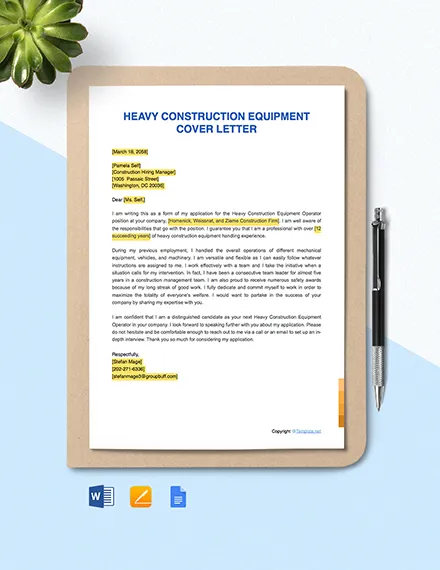
Include your contact information at the end of your cover letter, as well as at the top. Provide your full name, phone number, and email address. Make sure your contact information is up-to-date and accurate. Double-check your email address to make sure it is correct. A typo could prevent the hiring manager from contacting you. Consider including a link to your professional online profile, such as LinkedIn, if you have one. This gives the hiring manager access to more information about your professional background. A professional email address looks better than a casual or unprofessional one. Make sure your contact information is easy to find. Providing your contact information makes it easy for the hiring manager to reach you.