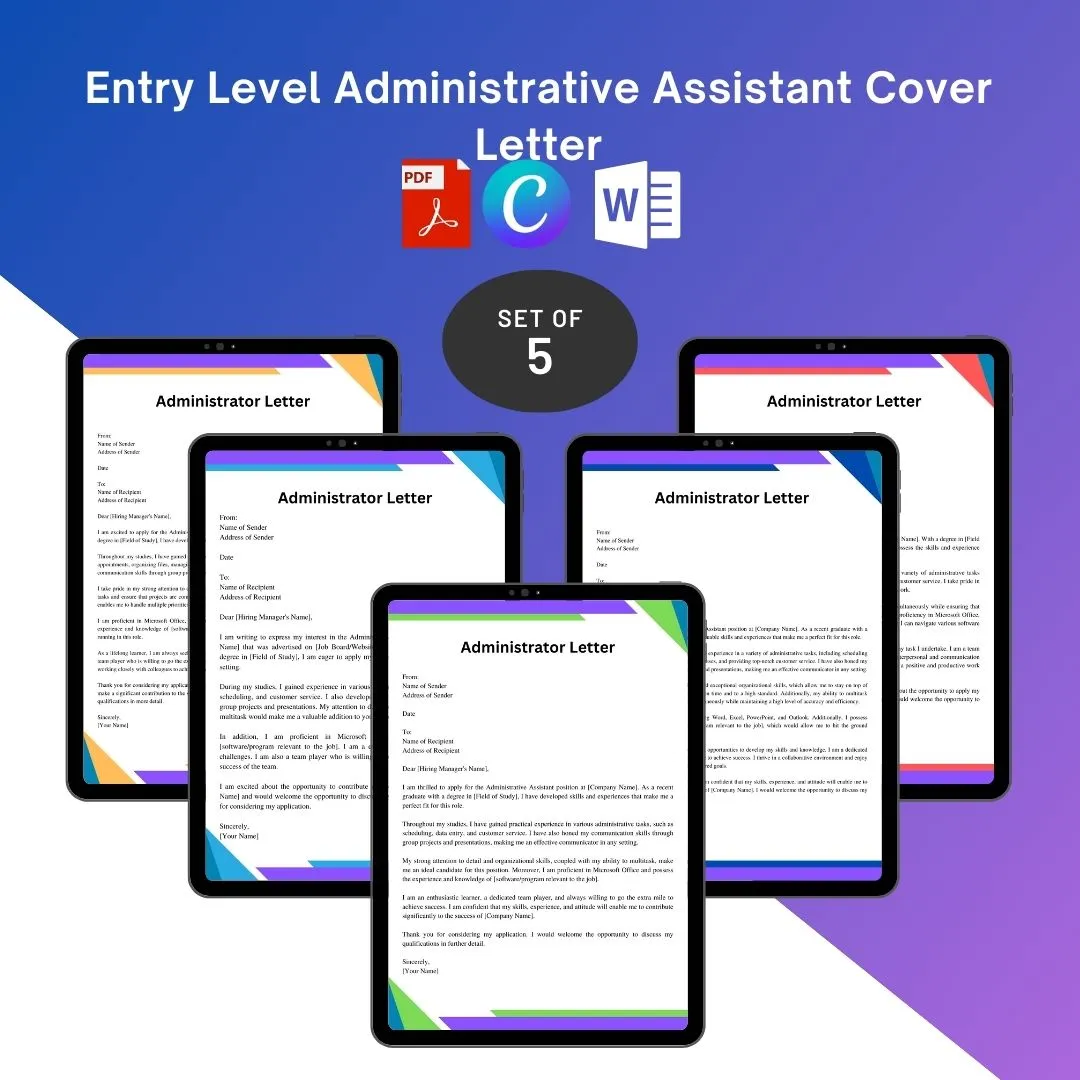
Why a Strong Cover Letter Matters
In the competitive job market, particularly for entry-level administrative assistant positions, a well-crafted cover letter is your secret weapon. It’s often the first impression you make on a potential employer, and it provides you with the opportunity to go beyond the confines of your resume and showcase your personality, enthusiasm, and relevant skills. A strong cover letter can significantly increase your chances of landing an interview and ultimately, the job. It’s your chance to make a memorable connection with the hiring manager, demonstrating why you’re the ideal candidate for the role. Don’t underestimate the power of a compelling cover letter; it could be the key that unlocks your dream job.
Highlighting Your Skills
Administrative assistant roles require a diverse skill set, so it is crucial to identify and highlight the skills most relevant to the specific job description. Think about what skills you possess that aligns with the responsibilities outlined in the job posting. This might include organizational skills, time management abilities, proficiency in specific software (like Microsoft Office Suite), communication skills, and attention to detail. Use action verbs to describe how you’ve used these skills in the past, providing concrete examples to back up your claims. For instance, instead of simply stating “organized files,” you could say, “Implemented a new filing system that improved document retrieval time by 20%.” This level of detail demonstrates your abilities effectively.
Showcasing Relevant Experience

Even if you’re applying for an entry-level position, you likely have some form of relevant experience, whether from previous jobs, internships, volunteer work, or even academic projects. Think outside the box to identify transferable skills. Did you manage a project for a student organization? Did you handle customer inquiries in a retail setting? These experiences can be relevant, showcasing your ability to handle responsibilities, communicate effectively, and work under pressure. Clearly articulate your role in each experience, emphasizing your contributions and the positive outcomes you achieved. Quantify your accomplishments whenever possible to give the hiring manager a clearer picture of your capabilities. This helps you stand out.
Tailoring Your Cover Letter
A generic cover letter is easily recognizable and often discarded. To make your application stand out, customize your cover letter for each position. Research the company and the specific role to understand what they’re looking for in a candidate. Use the job description as a guide to identify the key skills and qualifications the employer is seeking. Then, adapt your cover letter to highlight those skills and how your experiences align with the company’s needs and values. This shows that you’ve put in the effort to learn about the company and are genuinely interested in the position, increasing your chances of getting noticed and getting hired. Don’t be afraid to mention the company by name and show your personality.
Formatting for Success
The format of your cover letter is just as important as the content. A well-formatted cover letter is easy to read and visually appealing. Choose a professional font, such as Times New Roman, Arial, or Calibri, and maintain a consistent font size. Keep your paragraphs concise and use clear headings to separate different sections. Ensure there is adequate white space to avoid a cluttered appearance. Proofread carefully to check for any errors in grammar or spelling. An easy-to-read, professional-looking cover letter makes a positive impression and reflects your attention to detail, a crucial quality for an administrative assistant.
Header and Contact Information

Your cover letter should start with a professional header that includes your contact information. This should include your full name, phone number, email address, and, optionally, your LinkedIn profile URL. Make sure this information is accurate and up-to-date. Following this, include the date and the hiring manager’s name and title (if you know it) and the company’s address. Presenting this information correctly is a basic element of professional communication and a sign of your professionalism. Correctly formatted contact details make it easy for the hiring manager to contact you. Always proofread it to ensure its accuracy.
Greeting the Hiring Manager
Begin your cover letter with a professional greeting. If you know the hiring manager’s name, use it (e.g., “Dear Ms. Smith,”). If you’re unsure, a general greeting like “Dear Hiring Manager” is acceptable. Avoid outdated or overly casual greetings. The greeting sets the tone for the rest of your letter, so it’s important to make a good first impression. Researching to find the name of the hiring manager can demonstrate initiative. This personalized approach shows you’ve taken the time to prepare, which can influence the hiring manager to read your cover letter with greater interest.
Body Paragraphs Strategies
The body paragraphs of your cover letter are where you elaborate on your skills, experience, and enthusiasm. Structure your body paragraphs logically. Start with a brief introduction of yourself, then move on to highlight your relevant skills and experience, providing specific examples to demonstrate your abilities. Use the STAR method (Situation, Task, Action, Result) to describe your accomplishments, offering a clear narrative of your past experiences. Focus on how your skills and experience align with the job requirements. Be concise, clear, and avoid unnecessary jargon. It’s critical to make your points engaging, so the hiring manager wants to read until the end, showing your passion.
First Paragraph Hook

The first paragraph is your opportunity to grab the reader’s attention. Start with a compelling hook that immediately explains why you’re interested in the position and why you’re a good fit. You can mention something specific about the company that caught your eye, or you can state your interest in the administrative assistant position in a captivating way. For example, you could start with a statement expressing your admiration for the company’s mission. This establishes your interest from the beginning and encourages the hiring manager to keep reading. It’s your first chance to showcase your personality.
Highlighting Skills
In the subsequent paragraphs, expand on your relevant skills, ensuring they match the requirements listed in the job description. Provide specific examples that demonstrate how you’ve utilized these skills in past roles or experiences. Consider the type of administrative assistant role you are applying for, and adjust your focus accordingly. Emphasize your proficiency in the necessary software programs, such as Microsoft Office, and other essential skills. For example, highlight your communication skills and any experience with customer service, scheduling, or managing tasks. Offer evidence to support these claims.
Demonstrating Enthusiasm
Throughout your cover letter, convey your enthusiasm for the position and the company. Show that you’re eager to contribute and excited about the opportunity. You can express your enthusiasm by mentioning what you like about the company’s values or mentioning a specific project you find interesting. Be genuine in your expression, as authenticity resonates with hiring managers. Let your passion for the administrative field shine through. Demonstrating your excitement can make you a more memorable candidate and increase your chances of landing an interview.
Closing Paragraph and Call to Action

The closing paragraph of your cover letter should reiterate your interest in the position and thank the hiring manager for their time and consideration. End with a clear call to action, such as stating that you’re eager to discuss your qualifications further in an interview. Include your contact information again and state that you are available. This reinforces your interest in the role and makes it easy for the hiring manager to take the next step. Make sure to include a professional closing such as “Sincerely” or “Best regards”.
Proofreading and Editing
Before submitting your cover letter, proofread it carefully for any errors in grammar, spelling, and punctuation. Errors can create a negative impression, demonstrating a lack of attention to detail. Read your cover letter out loud to identify any awkward phrasing. Have a friend or family member review it as well, as a fresh pair of eyes can catch mistakes you might miss. A polished cover letter demonstrates professionalism and attention to detail, increasing your chances of being taken seriously by potential employers. A perfect cover letter is a must-do.
Common Mistakes to Avoid
Several common mistakes can undermine your cover letter and decrease your chances of success. Avoid these pitfalls to make a positive impression on hiring managers.
Generic Cover Letters

As mentioned earlier, avoid sending out generic cover letters that are not tailored to the specific job and company. These letters often come across as impersonal and show a lack of genuine interest. Instead, tailor your cover letter to reflect the requirements of each position. Research the company, the hiring manager, and the role, and then adjust your letter to show that you understand the company’s needs and are the perfect fit.
Typos and Grammatical Errors
Typos and grammatical errors can make a bad impression on the hiring manager. A cover letter that contains errors suggests a lack of attention to detail and a lack of professionalism. Always proofread your cover letter carefully before submitting it. Using a grammar checker can also help you catch any errors. It’s imperative to present your best self.
Lack of Enthusiasm
Your cover letter should convey your enthusiasm for the position and the company. Showing a genuine interest in the job and the organization will make you stand out from other candidates. Avoid using generic statements or sounding detached. Instead, share your enthusiasm for the company, its mission, or the specific role. Letting your passion shine through can make a positive impact on the hiring manager.
Tips for Success in Your Cover Letter

By following these tips, you can craft a compelling cover letter that increases your chances of landing an interview for an entry-level administrative assistant position. Highlight your skills and experience, tailor your letter to the job, and proofread it carefully. A well-written cover letter can make all the difference in your job search, so take the time to create a strong and memorable one, as it is the first impression that you can control. Good luck, and take your time with it!