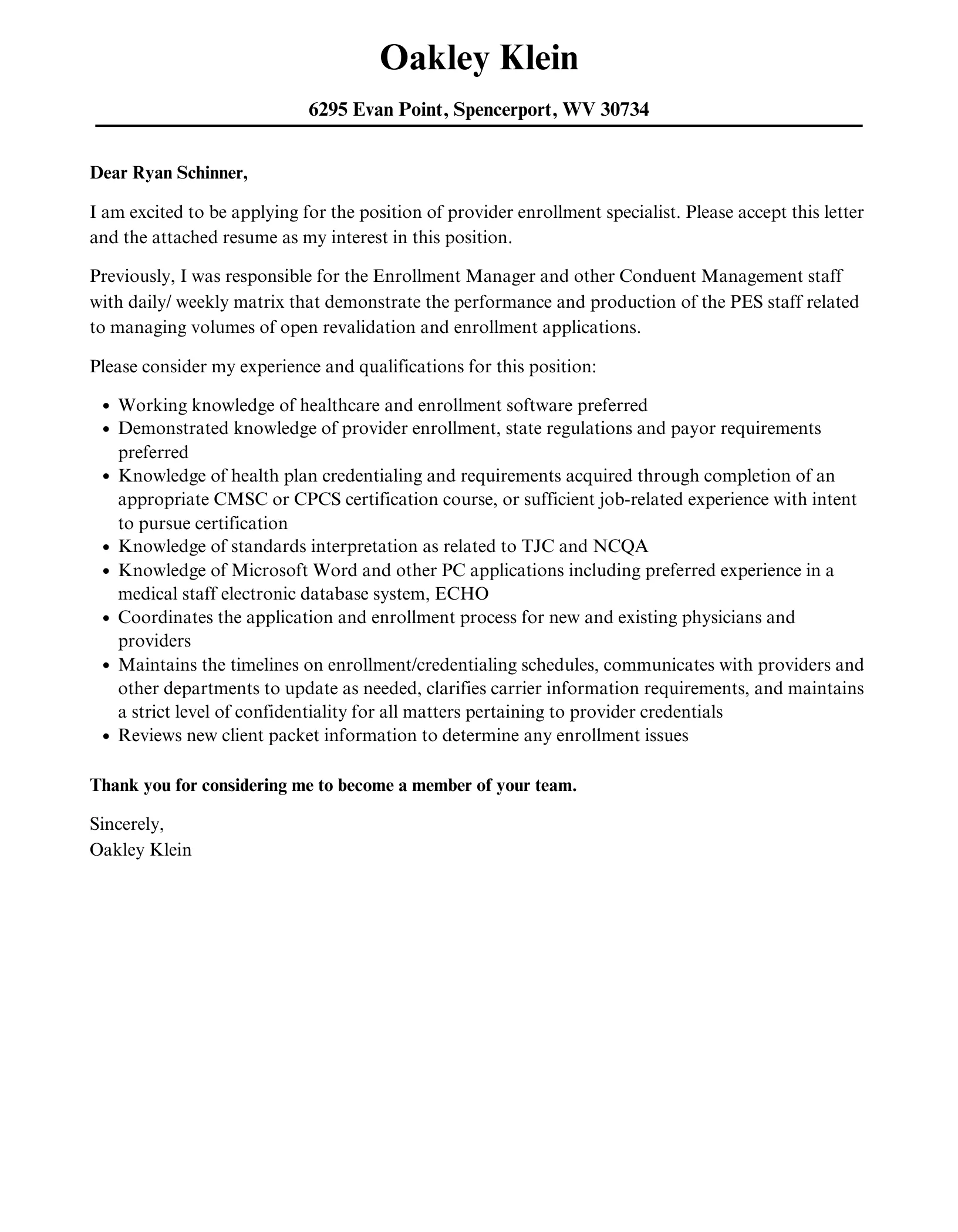
Crafting a Compelling Cover Letter for Enrollment Specialist
In the competitive field of education, a well-crafted cover letter is your first opportunity to make a positive impression and secure an interview as an Enrollment Specialist. This document serves as a crucial introduction, allowing you to showcase your relevant skills, experience, and enthusiasm for the role. A compelling cover letter goes beyond a mere summary of your resume; it’s a narrative that demonstrates how your qualifications align with the specific needs of the institution you’re applying to. By carefully constructing your cover letter, you can significantly increase your chances of standing out from other applicants and advancing to the next stage of the hiring process. This guide provides a comprehensive approach to help you create a cover letter that excels, highlighting your strengths and demonstrating your suitability for an Enrollment Specialist position.
Understanding the Enrollment Specialist Role
Before you begin writing your cover letter, a clear understanding of the Enrollment Specialist role is essential. This position typically involves guiding prospective students through the enrollment process, providing information about academic programs, financial aid, and campus life. The Enrollment Specialist serves as the primary point of contact for applicants, answering their questions, addressing their concerns, and assisting them with completing application requirements. Successful Enrollment Specialists possess a combination of strong communication, organizational, and interpersonal skills. They must be able to effectively manage multiple tasks, maintain accurate records, and build rapport with potential students and their families. Understanding the core responsibilities of the role will help you tailor your cover letter to highlight the most relevant qualifications.
Key Responsibilities of an Enrollment Specialist

Enrollment Specialists have a diverse set of responsibilities that contribute to the recruitment and enrollment of students. These responsibilities often include managing inquiries from prospective students, providing detailed information about academic programs, and guiding applicants through the application process. They also assist with the collection and verification of application materials, such as transcripts and test scores, and may coordinate campus visits and information sessions. Additionally, Enrollment Specialists often handle communication with applicants, including email, phone calls, and in-person meetings, providing support and answering questions related to financial aid, scholarships, and other resources. A strong understanding of these responsibilities is crucial when crafting your cover letter, as it allows you to emphasize the skills and experiences most relevant to the position. Demonstrating your ability to fulfill these duties will significantly improve your chances of securing an interview.
The Importance of a Strong Cover Letter
A well-written cover letter is a critical component of your job application, offering a unique opportunity to make a positive first impression on potential employers. It allows you to go beyond the basic information provided in your resume, providing context and demonstrating your enthusiasm for the role. A strong cover letter allows you to showcase your personality, communicate your interest in the specific institution, and highlight how your qualifications align with the job requirements. It provides a platform to expand on your skills and experiences, giving employers a clearer picture of your potential contributions. In a competitive job market, a compelling cover letter can set you apart from other candidates and increase your chances of securing an interview. This is your chance to articulate your value proposition and convince the hiring manager that you’re the best fit for the Enrollment Specialist position.
Highlighting Your Skills and Experience
When crafting your cover letter, it’s essential to highlight your skills and experiences that are most relevant to the Enrollment Specialist position. Focus on the qualifications mentioned in the job description and provide specific examples of how you’ve demonstrated these skills in previous roles. Consider your experience with student recruitment, application processing, and communication with prospective students. Quantify your achievements whenever possible, using numbers to demonstrate the impact of your work. For instance, if you have experience in increasing enrollment rates, provide the percentage increase or the number of new students enrolled. By focusing on these key areas, you can effectively showcase your ability to excel in the role and convince the employer of your suitability. Tailoring your response to the specific requirements of the job will significantly enhance the impact of your cover letter.
Demonstrating Your Communication Skills

Effective communication is a cornerstone of the Enrollment Specialist role. In your cover letter, emphasize your ability to communicate clearly, concisely, and persuasively, both verbally and in writing. Provide examples of how you have successfully communicated with prospective students, parents, and other stakeholders. Highlight your experience in answering inquiries, resolving issues, and providing detailed information about programs and services. Consider mentioning your experience with various communication channels, such as phone, email, and face-to-face interactions. Showcase your active listening skills and your ability to understand and address the needs of diverse audiences. Demonstrating strong communication skills in your cover letter is essential, as this is a core requirement for effectively guiding students through the enrollment process and representing the institution positively. Using appropriate language and tone, combined with clear and organized writing, will help demonstrate your capabilities.
Showcasing Your Organizational Abilities
Enrollment Specialists must possess strong organizational skills to manage multiple tasks, maintain accurate records, and meet deadlines. In your cover letter, emphasize your ability to prioritize tasks, manage time effectively, and handle a high volume of applications and inquiries. Provide examples of how you’ve successfully organized processes, managed information, and maintained attention to detail in previous roles. Highlight your experience with data entry, record keeping, and the use of CRM systems or other software. Mention any organizational skills training or certifications you’ve received. Demonstrating your ability to stay organized is essential to ensure that the enrollment process runs smoothly and that all applicants receive the support they need. By demonstrating these abilities, you reassure potential employers that you can efficiently manage your workload and maintain the high standards of an enrollment specialist.
Emphasizing Your Interpersonal Skills
Enrollment Specialists frequently interact with prospective students, their families, and other stakeholders, requiring strong interpersonal skills. Highlight your ability to build rapport, establish trust, and provide excellent customer service. Showcase your ability to understand and address the needs of others, demonstrating empathy and patience. Provide examples of how you have successfully resolved conflicts, handled difficult situations, and maintained a positive attitude. Consider mentioning your experience with providing support and guidance to individuals from diverse backgrounds. By emphasizing your interpersonal skills, you demonstrate your ability to create a welcoming and supportive environment for prospective students, contributing to a positive enrollment experience. Highlighting these skills will help convey your ability to connect with people and contribute to a positive enrollment environment.
Tailoring Your Cover Letter to the Job

To maximize the effectiveness of your cover letter, it’s crucial to tailor it to the specific job you are applying for. Carefully review the job description and identify the key skills, experiences, and qualifications that the employer is seeking. Customize your cover letter to address these requirements directly, providing specific examples of how your qualifications align with their needs. Research the institution and incorporate information about their mission, values, and programs into your letter. Demonstrating your understanding of the institution and the role will show that you’ve invested time and effort in your application. By tailoring your cover letter, you demonstrate your genuine interest in the position and increase the likelihood that your application will stand out. Customization is key to show you are a good fit for the role and the institution.
Researching the Institution
Before you begin writing your cover letter, thoroughly research the institution you’re applying to. Visit their website, explore their mission statement, and learn about their values, programs, and culture. Identify any recent initiatives or achievements that align with your skills and experience. This research will allow you to tailor your cover letter, demonstrating your understanding of the institution’s specific needs and objectives. Mentioning specific programs or initiatives that resonate with you shows your genuine interest in the role and the institution. This information can be incorporated into your opening paragraph, demonstrating your enthusiasm and making your cover letter more engaging. Researching the institution is a key step in crafting a compelling cover letter that resonates with the hiring manager.
Matching Your Skills to the Job Description
The most effective cover letters clearly match your skills and experience to the job description. Identify the key requirements listed in the job posting, and then provide specific examples from your background that demonstrate your ability to meet those requirements. Use the same keywords and phrases from the job description in your cover letter, but don’t simply restate the requirements. Instead, explain how your skills and experiences align with those requirements, providing evidence of your accomplishments. Tailor your language to align with the tone and style of the job description. By directly addressing the employer’s needs, you can effectively demonstrate that you are a strong candidate for the position. This targeted approach significantly increases the impact of your cover letter.
Structuring Your Cover Letter Effectively

A well-structured cover letter is easy to read and highlights the most important information. Start with a clear and engaging opening that captures the reader’s attention and states your interest in the position. In the body of your letter, provide specific examples of your skills and experiences, matching them to the job requirements. Use clear headings and bullet points to organize your information and make it easy to scan. Keep your paragraphs concise and focused. Conclude your letter with a strong closing that reiterates your interest and includes a call to action, such as expressing your availability for an interview. A well-structured cover letter will keep the reader engaged and allows you to effectively showcase your qualifications. Using a professional layout and formatting also helps in making it easy for the reader to navigate.
Writing a Strong Opening
Your opening paragraph sets the tone for your entire cover letter, so it’s important to make a strong first impression. Start by stating the position you are applying for and where you found the job listing. Immediately capture the reader’s attention by expressing your enthusiasm for the role and the institution. Briefly mention a key skill or experience that makes you a strong candidate, ideally aligning with a top requirement in the job description. Personalize your opening by mentioning something specific that attracted you to the institution, demonstrating that you have done your research. A compelling opening piques the reader’s interest and encourages them to continue reading. You could, for instance, mention how the institution’s mission or values align with your own professional aspirations.
Elaborating on Your Relevant Experience
In the body of your cover letter, provide detailed examples of your relevant experience. Instead of simply listing your job responsibilities, explain your accomplishments and the impact you made in previous roles. Use the STAR method (Situation, Task, Action, Result) to structure your examples. Describe the situation or challenge you faced, the task you were responsible for, the actions you took to address it, and the results you achieved. Quantify your achievements whenever possible, using numbers to demonstrate your impact. For example, you might mention the number of students you enrolled or the percentage increase in application completion rates. By providing specific and measurable examples, you can effectively demonstrate your value and convince the employer of your ability to succeed in the Enrollment Specialist role. Focus on experiences that directly align with the job requirements.
Quantifying Your Achievements

Quantifying your achievements is a powerful way to demonstrate the impact of your work and differentiate yourself from other candidates. Whenever possible, use numbers and data to showcase your accomplishments. For example, instead of saying “Improved enrollment rates,” say “Increased enrollment rates by 15% over two years.” Other metrics to include: the number of applications processed, the number of inquiries handled per day, or the percentage of students who successfully completed the enrollment process. Quantifying your achievements makes your accomplishments more concrete and compelling. It provides tangible evidence of your skills and abilities, which helps the hiring manager to clearly understand your capabilities. This approach clearly demonstrates your effectiveness and ability to deliver results.
Highlighting Your Skills
In your cover letter, explicitly highlight the skills that are most relevant to the Enrollment Specialist position. Refer to the job description to identify the key skills the employer is seeking, such as communication, organization, interpersonal skills, and problem-solving abilities. Provide specific examples of how you have demonstrated these skills in previous roles. Use action verbs to describe your accomplishments, such as “managed,” “coordinated,” “communicated,” “resolved,” and “supported.” Tailor your language to match the keywords used in the job description. Highlighting your skills effectively demonstrates your competence and readiness for the role, helping the hiring manager to quickly assess your qualifications. This should be intertwined within the explanation of your experiences.
Expressing Your Enthusiasm
Throughout your cover letter, express your genuine enthusiasm for the Enrollment Specialist position and the institution. Convey your passion for helping students achieve their educational goals and your interest in the specific programs or mission of the institution. Explain why you are excited about the opportunity and how you believe your skills and experience can contribute to the institution’s success. Be specific about what attracts you to the role and the institution, showing that you have done your research and are truly interested in the opportunity. Your enthusiasm should be clear and genuine, as this demonstrates that you are not just looking for a job, but that you are genuinely invested in the position and the institution.
Writing a Compelling Closing

Your closing paragraph should reiterate your interest in the position, summarize your key qualifications, and include a call to action. Thank the hiring manager for their time and consideration. Reiterate your enthusiasm and express your confidence in your ability to excel in the role. Clearly state your availability for an interview and provide your contact information. Ensure your closing is professional and reflects the tone of the entire letter. A strong closing leaves a lasting positive impression and encourages the hiring manager to take the next step. Providing your availability makes it easier for the hiring manager to reach out to you and helps to move the application process forward.
Proofreading and Editing Your Cover Letter
Before submitting your cover letter, carefully proofread and edit it to ensure it is free of errors. Check for grammatical errors, spelling mistakes, and typos. Verify the accuracy of all information, including the names of people and programs. Read your cover letter aloud to catch any awkward phrasing or sentences that don’t flow smoothly. Consider having a friend or colleague review your cover letter for feedback. Errors can undermine the credibility of your application, so taking the time to proofread and edit your cover letter is essential. This is crucial for demonstrating your attention to detail and commitment to professionalism.
Ensuring Accuracy and Clarity
Accuracy and clarity are paramount in your cover letter. Make sure all the information you provide is correct, from your contact details to the specifics of your experience. Use clear and concise language, avoiding jargon or overly complex sentences. Ensure that your writing is easy to understand and that your points are well-organized. Proofreading is not just about catching spelling and grammar mistakes; it’s also about ensuring the accuracy and clarity of your message. A well-written cover letter that is both accurate and easy to understand will leave a positive impression and increase your chances of securing an interview. It is important to demonstrate the attention to detail that is expected from an enrollment specialist.
Formatting Your Cover Letter Professionally
Formatting your cover letter professionally is as important as the content. Use a standard font, such as Times New Roman, Arial, or Calibri, and maintain a consistent font size. Use clear headings and subheadings to organize your information and make it easy to read. Maintain consistent margins and spacing throughout the document. Ensure your contact information is clearly displayed at the top of the letter. Use a professional letterhead or the standard business letter format. A well-formatted cover letter demonstrates your attention to detail and professionalism. Formatting it appropriately helps to create a visually appealing and easy-to-read document, making it easier for the hiring manager to focus on the content.
Tips for a Successful Cover Letter
Several tips can help you write a successful cover letter that will impress potential employers. Be sure to use action verbs to describe your accomplishments and quantify your achievements whenever possible. Tailor your letter to the specific job description and research the institution to demonstrate your interest. Proofread and edit your cover letter carefully to ensure accuracy and clarity. Keep your language concise and your paragraphs focused, and always maintain a professional tone. Highlighting your skills and experiences will help you stand out from other candidates. Also, personalize the letter to the specific institution and the role. Following these tips will help you create a compelling cover letter that effectively showcases your qualifications and enthusiasm.
Using Action Verbs
Using strong action verbs in your cover letter is essential for making a compelling impression. Action verbs add impact to your writing, demonstrating your skills and abilities in a clear and engaging manner. Instead of using passive phrases, use active verbs to describe your accomplishments. For example, use words like “managed,” “coordinated,” “implemented,” “achieved,” “developed,” “resolved,” “increased,” and “improved.” These verbs give your writing energy and provide a clear picture of what you have accomplished in previous roles. Choosing the right action verbs, in context, will demonstrate your capacity to take initiative and drive results, contributing to a stronger overall impression and conveying your value effectively. Action verbs bring your skills and experience to life, making your cover letter more impactful and persuasive.
Focusing on the Employer’s Needs
A successful cover letter focuses on the employer’s needs rather than simply listing your own accomplishments. Demonstrate your understanding of the role and the institution, and explain how your skills and experience align with the specific requirements. Highlight the benefits you can bring to the organization, rather than focusing solely on what you want from the job. Tailor your letter to address the employer’s needs, providing specific examples of how you have solved problems, achieved goals, and contributed to the success of previous employers. This approach makes your cover letter more relevant and demonstrates that you are a valuable candidate who can contribute to the institution’s success. By focusing on the employer’s needs, you prove that you are not just qualified, but also a great fit for the team.
Following Up on Your Application
After submitting your cover letter and resume, it’s important to follow up on your application. Send a brief thank-you email to the hiring manager a few days after submitting your application, reiterating your interest in the position. In your email, briefly mention a key skill or experience that you believe makes you a strong candidate and reiterate your contact information. If you haven’t heard back from the employer within a reasonable timeframe, you can send a follow-up email to inquire about the status of your application. Following up demonstrates your initiative and interest in the position and can help to keep your application top of mind. This proactive approach can increase your chances of being noticed and considered for the role.