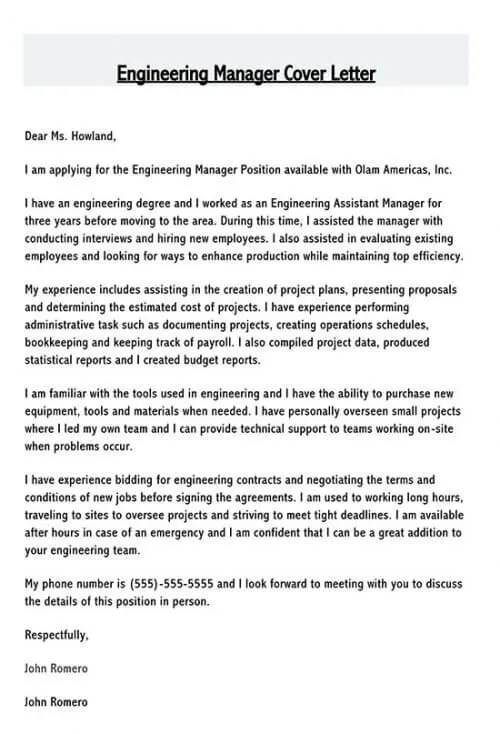
An engineering cover letter is a crucial document in the job application process, acting as your first introduction to a potential employer. It provides an opportunity to showcase your qualifications, skills, and enthusiasm for a specific engineering position. A well-crafted cover letter complements your resume by highlighting your relevant experiences and demonstrating why you are the ideal candidate. Mastering the art of writing a compelling engineering cover letter can significantly increase your chances of landing an interview and ultimately securing your dream job. With the right approach, your cover letter will not just list your achievements, but will also tell a story, setting you apart from other applicants and leaving a lasting impression on the hiring manager. Therefore, learn the top tips to write an outstanding engineering cover letter!
Highlight Your Skills and Experience
One of the most important aspects of an engineering cover letter is to highlight your relevant skills and experience. Engineering roles often require a specific set of technical abilities, so it’s essential to make these stand out. Carefully review the job description and identify the key skills and experiences the employer is looking for. Then, use your cover letter to demonstrate how your qualifications align with these requirements. Provide specific examples of projects, tasks, or achievements where you applied these skills. This may include the use of certain software, technical tools, or methodologies. It’s critical to show that you possess the necessary expertise to excel in the position. By providing concrete examples, you not only demonstrate your skills but also provide tangible evidence of your capabilities. This will help the hiring manager quickly assess your fit for the role. For example, if the job description calls for experience with CAD software, you should explicitly mention your proficiency and any projects where you utilized it, showing your technical aptitude and capability.
Quantify Your Achievements
Instead of merely listing your responsibilities, quantify your achievements whenever possible. Use numbers, percentages, and specific data to demonstrate the impact you made in previous roles. For example, rather than saying you improved a process, state that you ‘reduced production time by 15%’ or ‘increased efficiency by 20%’. Quantifiable results provide concrete evidence of your value and make your accomplishments more impactful. This makes it easier for the hiring manager to understand the scope of your achievements and the value you would bring to their team. Whenever possible, include metrics related to cost savings, efficiency improvements, and project success. These figures are a testament to your capabilities and provide a clear picture of your contribution to previous employers. For instance, if you led a project, quantify the impact by mentioning budget management, deadlines met, and the overall project success. Highlighting specific, measurable results demonstrates your ability to deliver tangible value.
Use Action Verbs

The use of strong action verbs is critical in writing a cover letter that captures the reader’s attention. Action verbs bring your experiences to life and make your descriptions more compelling. Start each bullet point or sentence describing your accomplishments with a dynamic action verb. Examples include ‘designed,’ ‘implemented,’ ‘managed,’ ‘developed,’ ‘optimized,’ ’led,’ ‘collaborated,’ and ‘resolved’. These verbs convey a sense of initiative, drive, and accomplishment, making you appear more proactive and results-oriented. By using active language, you transform your cover letter from a simple list of duties into a dynamic account of your achievements. This will keep the hiring manager engaged and interested in learning more about your qualifications. Remember to vary your choice of verbs to avoid repetition and maintain a clear, concise writing style. Choosing the right verbs helps in creating a narrative that will set you apart from other applicants.
Showcase Your Understanding of the Company
Demonstrate your genuine interest in the company by showcasing your understanding of their mission, values, and current projects. This involves conducting thorough research about the organization. Visit their website, read their publications, and explore their recent news and social media presence. Identify any specific projects, products, or initiatives that align with your skills and interests. In your cover letter, mention these aspects, showing that you have taken the time to understand the company’s business and how you can contribute to their goals. This level of preparation shows initiative and genuine interest in the position. In addition, it shows that you have a clear understanding of the company’s needs. This will impress the hiring manager and demonstrate your commitment to the role. Personalize your cover letter to specifically address how your skills and experience align with the company’s objectives. This will greatly increase your chances of getting noticed.
Tailor Your Letter to the Specific Job
Avoid using a generic cover letter template; instead, customize each letter to fit the specific engineering position you are applying for. Carefully read the job description and identify the key requirements, skills, and experiences the employer is seeking. Then, tailor your letter to address these requirements directly. Highlight the qualifications and experiences that align with the specific job. Include examples that demonstrate how you have successfully used these skills in past projects or roles. By tailoring your cover letter, you show that you have paid attention to the details of the job description. This will demonstrate your genuine interest and make you a stronger candidate. Always customize the tone and content of your letter to match the specific requirements of the position. This includes adjusting your language and emphasis to match the culture and expectations of the company.
Demonstrate Enthusiasm and Professionalism

Your cover letter should not only highlight your skills but also express your genuine enthusiasm for the position and the company. Show your passion for engineering and explain why you are interested in the role. Expressing excitement and interest will show the hiring manager that you are genuinely motivated to join the team. Your enthusiasm should be conveyed in a professional manner. Avoid overly casual or informal language. Instead, use strong, positive statements that reflect your desire to contribute to the company’s success. By expressing your enthusiasm in a clear and concise way, you set yourself apart from other candidates and make a positive impression. For example, you can include sentences like ‘I am particularly excited about the opportunity to contribute to…’ or ‘I am confident that my skills and experience align well with the goals of…’.
Maintain a Professional Tone
Maintain a professional tone throughout your cover letter. This means using clear, concise language and avoiding slang, jargon, or overly casual language. Your cover letter should be well-structured and easy to read. Make sure your grammar, spelling, and punctuation are impeccable. The tone of your cover letter reflects your attention to detail and your respect for the hiring manager. Avoid using contractions, informal language, or slang. Instead, use complete sentences and formal phrasing. Proper grammar and a polished writing style demonstrate professionalism and attention to detail. Always remember that a cover letter is a reflection of your abilities and professionalism. Present yourself in a way that portrays your best attributes.
Proofread Carefully
Proofreading is an essential step that should never be skipped. Before submitting your cover letter, carefully review it for any errors in grammar, spelling, punctuation, and formatting. Errors, no matter how small, can reflect poorly on your professionalism and attention to detail. Use spell-checking tools and grammar checkers to catch common mistakes, but don’t rely on them entirely. Read your cover letter aloud to help you identify awkward phrasing or other areas that need improvement. Ask a friend, mentor, or career counselor to review your letter for a fresh perspective. They can identify any errors that you might have missed. Make sure that your contact information is accurate and easy to read. A single error can create a negative impression and diminish your chances of getting the job.
Use a Clear and Concise Format

A clear, concise format is crucial for an effective cover letter. Keep your cover letter to one page and use a professional font, such as Times New Roman or Arial, with a font size between 10 and 12 points. Use clear headings, bullet points, and white space to make the information easy to read. Use a standard business letter format, including your contact information, the date, and the hiring manager’s name and title. Write in short, focused paragraphs to keep the reader engaged. Organize your letter logically, starting with an introduction that states the position you are applying for and a brief overview of why you are a good fit. Follow this with the main body of the letter, which highlights your relevant skills, experience, and accomplishments. Conclude with a brief summary that reiterates your interest and expresses your appreciation for the opportunity. Ensure that each section is clearly defined and easy to follow. A well-formatted cover letter shows that you are organized and professional.
Follow Up Appropriately
After submitting your cover letter and resume, follow up with the hiring manager or the company’s recruitment team to express your continued interest in the position. This can be done via email or phone, typically a week or two after submitting your application. Briefly mention your application and reiterate your enthusiasm for the role. Use this opportunity to ask any clarifying questions about the position or the hiring process. However, avoid being overly persistent or pushy. A polite and professional follow-up can reinforce your interest and help you stay top-of-mind. If you don’t hear back within a reasonable time frame, consider sending a follow-up email to inquire about the status of your application. This demonstrates your genuine interest and commitment. Make sure your follow-up is brief, professional, and expresses your enthusiasm for the opportunity.
In conclusion, writing a compelling engineering cover letter involves highlighting your skills, quantifying your achievements, using action verbs, showcasing your understanding of the company, and tailoring the letter to the specific job. Demonstrating enthusiasm and professionalism is equally important. By following these top 5 tips, you can significantly increase your chances of creating a cover letter that stands out and helps you land your dream engineering position.