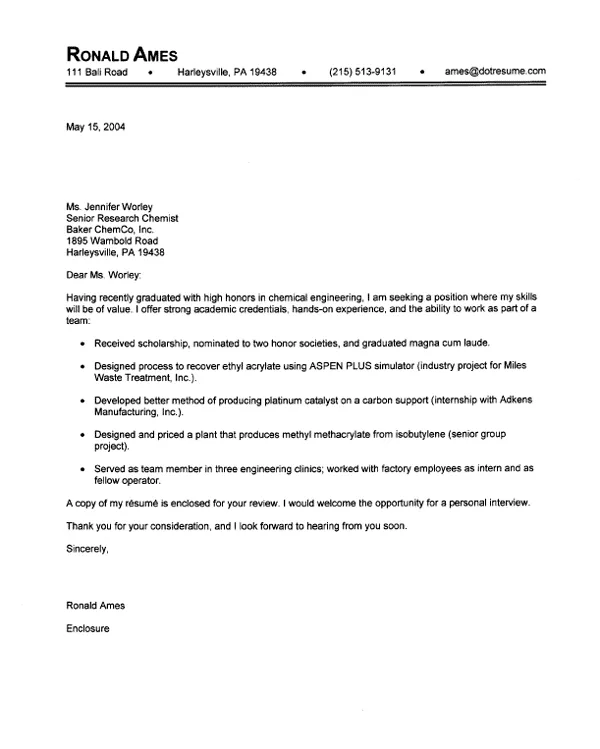
What is an Engineering Cover Letter?
An engineering cover letter is a crucial document that accompanies your resume when applying for engineering positions. It serves as your initial introduction to a potential employer and provides an opportunity to highlight your skills, experience, and enthusiasm for the specific role and company. Unlike a resume, which offers a snapshot of your qualifications, a cover letter allows you to elaborate on your relevant experiences, explain your motivations, and demonstrate how you align with the company’s needs. A well-crafted cover letter can significantly increase your chances of securing an interview and ultimately landing your dream engineering job. It is your chance to make a strong first impression and persuade the hiring manager that you’re the right candidate.
Why a Cover Letter is Crucial
In the competitive field of engineering, a cover letter is more than just a formality; it’s a necessity. It provides context to your resume, allowing you to connect your skills and experiences to the specific job requirements. It enables you to showcase your personality, writing skills, and communication abilities—qualities that can’t always be conveyed through a resume. The cover letter allows you to articulate your career goals and explain why you are interested in that particular role and company, demonstrating your genuine interest and initiative. Furthermore, a cover letter gives you the opportunity to address any potential concerns, such as gaps in your employment history or changes in career paths. It’s a critical tool for making a memorable impression and standing out from other qualified applicants, ultimately improving your chances of getting hired.
Key Components of a Winning Engineering Cover Letter

A compelling engineering cover letter has several key components that work together to create a strong impact. These elements include your contact information, the hiring manager’s details, a compelling opening paragraph, a detailed description of your skills and experiences, examples of your projects, an explanation of why you are the right fit for the job, and a persuasive closing paragraph. Each section must be crafted carefully to provide the most information. The cover letter should be properly formatted and designed to be readable. Careful attention to detail in each section helps to guarantee that your cover letter grabs the reader’s attention and provides evidence of your qualifications and interests.
Contact Information
Start your cover letter by including your contact information at the top. This should include your full name, phone number, email address, and optionally, your LinkedIn profile URL. Ensure this information is accurate and up-to-date, so the hiring manager can easily reach you. This section should be clearly formatted and visually separate from the rest of the letter for easy identification. By providing readily accessible contact details, you make it simple for potential employers to contact you regarding job opportunities, showcasing your professionalism and attention to detail.
Applicant’s Information
Your name and contact information should be clearly displayed at the top of your cover letter. This allows the hiring manager to quickly identify you and easily reach out. Include your full name, phone number, email address, and LinkedIn profile URL, if you have one. Make sure all the information is up to date and accurately presented. Using a professional-looking email address further demonstrates your professionalism, so avoid using informal or outdated email addresses. This section should be clean and organized, setting a professional tone for the rest of your cover letter.
Hiring Manager’s Information
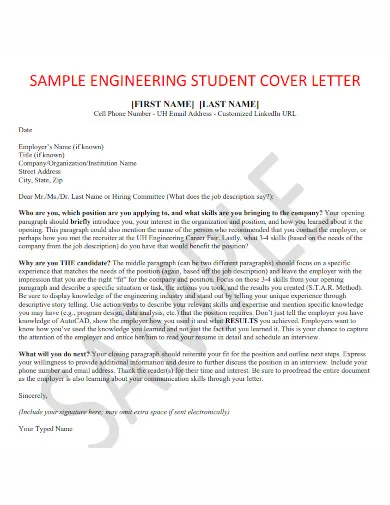
Whenever possible, address your cover letter to a specific person, such as the hiring manager or the recruiter. Research the company’s website or LinkedIn to find the name and title of the relevant contact. If you can’t find a specific name, use a general greeting like ‘Dear Hiring Manager’. Including the correct name demonstrates that you have done your homework and that you are enthusiastic about the position. Using the name helps the hiring manager understand that the cover letter is addressed to them specifically. Personalizing your cover letter will make a stronger impact and help you make a more professional impression.
The Opening Paragraph
The opening paragraph is critical for immediately capturing the reader’s attention. Start with a strong, attention-grabbing statement that reflects your enthusiasm for the role and the company. Mention where you saw the job posting, such as ‘I am writing to express my keen interest in the Engineering Intern position advertised on your company website.’ Briefly state your most relevant qualification and immediately convey the value you bring to the company. Clearly stating the position you are seeking helps the hiring manager understand what you are applying for. Ensure that your opening is professional and reflects the company’s values. The opening paragraph should be concise, memorable, and encourage the reader to continue reading the rest of your cover letter.
How to Grab Their Attention
To grab the hiring manager’s attention, open with a compelling statement that shows your genuine interest in the position and company. You might mention a specific achievement, a project you’re proud of, or a unique skill. Highlight something that directly aligns with the job requirements. A quote from the company’s mission statement or a compliment about the company’s work can also make an immediate impression. Avoid generic introductions, and instead, be specific and focused. For example, if the job requires experience with a particular software, mentioning your proficiency with that software in the opening paragraph immediately shows that you have the required skills. The goal is to make the hiring manager want to read further, so your opening should be strong and inviting.
Highlighting Your Skills and Experience

The core of your cover letter should highlight your skills and experiences relevant to the job description. Review the job posting and identify the key requirements. Then, provide detailed examples from your academic projects, internships, or other relevant experiences where you have demonstrated those skills. Use action verbs to describe your accomplishments. For example, instead of saying ‘Responsible for project management,’ write ‘Managed a team of five engineers to successfully deliver a project.’ Quantify your achievements whenever possible. Use concrete data to illustrate your abilities and show the impact of your work, showing your value to the potential employer.
Quantifiable Achievements
Quantifiable achievements are powerful because they provide concrete evidence of your abilities and the impact you’ve made in previous roles. Instead of simply stating you are ‘good at problem-solving,’ provide data, such as, ‘Solved complex design problems that reduced project costs by 15%.’ If you’ve improved efficiency, state the percentage increase. If you’ve managed projects, show the budget and timelines. Adding numbers helps the hiring manager understand the extent of your skills. When highlighting your achievements, focus on specific outcomes and data-driven results. This helps differentiate you from other applicants, making your qualifications more compelling and memorable.
Technical Skills
When showcasing your technical skills, be specific. List the software, tools, and methodologies you are proficient in. If you are applying for a mechanical engineering position, mention any CAD software skills, like SolidWorks or AutoCAD. For electrical engineering, list your experience with tools like MATLAB or LabVIEW. Tailor your skills to the specific requirements of the job description. If the job requires knowledge of a particular programming language, emphasize your experience and show how you’ve applied this knowledge in your projects or coursework. Provide examples of how you have utilized these technical skills to solve engineering problems or contribute to project outcomes, highlighting your ability to apply theory to practical situations.
Soft Skills

Soft skills, such as communication, teamwork, problem-solving, and leadership, are crucial in the engineering field. Demonstrate these skills by providing specific examples of how you have applied them. For example, if you mention teamwork, describe a project where you collaborated with others to achieve a common goal. Illustrate your ability to communicate complex technical information clearly and concisely. If you can prove your ability to lead a team, mention a project where you took on a leadership role. Provide practical examples to demonstrate how you have used these skills to contribute to project success. Remember to align the soft skills you showcase with the requirements outlined in the job description.
Showcase Your Projects
Highlighting your projects is an excellent way to demonstrate your practical skills and problem-solving abilities. Provide details about your projects, the engineering challenges you faced, and how you overcame them. Describe the project’s objective, your specific role, and the outcomes. Use technical language to explain complex concepts clearly and succinctly. If possible, include quantifiable results, such as the project’s performance, efficiency gains, or cost savings. By providing concrete examples of your projects, you can demonstrate that you can apply your knowledge in practical settings. Include any relevant coursework or design projects to illustrate your abilities and technical expertise.
Projects and Relevant Coursework
Include details about relevant coursework and projects to further illustrate your skills and knowledge. Briefly describe the coursework that aligns with the job requirements and the skills you have gained from them. For example, if the job requires expertise in a specific engineering discipline, mention relevant courses you have taken in that area. List the key skills and knowledge acquired, such as proficiency in design software, modeling techniques, or programming languages. Project details should include the project’s objective, your role, and the outcome. Emphasize how these projects demonstrate your ability to apply theoretical knowledge to real-world situations. Use this section to demonstrate the practical application of the knowledge you have acquired throughout your education.
Tailoring Your Cover Letter to the Job

To make your cover letter effective, you must tailor it to each job application. This means carefully reviewing the job description and identifying the key requirements, skills, and qualifications the employer is seeking. Modify your letter to emphasize these specific points. Show that you understand the company’s goals and values and that you can contribute to their success. Use the same keywords and phrases from the job description in your cover letter, but use them naturally. Show that you have genuinely researched the company and understand the role. Tailoring your cover letter demonstrates your commitment and attention to detail.
Research the Company
Researching the company is essential to demonstrate your genuine interest and to tailor your cover letter. Visit the company’s website to learn about its mission, values, and recent projects. Browse the ‘About Us’ section, read news articles, and explore the company’s social media presence. Identify the company’s current challenges and goals, and then address how your skills and experience can help them achieve their objectives. Show that you understand the company culture and values by mentioning any company initiatives or projects that resonate with you. This level of research shows that you are genuinely interested in the opportunity and that you have the skills to make a contribution to the company.
Match Skills to Job Requirements
Carefully analyze the job description and match your skills and experience to the requirements listed. Identify the keywords and phrases the employer uses to describe the ideal candidate and incorporate those into your cover letter naturally. Emphasize the skills and experiences that directly align with the job requirements. Instead of simply listing your skills, provide examples of how you have applied them in the past, especially in relevant projects or internships. By highlighting how your skills and experiences align with the requirements, you increase your chances of making a strong first impression. Your cover letter should highlight how your skills match the needs of the employer.
The Closing Paragraph and Call to Action

The closing paragraph provides you with a final opportunity to reinforce your enthusiasm and make a lasting impression. Express your enthusiasm for the opportunity and restate your interest in the position. Briefly summarize why you are a good fit for the role and the company. Always include a clear call to action. State that you are eager to discuss your qualifications further and that you look forward to hearing from them. Mention your availability for an interview, and provide your contact information again. This section should be brief, polite, and leave the employer with a positive impression.
Expressing Enthusiasm
Expressing enthusiasm shows your genuine interest in the position. Use phrases like ‘I am excited about the opportunity to contribute to your team’ or ‘I am very enthusiastic about the prospect of working at [Company Name].’ Make sure you match your enthusiasm to the tone of the company. Explain what specifically excites you about the role or the company. Avoid generic statements. Show how the position aligns with your career goals, and highlight any aspects of the company’s work or values that resonate with you. Demonstrating genuine excitement can significantly increase your chances of getting an interview.
Call to Action
Always include a clear call to action in your closing paragraph. Tell the hiring manager what you want them to do next. This could be something like ‘I am eager to discuss my qualifications further in an interview.’ Provide your contact information and state that you are available for an interview at their earliest convenience. This makes it easy for the hiring manager to contact you. It shows initiative and professionalism, encouraging a prompt response. By including a clear call to action, you guide the hiring manager to the next step in the process, increasing the chances of getting an interview and furthering your candidacy.
Cover Letter Formatting and Design
The formatting and design of your cover letter are as important as its content. A well-formatted cover letter is easy to read and professional. Choose a clean, readable font such as Times New Roman, Arial, or Calibri. Use a font size between 10 and 12 points. Ensure that your cover letter has clear margins, typically one inch on all sides. Use proper spacing between paragraphs to improve readability. Format your content logically using clear headings and bullet points to highlight key information. Use a professional and consistent layout throughout the document to enhance readability and create a polished look.
Font and Readability
Choose a font that is easy to read and professional. Common fonts like Times New Roman, Arial, or Calibri are excellent choices. Use a font size between 10 and 12 points to ensure the text is legible. Avoid using overly stylized or unusual fonts that can distract the reader. Ensure your text is well-spaced, with clear margins and proper paragraph spacing. This will make your cover letter easy to read and improves readability. Use bolding to highlight key information, and use italics sparingly for emphasis. This careful attention to font and formatting enhances your cover letter’s readability.
Length and Structure
Keep your cover letter concise and to the point. Aim for a length of one page. Structure your cover letter logically, with clear sections such as an introduction, skills and experience, project details, and a closing. Use headings and bullet points to break up the text and make it easier to scan. Maintain a consistent tone throughout the document. Use a formal tone and avoid slang or colloquialisms. A well-structured cover letter shows your attention to detail and your ability to communicate effectively. Ensure a smooth flow, connecting each section to the next. This will create an effective and professional document.
Proofreading and Editing
Proofreading and editing are essential steps to ensure your cover letter is free of errors. Carefully review your letter for any typos, grammatical errors, and punctuation mistakes. Read your cover letter multiple times, or ask a friend or mentor to review it for a fresh perspective. Pay attention to clarity and the overall flow of your writing. Use a spell-checker and grammar-checking tool, but don’t rely on them entirely. Proofreading helps make your cover letter polished and professional. The final check should be done to eliminate errors and ensure your cover letter makes a good impression.
Common Mistakes to Avoid
Avoiding common mistakes can significantly improve the effectiveness of your cover letter. Typos and grammatical errors are a big no-no; make sure to proofread your work carefully. Avoid sending generic cover letters that aren’t tailored to the specific job. Including irrelevant information wastes the reader’s time. Being too vague, using unprofessional language, or overselling your skills are all mistakes to avoid. Presenting a professional and tailored cover letter will demonstrate your attention to detail and your desire for the specific position. Avoiding these common mistakes can increase your chance of an interview.
Typos and Grammatical Errors
Typos and grammatical errors can damage your credibility. Always proofread your cover letter carefully to eliminate these mistakes. Use spell-checking and grammar-checking tools, but do not rely on them completely. Sometimes tools will not catch all the errors. Read your cover letter aloud to help spot any awkward phrasing or sentence structure problems. Ask a friend, family member, or career advisor to review your cover letter. Proofreading your work carefully will show your professionalism and attention to detail. A cover letter that is free of errors demonstrates that you are meticulous and take your application seriously.
Generic Cover Letters
Avoid sending generic cover letters to every job application. Generic cover letters don’t capture the interest of the hiring manager. To avoid sending a generic cover letter, tailor each letter to the specific job and company. Show that you’ve researched the company and understand their needs. Refer to the job description and highlight how your skills match the requirements. Mention specific projects or experiences relevant to the role. When writing a cover letter, always show your enthusiasm and make it clear that you have a genuine interest in the company and position.
Examples of Engineering Cover Letters
Reviewing examples of engineering cover letters can help you understand how to structure your own. Look for examples online or ask for advice from career services. These examples can provide you with a framework for highlighting skills, experience, and projects. Pay attention to how the applicant tailors their letter to the job description and the company. Analyze how the applicant uses action verbs, quantifies achievements, and demonstrates enthusiasm. Using examples helps you understand the components of an effective cover letter. Analyze the examples to develop your own cover letter effectively.