Crafting a Compelling Dental Assistant Cover Letter
A well-written dental assistant cover letter is your first chance to impress a potential employer. It serves as a crucial introduction, supplementing your resume by providing context to your skills, experience, and career aspirations. Unlike a resume, which lists facts, a cover letter allows you to express your personality, demonstrate your communication skills, and explain why you are the ideal candidate for the specific dental assistant position. This guide will take you through the essential steps to create a cover letter that stands out, helping you land that all-important interview.
Understanding the Purpose of a Cover Letter
The primary goal of a cover letter is to secure an interview. It provides an opportunity to highlight your most relevant qualifications and express your enthusiasm for the role and the dental practice. A good cover letter should capture the hiring manager’s attention, showcase your unique strengths, and persuade them that you are worth meeting. It should also demonstrate your understanding of the practice’s needs and how your skills align with those needs. Think of it as a personalized marketing document, selling your abilities and potential to the prospective employer.
Highlighting Your Skills and Experience

Your cover letter is the perfect space to showcase your key skills. Dental assisting requires a blend of clinical, technical, and interpersonal abilities. Be sure to emphasize skills like assisting with various dental procedures, taking and recording patient vital signs, sterilizing instruments, managing patient records, and providing patient education. Quantify your achievements whenever possible (e.g., ‘Managed a patient schedule of X patients per day’). Tailor the skills you highlight to match the requirements listed in the job description, ensuring your cover letter is as relevant as possible. Showcasing skills is very important to get a job.
Researching the Dental Practice
Before you begin writing, research the dental practice. Visit their website, read online reviews, and check their social media profiles. This will give you insights into their mission, values, and the types of services they offer. Demonstrating that you understand the practice’s focus, and that you share similar values, will make your application more compelling. In your cover letter, you can mention specific aspects of the practice that appeal to you, showing that you are genuinely interested in joining their team. This level of effort distinguishes you from other applicants.
Formatting Your Dental Assistant Cover Letter
A well-formatted cover letter is professional and easy to read. Use a standard business letter format, with clear headings, consistent font styles, and adequate spacing. Aim for a one-page document; brevity is key. The formatting should allow the reader to quickly grasp your qualifications and express your enthusiasm for the position. Ensure your cover letter is visually appealing and free of clutter.
Contact Information and Date

Start with your contact information at the top of the page, including your name, address, phone number, and email address. Then, include the date. This section provides essential information for the hiring manager to contact you. Make sure your email address is professional; avoid using informal or outdated addresses. The date helps the employer know when the cover letter was written.
The Salutation
Address your cover letter to a specific person whenever possible (e.g., ‘Dear Dr. Smith’). If you cannot find a name, use a professional salutation, such as ‘Dear Hiring Manager’ or ‘Dear [Practice Name] Team.’ Avoid generic greetings like ‘To Whom It May Concern,’ which can make your letter seem impersonal and less appealing. Using the correct name shows that you have taken the time to research the practice.
Body Paragraphs
The body of your cover letter is where you detail your skills, experience, and enthusiasm for the role. Aim for three to four paragraphs, each serving a specific purpose. The structure should be clear and easy to follow, with each paragraph building upon the previous one.
First Paragraph

Start with a strong opening. State the position you are applying for and where you found the job posting. Then, briefly highlight your key qualifications and express your interest in the role. This paragraph should grab the reader’s attention and make them want to continue reading. Use a confident and enthusiastic tone.
Second Paragraph
This is where you elaborate on your skills and experience. Provide specific examples of your accomplishments and how they align with the requirements of the job. Use keywords from the job description to demonstrate that you meet the practice’s needs. Focus on the most relevant aspects of your background, showcasing what makes you a valuable asset to the team.
Third Paragraph
In the third paragraph, express your enthusiasm for the practice and why you are a good fit. Mention specific aspects of the practice that appeal to you, like their patient care philosophy or use of technology. Explain how your values align with theirs, and how you can contribute to their success. This paragraph helps you connect with the employer on a personal level.
The Closing

Conclude your cover letter by restating your interest in the position and thanking the reader for their time and consideration. Include a call to action, such as stating that you are available for an interview. End with a professional closing, such as ‘Sincerely’ or ‘Best regards,’ followed by your typed name.
Proofreading and Editing
Before submitting your cover letter, proofread it carefully for any errors in grammar, spelling, and punctuation. Ask a friend or family member to review it as well. Errors can damage your credibility and give the impression that you lack attention to detail. Ensure the formatting is consistent and the tone is professional throughout the document.
Examples of Strong Dental Assistant Cover Letters
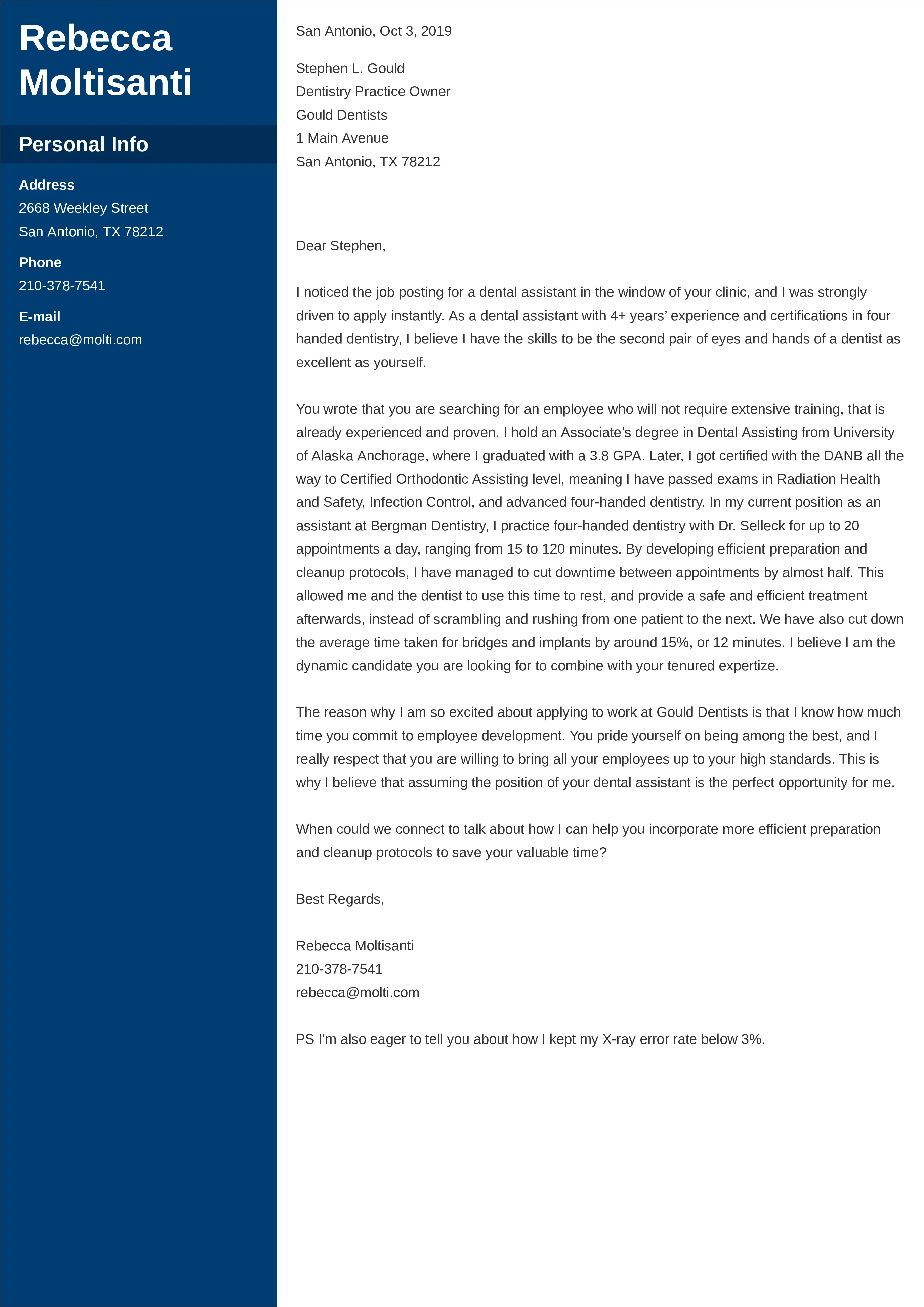
Reviewing examples of successful dental assistant cover letters can give you a solid understanding of what works. These examples showcase different approaches and highlight various skills and experiences. Use them as a template, tailoring the content to reflect your unique background and the specific job you’re applying for.
Example 1 Highlighting Clinical Skills

This example focuses on clinical skills, such as assisting with dental procedures, taking X-rays, and sterilizing instruments. The cover letter should provide specific examples of experience and highlight your certifications. This is especially important if the job description emphasizes patient care and clinical proficiency.
Example 2 Showcasing Communication Skills
This example focuses on your ability to communicate effectively with patients and the dental team. Highlight experiences in managing patient interactions, explaining procedures, and providing patient education. Mention specific situations where you have resolved patient concerns or built rapport. Effective communication is vital in a dental setting.
Example 3 Emphasizing Experience
If you have extensive experience as a dental assistant, showcase your longevity and achievements. The cover letter may also focus on leadership skills, such as training new assistants, or managing office operations. If you have specialized knowledge in a particular area (e.g., orthodontics, pediatric dentistry), mention it, and ensure that you highlight your relevant certifications.
Common Mistakes to Avoid

Avoiding common mistakes is crucial for making a positive impression. Be mindful of these pitfalls as you create your cover letter.
Generic Cover Letters
Sending a generic cover letter, one that could be sent to any dental practice, is a major error. Tailor each cover letter to the specific practice and the job you are applying for. Refer to the practice by name, and mention details from their website or job description. Personalization shows that you’ve put in the time and effort to understand their needs.
Typos and Grammatical Errors
Typos and grammatical errors can be a significant deterrent. Proofread your cover letter thoroughly before submitting. Use a grammar checker, and have someone else review it. Mistakes create a poor impression and can make you appear unprofessional or careless.
Not Tailoring to the Position

Failing to tailor your cover letter to the specific requirements of the job is another common mistake. Always review the job description carefully, and identify the key skills and experiences the employer is seeking. Highlight those skills and provide evidence of your abilities in those areas. Do not assume that a generic cover letter will suffice.
Tips for Tailoring Your Cover Letter
Tailoring your cover letter to each job application significantly increases your chances of success. This requires time and attention, but the effort pays off.
Match Skills to Job Requirements
Carefully read the job description and create a list of the required skills and qualifications. Then, go through your resume and cover letter, highlighting the relevant skills and experiences. Ensure your cover letter directly addresses the employer’s needs. Do not just list all your skills; show how they align with the job requirements.
Use Keywords From the Job Description
Incorporate keywords from the job description into your cover letter. This helps demonstrate that you possess the necessary skills and makes it easier for the hiring manager to quickly see that you are a good fit. Keywords also assist in applicant tracking systems (ATS), which many employers use to screen applications. Be careful to incorporate keywords naturally; don’t stuff them into your letter.
Demonstrate Enthusiasm
Show your enthusiasm for the position and the dental practice. Explain why you are interested in working there and how your values align with theirs. Your enthusiasm can set you apart from other candidates. Express your eagerness to learn and contribute to the team. Your positive attitude can be an asset.
Finalizing and Submitting Your Cover Letter
The final steps involve saving your cover letter correctly and submitting it in the appropriate format. Attention to detail ensures you make a professional impression.
Saving Your Cover Letter
Save your cover letter with a clear and professional file name. Use your name and the job title. For example, ‘JaneDoe_DentalAssistantCoverLetter.’ This helps the hiring manager organize their files. Ensure your document is saved in a format that can be easily opened by the recipient, such as PDF or DOCX.
Submitting Online or via Email
Follow the application instructions carefully. If submitting online, ensure you upload the cover letter and resume in the required formats. If submitting via email, include a brief and professional message in the email body. Attach your cover letter and resume as separate files. Double-check the email address to ensure it is correct.
Following Up
After submitting your application, it is acceptable to follow up with the employer. Send a brief email or make a phone call a week or two after the application deadline to reiterate your interest and ask about the status of your application. Be polite and professional, and reiterate your enthusiasm for the position. Following up shows that you are proactive and genuinely interested in the role.