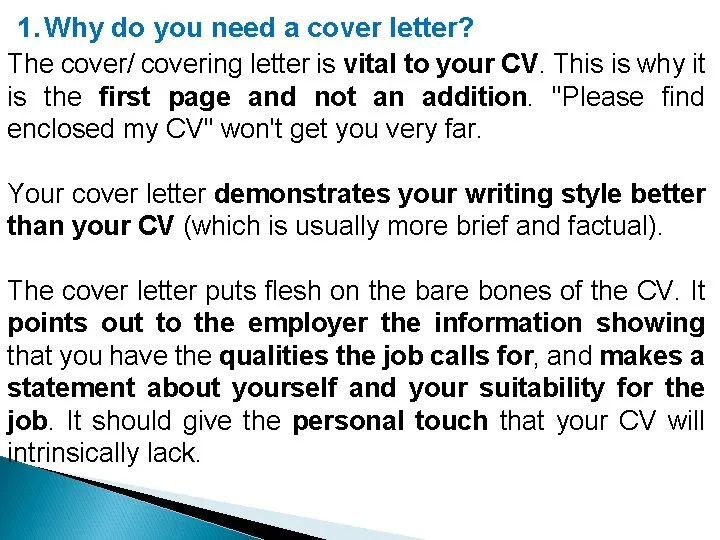
Why Cover Letters Still Matter
In an age where digital applications and online submissions dominate the job market, some may question the continued relevance of cover letters. However, the truth is that cover letters remain a crucial element of any successful job application. They offer a unique opportunity to go beyond the confines of a resume and provide a more personalized and compelling narrative. While a resume presents a snapshot of your qualifications, the cover letter allows you to paint a vivid picture of who you are as a professional, why you are interested in the specific role, and how your skills and experiences align with the employer’s needs. Ignoring this powerful tool can significantly diminish your chances of landing an interview, as it is often the first impression you make on a potential employer. A well-crafted cover letter demonstrates your communication skills, attention to detail, and genuine interest in the position. It also allows you to address any gaps in your resume, explain career transitions, and showcase your personality, ultimately helping you stand out from the competition.
Showcasing Your Unique Value
A cover letter is your canvas to highlight what makes you uniquely qualified for the role. It’s not just a reiteration of your resume; it’s an opportunity to articulate how your specific skills, experiences, and personality align with the company’s values and the job requirements. The most effective cover letters clearly and concisely demonstrate your value proposition. This includes illustrating how you have solved problems in the past, achieved specific results, or contributed to a team’s success. Instead of simply listing your responsibilities, focus on the achievements and outcomes of your work. Quantify your accomplishments whenever possible, using data and metrics to showcase your impact. For example, if you increased sales in a previous role, mention the percentage increase. If you streamlined a process, state how much time or money you saved. By clearly articulating your unique value, you make a strong case for why the employer should consider you for an interview, setting you apart from other applicants who may only offer a list of generic skills.
Highlighting Relevant Skills and Experiences

The cover letter provides a strategic space to emphasize the skills and experiences that are most relevant to the job you’re applying for. While your resume lists all your qualifications, a cover letter allows you to tailor your presentation to the specific requirements outlined in the job description. Carefully review the job posting and identify the key skills and experiences the employer is seeking. Then, in your cover letter, provide specific examples from your past work that demonstrate your proficiency in those areas. This targeted approach not only shows that you have the necessary qualifications but also that you have taken the time to understand the employer’s needs. Use action verbs to describe your accomplishments and quantify your results whenever possible. For instance, instead of simply stating that you ‘managed a team,’ you could write ‘Led a team of 10 developers, delivering projects on time and within budget.’ This level of detail helps the hiring manager quickly see how your skills align with their needs, increasing your chances of getting an interview.
Tailoring Your Application for Each Job
One of the most critical aspects of a standout cover letter is personalization. Generic, one-size-fits-all cover letters rarely impress hiring managers. The best cover letters are tailored to the specific job and company, demonstrating that you have researched the organization and understand the role. Start by addressing the hiring manager by name, if possible, which shows that you have taken the time to find out who will be reading your application. Then, customize your letter to reflect the specific requirements of the job and the values of the company. Explain why you are particularly interested in this specific role and what attracts you to the company. This could involve discussing your passion for their industry, your admiration for their work culture, or your alignment with their mission. By demonstrating genuine interest and tailoring your letter to the specific opportunity, you demonstrate to the employer that you are not just another applicant but someone who has a genuine desire to join their team and contribute to their success. This level of personalization significantly increases your chances of making a positive impression and standing out from the competition.
Demonstrating Personality and Enthusiasm
A cover letter is more than just a professional document; it’s an opportunity to showcase your personality and enthusiasm for the job. While your resume provides a factual overview of your qualifications, the cover letter allows you to infuse your application with your unique voice and demonstrate your passion. Use a professional but conversational tone that reflects your personality and allows the hiring manager to get a sense of who you are. Show genuine enthusiasm for the role and the company. Explain what excites you about the opportunity and why you are a good fit. This might involve highlighting your interest in a specific project, your admiration for the company’s culture, or your alignment with their values. The goal is to make the reader believe that you are genuinely interested in the role and that you are excited about the possibility of joining their team. Remember that hiring managers want to hire people who are not only qualified but also enthusiastic and eager to contribute. Your cover letter is your chance to convey that passion and enthusiasm, helping you stand out from the crowd.
Adding a Professional Touch

A cover letter provides an opportunity to showcase your professionalism and attention to detail. It’s a reflection of your communication skills, organizational abilities, and commitment to excellence. Pay close attention to the layout, formatting, and grammar of your cover letter. Use a clear and easy-to-read font, and ensure that your letter is well-organized and visually appealing. Proofread carefully for any errors in grammar, spelling, or punctuation. Even minor mistakes can damage your credibility and undermine your chances of getting an interview. Your cover letter should be concise and well-structured, with a clear beginning, middle, and end. The beginning should grab the reader’s attention and state your purpose. The middle should highlight your key qualifications and experiences, and the end should express your enthusiasm for the opportunity and request an interview. By taking the time to craft a professional and polished cover letter, you demonstrate to the hiring manager that you are a serious and dedicated applicant who is committed to excellence.
Making a Strong First Impression
Your cover letter is often the first point of contact between you and a potential employer. It sets the tone for the entire application process and can significantly impact your chances of getting an interview. A well-crafted cover letter makes a strong first impression, showcasing your professionalism, communication skills, and genuine interest in the role. It allows you to distinguish yourself from the competition and demonstrate why you are the ideal candidate. The cover letter is your opportunity to make a positive impact and persuade the hiring manager to learn more about you. Ensure that your cover letter is well-written, personalized, and tailored to the specific job. Highlight your unique value, relevant skills, and experiences, and demonstrate your enthusiasm for the opportunity. By crafting a compelling cover letter, you not only increase your chances of landing an interview but also position yourself for long-term career success. Making a strong first impression can make all the difference in today’s competitive job market, so don’t underestimate the power of a well-written cover letter. It can be your secret weapon for landing the job of your dreams.