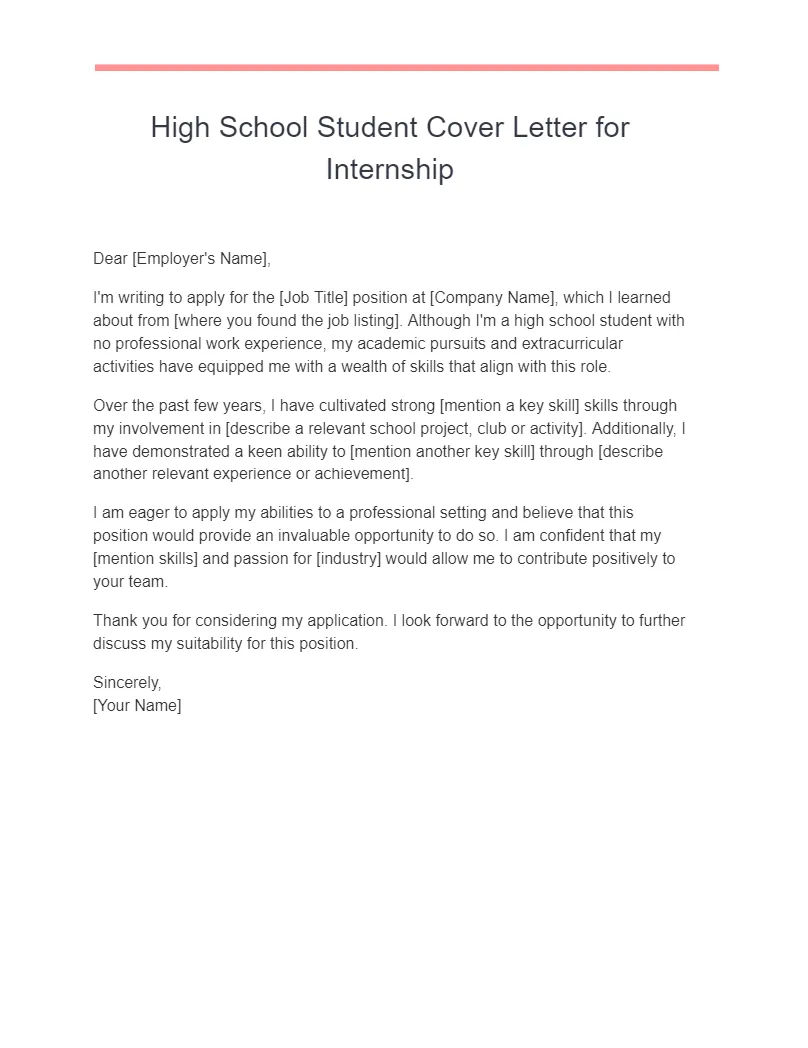
Understanding the Cover Letter’s Importance
In the competitive landscape of job applications, a well-crafted cover letter is a crucial tool for high school students. It serves as your personal introduction, going beyond the basic information provided in your resume. A cover letter allows you to showcase your personality, enthusiasm, and suitability for a particular role. It is your chance to make a strong first impression and convince the employer why you’re the perfect fit, even with limited work experience. Think of it as your opportunity to explain your skills and experiences, demonstrating how they align with the job’s requirements. A compelling cover letter can significantly increase your chances of landing an interview, making it a vital component of any job application.
Why a Cover Letter Matters for High Schoolers
For high school students, a cover letter is particularly important because it helps bridge the experience gap. Since many students have limited professional experience, the cover letter provides a platform to highlight transferable skills, such as teamwork, communication, and problem-solving, gained through extracurricular activities, volunteer work, or academic projects. It also gives you a chance to demonstrate your eagerness to learn and your genuine interest in the position. By addressing the employer’s needs and showing how your skills and qualities align with the job requirements, you can stand out from other applicants. Moreover, a well-written cover letter showcases your writing abilities and attention to detail, which are essential in any professional setting. It’s your chance to demonstrate professionalism and make a memorable impression.
Key Elements of a Winning Cover Letter

A winning cover letter is concise, compelling, and tailored to the specific job and company. It typically includes a header with your contact information, a professional salutation, a captivating opening paragraph, a body that highlights your relevant skills and experiences, a closing paragraph expressing enthusiasm, and a call to action. Ensure that your letter is free of errors and adheres to professional formatting standards. The following sections provide detailed guidance on each element, offering insights into how to create a cover letter that grabs attention and gets results. By following these guidelines, you can significantly improve your chances of making a positive impression and securing an interview.
Header & Contact Information
Your header should include your full name, address, phone number, and email address. Make sure your email address is professional (e.g., firstname.lastname@email.com). The header should be aligned left or centered at the top of the document. Below your information, include the date and the employer’s contact information (name, title, company, and address), if available. Using the employer’s name and title shows that you’ve taken the time to research the company and the specific role. Double-check all contact details for accuracy to ensure that the employer can easily reach you.
Formatting your letter
Use a professional font such as Times New Roman, Arial, or Calibri, and keep the font size between 10 and 12 points. Maintain consistent formatting throughout the document, including spacing and alignment. Set the margins to one inch on all sides. Use single spacing within paragraphs and double spacing between paragraphs. Keep your letter concise, aiming for one page. Break up large blocks of text with short paragraphs and bullet points to improve readability. Ensure that the overall appearance is clean, organized, and easy to read, making a positive impression on the recipient.
The Opening Paragraph: Grabbing Attention

The opening paragraph is your opportunity to capture the reader’s attention. Start with a strong hook that immediately indicates why you’re writing and what position you’re applying for. Mention the job title and where you saw the job posting. Briefly state why you are interested in the role and the company. Show enthusiasm and a genuine interest in the opportunity. Avoid generic openings like, ‘I am writing to apply for the position of…’ Instead, use a statement that showcases your personality or a specific skill that aligns with the job requirements. This initial paragraph should set the tone for the rest of your letter and entice the reader to continue.
Highlighting Your Skills and Experiences
The body of your cover letter is where you demonstrate your suitability for the job. Focus on highlighting the skills and experiences that align with the job requirements. Analyze the job description carefully and identify the key skills the employer is seeking. Provide specific examples of how you’ve demonstrated these skills in previous roles, extracurricular activities, or academic projects. Use action verbs to describe your accomplishments and responsibilities. Quantify your achievements whenever possible (e.g., ‘Managed a team of five students,’ ‘Increased sales by 15%’). Relate your experiences to the job requirements, showing the employer how your skills can benefit the company.
Showcasing Relevant Coursework & Projects
If you lack extensive work experience, emphasize relevant coursework and projects. Mention specific courses, projects, or assignments that demonstrate skills relevant to the job. For example, if you’re applying for a role in marketing, highlight projects in your marketing class that involved market research, campaign development, or social media management. Describe the skills you gained and the outcomes of these projects. You can also include details about your academic achievements or any special projects you’ve undertaken. This showcases your knowledge and ability to apply theoretical concepts in practical situations, demonstrating your readiness for the role.
Emphasizing Soft Skills & Personal Qualities

Soft skills, such as communication, teamwork, problem-solving, and time management, are highly valued by employers. Showcase these skills by providing examples from your experiences. For example, describe a time when you worked effectively in a team, resolved a conflict, or managed a demanding project. Use the STAR method (Situation, Task, Action, Result) to structure your examples. Start by describing the situation, outline the task at hand, explain the actions you took, and highlight the results you achieved. This approach helps demonstrate how you apply your soft skills in real-world situations, making your claims more credible and compelling. Ensure the qualities you highlight align with the company culture and the job requirements.
Quantifying Achievements & Using Action Verbs
Whenever possible, quantify your achievements to make them more impactful. Use numbers, statistics, and percentages to illustrate your accomplishments. Instead of saying ‘Improved customer service,’ say ‘Improved customer satisfaction scores by 20% by implementing a new feedback system.’ Action verbs are also essential for creating a dynamic and engaging cover letter. Start your sentences with strong action verbs to describe your accomplishments and responsibilities. For example, use verbs like ‘managed,’ ‘coordinated,’ ‘developed,’ ‘implemented,’ ‘analyzed,’ and ‘achieved.’ This makes your letter more compelling and helps the employer understand the value you can bring to the position.
Addressing the Employer’s Needs
Tailor your cover letter to address the specific needs and requirements outlined in the job description. Analyze the job posting carefully to identify the key skills and qualities the employer is looking for. Demonstrate how your skills and experiences align with these requirements. Explain how you can contribute to the company’s goals and objectives. By directly addressing the employer’s needs, you show that you’ve taken the time to understand the position and are genuinely interested in the opportunity. This personalization makes your application more relevant and increases your chances of getting noticed.
Researching the Company and Job

Before writing your cover letter, conduct thorough research on the company and the specific job. Visit the company’s website to learn about their mission, values, products, and services. Research the job description to understand the key responsibilities, required skills, and desired qualifications. This research will help you tailor your letter to the company’s needs and demonstrate your interest in the position. Refer to the company’s values or recent achievements in your cover letter to show that you’ve done your homework. This attention to detail can significantly set you apart from other applicants.
Tailoring Your Letter to the Job Description
Each cover letter should be customized for the specific job you are applying for. Use the job description as your guide, and highlight the skills and experiences that are most relevant. Avoid using a generic cover letter template. Instead, modify the template to reflect the specific requirements of the job. Mention specific keywords and phrases from the job description to show that you’ve paid attention to the details. Tailoring your letter demonstrates that you are a good fit for the role and have the necessary skills and qualifications.
The Closing Paragraph: Call to Action
Your closing paragraph should summarize your interest in the position and reiterate your key qualifications. Express your enthusiasm for the opportunity and thank the employer for their time and consideration. Include a clear call to action, such as, ‘I look forward to the opportunity to discuss my qualifications in an interview,’ or ‘I am available for an interview at your earliest convenience.’ Provide your contact information again to make it easy for the employer to reach you. End your letter with a professional closing, such as ‘Sincerely,’ or ‘Best regards,’ followed by your full name.
Expressing Enthusiasm and Gratitude

Throughout your cover letter, express your enthusiasm for the position and the company. Show that you are genuinely interested in the opportunity and excited about the possibility of contributing to the organization’s success. Express gratitude to the employer for their time and consideration. This demonstrates your professionalism and respect for their time. End with a positive and confident tone, leaving a lasting impression on the reader.
Proofreading and Editing: Ensuring Perfection
Proofreading and editing are crucial steps in creating a professional cover letter. Always proofread your letter multiple times to catch any typos, grammatical errors, or formatting inconsistencies. Read your letter aloud to identify awkward phrasing or areas that need improvement. Ask a teacher, career counselor, or trusted friend to review your letter and provide feedback. Ensure that your letter is free of errors before submitting it. A polished and error-free cover letter demonstrates attention to detail and professionalism, increasing your chances of making a positive impression.
Common Mistakes to Avoid
Avoiding common mistakes is essential for creating a successful cover letter. Here are some of the most prevalent errors to steer clear of when applying to a job. By understanding these pitfalls, you can refine your approach and enhance your prospects of securing an interview.
Generic Language and Lack of Personalization

Using generic language and failing to personalize your cover letter is a major turnoff for employers. Avoid using a generic template that could be sent to any company. Instead, tailor your letter to the specific job and company, demonstrating your genuine interest. Avoid clichés and overused phrases. Make sure your letter reflects your unique personality, skills, and experiences. Show the employer that you’ve researched the company and understand their needs. Personalization shows that you’re not just sending out mass applications but are genuinely interested in the position.
Typos, Grammatical Errors, and Poor Formatting
Typos, grammatical errors, and poor formatting can instantly damage your credibility. Always proofread your letter multiple times to ensure that it is free of errors. Check for correct spelling, punctuation, and grammar. Pay attention to the formatting, including font size, spacing, and margins. A well-formatted letter demonstrates attention to detail and professionalism. Poor formatting can make your letter difficult to read and create a negative impression.
Failing to Highlight Relevant Skills
Make sure your cover letter highlights the skills and experiences that are most relevant to the job. Don’t just list your skills; provide specific examples of how you’ve demonstrated those skills in the past. Use the job description as your guide, and tailor your letter to showcase the skills and qualifications the employer is seeking. Show the employer how your skills and experiences align with their needs. Ignoring the job description and failing to tailor your letter will make it less effective and could lead to your application being overlooked.
Cover Letter Templates and Examples
Using cover letter templates and examples can be a helpful starting point, but it’s important to adapt them to your specific needs. A well-designed template can help you structure your letter and ensure that you include all the necessary elements. However, you must personalize the template to reflect your unique skills and experiences.
Where to Find Reliable Templates
Numerous online resources offer cover letter templates. Websites such as Canva, Resume.com, and Indeed provide a variety of templates that are designed to meet different needs. You can also find templates on websites dedicated to career advice. Make sure to select a template that is professional and easy to customize. Avoid using overly elaborate templates that may distract from your content. Choose a template that allows you to showcase your skills and experiences effectively. Always tailor the template to your specific needs.
Analyzing Sample Cover Letters
Studying sample cover letters can help you understand how to structure your letter and what elements to include. Look for samples that are relevant to your field and experience level. Pay attention to the language used, the formatting, and the way skills and experiences are highlighted. Analyze how the applicant addresses the employer’s needs and expresses their enthusiasm for the role. Use the sample cover letters as inspiration, but do not copy them directly. Adapt the examples to reflect your unique skills, experiences, and the specific job requirements.
Adapting Templates to Your Needs
Once you’ve selected a template, adapt it to reflect your specific skills and experiences. Start by customizing the header with your contact information. Personalize the opening paragraph to capture the reader’s attention and express your genuine interest. Tailor the body paragraphs to highlight your relevant skills and experiences, providing specific examples and quantifying your achievements whenever possible. Use action verbs and keywords from the job description to demonstrate your fit for the role. Ensure your letter is free of errors and proofread it carefully before submitting it. Customizing your letter significantly increases its effectiveness.
Final Tips for Success
Creating a compelling cover letter requires careful attention to detail, personalization, and a focus on the employer’s needs. By following the tips outlined in this guide, you can significantly increase your chances of making a positive impression and securing an interview. Remember to tailor your letter to each job, proofread carefully, and express your enthusiasm for the opportunity. Good luck!