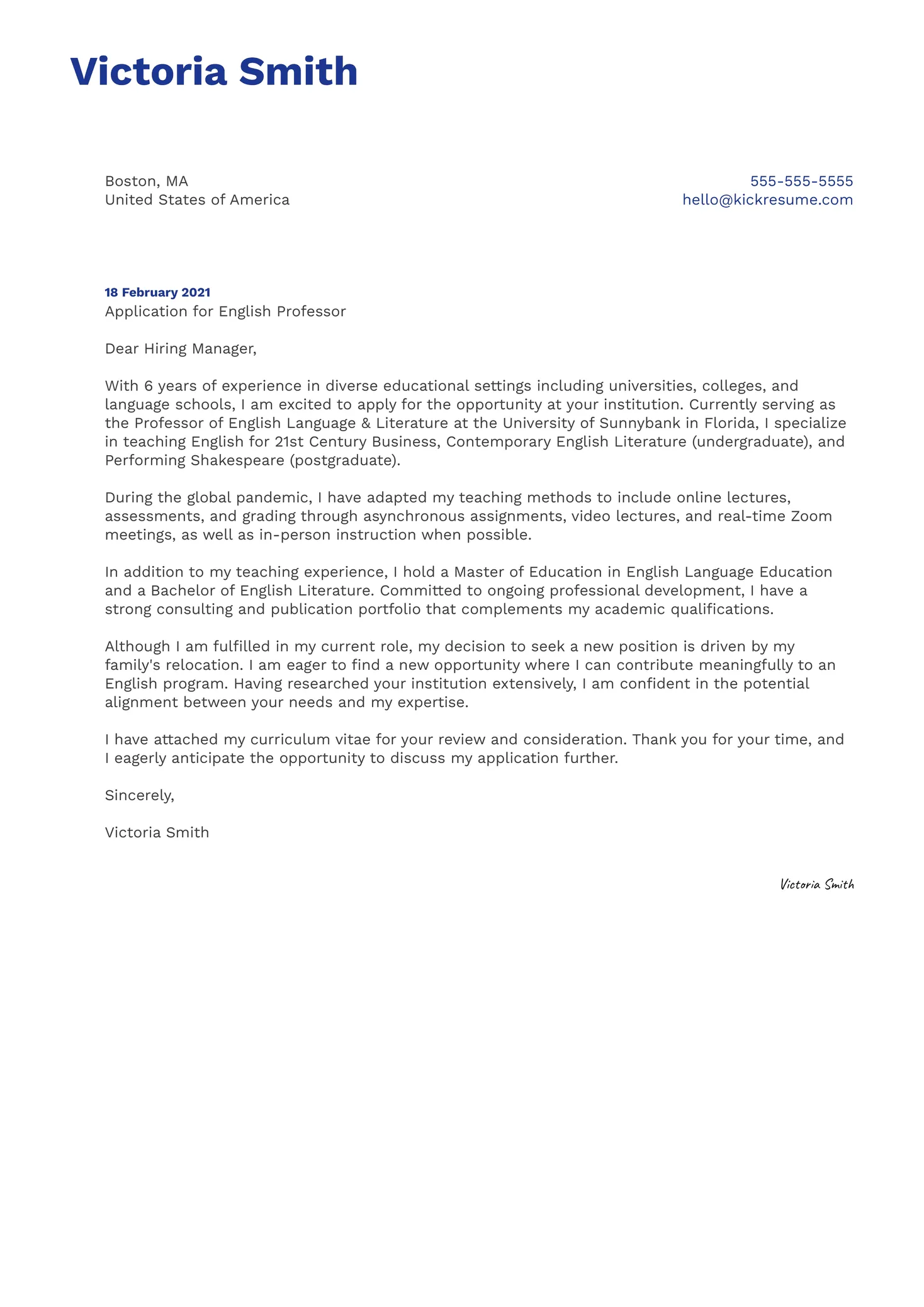
Understanding the Importance of a Cover Letter
A well-crafted cover letter is not merely a formality it’s your first impression and a critical tool in securing a position as an English professor. Unlike a resume which is a straightforward overview of your qualifications, the cover letter allows you to tell a compelling story, showcasing your personality, passion for the field, and how your specific skills align with the institution’s needs. It provides context to your accomplishments, allowing you to elaborate on your research, teaching experience, and overall suitability for the role. Neglecting this crucial document means missing an opportunity to make a strong initial impact and potentially losing out on the chance to be interviewed. A strong cover letter demonstrates your writing skills, an essential quality for any English professor, and indicates your attention to detail, a key trait in academia. The cover letter, therefore, is your chance to shine, setting you apart from other applicants and highlighting your unique value proposition to the hiring committee. This is where you can truly connect with the reader.
Highlighting Relevant Experience and Skills
When crafting your cover letter, it’s essential to focus on the experience and skills most relevant to the specific position. Review the job description meticulously, identifying the key requirements and desired qualifications. Then, carefully select the accomplishments and experiences that directly address these needs. Quantify your achievements whenever possible; instead of stating ’taught numerous courses,’ mention ’taught five different courses, encompassing a total of 150 students, with an average student evaluation score of 4.5 out of 5.’ Highlight your experience with different pedagogical approaches, curriculum development, and student assessment methods. Be sure to include details about your research, such as publications, presentations, and areas of specialization. This section should showcase not only your academic credentials but also your ability to engage students, contribute to the department’s research profile, and thrive in an academic environment. Remember, the goal is to demonstrate how your skills and experience uniquely qualify you for this particular opportunity.
Tailoring Your Cover Letter to the Position

Generic cover letters are easily spotted and often discarded. Tailoring your letter to each specific position is crucial. Start by thoroughly researching the institution, department, and the specific role you’re applying for. Understand the institution’s mission, values, and the specific needs of the English department. Analyze the job description to identify the key requirements, desired skills, and any specific projects or initiatives the department is involved in. In your cover letter, explicitly address these needs and demonstrate how your qualifications and experience align with the institution’s goals. This may involve highlighting specific courses you’ve taught that align with the department’s curriculum, referencing research areas that complement faculty expertise, or expressing enthusiasm for opportunities to contribute to departmental initiatives. By demonstrating that you’ve invested time and effort in understanding the position and institution, you increase your chances of making a positive impression and securing an interview. Personalize your letter, and let it speak directly to the specific requirements of the role. It is about showing a genuine interest in the opportunity.
Showcasing Your Research and Publications
For an English professor position, your research and publications are vital components of your application. Your cover letter should showcase your scholarly achievements and their relevance to the position. Briefly summarize your research interests, and highlight your most significant publications, including journal articles, books, and conference presentations. Instead of merely listing your publications, explain their significance and how they contribute to the field of English studies. If your research aligns with any specific areas of focus within the department or institution, make sure to highlight that connection. If you have received any grants, awards, or fellowships related to your research, mention them as well. Provide a clear overview of your research trajectory, demonstrating a cohesive body of work that contributes to the broader academic community. Moreover, if your research lends itself to student engagement, make sure to point out how you incorporate your findings in teaching or mentoring students. Your research section is a prime area to illustrate your intellectual curiosity and contributions to the field. Include your passion here!
Demonstrating Teaching Philosophy and Experience
Your teaching philosophy is a critical element in your cover letter, particularly for English professor positions. It should outline your beliefs about teaching, your approach to student engagement, and your commitment to creating an effective learning environment. Begin by articulating your teaching philosophy concisely and passionately. Explain how you motivate students, foster critical thinking, and promote active learning. Provide specific examples of how you’ve implemented your teaching philosophy in the classroom, such as innovative assignments, collaborative projects, or student-centered activities. Mention any teaching awards or positive student evaluations you have received. If the job description specifies particular teaching methodologies or curriculum requirements, address how your experience aligns with these expectations. Emphasize your ability to connect with students, adapt to diverse learning styles, and create an inclusive classroom environment. Show your dedication to student success and your commitment to being an effective educator. Your passion for teaching makes you a good candidate.
Formatting and Proofreading Your Cover Letter

Attention to detail is paramount when applying for a position as an English professor. Your cover letter must be impeccably formatted and free of any grammatical errors, typos, or inconsistencies. Use a professional font, such as Times New Roman, Arial, or Calibri, and maintain consistent formatting throughout the document. Ensure your margins are appropriate and the text is easy to read. Proofread your cover letter multiple times, and consider asking a colleague or mentor to review it as well. Spellcheck and grammar check tools can be helpful, but they are not a substitute for careful human review. Pay attention to the tone of your letter; it should be professional and enthusiastic, reflecting your interest in the position. Customize the letter for each application, and make sure to update the recipient’s name. A well-formatted and error-free cover letter demonstrates your professionalism, your attention to detail, and your commitment to producing high-quality work. It also reflects your capabilities in the field of writing, a core aspect of the English professor role. Make sure the cover letter is concise, and avoids jargon.