What is a Cover Letter
A cover letter serves as your introduction to a potential employer. It’s a concise document accompanying your resume, offering a personalized overview of your skills, experience, and why you’re the ideal candidate for a specific job. Unlike a resume, which provides a factual summary, a cover letter enables you to showcase your personality, express your enthusiasm, and explain how your qualifications align with the job requirements. Using a well-crafted cover letter template can significantly streamline this process, ensuring you convey the necessary information professionally and effectively, increasing your chances of getting noticed by hiring managers. This document allows you to elaborate on specific achievements and skills that directly relate to the job description, providing context and demonstrating your genuine interest in the position.
Why is a Cover Letter Important
A cover letter provides an opportunity to make a strong first impression. In a competitive job market, a well-written cover letter can set you apart from other applicants. It demonstrates your communication skills, attention to detail, and proactive approach. Employers often use cover letters to assess your writing ability and your understanding of the role and company. Moreover, a cover letter allows you to address any potential gaps in your resume or explain specific career changes. It gives you a platform to highlight the value you can bring to the organization and to express your genuine interest in the opportunity. A cover letter, when tailored to the specific job and company, shows that you’ve done your homework and are genuinely interested, which can significantly increase your chances of getting an interview.
Cover Letter vs Resume

While both a cover letter and a resume are crucial components of a job application, they serve different purposes. A resume is a factual summary of your work experience, education, skills, and accomplishments. It provides a concise overview of your professional history and qualifications, typically presented in a bulleted or chronological format. The main goal of a resume is to provide a snapshot of your professional background and to get you an interview. On the other hand, a cover letter is a personalized introduction. It allows you to expand on your qualifications, explain your career goals, and express your interest in the specific role and company. Think of the resume as what you’ve done and the cover letter as why you are the best fit. The cover letter tells a story that complements the facts in your resume.
Key Components of a Simple Cover Letter
Header Information
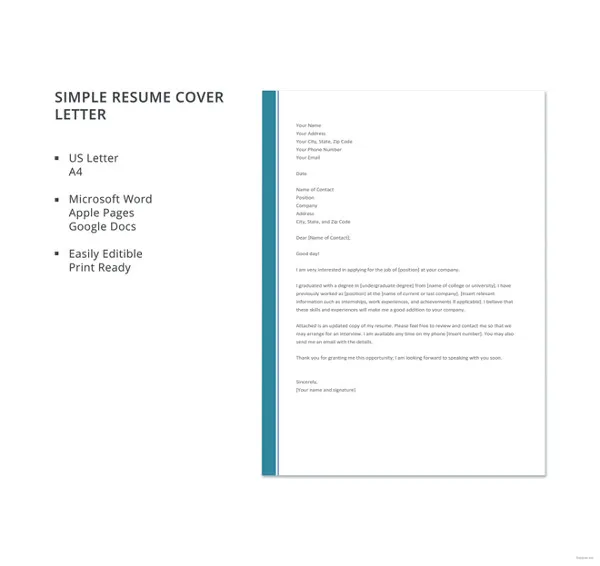
The header of your cover letter is the first thing a hiring manager sees, making it essential to get it right. Start with your full name, address, phone number, and email address. Include the date, followed by the hiring manager’s name (if known), their title, and the company’s address. Using a professional and easy-to-read format is critical. Ensure all contact information is accurate and up-to-date. The header should be formatted neatly and consistently. When you customize your cover letter template, double-check all details to avoid errors. This section sets the tone for your application and provides the recruiter with the necessary information to contact you.
Greeting

The greeting is a crucial component of your cover letter. Address the hiring manager by name whenever possible. If you can’t find a name, use a professional greeting like ‘Dear Hiring Manager’ or ‘Dear [Department Name] Team.’ Avoid generic greetings like ‘To Whom It May Concern’ as they suggest a lack of effort. Researching the company and the specific hiring manager is always a good idea, as it personalizes your application. This initial step sets the tone for your cover letter, and a personalized greeting demonstrates your attention to detail and genuine interest in the position.
Opening Paragraph
The opening paragraph is your first chance to grab the reader’s attention. It should clearly state the position you’re applying for and how you found the opportunity. Briefly mention your most relevant skills or experiences that make you a strong candidate. Express your enthusiasm for the role and the company. This paragraph should be concise, compelling, and tailored to the specific job description. Think of it as your elevator pitch. Using strong action verbs can make your opening more dynamic and engaging. It should immediately showcase your understanding of the job and why you are a great fit. Keep it short and impactful to encourage the reader to continue reading.
Body Paragraphs
The body paragraphs are the core of your cover letter, where you elaborate on your qualifications and skills. Use these paragraphs to highlight your relevant experience, achievements, and how they align with the job requirements. Provide specific examples of your accomplishments, using the STAR method (Situation, Task, Action, Result) to demonstrate your impact. Tailor each paragraph to address specific aspects of the job description. Show, don’t just tell; quantify your accomplishments whenever possible. For instance, instead of saying ‘Managed projects,’ say ‘Managed five projects simultaneously, resulting in a 15% increase in on-time project delivery.’ Structure your body paragraphs logically, ensuring they support your main arguments and showcase your value as a potential employee.
Closing Paragraph

The closing paragraph is your last chance to reinforce your interest and call to action. Reiterate your enthusiasm for the opportunity and briefly summarize why you’re a great fit. Express your eagerness to discuss your qualifications further and mention that you’ve attached your resume for review. Include a call to action by requesting an interview or stating that you look forward to hearing from them. Thank the hiring manager for their time and consideration. End with a professional closing like ‘Sincerely,’ or ‘Best regards,’ followed by your full name. Make sure the closing paragraph leaves a positive and lasting impression, encouraging the hiring manager to take the next step.
Formatting and Design
Font Selection and Readability
Choosing the right font is crucial for readability and professionalism. Stick to standard fonts like Times New Roman, Arial, Calibri, or Helvetica. Ensure the font size is between 10 and 12 points for easy reading. Use consistent formatting throughout your cover letter. Avoid overly decorative fonts that might distract the reader. Opt for a clean and clear font style. This ensures your cover letter looks professional and is easy on the eyes. It is important to maintain a professional appearance. The goal is to make your cover letter easy to read and visually appealing.
Length and Structure

Keep your cover letter concise and to the point, ideally no more than one page. Use a clear and organized structure with well-defined paragraphs. Use white space to separate sections and make the content easy to scan. Maintain a professional tone throughout. Avoid lengthy sentences and paragraphs. Each paragraph should focus on a specific point or idea. Proper formatting and design elements can make your cover letter much more appealing. Use bullet points to highlight key achievements or skills. This helps the reader easily grasp the main points. Ensure there are clear headings and subheadings to guide the reader.
Proofreading and Editing
Common Mistakes to Avoid
Proofreading and editing are essential steps in creating a compelling cover letter. Errors can undermine your credibility and professionalism. Avoid typos, grammatical errors, and inconsistencies. Always proofread your cover letter multiple times. Use spell-check and grammar-check tools, but don’t rely on them entirely. Have someone else review your cover letter to catch errors you might miss. Ensure your cover letter flows logically and that your writing is clear and concise. Check that you’ve used the correct company name and address. A single mistake can impact your chances of landing an interview.
Using a Cover Letter Template

Using a cover letter template can save you time and ensure you include all the necessary components. Many templates are available online, but always customize them to fit your specific needs and the job you’re applying for. Tailor the template to showcase your unique skills and experience. Don’t just fill in the blanks; adapt the content to reflect your qualifications and the company’s requirements. This ensures that your cover letter stands out from the crowd. Make sure the template you choose aligns with your industry and the company’s culture. Customizing your cover letter template demonstrates that you have put effort into your application, which impresses potential employers and increases your chances of getting hired.
Where to Find Cover Letter Templates
There are numerous resources for finding cover letter templates. Websites like Microsoft Word, Google Docs, and Canva offer a wide variety of templates. Many career websites and resume builders also provide templates. When choosing a template, consider your industry, the specific job requirements, and your personal style. Look for templates that are easy to customize and align with your personal branding. Ensure the templates are in a professional format and are visually appealing. Free and premium options are available, so choose the one that best suits your needs. Ensure that the template is compatible with the software you use. The right cover letter template can provide a great starting point and save time.