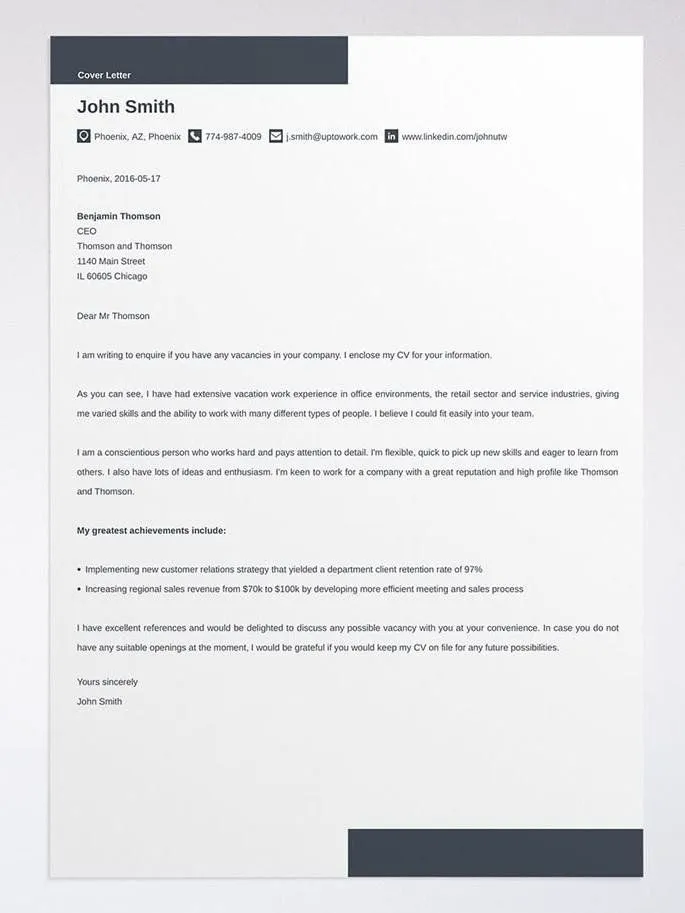
What is a Cover Letter?
A cover letter is a crucial document that accompanies your resume when applying for a job. It serves as your introduction to the hiring manager, providing a concise overview of your qualifications, skills, and experiences. Think of it as your personal sales pitch, designed to persuade the employer that you are the ideal candidate for the position. Unlike a resume, which presents a factual summary, a cover letter allows you to showcase your personality, enthusiasm, and communication skills. It’s your opportunity to connect your qualifications to the specific requirements of the job and explain why you’re a great fit for the company culture. In the competitive job market, a well-crafted cover letter can significantly increase your chances of getting an interview.
Why is a Cover Letter Important?
In today’s job market, a cover letter remains a vital component of a successful job application, even as some may debate its necessity. Many hiring managers still rely on cover letters to gauge your writing skills, attention to detail, and genuine interest in the role and the company. It allows you to express your unique value proposition and explain how your skills align with the specific job requirements. A compelling cover letter demonstrates your understanding of the company’s needs and your enthusiasm for the opportunity, setting you apart from other applicants who may only submit a resume. Furthermore, it provides a platform to address any potential gaps or weaknesses in your resume, offering a more complete picture of your qualifications and making a strong case for why you deserve an interview. The importance of a cover letter is undeniable in a competitive job market.
Standing Out From the Crowd

In a sea of applications, a cover letter is your chance to distinguish yourself. A generic, mass-produced letter will likely end up in the discard pile. Instead, use this opportunity to showcase your personality and your unique value. Tailor your letter to each specific job, highlighting the skills and experiences that are most relevant to the position. Research the company and demonstrate your understanding of their mission, values, and current projects. Mentioning specific details or initiatives that resonate with you shows genuine interest and initiative. By customizing your cover letter, you demonstrate to the hiring manager that you’re not just sending out a generic application; you’re genuinely interested in the specific opportunity. This attention to detail and personalized approach significantly increases your chances of making a positive first impression and securing an interview.
Essential Cover Letter Components
A well-structured cover letter consists of several key components that work together to create a compelling narrative. These elements are essential for making a positive first impression and effectively communicating your qualifications. Each part plays a specific role in showcasing your suitability for the job. A comprehensive cover letter provides a cohesive and persuasive argument for why you should be considered for the position. Mastering these components will empower you to craft a cover letter that effectively captures the attention of hiring managers and increases your chances of securing an interview.
Contact Information
Begin your cover letter with your contact information. This typically includes your full name, phone number, email address, and optionally, your LinkedIn profile URL. This ensures that the hiring manager can easily reach you if they’re interested in scheduling an interview. Place this information at the top of the document, either on the left or right side, and ensure it is easy to read. Double-check that your email address is professional and that your phone number is accurate. Providing this information upfront is a basic but crucial step in the application process. Make sure it is easy to find and readily accessible.
Professional Greeting

The greeting sets the tone for your entire cover letter. Avoid generic greetings like “To Whom It May Concern.” Instead, try to address the hiring manager by name. Research the company’s website or LinkedIn to find the name of the hiring manager or the specific person responsible for reviewing applications. If you’re unable to find a specific name, “Dear Hiring Manager” is a suitable alternative. Personalizing your greeting shows that you’ve taken the time to research the company and demonstrates a genuine interest in the opportunity. This small detail can make a significant difference in capturing the reader’s attention.
Opening Paragraph
The opening paragraph is your chance to grab the hiring manager’s attention. Start with a strong statement that immediately highlights your interest in the position and the company. Clearly state the position you’re applying for and where you saw the job posting. Briefly mention a key skill or accomplishment that aligns with the job requirements. This initial paragraph should create a positive first impression and entice the reader to continue reading. Keep it concise and focused, setting the stage for the rest of your letter. The opening is a great way to hook the hiring manager immediately.
Body Paragraphs
The body paragraphs are the heart of your cover letter, where you showcase your qualifications and connect your skills to the job requirements. This section needs to be well-organized and focused on demonstrating how your experience and skills align with the specific needs of the role. Use specific examples to support your claims, quantifying your achievements whenever possible. Address the key requirements outlined in the job description, explaining how your past experiences have prepared you for success in this role. Avoid simply restating your resume; instead, provide deeper insights and context to illustrate your abilities and potential contributions. Aim to address 2 or 3 key points or accomplishments from your background. These paragraphs are where you will make your case for why you are the best candidate.
Highlighting Skills and Experiences

In the body paragraphs, provide specific examples to demonstrate your skills and experiences. Don’t just list your qualifications; instead, explain how you’ve used these skills to achieve results in previous roles. For each skill or experience, provide a brief context, explaining the situation, the actions you took, and the positive outcome. This “STAR” method (Situation, Task, Action, Result) is a powerful technique for illustrating your abilities. Tailor your examples to match the job requirements outlined in the job description. This demonstrates that you understand the role’s expectations and have the experience necessary to succeed. Highlighting your relevant accomplishments provides solid evidence of your abilities and adds credibility to your application.
Quantifying Achievements
Whenever possible, quantify your achievements to demonstrate the impact of your work. Instead of saying, “Improved customer satisfaction,” say “Increased customer satisfaction by 15% within six months.” Use numbers, percentages, and specific data points to showcase your accomplishments and provide tangible evidence of your abilities. Quantifying your achievements makes them more compelling and memorable. It also provides concrete proof of your value and helps the hiring manager understand the potential impact you can make in the role. This approach adds significant weight to your application and clearly demonstrates your past contributions and potential for future success.
Closing Paragraph
Your closing paragraph should reiterate your interest in the position and thank the hiring manager for their time and consideration. Reiterate your enthusiasm for the opportunity and briefly summarize why you’re a strong fit. Express your eagerness to discuss your qualifications further in an interview. End with a professional closing, such as “Sincerely” or “Best regards,” followed by your full name. The closing paragraph reinforces your enthusiasm and leaves the hiring manager with a positive final impression. Maintain a polite and professional tone to reinforce your commitment to the role.
Call to Action

Include a clear call to action in your closing paragraph. This is a direct instruction to the hiring manager, indicating the next step you’d like them to take. The most common call to action is a request for an interview. State your availability and express your eagerness to discuss how you can contribute to the company’s success. Ensure that the call to action is confident but not presumptuous. For example, you could write, “I am eager to discuss my qualifications further and would welcome the opportunity to interview for this position.” This clear and direct approach helps guide the hiring manager and increases the likelihood of a positive response.
Cover Letter Formatting Best Practices
The format of your cover letter is just as important as its content. A well-formatted cover letter is easy to read, visually appealing, and reflects your professionalism. Follow these formatting best practices to ensure your cover letter makes a positive impression. Properly formatted document is a sign of attention to detail, which can influence hiring managers. These seemingly minor details can significantly improve the overall effectiveness of your cover letter. A well-formatted cover letter shows that you’ve taken the time to prepare a professional application.
Font Choice and Size
Choose a professional and readable font for your cover letter. Common choices include Times New Roman, Arial, Calibri, and Helvetica. Ensure that the font size is between 10 and 12 points for easy readability. Avoid using overly stylized or decorative fonts, as they can be distracting. The goal is to create a clean and professional document that is easy for the reader to scan. Select a font that is universally accessible and considered standard in professional communications. A well-chosen font enhances the overall presentation of your cover letter and ensures your message is easily understood.
Margins and Spacing

Use standard margins of 1 inch on all sides of your cover letter. This creates a balanced and visually appealing layout. Maintain single spacing within paragraphs and double spacing between paragraphs. This formatting helps separate different sections of your cover letter and enhances readability. Ensure consistent spacing throughout the document to maintain a polished and professional appearance. Properly formatted margins and spacing guide the reader’s eye and make your cover letter more inviting. These formatting elements are important for a clean and professional look.
Cover Letter Examples for Different Industries
Cover letters are not one-size-fits-all; they must be tailored to the specific industry and the job you are applying for. Understanding the norms and expectations of each field is crucial. Reviewing examples from your industry will help you understand what employers are looking for. Tailoring your cover letter makes it far more effective. The following examples will give you a solid foundation to begin with.
Example Cover Letter for Marketing
A marketing cover letter should emphasize your understanding of marketing principles and your ability to drive results. Highlight your experience with specific marketing tools, platforms, and strategies. Include examples of successful campaigns, showcasing metrics and results. Showcase your creativity, strategic thinking, and ability to communicate effectively. Demonstrate a clear understanding of the company’s brand and its target audience. It should clearly showcase marketing abilities and how those skills align with the job description and company needs. Your marketing cover letter must demonstrate a clear understanding of marketing principles.
Example Cover Letter for IT

An IT cover letter should focus on your technical skills, experience with specific technologies, and problem-solving abilities. Highlight relevant certifications, such as those from CompTIA or Microsoft. Describe your experience with various IT systems, platforms, and applications. Provide examples of your ability to troubleshoot and resolve technical issues. Use precise technical language and demonstrate your understanding of IT infrastructure and security. For IT positions, it is vital to highlight relevant certifications, and experience, focusing on technical skills and problem-solving abilities. The IT industry requires a technical approach with the precise use of language.
Cover Letter Mistakes to Avoid
Avoiding common cover letter mistakes is crucial for making a positive impression. Be aware of errors that can undermine your application. These mistakes can be easily avoided by careful planning and proofreading. By avoiding these pitfalls, you’ll significantly improve the effectiveness of your cover letter. A well-crafted cover letter can be the deciding factor between getting an interview and being overlooked.
Typos and Grammatical Errors
Typos and grammatical errors are a major red flag for hiring managers. Proofread your cover letter carefully before submitting it. Use spell-check and grammar-check tools, but also read the document aloud to catch any errors that automated tools might miss. Enlist a friend or family member to review your letter as a second pair of eyes to help ensure accuracy. Even a small mistake can create a negative impression and suggest a lack of attention to detail. Thorough proofreading is essential to present yourself as a professional and detail-oriented candidate.
Generic and Vague Content

Avoid using generic and vague language that could apply to any job or company. Your cover letter should be tailored to the specific position and organization. Instead of making broad statements, provide specific examples of your skills and accomplishments. Show, don’t tell. Generic statements fail to showcase your uniqueness, while tailored content demonstrates that you’ve researched the company and understand the role. Be specific and provide relevant details to stand out from other applicants. Focusing on your specific skills and experience helps you shine.
Ignoring the Job Description
Carefully review the job description and address the specific requirements and qualifications. Failure to demonstrate how your skills and experience align with the job description will likely result in your application being rejected. Use the keywords and phrases from the job posting to show that you meet the required criteria. Tailor your letter to match the language used in the job posting. Always show you understand the requirements and have the necessary qualifications. Carefully addressing the job description will increase your chances.
The Importance of Customization
Customization is essential for a successful cover letter. A generic letter sent to multiple companies will not make a lasting impression. Tailor your cover letter to each job, highlighting the most relevant skills and experiences. Research the company and understand their values, mission, and recent projects. Show that you’ve taken the time to learn about the company and are genuinely interested in the opportunity. Customization demonstrates your genuine interest in the position and shows you’ve put in effort. This personalized approach dramatically increases your chances of making a positive impression on the hiring manager.
Tailoring Your Cover Letter
Start by carefully reviewing the job description to identify the key requirements and qualifications. Highlight the skills and experiences that match these requirements. Research the company and understand its mission, values, and culture. Use the company’s website, social media, and other online resources to gather information. Incorporate this information into your cover letter to demonstrate your interest. Be prepared to customize your cover letter for each specific job and company. Make it a regular part of your job application process. This helps to show you’re a good fit and will greatly improve your success.
Researching the Company
Before you write your cover letter, research the company thoroughly. Visit their website, read their “About Us” page, and explore their social media presence. Understand their mission, values, and recent projects. Researching the company allows you to tailor your cover letter and demonstrate your interest. Use your research to identify key details that you can incorporate into your cover letter. This demonstrates your understanding and enthusiasm for the opportunity. The ability to research helps you create a connection and makes you stand out.
Cover Letter Writing Tips
To make your cover letter more compelling, there are several writing techniques you can use. These tips can make a major difference in the impact of your cover letter. A well-written letter needs to be clear, concise, and persuasive. These tips are meant to help strengthen your ability to create an effective cover letter.
Use Action Verbs
Use strong action verbs to describe your skills and accomplishments. Action verbs make your cover letter more dynamic and engaging. Avoid using passive language; instead, choose active verbs that show your achievements. Examples include “managed,” “developed,” “implemented,” “achieved,” and “led.” Action verbs make your statements more impactful and help the hiring manager visualize your contributions. Use these verbs throughout the cover letter.
Show, Don’t Tell
Instead of simply stating your skills and abilities, show how you’ve used them to achieve results. Provide specific examples and quantify your achievements whenever possible. For instance, instead of writing “I have excellent communication skills,” write “Effectively communicated project updates to stakeholders, resulting in a 15% increase in project efficiency.” Demonstrate your value by providing concrete examples. This approach adds credibility and helps the hiring manager understand your capabilities. Use real-life examples.
Proofreading Your Cover Letter
Always proofread your cover letter before submitting it. Errors can create a negative impression. Check for typos, grammatical errors, and inconsistencies. Proofread your cover letter multiple times and consider having someone else review it as well. A second pair of eyes can often catch errors that you might miss. Make sure everything is accurate before submitting. Proofreading is a crucial step.
The Future of Cover Letters
While some debate the necessity of cover letters, they are still an essential component of the job application process. In the future, cover letters will continue to evolve with technological advancements. Personalization and customization will become even more critical. The ability to highlight your unique value proposition and explain how your skills align with the job requirements will continue to be valuable. By staying informed and adapting to these changes, you can ensure your cover letter remains effective in the years to come. The need to showcase your value will still be important in the future.