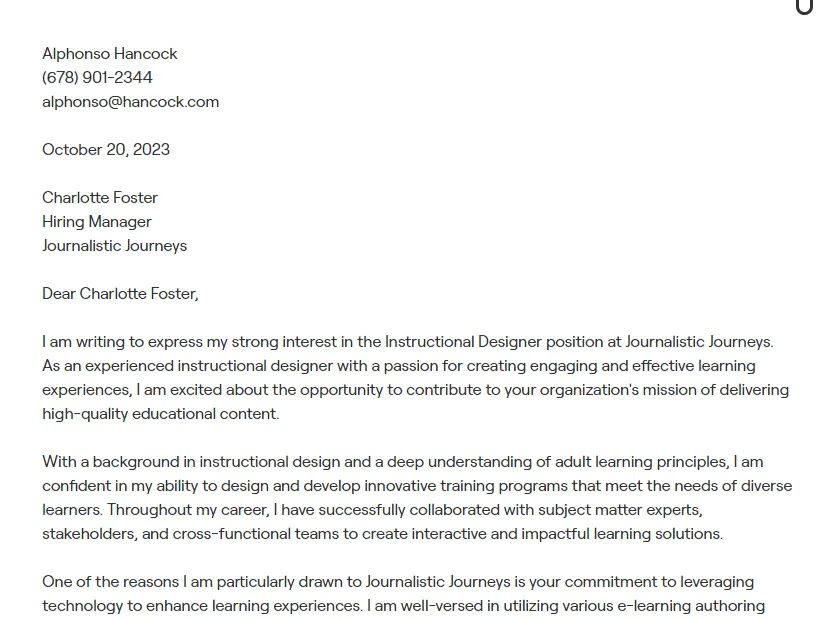
Understanding the Importance of an Instructional Designer Cover Letter
In the competitive field of instructional design, a well-crafted cover letter is not just a formality; it’s your first opportunity to make a strong impression. It provides a space to showcase your personality, passion, and skills in a way that a resume alone cannot. A compelling cover letter grabs the hiring manager’s attention and increases your chances of securing an interview, by presenting a concise overview of your qualifications and how they align with the specific job requirements. This guide will provide a comprehensive overview of the elements that make an outstanding instructional designer cover letter, helping you to stand out from the competition.
Why a Cover Letter Matters
A cover letter offers the crucial opportunity to tell your story and show your enthusiasm for the role. It enables you to highlight your understanding of the company’s needs and how your skills and experiences can meet them. A cover letter allows you to explain any gaps in your resume, emphasize specific achievements, and showcase your communication skills. It’s a chance to demonstrate your attention to detail and commitment to the application process. Ignoring this crucial step could mean losing out on the opportunity to make a great first impression and progress in the hiring procedure.
Key Components of an Effective Cover Letter

An effective cover letter for an instructional designer includes key components that help you stand out from the competition. It should start with a personalized greeting and a compelling introduction that grabs the reader’s attention. The body of the letter should highlight relevant skills and experience, quantifying achievements with data. The tone should convey passion for the field and explain why you are a great fit for the company and the position. Your cover letter’s formatting is also important, including clear structure, a professional tone, and a call to action that invites the reader to review your resume or contact you for more information. A well-structured cover letter shows you’ve done your research and are genuinely interested in the position.
Essential Elements for Your Instructional Designer Cover Letter
Personalized Greeting and Introduction
Start your cover letter with a personalized greeting. If possible, address the hiring manager by name. This shows that you’ve taken the time to research the company and that you’re genuinely interested in the specific role. In your introduction, briefly state the position you are applying for and how you learned about it. Your introduction should also include a brief statement of your key skills or experience, designed to capture the hiring manager’s interest from the start. Make sure your greeting and introduction are engaging and tailored to the specific job and company to make your cover letter more compelling.
Highlighting Relevant Skills and Experience

In the body of your cover letter, concentrate on skills and experiences that align with the job description. Identify the key requirements listed in the job posting and demonstrate how your past experiences have prepared you for the role. Focus on specific projects or roles where you successfully applied instructional design principles, created engaging learning materials, or managed training programs. Use the STAR method (Situation, Task, Action, Result) to describe your experiences, highlighting what you did and the positive outcomes achieved. This will show potential employers how your skills and experience can contribute to their team.
Quantifying Achievements with Data
To make your achievements more impactful, use data and metrics to quantify your results. Rather than simply stating that you improved training effectiveness, provide concrete numbers such as, “Increased learner engagement by 25%” or “Reduced training completion time by 15%.” Include statistics related to project completion, cost savings, or positive feedback received. Quantifiable achievements provide concrete evidence of your capabilities and make your cover letter more credible. Data-driven details give hiring managers clear insight into your skills and how your contributions could benefit the organization.
Demonstrating Passion for Instructional Design
A successful cover letter reveals your passion for instructional design. Explain what inspires you about this field and what you enjoy most about developing learning experiences. Show your awareness of industry trends, the importance of innovative instructional design, or the value of creating engaging learning materials. Share your knowledge of instructional design models or methods that you use to create high-impact learning. Connect your professional goals to the company’s mission or values, showing that you are a good fit and are driven to provide valuable learning experiences. This makes your cover letter more personal and shows employers that you are motivated and enthusiastic.
Structuring Your Instructional Designer Cover Letter

Paragraph 1 Introduction and Purpose
The first paragraph should introduce you and clearly state the purpose of your letter. Begin by mentioning the position you are applying for and where you saw the job posting. Provide a brief, attention-grabbing statement about why you are a good fit for the job. Your goal is to make the hiring manager read on by quickly indicating your interest and enthusiasm for the role. State your key skills or your most relevant experience to show how you would fit the company.
Paragraphs 2-3 Skills and Experience
In the body paragraphs (typically two or three), provide the main part of your letter. Describe how your skills, experience, and achievements relate to the job requirements. Provide clear, concise details about your work, emphasizing quantifiable results and outcomes. When applicable, use the STAR method to provide context and results of your experience. Tailor your examples to match the specific needs of the company and the role. Be specific and provide evidence of your ability to perform the job well.
Paragraph 4 Demonstrating Passion & Closing
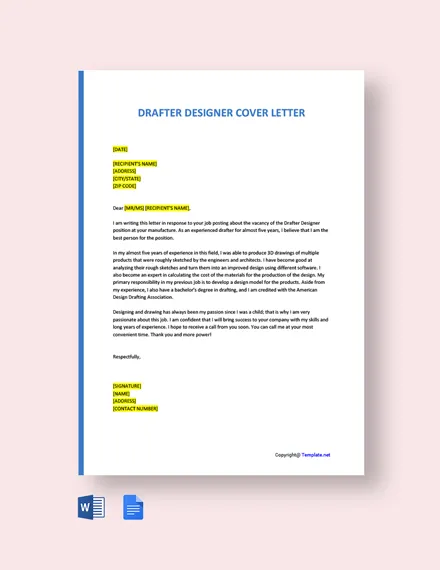
The closing paragraph summarizes your interest in the position and the company. Briefly restate your key qualifications and reiterate your enthusiasm for the role. Show your understanding of the company’s goals and explain how your skills can help them achieve their objectives. Close the letter with a strong call to action, encouraging the hiring manager to review your resume and contact you for an interview. Thank the reader for their time and consideration, and provide your contact information.
Formatting and Style for Your Cover Letter
Font Choice and Readability
Choose a professional and easy-to-read font, such as Arial, Calibri, or Times New Roman, to ensure that your cover letter is readable. Use a font size between 10 and 12 points, and use a single-spaced format with a space between each paragraph. Use consistent formatting throughout the letter, including the same font style, size, and spacing. Organize your information into clearly defined paragraphs. This creates a clean and organized format that is easy for the hiring manager to review, and it emphasizes your attention to detail.
Using Action Verbs

Use action verbs to make your accomplishments stand out. Begin sentences by using active verbs such as “developed,” “created,” “managed,” “implemented,” and “designed.” Action verbs highlight what you have done and describe your abilities and accomplishments more effectively. Using action verbs makes your cover letter more dynamic and increases your appeal to a potential employer. Review your letter to remove vague phrasing and instead use strong verbs that describe your achievements and contributions.
Proofreading and Editing
Before submitting your cover letter, carefully proofread and edit it for any errors in grammar, spelling, or punctuation. Small mistakes can make you appear careless, so checking your work is essential. Consider asking a friend, family member, or colleague to review your letter. This helps catch errors you might have missed. Ensure your letter is well-written and free from mistakes. A polished cover letter shows your attention to detail and dedication to the job application process.
Tailoring Your Cover Letter to the Job Description
Matching Skills and Requirements

Customize your cover letter for each job application by carefully reviewing the job description and matching your skills and experience to the requirements. Identify the keywords, responsibilities, and qualifications that the employer is seeking. Highlight the skills and experiences that are most relevant to the position. Focus on how you have met the company’s requirements and provide specific examples of your accomplishments. Demonstrate your understanding of what the employer needs and how you are the perfect candidate. Customization shows employers that you have read the job description and understand the role.
Researching the Company
Research the company to show your interest and demonstrate that you understand their mission, values, and current projects. Visit their website and social media profiles, read recent news articles, and learn about their products or services. In your cover letter, show how your experience and goals align with the company’s mission or values. You can also mention a specific project, accomplishment, or future plan. Demonstrate a genuine interest in the company and its work. This research will give you an edge over other applicants and convince the hiring manager that you’re a good fit for the team.
Common Mistakes to Avoid in Your Cover Letter
Generic Letters

Avoid using a generic cover letter that is not customized for the specific job or company. Hiring managers can easily spot generic letters, which makes a poor impression and suggests you have not taken the time to tailor your application. Make sure your letter highlights the aspects of the job description and shows how you meet the requirements. Avoid using generic phrases and instead emphasize your specific experiences and accomplishments that make you unique. Customization shows employers that you are genuinely interested in the position and have considered their requirements.
Typos and Grammatical Errors
Always check your cover letter for typos, spelling errors, and grammatical mistakes. These errors can undermine your credibility, as they suggest a lack of attention to detail. Proofread your letter carefully and use a grammar and spelling checker. Consider asking a friend, family member, or colleague to review your letter before you submit it. Ensure that your letter is polished and presents you in a professional manner.
Focusing on Yourself Too Much
While it’s important to highlight your skills and achievements, avoid focusing solely on yourself. Make sure to show that you understand the company’s needs and explain how you can meet them. Connect your abilities to the job description, and show that you are a good fit for the team. Focus on your contributions, such as ways that you have helped past employers. This demonstrates your ability to work as a team and to make a valuable contribution to the company.
The Final Steps Submitting Your Cover Letter
File Format and Naming
Save your cover letter as a PDF file to ensure it is viewed correctly on any device. PDF files maintain the formatting and layout of your document. Name the file with your name and the job title to make it easy for the hiring manager to identify. For instance, use the format “Your Name_Cover Letter_Instructional Designer”. Double-check that the file format is what the employer requests. Following these simple steps makes it easier for the company to read your letter and ensures a professional presentation of your qualifications.
Following Application Instructions
Carefully read and follow all application instructions provided in the job posting. Pay close attention to specific requirements, such as the preferred method of submitting the cover letter and the resume. If the posting indicates a certain file format, or a particular way to address the hiring manager, then make sure you follow the instructions. This shows that you pay attention to detail and respect the company’s processes. Failure to follow instructions can lead to your application being overlooked.
Follow-Up and Next Steps
After submitting your cover letter and resume, consider following up with the hiring manager. If the job posting provides a contact person, send a brief email to reiterate your interest in the role and to express your gratitude for their time. If no contact information is provided, you can follow up after a week or two of submitting your application. Follow up with the employer after you have submitted your application. This shows initiative and demonstrates your enthusiasm for the position.