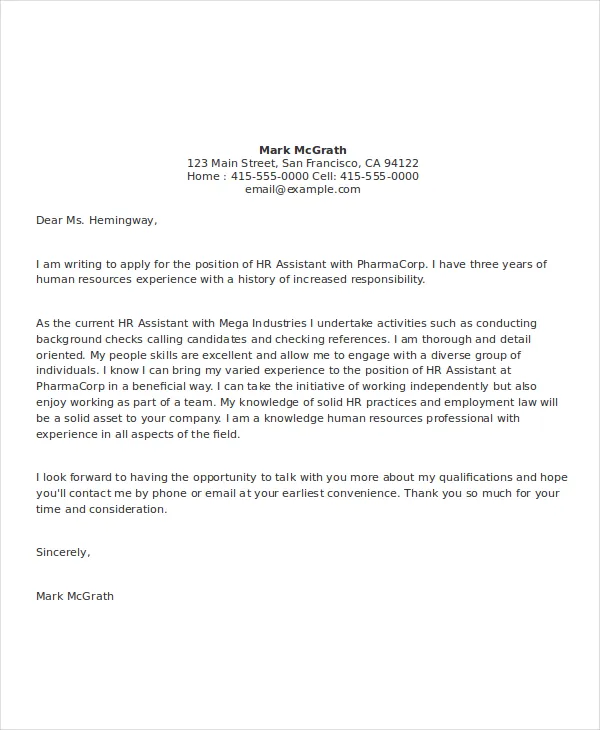
Understanding the Human Resources Assistant Role
Before you even begin writing your cover letter, it’s crucial to grasp the responsibilities of a Human Resources Assistant. This role is the backbone of any HR department, providing administrative support and assisting with a variety of tasks. These tasks can range from onboarding new employees to managing employee records, assisting with payroll, and coordinating benefits. Understanding the core duties involved will help you tailor your cover letter to demonstrate your suitability. The more you understand what the job entails, the better equipped you’ll be to highlight your relevant skills and experiences. Consider the specific requirements mentioned in the job description; does the position require experience with a particular HRIS system? Does it emphasize communication skills or organizational abilities? Knowing this information is critical for making your cover letter stand out. Demonstrating this level of understanding from the outset signals to the hiring manager that you are serious about the opportunity and have done your homework, making you a more attractive candidate.
Essential Elements of a Human Resources Assistant Cover Letter
Your cover letter is your first opportunity to impress a potential employer. It should include all the necessary elements to make it a standout. Start with a professional heading that includes your contact information and the date, followed by the hiring manager’s name and title. A compelling opening paragraph is key. Begin by stating the position you are applying for and how you found the job. Briefly mention why you are interested in the role and what makes you a good fit. The body of your cover letter is where you provide specific examples of your skills and experience. Highlight your achievements and explain how they align with the job requirements. Conclude with a strong closing paragraph that reiterates your interest, thanks the hiring manager for their time, and expresses your anticipation for an interview. Always proofread your cover letter carefully for any grammatical errors or typos, as they can detract from your professionalism. Be sure to tailor your cover letter to the specific company and the specific job to help you succeed.
Highlighting Your Skills and Experience

Your cover letter is your chance to showcase your skills and experience that make you a suitable candidate for the Human Resources Assistant role. Instead of simply listing your skills, provide examples of how you have used them in previous roles. For instance, if the job description emphasizes strong organizational skills, describe a time when you managed a complex project or multiple tasks simultaneously. Did you improve any processes in your previous HR role? Were you able to streamline any administrative tasks? If the job description highlights the importance of experience with HR software, be sure to mention the specific software you have used and provide any quantifiable results you achieved using that software, like saving time or reducing errors. By providing concrete examples, you demonstrate to the hiring manager that you have the practical skills and experience necessary to excel in the position. Your accomplishments should be tailored to show you can contribute positively to the new organization by providing similar results. Use action verbs to describe your tasks to help the hiring manager better understand your experience.
Focusing on Relevant Skills
When crafting your cover letter, focus on the skills that align directly with the job requirements outlined in the job description. HR Assistant roles typically require a combination of administrative, interpersonal, and technical skills. Some of the most important soft skills include communication, both written and verbal, and excellent organizational abilities. You should also highlight your problem-solving skills, attention to detail, and ability to maintain confidentiality. In addition to soft skills, it is important to focus on the technical skills relevant to the position. These might include experience with HRIS systems, proficiency in Microsoft Office Suite (especially Excel), and knowledge of employment laws and regulations. By focusing on relevant skills, you demonstrate that you understand the specific needs of the position and are well-equipped to handle the responsibilities. Tailor your skills to the job by reviewing the job description carefully and identify the key skills the employer is looking for and include them.
Demonstrating Your Accomplishments
Demonstrating your accomplishments is more impactful than simply listing your responsibilities. Instead of saying ‘Managed employee records,’ say, ‘Successfully maintained employee records for over 200 employees, ensuring 100% accuracy and compliance with all regulations.’ Instead of saying, ‘Assisted with onboarding,’ describe how you improved the onboarding process. For example, ‘Developed and implemented a new onboarding checklist that reduced onboarding time by 20% and improved new employee satisfaction.’ Quantify your achievements whenever possible. Use numbers and data to showcase the impact you have made in your previous roles. This shows employers that you not only have the skills but also have a proven track record of success. Your goal should be to show how your previous work has benefitted your previous employer, which will help the hiring manager see how you can improve their company.
Tailoring Your Cover Letter to the Job Description

One of the biggest mistakes applicants make is sending out generic cover letters. To make your cover letter stand out, it must be tailored to the specific job description and company. Begin by carefully reading the job description and identifying the key requirements, skills, and values that the employer is looking for. Then, customize your cover letter to highlight how your experience and qualifications align with these specific requirements. This could involve adjusting your language to mirror the language used in the job description, emphasizing specific skills that the employer has highlighted, and providing examples that directly address the job’s needs. Research the company. Show that you understand the company’s mission, values, and culture. This demonstrates your genuine interest in the role and the organization. By personalizing your cover letter, you show that you are invested in the opportunity and that you have taken the time to understand the role and the company, increasing your chances of landing an interview.
Formatting and Structure for Impact
The formatting and structure of your cover letter are just as important as the content. A well-formatted cover letter is easy to read and makes a positive first impression. Use a professional font, such as Times New Roman, Arial, or Calibri, in a readable size (11 or 12 points). Maintain a consistent format throughout your cover letter, with clear headings, subheadings, and bullet points (if needed). Break up large blocks of text with white space to make it more visually appealing. A well-structured cover letter typically includes a heading with your contact information, a formal salutation (e.g., “Dear Mr./Ms. [Last Name]”), an opening paragraph that states your purpose, a body that highlights your skills and experience, and a closing paragraph that expresses your interest and thanks the reader. Keep the letter concise, ideally no more than one page, and use clear, concise language. The easier your cover letter is to read and digest, the more likely it is that the hiring manager will take notice.
Proofreading and Finalizing Your Cover Letter
Before you submit your cover letter, proofread it meticulously to catch any errors. Typos, grammatical errors, and formatting issues can damage your credibility and make you appear careless. Use a grammar checker and a spell checker, but don’t rely on them entirely. Print out your cover letter and read it aloud to catch any awkward phrasing or unclear sentences. Ask a friend, family member, or career counselor to review it for you. A second pair of eyes can often spot mistakes that you might have missed. Make sure that your contact information is accurate and up-to-date. Check to see that your resume and cover letter are consistent, and that the cover letter’s tone and style align with the company’s culture. Ensure that you have followed the instructions outlined in the job description. By taking the time to proofread and finalize your cover letter, you will significantly increase your chances of making a positive impression and securing an interview.