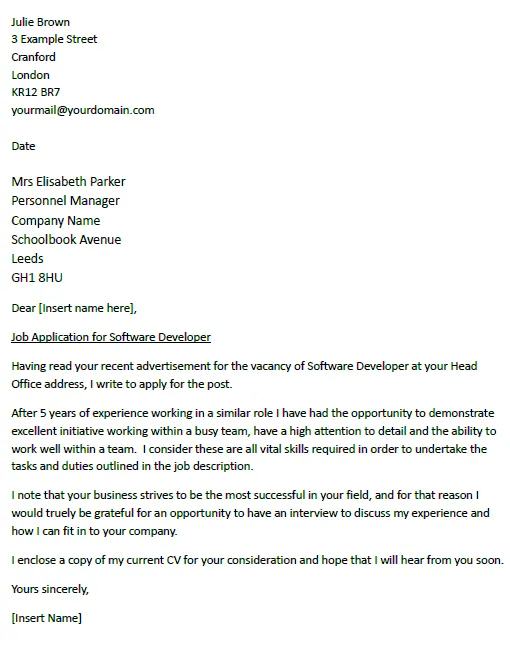
What is a Cover Letter and Why Does it Matter
In the competitive world of software development, a well-crafted cover letter can be your key to unlocking the door to your dream job. Often accompanying your resume, the cover letter serves as a personalized introduction to a potential employer, going beyond the static information contained in your resume. It provides an opportunity to showcase your personality, passion, and the unique value you bring to the table. Think of it as your first impression, the chance to make a compelling case for why you are the ideal candidate. A strong cover letter can significantly increase your chances of getting noticed and securing an interview.
Purpose of a Cover Letter
The primary purpose of a cover letter is to introduce yourself to the hiring manager and express your interest in a specific position. It’s a chance to highlight your relevant skills and experience, explaining how they align with the job requirements. Furthermore, a cover letter enables you to personalize your application, demonstrating your understanding of the company and the role. It allows you to articulate your career goals and aspirations, showing that you’re not just looking for a job but seeking a long-term career opportunity. Effectively, a cover letter is a persuasive marketing tool, selling your qualifications and enthusiasm to the employer.
Importance for Software Developers

For software developers, a cover letter is particularly important. The tech industry is fast-paced, with numerous candidates vying for each position. Your cover letter gives you a chance to differentiate yourself by demonstrating not only your technical prowess but also your soft skills, such as communication, problem-solving, and teamwork. It allows you to elaborate on your projects, highlight your contributions, and show your passion for technology. Additionally, a cover letter can address any potential gaps in your resume or explain why you’re a good fit even if your background doesn’t perfectly match the job description. In short, it’s your chance to make a strong first impression and convince the employer that you are worth interviewing.
Key Components of a Cover Letter
Header and Contact Information
Start your cover letter with a professional header that includes your name, address, phone number, and email address. Make sure the information is accurate and up-to-date. Include the date and the hiring manager’s name and title (if you know it), along with the company’s name and address. This header sets the tone for the rest of the letter, showing attention to detail and professionalism. Proper formatting and accurate contact information are crucial, as they allow the hiring manager to easily reach you if they are interested in your application. This is the first step in demonstrating your competence and organizational skills.
Personalized Greeting

Always address your cover letter to a specific person whenever possible. Research the company to find the hiring manager’s name. Addressing the letter to ‘Dear Mr./Ms. [Last Name]’ shows that you’ve taken the time to personalize your application. If you can’t find a specific name, use a professional greeting like ‘Dear Hiring Manager.’ Avoid generic greetings such as ‘To Whom It May Concern,’ as these make your letter feel impersonal and less engaging. A personalized greeting demonstrates your interest in the specific role and company, immediately capturing the reader’s attention.
Opening Paragraph
The opening paragraph should grab the reader’s attention and clearly state the purpose of your letter. Mention the specific position you’re applying for and where you found the job posting. Briefly highlight your most relevant qualifications and express your enthusiasm for the role and the company. Make it concise, engaging, and focused on why you’re a great fit. For example, you could start with a strong statement about your passion for software development and how the company’s mission aligns with your career goals. The opening paragraph sets the stage for the rest of your letter, making the hiring manager want to continue reading.
Body Paragraphs Highlighting Skills and Experience
The body paragraphs are where you showcase your skills, experience, and accomplishments. Use this space to elaborate on your qualifications and explain how they match the job requirements. Provide specific examples of your projects, contributions, and achievements, using the STAR method (Situation, Task, Action, Result) to provide context and demonstrate your impact. Tailor each paragraph to the specific job description, highlighting the skills and experiences that are most relevant. Use keywords from the job posting to ensure your letter is easily scannable by applicant tracking systems (ATS). Focus on what you can offer the company and how you can contribute to their success.
Showcasing Technical Skills

Detail your technical skills, including programming languages, frameworks, tools, and technologies you’re proficient in. Mention specific projects where you used these skills, emphasizing your understanding and ability to apply them effectively. Quantify your proficiency with examples like, ‘Developed and maintained a web application using React, resulting in a 20% increase in user engagement.’ Include any relevant certifications or training. Always provide concrete examples of your expertise. The hiring manager should be able to quickly assess your technical capabilities from your cover letter.
Demonstrating Project Experience
Highlight your project experience, whether personal, academic, or professional. Describe your role, responsibilities, and the outcomes of each project. Focus on the challenges you faced, the solutions you implemented, and the results you achieved. Include links to your portfolio or GitHub if possible. Show your ability to work on projects from start to finish, demonstrating your initiative and problem-solving skills. This section should be clear, concise, and focused on showcasing your project accomplishments.
Quantifying Achievements
Use numbers and data to quantify your achievements whenever possible. Instead of saying ‘Improved efficiency,’ state ‘Improved efficiency by 15% through the implementation of…’ Quantifiable achievements demonstrate your impact and value to previous employers. Mention how you’ve saved time, reduced costs, or increased revenue. Numbers provide credibility and make your achievements more tangible. These figures show the value you bring to a team and the positive impact you have.
Closing Paragraph

In the closing paragraph, reiterate your interest in the position and thank the hiring manager for their time and consideration. Express your enthusiasm for the opportunity to learn more about the role and the company. Keep it brief and professional. It’s also a good idea to mention that you’re available for an interview and are eager to discuss your qualifications further. This paragraph should leave a lasting positive impression, emphasizing your professionalism and eagerness.
Call to Action
End your cover letter with a clear call to action. This could be a statement like ‘I am eager to discuss how my skills and experience can contribute to [Company Name]’s success’ or ‘I welcome the opportunity to discuss my qualifications in an interview.’ Make it easy for the hiring manager to take the next step. Avoid vague statements and be proactive in expressing your interest. The call to action should be confident and assertive, encouraging the hiring manager to contact you.
Formatting and Design Best Practices
Font and Readability

Choose a professional and easy-to-read font like Arial, Calibri, or Times New Roman, with a font size between 10 and 12 points. Use consistent formatting throughout your cover letter, including the same font and size for headings and body text. Ensure there is sufficient white space between paragraphs to make it easy on the eyes. A well-formatted cover letter is easier to read and demonstrates attention to detail. Poor formatting can immediately deter a hiring manager, making your letter less likely to be read.
Length and Structure
Keep your cover letter concise, ideally no more than one page. Organize your letter with clear sections and paragraphs, using headings and bullet points to improve readability. Make sure the structure is logical, with an introduction, body paragraphs highlighting your skills and experience, and a conclusion. This structure helps the hiring manager easily navigate your letter. A well-structured letter demonstrates your ability to communicate clearly and concisely.
Proofreading and Editing
Proofread your cover letter multiple times for any grammatical errors, typos, and inconsistencies. Use spell-check tools, but don’t rely on them completely. Read your letter aloud to catch any awkward phrasing. Ensure your letter is free of errors and presents you as a polished, professional candidate. Have a friend or career advisor review your letter for feedback. Errors can undermine your credibility, so meticulous proofreading is essential.
Cover Letter Examples Software Developer

Example 1 Entry-Level Developer
This example should focus on showcasing academic projects, internships, and relevant coursework. Highlight skills and enthusiasm for learning and applying new technologies. The tone should be professional, enthusiastic, and focused on career goals.
Example 2 Experienced Developer
This example should emphasize professional accomplishments, contributions to projects, and specific technical expertise. Quantify achievements and use the STAR method to showcase skills. It should also highlight leadership, mentoring, or team collaboration skills.
Example 3 Developer with a Specific Skill
This example should focus on a niche skill, such as a specific programming language, framework, or area of expertise (e.g., machine learning, cybersecurity). Tailor the letter to jobs seeking that specific skill. Highlight relevant projects and experiences, with a focus on demonstrating mastery and practical application.
Common Mistakes to Avoid
Generic Letters
Avoid sending generic cover letters that could be used for any job. Tailor each cover letter to the specific job and company. Generic letters show a lack of effort and interest. Show that you understand the company’s needs and the requirements of the role. Address the specific needs of the company to improve your chances of getting the role.
Typos and Grammatical Errors
Carelessly written cover letters with typos and grammatical errors can make you seem unprofessional and inattentive to detail. Always proofread your letter carefully, and ask someone else to review it as well. These errors demonstrate a lack of attention to detail and make a bad first impression. Proofreading is vital to demonstrating your professionalism and attention to detail.
Focusing on Yourself Too Much
While highlighting your skills and experience is important, don’t focus solely on yourself. Focus on how your skills and experience can benefit the company. Show that you understand their needs and how you can contribute to their success. Focus on the value you bring to the organization, and this increases your chances of selection.
Tailoring Your Cover Letter
Researching the Company
Before writing your cover letter, research the company. Understand their mission, values, and current projects. Tailor your letter to demonstrate your knowledge of the company and how your skills align with their goals. Company research shows your interest and initiative. Visit their website, read news articles, and understand their work.
Matching Skills to Job Requirements
Carefully review the job description and identify the required skills and qualifications. Tailor your letter to highlight the skills and experiences that match the job requirements. Use keywords from the job description to ensure your letter is easily scannable by ATS. Directly address the requirements to show you are a good fit for the position.
Using Keywords Effectively
Incorporate keywords from the job description into your cover letter. This helps your letter get past applicant tracking systems (ATS) and makes it easier for hiring managers to see that you meet the requirements. Use keywords naturally, not excessively, to maintain readability. This step helps the recruiter understand your expertise more efficiently.
Final Tips for Success
Review and Revise
Always review and revise your cover letter multiple times. Check for any errors, inconsistencies, or awkward phrasing. Ensure that your letter is clear, concise, and tailored to the specific job and company. Reviewing is essential to improve your letter’s effectiveness and presentation. Correcting errors improves your chance of selection.
Seek Feedback
Ask friends, family, career advisors, or mentors to review your cover letter and provide feedback. A fresh perspective can help you catch any mistakes or areas for improvement. Having multiple reviewers gives your letter greater strength. Their insight may significantly enhance your chances.
Follow Up
After submitting your application, follow up with the hiring manager or recruiter. A follow-up email, sent a week or two after your submission, expresses your continued interest and allows you to reiterate your qualifications. Following up can demonstrate your persistence and initiative, and may remind the hiring manager about your application. This action provides further assurance to the hiring manager.